
What Size Compressor Tank Do I Need?
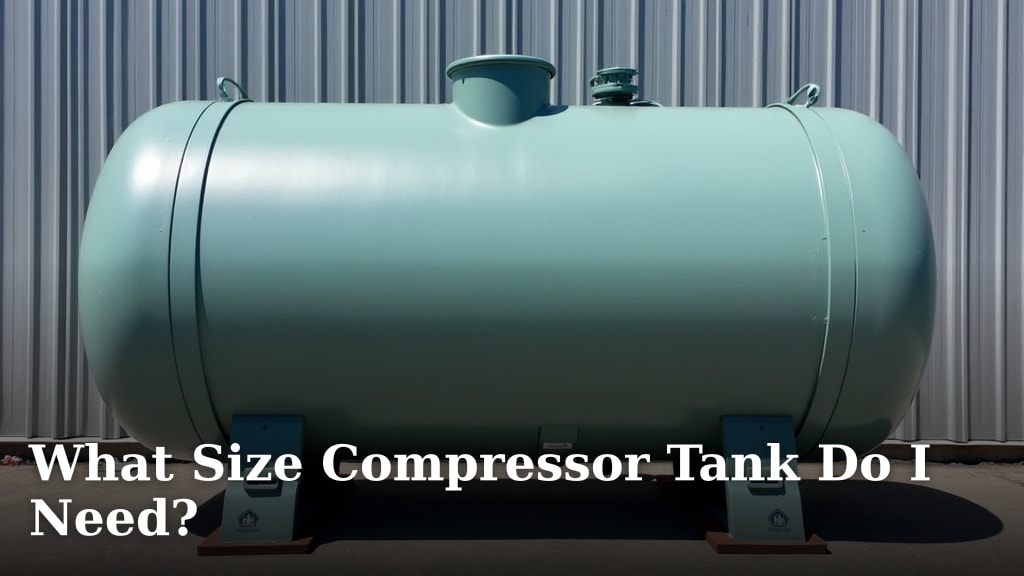
The right size air compressor tank for your needs depends on the tools you’ll use. For light DIY tasks like inflating tires or powering small nail guns, a 2 to 6-gallon tank is usually enough. Bigger jobs, like running impact wrenches or sanders, require tanks of 20 gallons or more to ensure a steady air supply.
Choosing the correct tank size means your compressor won’t struggle and your tools will perform their best. It also prevents you from buying a unit that’s too big and wastes energy, or too small and constantly runs out of air. We found that understanding your tool’s air consumption is key to a good match.
- Tank size depends on your tools’ air needs.
- Small tanks (2-6 gallons) work for simple tasks.
- Large tanks (20+ gallons) are for demanding jobs.
- Matching size prevents tool trouble and wasted energy.
- Check your tools’ CFM rating to find the right fit.
Let’s walk through how to pick the perfect compressor tank size for your workshop or garage.
Matching Your Compressor Tank Size to Your Needs
Finding the right air compressor tank size is more important than you might think. It ensures your tools run smoothly. It also stops you from wasting money on a unit that’s too big or too small. We found that understanding your tools’ air demands is the key to making a smart choice. This guide will help you navigate the options.
Understanding Air Consumption: The CFM Factor
The most critical number to look at is your tool’s CFM rating. CFM stands for Cubic Feet per Minute. It tells you how much air a tool needs to operate effectively. Think of it like your car’s gas mileage. A tool that needs more air will use up the compressed air in the tank faster.
What is CFM?
CFM measures the volume of air a tool uses per minute. Higher CFM means the tool needs more air. Lower CFM means it’s more efficient. You’ll typically find this rating on the tool itself or in its manual. It’s often listed at a specific pressure level, usually 90 PSI (pounds per square inch). This is a standard for most air tools.
How CFM Relates to Tank Size
A bigger tank holds more compressed air. This means it can supply air for longer periods. If your tool has a high CFM, you need a tank that can keep up. A small tank might run out of air quickly. This causes your tool to sputter or stop working.
Finding Your Tools’ CFM Requirements
Most tool manufacturers list the CFM needed. For example, a small brad nailer might need only 0.3 CFM. A die grinder or sander could need 5 CFM or more. It’s essential to check each tool you plan to use. Add up the CFM requirements if you plan to run multiple tools at once. Though, it’s rare to use many high-demand tools simultaneously.
The Role of PSI
While CFM is about volume, PSI is about pressure. Most air tools operate best around 90 PSI. Your compressor needs to be able to deliver this pressure consistently. The tank size helps maintain this pressure, even as air is being used. A tank that’s too small can’t replenish air fast enough to keep pressure steady.
Common Air Compressor Tank Sizes and Their Uses
Air compressor tanks come in various sizes. Each size is suited for different types of jobs and tools. We’ve broken down the common sizes to help you decide.
Small Tanks: 1 to 6 Gallons
These are the most portable and compact options. They are great for light-duty tasks. Think of them as your go-to for quick fixes around the house. They are easy to move and don’t take up much space.
- Inflating tires: Perfect for keeping your car or bike tires topped up.
- Light nailing: Small brad nailers or finish nailers work well.
- Blowing dust: Useful for cleaning workbench surfaces.
- Airbrushing: For hobbyists and small craft projects.
These tanks are best for tools with low CFM requirements, typically under 2 CFM. They will need to cycle on and off frequently to refill. This means they aren’t ideal for continuous use.
Medium Tanks: 10 to 30 Gallons
These tanks offer a good balance between portability and air supply. They can handle a wider range of tasks than the smaller units. They provide a more sustained airflow, meaning less downtime for the compressor to refill.
- Stapling and tacking: Can power wider staple guns.
- Small impact wrenches: For occasional automotive work.
- Chipping hammers: For light demolition tasks.
- Painting with smaller spray guns: Suitable for touch-ups.
Medium tanks are a popular choice for home garages and small workshops. They can usually support tools needing around 3 to 5 CFM. You’ll experience fewer interruptions compared to smaller tanks.
Large Tanks: 60 Gallons and Above
These are the heavyweights of the air compressor world. They are designed for demanding, continuous-duty applications. Large tanks offer a massive reserve of compressed air. This allows them to power high-demand tools for extended periods without frequent refills.
- Impact wrenches for extended use: Great for automotive shops.
- Sandblasting and grinding: These tools are air-hungry.
- Spray painting with larger guns: For professional-grade finishes.
- Running multiple air tools simultaneously.
Large tanks are typically stationary units. They often require a dedicated power source, like a 240-volt outlet. If your work involves serious DIY or professional tasks, a large tank is often necessary. They can handle tools with CFM needs of 5 CFM and higher, often much higher.
How to Calculate Your Required Tank Size
To find the perfect tank size, you need to consider the CFM of your most demanding tool. Many experts suggest adding a buffer of 1.5 to 2 times the CFM requirement.
Step 1: Identify Your Tools’ CFM Needs
Gather all the air tools you plan to use. Check the CFM rating for each one. List them out. Pay close attention to the PSI rating associated with the CFM. This is usually 90 PSI.
Step 2: Determine Your Peak Air Demand
Find the tool with the highest CFM requirement. This is your peak demand. If you plan to run multiple tools at once, you’d add their CFM values. However, most people use one primary tool at a time.
Step 3: Apply a Safety Margin
It’s wise to get a compressor that’s a bit larger than your exact needs. This prevents the compressor from running constantly. Constant running can shorten its lifespan. We found that a common recommendation is to choose a tank that provides at least 50% more CFM than your highest-demand tool.
For example, if your most air-hungry tool needs 4 CFM, you should aim for a compressor that can deliver at least 6 CFM (4 CFM x 1.5). The tank size then supports this delivery rate.
Step 4: Consider Duty Cycle and Horsepower
Duty cycle refers to how long a compressor can run before needing to cool down. Look for compressors with a 50% or 75% duty cycle for demanding tasks. Horsepower (HP) is also a factor, but CFM and tank size are more direct indicators of air supply. A higher HP motor generally means the compressor can build and maintain pressure more effectively, especially with larger tanks.
A Quick Guide to Tank Size by Tool Type
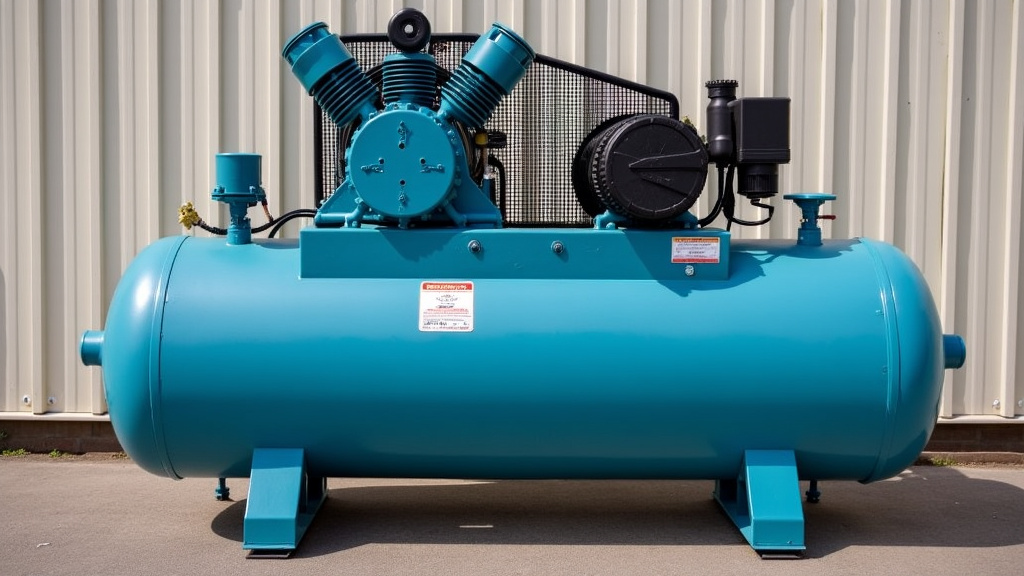
Here’s a simplified chart based on common tool usage. Remember to check your specific tool’s requirements for the most accurate sizing.
| Tool Type | Typical CFM Needed (at 90 PSI) | Recommended Tank Size |
|---|---|---|
| Tire Inflator, Brad Nailer, Stapler | 0.3 – 1.5 CFM | 1 – 6 Gallons |
| Finish Nailer, Caulk Gun, Airbrush | 1 – 3 CFM | 6 – 15 Gallons |
| Impact Wrench, Ratchet, Small Sanders | 3 – 5 CFM | 15 – 30 Gallons |
| Larger Sanders, Grinders, Paint Sprayers | 5 – 10+ CFM | 60 Gallons + |
Don’t Forget About Power Source and Portability
Beyond just tank size, consider how you’ll power your compressor and if you need to move it. Small compressors often run on standard 120V household outlets. Larger, more powerful units might require a 240V outlet, similar to what a dryer or oven uses. This is an important factor for workshop setup.
Portability is also key. If you need to move your compressor around your yard or to different job sites, a smaller, lighter unit with a wheeled design is essential. Larger tanks are generally heavier and meant to stay in one place. Think about your workflow – will you be taking the compressor to the work, or bringing the work to the compressor?
Checklist: Choosing Your Compressor Tank Size
Use this quick checklist to ensure you’ve considered all the important points:
- Have you identified the CFM rating for all your air tools?
- Do you know the highest CFM requirement among your tools?
- Are you planning to run multiple tools at once?
- Have you added a buffer (e.g., 50% more CFM) to your highest need?
- Do you need a portable compressor or a stationary one?
- Does your workshop have the correct power outlet (120V or 240V)?
Conclusion
You’ve learned that matching your air compressor tank size to your tools’ needs is key. Understanding your tools’ CFM requirements is the most critical step. A tank that’s too small will constantly run out of air, while one that’s too large might be an unnecessary expense. We found that a good rule of thumb is to aim for a compressor that can deliver 1.5 to 2 times the CFM of your most demanding tool. Now you’re ready to make an informed decision. Check your tools’ specs and find the compressor that will keep your workshop running smoothly.
Frequently Asked Questions
What happens if my air compressor tank is too small?
If your tank is too small, you’ll experience frequent interruptions. Your tools will sputter or stop working as the compressor struggles to keep up. This can be frustrating and slow down your projects considerably.
Do I need a bigger tank if I plan to use multiple air tools at once?
Yes, if you plan to run multiple tools simultaneously, you’ll need to add their CFM requirements together. Then, apply the buffer rule to find a suitable tank size. Most users rarely run high-demand tools at the same time, but it’s important to consider.
Can a large tank size compensate for a lower horsepower motor?
While a larger tank holds more air, a lower horsepower motor might struggle to refill it quickly. This can still lead to pressure drops during continuous use. Horsepower, CFM, and tank size all work together for optimal performance.
How often should I drain my air compressor tank?
You should drain your air compressor tank at the end of each day or before storing it. Water accumulates inside the tank as air is compressed. Regularly draining it prevents rust and corrosion, prolonging the life of your compressor.
Is PSI as important as CFM when choosing a tank size?
PSI (pressure) is vital for tool operation, but CFM (volume) is more directly related to tank size needs. Your compressor must deliver the required PSI, and the tank size helps maintain that pressure consistently while supplying the necessary CFM for your tools.
