
Why Is My Air Compressor Not Building Pressure?
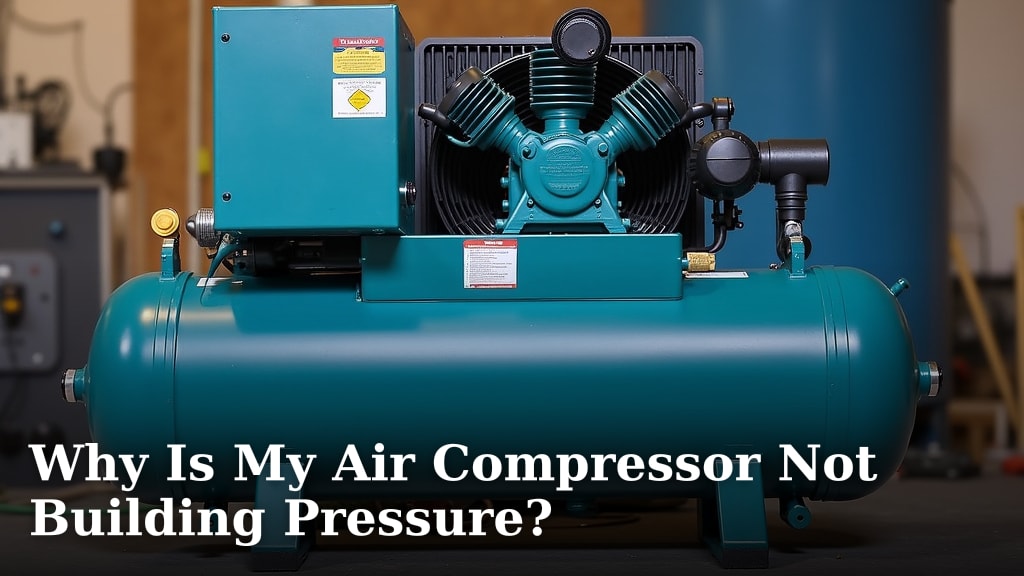
Your air compressor isn’t building pressure because of a leak in the system, a faulty pressure switch, or problems with the pump itself. These issues stop your compressor from reaching its set pressure. When your air compressor is not building pressure, it can be frustrating.
You expect your tools to work, right? We found that common culprits often involve simple component failures or maintenance oversights. Understanding these basic issues helps you get your machine running again, saving you time and money. It’s usually something fixable.
TL;DR:
- Air leaks are a frequent cause.
- The pressure switch might be bad.
- Pump wear can prevent pressure buildup.
- Check for clogged filters.
- Motor issues can also be a factor.
Let’s dive into the common reasons why your air compressor isn’t building pressure. We’ll walk you through how to troubleshoot these problems step by step.
Troubleshooting Your Air Compressor’s Pressure Problems
When your air compressor isn’t building pressure, it’s often a sign that something is preventing the air from being compressed or held correctly. We’ve found that these issues can range from simple fixes to more involved repairs.
The goal is to methodically check each component. This helps you pinpoint the exact cause without wasting time or money. Let’s walk through the common culprits together.
Investigating Air Leaks
Air leaks are a surprisingly common problem. Even a tiny pinhole can cause a significant drop in pressure over time. Imagine trying to fill a balloon with a small hole in it; it’s a similar principle here. You’ll never reach full pressure.
Where to Look for Leaks
Leaks can happen anywhere air travels. This includes hoses, fittings, and even the tank itself. We’ve seen many cases where a loose connection was the only problem. Sometimes, the leak is subtle and hard to spot.
- Hoses and Connections: Check all hoses for cracks, cuts, or wear. Wiggle each connection to see if you hear a hiss. These are often the easiest to fix or replace.
- Fittings and Valves: Look at all threaded connections, quick-connect couplers, and drain valves. These can loosen over time or have worn seals.
- Tank Itself: Though less common, tanks can develop small pinholes, especially older ones. This is more serious and requires professional assessment.
The Soapy Water Test
A simple, effective way to find leaks is the soapy water test. You’ll need a spray bottle and some dish soap. It’s like finding a leak in a bike tire.
- Mix a solution of water and a generous amount of dish soap in a spray bottle.
- Turn on your air compressor and let it build some pressure, even if it’s not reaching its maximum.
- Spray the soapy solution generously over all suspected leak areas: hoses, connections, fittings, and valves.
- Watch for bubbles. Any bubbling indicates an air leak. The bigger the bubbles, the bigger the leak.
Once you find a leak, you can usually tighten the connection, replace a worn hose, or reapply thread sealant. This simple step often solves the whole problem.
Examining the Pressure Switch
Your pressure switch is the brain of your compressor. It tells the motor when to start and stop, based on the pressure in the tank. If it’s not working right, your compressor won’t know when to build pressure. Many experts say a faulty pressure switch is a common point of failure (NFPA).
Symptoms of a Bad Pressure Switch
How do you know if the pressure switch is the problem? There are a few tell-tale signs. You might notice the compressor running constantly or not starting at all.
- Compressor Runs Continuously: If the compressor keeps running without shutting off, even when it should have reached pressure, the switch might not be signaling it to stop.
- Compressor Doesn’t Start: Conversely, if the tank pressure is low but the compressor doesn’t kick on, the switch might not be telling it to start.
- Inconsistent Cut-Out/Cut-In Points: The compressor might shut off too early or too late, or start too early or too late.
What to Check on the Switch
Before replacing the switch, check a few things. Sometimes it’s just a simple adjustment.
- Wiring Connections: Ensure all wires to the pressure switch are secure and not corroded.
- Diaphragm/Piston: Some switches have an internal diaphragm or piston that can wear out. While not usually user-serviceable, knowing this helps.
- Cut-Out Adjustment: Many switches have an adjustment screw to set the cut-out pressure. Make sure it hasn’t been accidentally altered.
If you suspect a faulty pressure switch, it’s often best to replace it. They aren’t usually repairable components. Always disconnect power before working on electrical parts, for your safety.
Problems with the Compressor Pump
The pump is the heart of your air compressor. It’s where the actual compression happens. If the pump itself is failing, it simply can’t generate enough pressure. This is often more serious than a leak or switch problem.
Worn Piston Rings or Cylinders
Over time, the piston rings inside the pump can wear down. This is much like how an engine’s piston rings can wear out in a car. When they wear, air can escape past the piston instead of being compressed. We found that this is a common issue in older, well-used units.
- Signs: The compressor runs, but pressure builds very slowly or not at all. You might hear a distinct “hissing” sound coming from the pump head itself.
- Visual Check: For some pumps, you can remove the head and inspect the piston and cylinder walls. Look for scoring or excessive wear.
Damaged or Stuck Valves
The pump uses intake and exhaust valves to control airflow. If these valves are dirty, stuck open, or broken, the pump won’t compress air effectively. It would be like trying to pump water with a leaky check valve.
- Intake Valve Issues: If the intake valve doesn’t seal properly, air can escape back out during the compression stroke.
- Exhaust Valve Issues: If the exhaust valve is stuck open, compressed air won’t be pushed into the tank efficiently.
Servicing pump valves often requires some mechanical skill. Refer to your compressor’s manual. Sometimes, cleaning or replacing these small components can make a big difference.
Clogged Air Filters
The air filter protects your compressor’s pump from dust and debris. A clogged filter restricts the amount of air entering the pump. Think of trying to breathe through a very stuffy nose; it’s much harder to get enough air.
Impact of a Dirty Filter
A dirty filter starves the pump of air. This means the pump has to work harder to pull in enough air, and it simply won’t be able to compress as much. Your compressor will run longer, heat up more, and still not build pressure efficiently. It’s a lose-lose situation.
- Reduced Air Intake: Less air goes into the pump.
- Overheating: The motor works harder, generating more heat.
- Slow Pressure Buildup: Pressure increases very slowly, if at all.
Checking and Replacing the Filter
Checking the air filter is one of the easiest troubleshooting steps. It’s usually a small, visible component. Most manufacturers recommend replacing air filters regularly, often every few months with heavy use (OSHA guidelines suggest regular maintenance checks).
- Locate the air filter housing, usually a small plastic or metal cap.
- Remove the cap and inspect the filter element inside. Is it dirty, dusty, or clogged with debris?
- If it looks dirty, try gently cleaning it with compressed air if it’s a reusable type. Otherwise, replace it with a new one.
A clean air filter ensures your pump can breathe freely, allowing it to work efficiently. It’s a small investment that pays off big in performance.
Motor Issues and Power Problems
Your compressor’s motor is what drives the pump. If the motor isn’t getting enough power or isn’t running at full speed, the pump won’t be able to do its job. We often overlook electrical problems, but they can be critical.
Underpowered Motor
An underpowered motor can’t drive the pump effectively. This could be due to a number of electrical issues.
- Low Voltage: Ensure your compressor is plugged into an appropriate power source. Using an extension cord that is too long or too thin can cause a voltage drop.
- Faulty Capacitor: Many electric motors use a start capacitor to give them the initial jolt to get going. If this capacitor fails, the motor might hum but not start, or run weakly.
- Overloaded Circuit: If other appliances are on the same circuit, it might not provide enough power for your compressor to run at full strength.
Thermal Overload Switch
Most compressors have a thermal overload switch. This is a safety feature that trips if the motor gets too hot. It prevents damage to the motor. If your compressor suddenly stops working and won’t restart, check this.
Look for a small red button on the motor housing. If it’s popped out, push it back in to reset it. If it keeps tripping, there’s likely a more serious underlying issue like a failing motor or excessive load on the pump.
Drain Valve and Check Valve Inspection
These two valves are crucial for maintaining pressure in the tank. If either fails, air will escape. It’s like having a hole in the bottom of your bucket.
Leaky Drain Valve
The drain valve, usually at the bottom of the tank, is for draining condensation. If it’s left open or doesn’t seal properly, air will escape. It’s a common oversight. Always ensure this valve is tightly closed after draining the tank. A worn-out valve might need replacing.
Faulty Check Valve
The check valve is located where the air line from the pump connects to the tank. Its job is to allow compressed air into the tank but prevent it from flowing back into the pump when the pump stops. If this valve is stuck open or leaking, air will bleed back into the pump, preventing pressure from building up in the tank. You might hear a hiss from the pump head after the compressor shuts off.
You can test this by running the compressor and then shutting it off. Listen for air escaping from the pump. If you hear a continuous hiss, the check valve is likely the culprit.
Quick Checklist for No-Pressure Issues
Here’s a handy list to run through when your compressor isn’t building pressure:
- Check all hoses and fittings for visible leaks or damage.
- Perform the soapy water test to find hidden leaks.
- Inspect the air filter for dirt or clogging.
- Verify the pressure switch operation; does it turn the compressor on/off correctly?
- Listen for unusual noises from the pump, suggesting internal wear.
- Ensure the tank drain valve is fully closed and not leaking.
- Test the check valve for back-pressure leaks into the pump.
- Confirm the motor is getting adequate power and isn’t tripping its overload switch.
By systematically going through these steps, you can often identify and fix the problem. Remember, safety first! Always unplug your compressor before performing any inspections or repairs.
Conclusion
Dealing with an air compressor that won’t build pressure can be a real headache. But as we’ve explored, many issues are often straightforward to diagnose and fix. From a simple air leak to a faulty pressure switch, the key is a systematic approach.
By checking common culprits like leaks, filters, and valves, you can often pinpoint the problem yourself. We found that most users can resolve these issues with a bit of patience. So, take these troubleshooting steps and get your air compressor back to peak performance. You’ll be glad you did.
Frequently Asked Questions
Can an air compressor pump be repaired?
Yes, often the pump components like piston rings or valves can be replaced. This usually costs less than buying a whole new compressor. We’ve seen many units get a second life with pump repairs.
How often should I drain my air compressor tank?
You should drain your air compressor tank after every use. Condensation builds up inside, which can lead to rust and tank damage over time. It’s a quick and important maintenance step.
Is it normal for an air compressor to leak air from the pressure relief valve?
No, it’s not normal for the pressure relief valve to leak continuously. This valve should only open if the tank pressure exceeds its safe limit. If it’s leaking, it might be faulty or stuck open and needs inspection.
How long should an air compressor typically last?
The lifespan of an air compressor varies widely based on usage and maintenance. Well-maintained units can last 10-15 years or more. Neglected compressors might fail much sooner.
Why does my air compressor motor hum but not start?
When your compressor hums but doesn’t start, it often points to a problem with the start capacitor. This component gives the motor the initial boost it needs to spin up. A faulty capacitor is a common electrical issue.
