
How Much Power Does A Air Compressor Use?
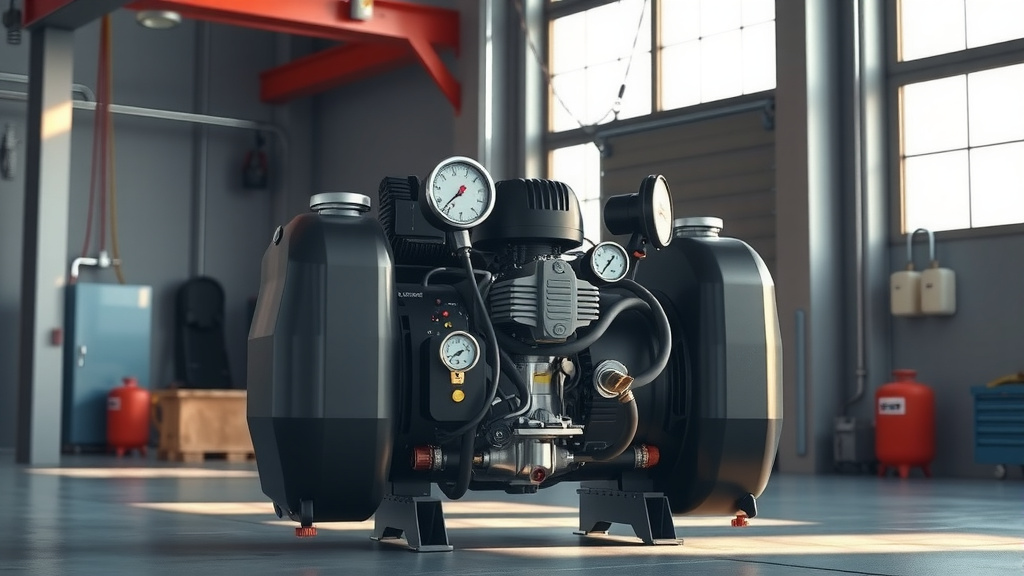
Air compressors use varying amounts of power, typically measured in watts, amps, or horsepower (HP), depending on their size, motor efficiency, and how hard they work. A small portable unit might draw a few hundred watts, while large industrial systems can consume tens of thousands of watts.
The exact power consumption of an air compressor is not fixed; it constantly changes based on factors like the compressor’s motor size, the pressure it needs to maintain, and how often it cycles on and off during operation.
- TL;DR: Air compressor power use varies widely by size and task.
- Smaller units for home tasks use less power, similar to a vacuum cleaner.
- Larger industrial compressors consume substantial electricity, like multiple heavy appliances.
- Key factors are horsepower, CFM (cubic feet per minute), and how often it runs.
- Regular maintenance and proper sizing help you save on electricity costs.
How Much Power Does A Air Compressor Use?
Understanding air compressor power usage means looking at several factors. It is not a one-size-fits-all answer, as machines differ greatly.
The power drawn by your air compressor is influenced by its size and intended use. Small units behave very differently from heavy-duty models.
Understanding Power Measurements
When you look at an air compressor, you will see a few terms related to its power. These terms help describe how much electricity it uses or how strong it is.
Learning these basics helps you understand what your compressor needs. It also helps you predict your energy bills.
Horsepower (HP)
Horsepower is often the first thing people notice on a compressor. It tells you about the motor’s strength.
More HP generally means more compressed air can be produced. This also translates to higher electricity usage.
Watts and Kilowatts (kW)
Watts measure the real power consumption of the compressor. A kilowatt is simply 1,000 watts.
You will often see power listed in watts for smaller units or kilowatts for larger ones. This is what your electric meter reads.
Amps and Volts
Amps (amperes) measure the electrical current flowing to the motor. Volts measure the electrical potential or “pressure.”
Multiply amps by volts to get an idea of total power (Watts = Amps x Volts for DC, or with a power factor for AC). We found that specific voltage requirements are very important for safe operation (Electrical Safety Foundation International).
Key Factors Influencing Power Consumption
Many things can make your air compressor use more or less power. Knowing these helps you manage your energy usage.
It is not just about the compressor itself, but also how you use it. Even small changes can sometimes make a difference.
Compressor Horsepower (HP)
As we mentioned, higher HP motors need more power to run. A 5 HP compressor uses much more electricity than a 1 HP model.
Match the HP to your actual needs. Do not buy a bigger unit than you really require.
Cubic Feet Per Minute (CFM)
CFM measures how much air your compressor can deliver. Higher CFM usually means a bigger motor, which uses more power.
Your tools determine the CFM you need. Always check your tool requirements first.
Tank Size and Pressure Settings
A larger tank means the compressor runs less often to refill. But it still takes power to fill that tank to a high pressure.
Setting your pressure higher means the compressor works harder. It needs more power to reach those higher PSI levels (pounds per square inch).
Duty Cycle
The duty cycle tells you how long the compressor can run continuously. A 50% duty cycle means it can run half the time.
Compressors that run constantly (higher duty cycle) use more power overall. This impacts your electricity bill directly.
Motor Type and Efficiency
Different motors have different efficiencies. Some motors convert electricity to mechanical power better than others.
Inverter or variable speed drive (VSD) compressors are often very efficient. They only use the power needed for the task at hand.
Estimating Your Compressor’s Power Use
You can get a rough idea of how much power your air compressor uses. This can help you anticipate energy costs.
Remember, these are estimates. Actual use might vary based on your specific conditions.
Here is a basic way to estimate:
Most electric motors are about 75-85% efficient. A 1 HP motor draws around 746 watts (since 1 HP = 746 watts).
So, a 1 HP compressor motor might actually draw about 900-1000 watts when running (746W / 0.8 efficiency ≈ 932W). Many experts say that including start-up current can make this even higher momentarily (Electrical Engineering Handbook).
Example Power Consumption Table
Here is a simple table showing typical power draw for different air compressor sizes:
| Compressor Size (HP) | Approximate Running Watts | Approximate Amps (120V) |
|---|---|---|
| 1-2 HP (Small portable) | 900 – 1800 W | 7.5 – 15 A |
| 3-5 HP (Mid-range shop) | 2700 – 4500 W | 22.5 – 37.5 A |
| 7.5-10 HP (Larger shop/light industrial) | 6750 – 9000 W | 56 – 75 A |
Please note: Amps for 240V systems would be half of the 120V values for the same wattage.
Tips for Reducing Air Compressor Power Consumption
Want to save some money on your electricity bill? There are practical steps you can take to make your compressor more efficient.
Even small changes in habits and maintenance can lead to noticeable savings over time. It is all about smart operation.
Regular Maintenance is Key
Keep your compressor in top shape. We found that regular checks prevent energy waste (Industry research).
Check for air leaks often. Even small leaks force the compressor to run more, using extra power unnecessarily.
Match Compressor Size to Your Needs
Do not use a huge compressor for tiny jobs. A smaller unit will use less power to do the same work if sized correctly.
Oversizing is a common mistake. It leads to higher initial costs and ongoing energy waste.
Optimize Pressure Settings
Do you really need 120 PSI? Often, tools work just fine at 90 PSI.
Lowering your pressure setting reduces the workload on the compressor. This directly cuts down on power usage.
Consider a VSD Compressor
Variable Speed Drive (VSD) compressors adjust their motor speed. They only produce the air you need at that moment.
Many guidelines point to VSD technology as highly energy-efficient for fluctuating air demands (Energy Star guidelines).
Energy-Saving Checklist
- Regularly check for and fix air leaks.
- Clean or replace air filters often.
- Drain condensation from the tank daily.
- Lower discharge pressure if possible.
- Turn off the compressor when not in use.
- Ensure adequate ventilation around the unit.
Conclusion
The power an air compressor uses is not a simple number. It depends heavily on its size, how it is used, and how well it is maintained.
From small portable units for quick tasks to large industrial systems, power consumption varies widely. Knowing these factors helps you choose wisely and operate efficiently.
By understanding horsepower, watts, and efficiency, you can make informed decisions. Smart usage means lower energy bills and a longer lifespan for your equipment.
What is the difference between starting watts and running watts for an air compressor?
Starting watts (or surge watts) are the higher amount of power an air compressor needs for a brief moment to get its motor going. Running watts are the consistent power level it draws once it is actively compressing air. The starting surge can be 2-3 times higher than the running wattage.
Can an air compressor run on a standard household outlet?
Many smaller air compressors (typically up to 2 HP) are designed to run on a standard 120V household outlet. Larger compressors, especially those 3 HP and above, often require a dedicated 240V circuit due to their higher amperage draw, similar to an electric dryer or oven.
Does the age of an air compressor affect its power consumption?
Yes, older air compressors can become less efficient over time. Worn components, increased friction, degraded seals, and reduced motor efficiency can all lead to an older unit needing more power to produce the same amount of compressed air compared to when it was new.
How does ambient temperature impact air compressor power usage?
Ambient temperature can influence power usage. In colder environments, the air is denser, potentially requiring less work to compress a given volume. However, extremely cold temperatures can also make motor oil thicker, increasing motor strain. In hot environments, the air is less dense, which might require more compression cycles to achieve the same air volume, thus increasing power use.
Is it more energy-efficient to let my air compressor run continuously or cycle on and off?
For most piston-style air compressors, it is generally more energy-efficient for them to cycle on and off as needed, rather than run continuously without demand. However, excessively frequent cycling can also be hard on the motor. Many experts agree that matching the compressor’s capacity to the demand is key for optimal efficiency (Compressed Air Challenge).
