
What Air Compressor For Painting?
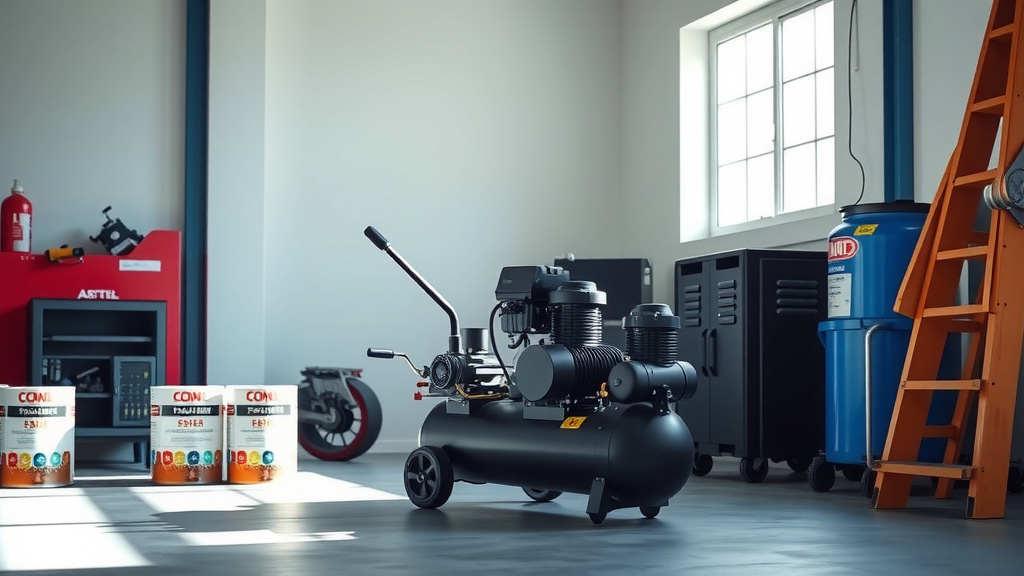
For most painting projects, you’ll want an air compressor with at least 10-15 CFM (cubic feet per minute) at 90 PSI (pounds per square inch) to adequately power common spray guns. This ensures a consistent and smooth paint application without pauses or uneven finishes, which is truly key for professional-looking results.
A high-quality air compressor for painting needs sufficient airflow (CFM) and pressure (PSI) to maintain a steady spray, particularly if you are using HVLP or conventional spray guns. Choosing the right air compressor can make a big difference in your paint job’s quality and your overall painting experience.
- Getting the right air compressor for painting means focusing on CFM and PSI ratings.
- HVLP spray guns often demand 10-15 CFM, making tank size and motor power vital.
- Oil-lubricated compressors typically run quieter and last longer, ideal for regular use.
- Always use air filters and water traps to keep your paint free from contaminants.
- Proper maintenance of your compressor is essential for consistent painting results and longevity.
What Air Compressor For Painting?
Selecting the ideal air compressor for painting means balancing its power with the demands of your spray gun. We found that a compressor with at least 10-15 CFM at 90 PSI is a solid starting point for many painting enthusiasts and professionals.
Why Does Air Compressor Power Matter for Painting?
Think of your air compressor as the heart of your painting system. It pushes the paint out smoothly. If it’s too weak, your paint job can look blotchy, like a bad watercolor painting.
The right power prevents sputtering and ensures a consistent, professional finish. It saves you frustration and rework.
Understanding CFM and PSI
These two terms are the most important for painters. CFM measures the volume of air your compressor can deliver. PSI tells you the pressure of that air. Both are critical for a steady spray.
Your spray gun has specific CFM and PSI needs. Matching these numbers is like finding the right key for a lock.
The “Continuous Airflow” Challenge
Painting requires a constant stream of air. If your compressor can’t keep up, it will constantly cycle on and off. This leads to inconsistent pressure and an uneven finish.
Many experts say that your compressor’s CFM should be higher than your spray gun’s required CFM. This gives you a safe margin (Power Tools Institute).
Matching Your Project to the Compressor
Different painting jobs have different demands. A small craft project won’t need the same muscle as painting a whole car.
Consider the scale of your typical work. This helps you avoid buying too little or too much machine.
Small Projects: Touch-ups, Crafts
For detail guns or airbrushes, you can get away with smaller, more portable compressors. A pancake or hot dog compressor might work well here.
Look for something around 2-5 CFM at 40 PSI. It’s enough for quick, light tasks.
Medium Projects: Furniture, Cabinets
When you’re painting furniture or kitchen cabinets, you need more sustained power. HVLP guns are common here and need more air.
A compressor providing 6-10 CFM at 90 PSI is often recommended. This range offers good balance.
Large Projects: Cars, Whole Rooms
Tackling an entire vehicle or a large room demands significant air. Production spray guns eat up a lot of CFM.
You’ll likely need a compressor in the 12-18 CFM at 90 PSI range, possibly with a larger tank. Research often connects these larger units with professional automotive work (Automotive Service Association).
Key Specs to Look For: CFM and PSI Explained
Don’t let these numbers intimidate you. Understanding them is simple and incredibly helpful for choosing the right compressor.
They are your compass in the world of air compressors.
CFM (Cubic Feet per Minute)
This tells you how much air your compressor moves. Higher CFM means more air delivery. Your spray gun will list its required CFM.
Always check your spray gun’s specific requirements at its operating PSI.
PSI (Pounds per Square Inch)
PSI indicates the force of the air. Painting requires a certain pressure to atomize the paint effectively. Too low, and it splatters; too high, and you waste paint.
Most spray guns work best around 40-90 PSI, depending on the type.
The “Rule of Thumb” for Painters
Many experienced painters recommend a compressor that can deliver at least 1.5 times the CFM your spray gun requires. This helps avoid compressor burnout and ensures continuous airflow.
For example, if your gun needs 7 CFM, aim for a compressor that offers 10-11 CFM.
Types of Air Compressors for Painting
Compressors come in various shapes and sizes, each with its own advantages. Let’s look at the common types you might encounter.
Choosing the right type depends on your workspace and how often you paint.
Pancake Compressors: Quick and Easy
These are small, portable, and great for quick jobs. They have a small, round tank on the bottom.
They often lack the CFM for serious painting but are good for airbrushing or small touch-ups.
Hot Dog/Twin Stack: More Capacity
Hot dog compressors have one elongated tank, while twin-stack models have two. They offer more air storage than pancake models.
These are a step up in power and portability, suitable for medium-sized projects.
Horizontal/Vertical Tank: Stationary Workhorses
These are larger, more powerful units designed for continuous use. They have substantial air tanks.
They are often preferred for workshops or garages where space is not an issue and consistent airflow is vital.
Oil-Lubricated vs. Oil-Free Compressors: A Painter’s Dilemma
This choice impacts noise, maintenance, and the purity of your air. It’s a common point of discussion among painters.
Both have their place, depending on your priorities.
Oil-Lubricated: Pros and Cons for Painting
These compressors are generally quieter and more durable. The oil helps them run cooler and extends their lifespan. We found they are often chosen for professional settings (Occupational Safety and Health Administration).
However, there’s a slight risk of oil passing into your air stream, which can contaminate paint. You’ll need good filters to prevent this.
Oil-Free: Pros and Cons for Painting
Oil-free compressors require less maintenance and pose no risk of oil contamination. They are also lighter and often cheaper.
The downside is they can be louder and might not last as long as their oil-lubricated counterparts. Their seals wear faster without lubrication.
Essential Compressor Accessories for a Great Finish
Think of these as the supporting cast for your main painting act. They truly improve your results.
- Air Filter/Water Trap: This is non-negotiable. It removes moisture and particulates that can ruin your paint job. Water in your paint causes fish eyes or bubbles.
- Air Hose: Choose a flexible, durable hose that’s long enough for your workspace. Too short is frustrating, too long can reduce pressure.
- Regulator: Allows you to adjust the air pressure precisely at the gun. Many experts say consistent pressure is vital (Graco literature).
- Quick-Connect Fittings: These make swapping tools fast and easy. They save time and frustration.
Choosing the Right Paint Gun for Your Compressor
Your spray gun and compressor are a team. They need to be compatible to perform their best. Picking the wrong gun can make even a good compressor seem ineffective.
Here’s a quick overview of common types.
HVLP (High Volume Low Pressure)
HVLP guns are known for their efficiency and reduced overspray. They use a high volume of air at lower pressure.
This means they require a compressor that can deliver a higher CFM, typically 10-15 CFM.
LVLP (Low Volume Low Pressure)
LVLP guns are a newer option, offering a good balance between HVLP and conventional guns. They use less air volume and pressure.
They are a good choice if your compressor has lower CFM output, often needing only 5-10 CFM.
Conventional Spray Guns
These are the traditional spray guns, known for their speed and fine atomization. They use high pressure and moderate air volume.
Conventional guns generally need 8-12 CFM and higher PSI, around 50-60 PSI at the gun.
Air Compressor Requirements for Different Paint Guns
This table gives you a quick reference for common setups. Remember, these are general guidelines.
Always check your specific gun’s manual for precise recommendations.
| Spray Gun Type | Recommended CFM @ 90 PSI | Typical Tank Size (Gallons) | Ideal Project Size |
|---|---|---|---|
| HVLP (High Volume Low Pressure) | 10-15+ CFM | 20-60+ Gallons | Medium to Large |
| LVLP (Low Volume Low Pressure) | 5-10 CFM | 10-30 Gallons | Small to Medium |
| Conventional (High Pressure) | 8-12 CFM | 20-40 Gallons | Medium to Large |
| Airbrush / Detail Gun | 1-3 CFM | 1-6 Gallons | Very Small / Detail |
Setting Up Your Compressor for Flawless Painting
Proper setup is just as important as choosing the right equipment. A well-prepared system delivers better results.
Follow these steps for a smoother painting experience.
- Placement Matters: Position your compressor in a well-ventilated area, away from the painting zone. This reduces noise and keeps contaminants out.
- Drain Moisture: Before starting, always drain any accumulated water from the tank. This prevents moisture from reaching your paint.
- Install Filters: Attach your air filter and water trap directly to the compressor output or closer to the spray gun.
- Set Regulator: Adjust your pressure regulator to the PSI recommended by your spray gun manufacturer.
- Check Connections: Ensure all hoses and fittings are securely connected to prevent air leaks.
Maintenance Tips for Long-Lasting Performance
A well-maintained compressor is a happy compressor. It will serve you reliably for many years. Neglecting it leads to issues.
These simple steps protect your investment.
Drain the Tank Regularly
Moisture builds up inside the tank as air compresses. This leads to rust and can ruin your tank. Drain it after every use.
Many guidelines point to daily draining for heavy users (Compressed Air and Gas Institute).
Check Air Filters
Both the compressor’s intake filter and your line filter need attention. A dirty intake filter makes the compressor work harder. A dirty line filter can’t trap contaminants.
Clean or replace them according to your manual’s schedule.
Conclusion
Choosing the right air compressor for painting doesn’t have to be a mystery. By focusing on CFM and PSI, understanding the different types of compressors and spray guns, and adding essential accessories, you can find the perfect match for your projects. Remember, a good compressor is an investment in achieving those smooth, professional finishes you truly desire. Take your time, do your research, and you’ll be ready to tackle any painting challenge with confidence.
What is the minimum CFM I need for painting a car?
For painting an entire car, especially with an HVLP gun, you’ll generally need a compressor capable of delivering at least 15-20 CFM at 90 PSI. This ensures continuous airflow for larger panels without waiting for the compressor to catch up, which is vital for a smooth finish.
Do I need an air dryer for painting with an air compressor?
While an air filter and water trap are essential, adding an air dryer (refrigerated or desiccant) provides the driest air possible, virtually eliminating moisture contamination. For critical, high-quality paint jobs like automotive finishes, many professionals consider an air dryer a very worthwhile addition.
Can a small 6-gallon pancake compressor be used for painting?
A small 6-gallon pancake compressor can be used for very small painting tasks, like airbrushing, touch-ups, or painting small craft items with a detail gun. However, its low CFM output (typically 2-4 CFM) means it won’t sustain larger spray guns for more than a few seconds, making it unsuitable for furniture or vehicle painting.
How does hose length affect my compressor’s performance for painting?
Excessively long or narrow air hoses can cause a pressure drop, reducing the effective PSI and CFM reaching your spray gun. For painting, it’s best to use the shortest practical hose length, typically 25-50 feet, with an adequate diameter (usually 3/8-inch inner diameter) to minimize airflow restrictions.
Is a two-stage air compressor better for painting than a single-stage?
A two-stage air compressor is generally superior for painting. It compresses air in two steps, leading to higher efficiency, cooler operation, and the ability to deliver more consistent CFM at higher pressures. This makes them ideal for demanding, continuous painting applications and professional workshops.
