
What Air Compressor Do I Need For Sandblasting?
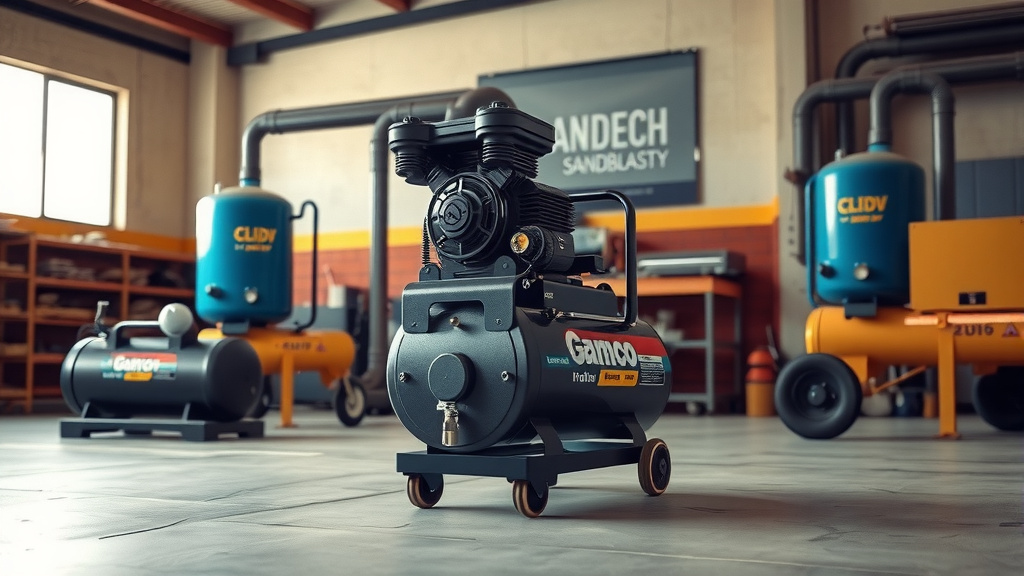
For sandblasting, you generally need an air compressor that delivers high CFM (Cubic Feet per Minute) and sufficient PSI (Pounds per Square Inch), typically 10-20 CFM at 90-100 PSI.
The ideal air compressor for sandblasting depends heavily on your blaster type, nozzle size, and the scale of your project, with larger projects requiring significantly more power.
Here’s a quick overview of what to look for:
- Match your compressor’s CFM and PSI to your sandblaster’s needs.
- Larger sandblasting jobs require higher CFM, often 20 CFM or more.
- A bigger air tank (60-80 gallons) means longer, uninterrupted blasting.
- Electric compressors are great for shops; gas models offer outdoor flexibility.
- Always factor in air filtration and proper safety equipment for your protection.
What Air Compressor Do I Need For Sandblasting?
You need an air compressor with high CFM and consistent pressure output that directly matches your sandblaster’s requirements.
The right choice ensures efficient work and prevents frustrating pauses during your project.
Understanding CFM and PSI: Your Power Duo
When selecting an air compressor for sandblasting, CFM (Cubic Feet per Minute) and PSI (Pounds per Square Inch) are your most important numbers.
CFM dictates how much air your compressor can produce, while PSI measures the force of that air.
Sandblasting tools are air-hungry. Your compressor must supply enough CFM at the required PSI to operate your blaster continuously.
CFM: The Key to Continuous Blasting
Think of CFM as the breathing capacity of your compressor. A higher CFM means the compressor can keep up with the demands of your sandblaster.
If your compressor’s CFM is too low, it will run constantly and still not provide enough air, leading to inconsistent blasting and longer project times.
Most small to medium sandblasters need around 10-20 CFM at 90 PSI. Larger industrial blasters can require 30 CFM or much more.
PSI: The Blasting Force
PSI is the force that propels the abrasive media. Most sandblasting applications require 90 to 100 PSI for effective cleaning or etching.
While PSI is important, modern compressors typically offer enough pressure. The real challenge is usually meeting the CFM demand at that pressure.
Tank Size Matters for Sandblasting
The air tank, often measured in gallons, acts as a reserve. A larger tank provides a buffer, allowing your compressor to cycle less often and deliver a more consistent air supply.
For sandblasting, especially with a direct pressure pot, a larger tank is always better. We found that 60-80 gallons is a good starting point for sustained hobbyist or light commercial work.
Smaller tanks might work for quick, intermittent blasts but will struggle with continuous operation, causing frequent compressor stops and starts.
Types of Air Compressors for Sandblasting
You’ll primarily encounter two main types of air compressors suitable for sandblasting:
- Reciprocating (Piston) Compressors: These are common and usually more affordable. They work by using pistons to compress air into a tank. They are suitable for many smaller to medium sandblasting tasks.
- Rotary Screw Compressors: These units provide a continuous flow of air and are built for heavy, sustained use. They are generally more expensive but are ideal for industrial or continuous sandblasting operations where downtime is not an option.
Piston Compressors: Your Workhorse Option
Many experts say piston compressors are a solid choice for the average user. They come in single-stage and two-stage versions.
Two-stage piston compressors are generally preferred for sandblasting. They compress air twice, delivering higher pressure and more CFM compared to single-stage models of similar size.
Rotary Screw Compressors: For the Serious Blaster
If you’re running a sandblasting business or tackling large, continuous projects, research often connects rotary screw compressors with superior efficiency (U.S. Department of Energy).
They are quieter and have a longer duty cycle, meaning they can run continuously without overheating, which is perfect for industrial demands.
Electric vs. Gas-Powered Compressors
Your power source affects where and how you can sandblast.
Electric Air Compressors
Electric compressors are great for indoor use, like in your garage or workshop. They are generally quieter and produce no exhaust fumes.
You’ll need a suitable electrical outlet. Smaller units might run on 120V, but the powerful compressors needed for sandblasting often require 240V power.
Gas-Powered Air Compressors
Gas compressors offer fantastic portability. If you need to sandblast outdoors or at a job site without readily available electricity, a gas-powered unit is your friend.
Keep in mind they are louder and produce exhaust fumes, so proper ventilation is key (OSHA guidelines).
Matching Your Compressor to Your Blaster Type
The type of sandblaster you use also influences your compressor needs.
Siphon Feed Blasters
These blasters are simpler and often cheaper, pulling abrasive from a hopper below. They typically require less CFM, perhaps 8-12 CFM at 90 PSI.
They are suitable for smaller projects like cleaning rusted tools or small car parts.
Pressure Pot Blasters
Pressure pot blasters push abrasive out under continuous pressure, making them faster and more efficient. They demand more air, generally 15-25 CFM at 90-100 PSI.
These are the go-to for larger projects, such as car bodies, boat hulls, or extensive metal restoration.
Blast Cabinet Systems
A blast cabinet encloses the blasting process, containing the abrasive and dust. The compressor requirements depend on the cabinet’s nozzle size, often falling into the 10-20 CFM range.
They are ideal for repetitive small-part blasting in a contained, dust-free environment.
Nozzle Size: A Hidden Air Gobbler
Did you know your sandblaster’s nozzle size dramatically affects CFM requirements? A larger nozzle allows more abrasive and air to pass through, speeding up the job but demanding much more from your compressor.
Many users overlook this, but we found that increasing nozzle size by just one increment can double your CFM needs.
Always check your nozzle’s CFM rating at your desired PSI before choosing a compressor.
Essential Accessories for Sandblasting
A powerful compressor is just one piece of the puzzle. You’ll also need:
- Air Dryer/Filter: Sandblasting requires dry air. Moisture causes clogs and poor performance. A good air dryer is non-negotiable.
- Hoses: Use appropriately sized, heavy-duty air hoses. Too small a hose will restrict airflow and reduce efficiency.
- Safety Gear: Always wear a blast hood, respirator, gloves, and protective clothing. Your safety is paramount (National Institute for Occupational Safety and Health).
Compressor Comparison for Sandblasting
Here’s a quick guide to help visualize different compressor types for common sandblasting tasks:
| Application | Recommended Compressor Type | Typical CFM @ 90 PSI | Tank Size (Gallons) |
|---|---|---|---|
| Small Parts (Siphon Blaster) | Single-Stage Piston | 8-12 CFM | 30-60 Gallons |
| Medium Projects (Pressure Pot) | Two-Stage Piston | 15-25 CFM | 60-80 Gallons |
| Large, Continuous Jobs | Rotary Screw | 30+ CFM | 80+ Gallons (or Tankless) |
| Outdoor/Remote Sites | Gas-Powered Piston | 15-30 CFM | 60-80 Gallons |
Checklist for Choosing Your Air Compressor
Before you commit, run through this quick checklist:
- Does your compressor’s CFM meet your sandblaster’s nozzle requirements?
- Does it deliver consistent 90-100 PSI?
- Is the tank size adequate for your project duration?
- Is the power source (electric/gas) right for your workspace?
- Have you budgeted for essential accessories like air dryers and safety gear?
- Is the compressor duty cycle suitable for your expected usage?
Conclusion
Choosing the right air compressor for sandblasting doesn’t have to be complicated. Focus on matching your compressor’s CFM and PSI output to your specific sandblasting equipment and project needs.
A larger tank and a two-stage piston or rotary screw compressor will generally provide the best experience for most serious sandblasting tasks.
Always prioritize safety and invest in an air dryer to ensure dry, efficient blasting every time. With the right setup, you’ll tackle your projects with confidence and achieve great results.
Frequently Asked Questions
What CFM do I need for a small sandblaster?
For a small, siphon-feed sandblaster or light tasks, you will typically need an air compressor capable of delivering at least 8-12 CFM at 90 PSI. Always check your specific blaster’s requirements.
Can I use a pancake compressor for sandblasting?
Generally, no. Pancake compressors have very small tanks and low CFM output, making them unsuitable for the continuous airflow required for effective sandblasting. They will run constantly and still struggle to keep up.
How important is an air dryer for sandblasting?
An air dryer is extremely important. Moisture in your air lines will cause abrasive media to clump and clog your sandblaster, leading to frustrating interruptions and poor blasting results. It’s a non-negotiable accessory.
What PSI is ideal for removing rust with a sandblaster?
For effective rust removal, most experts agree that a pressure between 90-100 PSI is ideal. This range provides enough force to strip away rust and old paint efficiently without damaging the underlying material.
Should I get an oil-lubricated or oil-free compressor for sandblasting?
While both can work, oil-lubricated compressors are generally more durable and quieter for heavy-duty applications like sandblasting. However, if you choose an oil-lubricated model, ensure you have excellent air filtration to prevent oil from contaminating your abrasive media.
