
How To Piggyback Air Compressors?
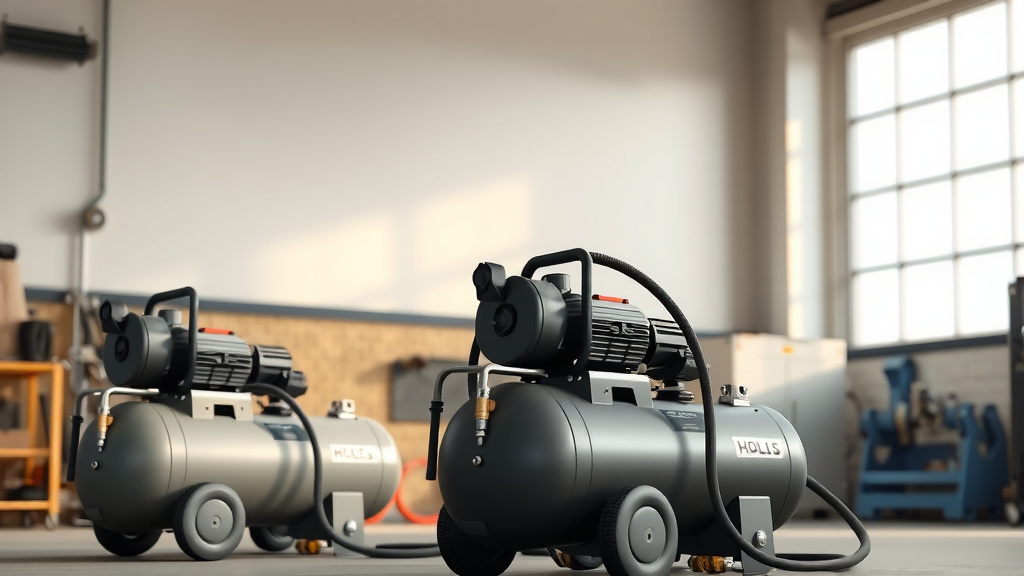
Piggybacking air compressors involves connecting two or more units in parallel to effectively combine their air storage capacity and increase overall output for your workspace.
This setup allows you to meet higher air demands or provide redundancy, often by plumbing their output tanks together using proper fittings and check valves.
- To piggyback air compressors, you connect them in parallel to boost total air volume and continuous supply.
- You’ll need essential items like check valves and a manifold to manage airflow and pressure safely.
- Always ensure your compressors are compatible and follow strict safety protocols during setup.
- This method helps you achieve greater efficiency and sustained air pressure for demanding tasks.
- Careful planning and proper installation are key to avoiding operational issues and ensuring system longevity.
How To Piggyback Air Compressors?
Piggybacking air compressors means you link them together, typically in parallel, so they share a common air supply, allowing for greater air volume and consistent pressure delivery. This method helps your system handle higher demand without struggling.
Why Consider Piggybacking Your Compressors?
Sometimes, a single air compressor just doesn’t cut it, right? Maybe your tools demand more continuous airflow, or you need a larger reserve for sudden bursts of activity. Piggybacking is a smart way to get that extra muscle.
This approach offers several perks. You gain increased air capacity, which translates to longer run times for air-hungry tools. It can also provide a backup; if one compressor goes down, the other can often keep you working (Industry Standards).
It’s often more economical than buying one giant, expensive compressor. Plus, you can run multiple smaller compressors, giving you flexibility and efficiency.
Understanding the Core Concept
When we talk about piggybacking, we’re essentially talking about joining two or more air compressor tanks. You’re not just stacking them; you’re creating a shared reservoir. The goal is to work smarter, not harder.
Imagine two garden hoses feeding into one bigger hose; that’s the basic idea. Each compressor fills its own tank, and then these tanks are linked to create one larger, virtual tank. This setup helps maintain steady pressure.
Parallel Connection for Increased Capacity
For most piggybacking setups, you’ll use a parallel connection. This means each compressor’s output goes into a common line or manifold. It’s like having multiple roads leading to the same destination.
A parallel setup ensures both compressors contribute to the overall air supply, effectively doubling or tripling your available volume. This is how you achieve greater sustained airflow for your operations.
Gathering Your Essential Tools and Components
Before you start, you’ll need the right gear. Think of it like baking; you can’t make a cake without all the ingredients. Getting everything ready beforehand will save you headaches later.
You’ll need a couple of good check valves, a sturdy air manifold or tee-fittings, high-pressure air hoses, and appropriate thread sealant. Make sure all components are rated for your compressors’ maximum pressure (Safety Guidelines).
Prioritizing Safety in Your Setup
Safety isn’t just a suggestion; it’s a rule. Working with compressed air means high pressure, and mistakes can be dangerous. Always make sure both compressors are unplugged and depressurized before you touch any fittings.
Wear appropriate safety glasses, and double-check all connections. A leak might seem minor, but it can lead to bigger problems. Your personal safety and the longevity of your equipment depend on it.
A Practical Guide: Connecting Your Air Compressors
Ready to get your hands dirty? This step-by-step guide will walk you through the process. It’s simpler than you might think, but each step needs careful attention to detail.
Preparing Each Compressor
First, place your compressors in their desired locations. Ensure they have adequate ventilation and are on a stable, level surface. You want them to be close enough for easy connection but with enough space for maintenance.
Drain any accumulated condensation from their tanks. Check that all gauges and controls are working correctly. A little prep work goes a long way in ensuring a smooth, efficient setup.
Integrating Check Valves and Manifolds
Install a check valve on the output line of each compressor, just before it connects to the manifold. These valves are crucial; they prevent air from flowing back into a compressor that might be off or operating at lower pressure. Think of them as one-way gates for air.
Connect your manifold or tee-fittings to a central point where the output from both check valves will meet. This manifold will be your shared air highway to your tools.
Finalizing Connections and Testing
Use high-pressure air hoses to connect the output of each check valve to your manifold. Apply thread sealant to all fittings to prevent leaks. Tighten everything securely, but don’t overtighten and risk stripping threads. It’s about snug, not brutal force.
Once connected, turn on one compressor and let it build pressure. Listen for leaks. Then turn it off, and turn on the second. Repeat the leak check. Finally, run both together and ensure pressure builds correctly and consistently. This helps you confirm a sealed and functional system.
| Feature | Single Compressor | Piggybacked Compressors |
|---|---|---|
| Air Capacity | Limited to one tank | Combined tank volume |
| Run Time for Tools | Shorter, frequent cycling | Longer, less frequent cycling |
| Redundancy | None | Partial (one can run if other fails) |
| Initial Cost | Potentially lower for basic needs | Potentially higher than one small unit, lower than one giant unit |
| Maintenance | On one unit | On multiple units (but smaller components) |
Important Operational Considerations
A successful piggyback setup isn’t just about plumbing. You need to think about how they operate together. It’s about creating a harmonious air delivery system.
Managing Electrical Load
Remember, you’re running two motors now, not one. Make sure your electrical circuit can handle the combined load. Overloading a circuit can trip breakers or even cause electrical fires. Many experts say to use dedicated circuits for each compressor if possible.
Consult an electrician if you’re unsure about your wiring capacity. It’s always better to be safe than sorry when it comes to electricity. This precaution ensures your shop remains safe and powered.
Synchronizing Pressure Switches
Ideally, both compressors should have similar cut-in and cut-out pressure settings. This prevents one compressor from doing all the work while the other sits idle. Many manufacturers recommend setting them within a few PSI of each other.
Some users even install a single master pressure switch to control both compressors, though this requires more advanced wiring. The goal is to have them work as a team, not individuals (Compressor Manufacturers’ Guidelines).
Before You Power Up:
- Confirm all hose connections are tight and secure.
- Check that check valves are installed in the correct direction.
- Verify both compressor power cables are in good condition.
- Ensure adequate ventilation around both units.
- Double-check that drain valves are closed after draining.
- Have a pressure gauge ready for initial system monitoring.
Troubleshooting Common Piggybacking Issues
Even with careful setup, you might run into small problems. One common issue is uneven pressure build-up. This can often be traced back to mismatched pressure switch settings or a faulty check valve.
Another issue might be unexpected air leaks, often at fittings. A simple spray bottle with soapy water can help you pinpoint these culprits. Addressing these promptly will ensure your system runs smoothly.
Conclusion
Piggybacking air compressors is a fantastic way to boost your air supply without investing in a single, larger, and often more expensive unit. By connecting them in parallel with the right components and attention to detail, you create a more robust and reliable system. Remember to prioritize safety, match your compressor settings, and perform thorough leak checks. With this guidance, you’re well-equipped to enhance your air power and keep your projects running efficiently.
Can I piggyback two air compressors of different sizes?
Yes, you can piggyback compressors of different sizes, but it’s often best if their pressure ratings are similar. The larger compressor will typically carry more of the load, filling its tank and contributing to the shared manifold. Ensure both have proper check valves to prevent backflow and that the smaller unit isn’t constantly running to keep up.
Do I need a special manifold for piggybacking?
You don’t necessarily need a “special” manifold, but you do need a suitable pipe or fitting that can handle the combined airflow and pressure of both compressors. A heavy-duty brass or galvanized steel tee-fitting or a short section of pipe with multiple ports often works well. The critical part is its ability to withstand pressure and provide secure connections.
How do I prevent one compressor from overworking when piggybacked?
To prevent one compressor from overworking, you should try to synchronize their pressure switches. Adjust the cut-in and cut-out pressures so they are very close, allowing both compressors to cycle on and off together or alternate more evenly. This balance helps distribute the workload and extends the life of both units.
Is it better to use two smaller compressors or one large one?
The choice between two smaller compressors or one large one depends on your specific needs and budget. Two smaller ones offer redundancy (if one fails, you still have some air) and potentially more flexible placement. A single large compressor might be simpler to maintain and operate if space isn’t an issue. Many experts agree that two smaller units provide a good balance of cost and flexibility for many workshops.
What kind of air hose should I use for connecting piggybacked compressors?
You should use high-pressure, industrial-grade air hose or rigid piping (like galvanized steel or copper) that is rated for at least the maximum pressure of your compressors. Avoid standard, thin-walled hoses not designed for continuous high pressure, as they can fail, creating a safety hazard. Always choose hoses with proper fittings that match your compressor outputs and manifold.
