
How To Pull A Vacuum With An Air Compressor?
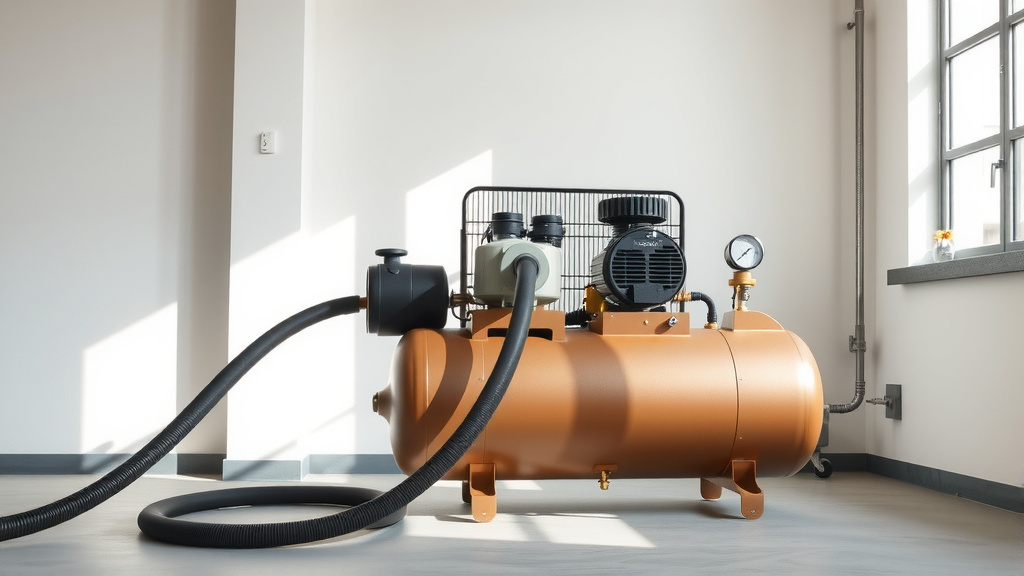
You can pull a vacuum with an air compressor by using a specialized venturi-style vacuum generator or vacuum pump attachment that converts compressed air into a vacuum. This clever accessory creates a low-pressure area, effectively drawing air and moisture out of a sealed system.
This process is often used for tasks like evacuating automotive air conditioning systems or other closed circuits to remove air and moisture before refilling them with fluids or refrigerants.
- You can create a vacuum using a standard air compressor by adding a venturi vacuum generator.
- This attachment uses compressed air to create a low-pressure zone, sucking air out of your system.
- The process is ideal for tasks like preparing AC lines or brake systems for new fluids.
- Always ensure a tight seal and monitor your vacuum gauge for effective results.
- Safety gear, like eye protection, is a must whenever you are working with compressed air.
How To Pull A Vacuum With An Air Compressor?
You can effectively pull a vacuum using your existing air compressor by adding a simple but ingenious accessory called a venturi vacuum pump or vacuum generator. This device converts your compressor’s high-pressure air into a powerful suction, perfect for various tasks.
Why Would You Need a Vacuum?
Pulling a vacuum means removing all air and moisture from a sealed system. This step is critically important in many applications. For instance, in automotive air conditioning, moisture can freeze and create blockages, while air can interfere with cooling efficiency (EPA recommendations often highlight this).
Another common use is preparing hydraulic lines for new fluid or even in some DIY woodworking applications for clamping. When you remove air and moisture, you ensure the system operates as intended, free from contamination.
The Basic Principle: How Does It Work?
The magic behind using an air compressor for vacuum lies in the venturi effect. Imagine air rushing through a narrow constriction. As the air speeds up, its pressure drops significantly, creating a vacuum. This is exactly what a venturi vacuum generator does.
Your air compressor supplies the high-pressure air. The venturi attachment then directs this air through a precisely designed nozzle, causing the pressure drop and generating suction. It’s a clever way to turn pressure into pull.
Understanding Vacuum Generators
These devices are often small, affordable, and attach directly to your air compressor hose. They have an inlet for compressed air and an outlet for the vacuum line, plus an exhaust for the air that has passed through. Many experts suggest they are surprisingly effective for their size.
Tools You’ll Need for the Job
Before you begin, gather your supplies. Having everything ready saves time and ensures a smooth process. You’ll want to double-check each item (Many professional guides often advise this initial preparation).
- Venturi vacuum pump attachment
- Appropriate hoses for your system (e.g., AC manifold gauge set hoses)
- Vacuum gauge (often part of a manifold set)
- Your air compressor
- Wrenches or pliers for connections
- Safety glasses and gloves
- Thread sealant tape (PTFE tape) for airtight connections
Essential Safety Precautions
Working with compressed air always requires care. Always wear eye protection to shield your eyes from debris or sudden bursts. Gloves can protect your hands. Make sure all connections are secure to prevent hoses from whipping around under pressure (Workplace safety guidelines consistently recommend this).
Step-by-Step Guide to Pulling a Vacuum
Let’s walk through the process together. It’s not complicated, but precision is key. Think of it like a chef following a recipe; each step matters.
Setting Up Your Equipment
First, attach the venturi vacuum pump to your air compressor’s air hose. Use thread sealant tape on all threaded fittings to ensure an airtight seal. Then, connect the vacuum pump’s suction port to the system you want to evacuate, usually via a manifold gauge set.
Ensure all connections are snug but don’t overtighten them. A good seal is the difference between success and frustration here.
The Vacuuming Process
With everything connected, open the valve on your manifold gauge set to the system you’re evacuating. Now, turn on your air compressor and let it build up pressure. Then, open the air valve to the venturi vacuum pump. You’ll hear air exhausting from the pump.
Watch your vacuum gauge. It should start to drop into the vacuum range, indicating air is being pulled out. This part takes patience, so don’t rush it.
Checking for Leaks
Once your gauge reaches the desired vacuum level, shut off the air to the venturi pump and close the system valve on your manifold. Turn off your compressor. Now, monitor the vacuum gauge for at least 15-20 minutes. If the needle holds steady, your system is leak-free (Research often highlights the importance of this leak test).
If the gauge rises, you have a leak. You’ll need to find and fix it before continuing. This often means checking all your connections again or inspecting the system itself.
When the Vacuum is Complete
After a successful leak test, slowly close the valve on your system that connects to the vacuum gauge. Then, you can safely disconnect your hoses. Your system is now evacuated and ready for the next step, like recharging with refrigerant or filling with fluid.
Common Mistakes to Avoid
Even seasoned pros make mistakes sometimes, but you can avoid them! One common pitfall is not using thread sealant tape, which leads to frustrating false leaks. Another is rushing the vacuum process itself; a deep vacuum takes time.
Forgetting safety glasses is also a big no-no. Lastly, ensure your air compressor can handle the continuous operation required. A weak compressor will struggle and prolong the process unnecessarily.
Is Your Compressor Up to the Task?
While most home compressors can run a venturi pump, performance varies. The key factors are CFM (Cubic Feet per Minute) and tank size. A higher CFM rating means the compressor can keep up better, and a larger tank provides a more consistent air supply without cycling too frequently (Industry benchmarks often specify these ratings).
Air Compressor Specifications for Vacuum Use
Here’s a quick guide to what works best:
| Compressor Type | Minimum CFM @ 90 PSI | Tank Size Recommendation |
|---|---|---|
| Small Portable | 2-3 CFM | 2-6 Gallons (for short tasks) |
| Medium Workshop | 4-6 CFM | 10-20 Gallons (good for most uses) |
| Large Industrial | 7+ CFM | 30+ Gallons (for continuous use) |
Understanding Vacuum Levels
When you pull a vacuum, you’re aiming for a specific negative pressure. This is often measured in microns of mercury, especially for sensitive systems like AC units. A deeper vacuum (lower micron number) indicates less moisture and contaminants remain.
For many basic applications, simply getting the gauge deep into the negative PSI or inches of mercury range is sufficient. However, for refrigerants, aiming for 500 microns or less is often recommended by manufacturers (SAE standards confirm this).
How Long Does it Take?
The time it takes to pull a vacuum depends on several factors: the size of the system, the amount of moisture present, and the efficiency of your vacuum pump and compressor. A small car AC system might take 30-60 minutes, while a larger industrial system could take several hours. Remember, patience is a virtue here.
Conclusion
Using your air compressor to pull a vacuum is a smart and economical solution for many applications, from maintaining your car’s AC to preparing fluid lines. By understanding the simple principles of the venturi effect and following our step-by-step guide, you can achieve professional results right at home or in your workshop. Remember to prioritize safety, ensure airtight connections, and give the process enough time to work its magic. With the right tools and a little care, you’ll be pulling perfect vacuums in no time!
How deep of a vacuum can a venturi pump achieve?
A typical venturi vacuum pump, when paired with a robust air compressor, can achieve a vacuum of around 28-29 inches of mercury (Hg), which translates to approximately 25,000 to 50,000 microns. While this is sufficient for many tasks like purging brake lines, it might not be deep enough for highly sensitive applications like advanced HVAC evacuations that require much lower micron levels.
Can I use my air compressor’s vacuum feature directly without an attachment?
Most standard air compressors are designed to produce positive pressure (push air out), not to create a vacuum (suck air in) directly. While some specialized industrial compressors might have a vacuum port, your typical garage air compressor will require a venturi vacuum generator attachment to convert its compressed air output into a vacuum. You cannot simply reverse the air flow without this type of accessory.
Is a venturi vacuum pump as good as a dedicated electric vacuum pump?
Venturi vacuum pumps are excellent for occasional use and lighter tasks due to their affordability and simplicity. However, a dedicated electric vacuum pump, especially a two-stage model, generally pulls a much deeper vacuum (often below 500 microns) faster and more efficiently. For professional HVAC work or systems requiring very deep vacuum levels, a dedicated electric pump is typically preferred (HVAC industry standards confirm this).
What if my vacuum gauge needle fluctuates or doesn’t hold steady?
If your vacuum gauge fluctuates or doesn’t hold steady after you’ve isolated the system, it almost always indicates a leak. You need to meticulously check all connections, hoses, and the system itself for any breaches. Common culprits include loose fittings, worn O-rings, or damaged hoses. Applying a leak detector spray to connections with the system under slight pressure might help identify the source.
Do venturi vacuum pumps consume a lot of compressed air?
Yes, venturi vacuum pumps can be quite air-hungry. They require a continuous supply of compressed air to maintain the venturi effect and pull a vacuum. This means your air compressor will run frequently, or even continuously, during the process. Ensure your compressor has enough CFM output and tank capacity to handle the demand without overheating or cycling excessively, especially for longer vacuum tasks.
