
What Air Compressor Do I Need For Air Tools?
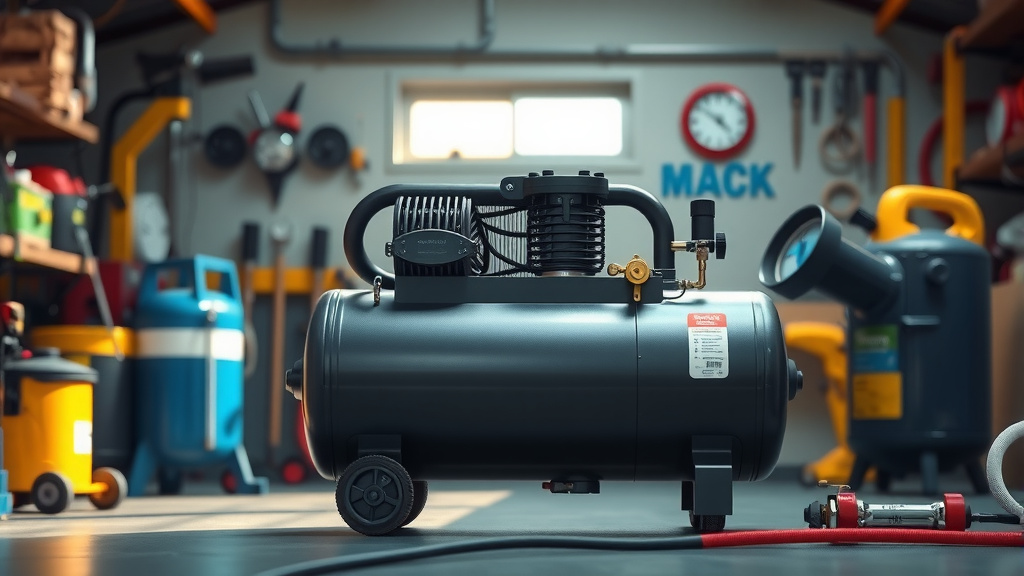
For most common air tools like impact wrenches or nail guns, you’ll need an air compressor that delivers at least 4-5 CFM at 90 PSI.
This ensures your tools receive a consistent airflow to operate efficiently and complete your projects without frustrating delays.
- Choose your compressor based on your air tools’ CFM and PSI needs, not just tank size.
- Prioritize continuous airflow (CFM) for optimal tool performance, especially for demanding tasks.
- A larger tank offers more reserve air, helping with high-demand tools and reducing compressor run time.
- Consider portability and noise levels, as these greatly impact your working environment.
- Always match or exceed your tool’s air requirements for the best results and tool longevity.
Thinking about upgrading your garage or workshop with some powerful air tools? That’s exciting! But hold on a second. Before you dive in, have you considered what powers those handy gadgets? That’s right, the air compressor!
Picking the right air compressor is like choosing the right engine for your car. Get it wrong, and your tools won’t perform their best. They might even stop working mid-task, which is super annoying. We’re here to help you get it right.
What Air Compressor Do I Need For Air Tools?
You need an air compressor that meets or exceeds the CFM and PSI requirements of your most demanding air tool. Always check the tool’s specifications for optimal performance.
Imagine trying to run a marathon on a small glass of water. Your tools would feel the same way if your compressor can’t keep up! The goal is a steady flow of air under pressure. This steady flow is measured mainly by two numbers: CFM and PSI.
Understanding CFM: The Breath of Your Tools
CFM stands for Cubic Feet per Minute. Think of it as the volume of air your compressor can deliver each minute. This is arguably the most important number when choosing a compressor for air tools (U.S. Department of Energy).
Different tools use different amounts of air. A small brad nailer sips air, while a heavy-duty impact wrench gulps it down. If your compressor’s CFM is too low, your tool will run out of air quickly and might not even finish the job.
Understanding PSI: The Push Behind the Power
PSI means Pounds per Square Inch. This is the air pressure. Most air tools operate around 90 PSI. The compressor needs to be able to build and maintain this pressure to make your tools work.
Your compressor will usually have a maximum PSI. It also has a “cut-in” and “cut-out” pressure. It turns on at the cut-in (e.g., 90 PSI) and off at the cut-out (e.g., 120 PSI). This ensures consistent pressure for your tasks.
Tank Size: Not Just for Bragging Rights
The air tank stores compressed air. A bigger tank doesn’t make your compressor produce more air (that’s CFM!). However, it means the compressor runs less often, as it has more reserve air. This is great for tools that demand a lot of air in short bursts, like sandblasters.
A smaller tank is fine for intermittent use, such as inflating tires or using a small nail gun. For continuous use, a larger tank offers convenience and reduces motor wear.
Duty Cycle: How Long Can it Work?
Some industrial compressors can run continuously. Most home or workshop compressors have a duty cycle, meaning they need to rest to cool down. If a compressor has a 50% duty cycle, it means it can run for 30 minutes in an hour before needing a break.
Pushing a compressor beyond its duty cycle can cause it to overheat and fail. Always give your machine time to cool down if you’re doing demanding work.
Matching Your Compressor to Your Air Tool: A Practical Guide
This is where the rubber meets the road. You need to identify your most demanding tool. Look for its CFM at 90 PSI requirement. Some tools list “average CFM” or “continuous CFM.” Always use the higher number if given a range.
- Impact Wrenches & Ratchets: Often need 4-6 CFM at 90 PSI.
- Nail Guns & Staplers: Generally lower, around 0.5-2 CFM at 90 PSI.
- Paint Spray Guns: Can vary widely, from 5 CFM for touch-up guns to 15+ CFM for professional models.
- Die Grinders: Often high demand, around 6-10 CFM at 90 PSI.
- Sanders: Similar to grinders, 5-8 CFM at 90 PSI.
If you plan to use multiple tools at once, you’ll need to add their CFM requirements together. Then, add a safety buffer of 20-30% to that total. It’s always better to have a bit more power than not enough!
Common Compressor Types: Which One is Right for You?
You’ll encounter a few main types of air compressors, each with its own advantages.
Pancake Compressors
These are small, portable, and often found in DIY tool kits. They’re great for light tasks like framing nailers or inflating tires. Their small tank means they cycle frequently, but they’re easy to move around.
Hot Dog Compressors
Slightly larger than pancake models, often with a horizontal tank. They offer a bit more capacity and CFM, suitable for more demanding home projects. They are still quite portable.
Twin-Stack Compressors
These usually have two smaller tanks stacked together, providing more air storage without being overly bulky. They strike a good balance between portability and power for serious DIYers.
Vertical Tank Compressors
Common in workshops, these take up less floor space while offering larger tanks and higher CFM. They’re less portable but deliver serious power for continuous use.
Two-Stage Compressors
These are more industrial, compressing air twice for higher efficiency and consistent pressure. They’re typically more expensive and louder, but they are built for heavy, continuous work (U.S. Department of Energy).
Here’s a quick overview to help you compare:
| Compressor Type | Typical CFM (at 90 PSI) | Tank Size Range | Best For |
|---|---|---|---|
| Pancake/Hot Dog | 1-4 CFM | 1-6 Gallons | Nail guns, inflators, light tasks |
| Twin-Stack | 3-6 CFM | 4-10 Gallons | Impact wrenches, small paint guns |
| Vertical Tank | 5-10+ CFM | 10-30 Gallons | Grinders, sanders, continuous use |
| Two-Stage | 10-20+ CFM | 30-80+ Gallons | Professional auto shops, industrial use |
Noise Levels: Keep Your Ears Happy
Air compressors can be loud. Really loud. If you’re working in a garage connected to your home, or have neighbors close by, noise can be a big concern. Many modern compressors are designed to be quieter, often advertised as “silent” or “low-noise.”
Look for models rated under 70 dB (decibels) if noise is a priority. For reference, a normal conversation is around 60 dB. Your hearing matters!
Oil-Lubricated vs. Oil-Free: The Internal Debate
This refers to how the pump is lubricated. Oil-lubricated compressors generally last longer, run quieter, and are more durable. They require regular oil changes, much like a car engine.
Oil-free compressors are lower maintenance and lighter. They’re also typically louder and might not last as long as their oiled counterparts. But if you hate maintenance, they are a solid option.
Power Source: Electric or Gas?
Most home and workshop compressors are electric. They are cleaner, quieter, and you just plug them in. Gas-powered compressors are for outdoor or remote jobs where electricity isn’t available. They’re much louder, require fuel, and emit fumes.
For most personal use, an electric compressor is the way to go. Just ensure your electrical circuit can handle the amperage!
Your Air Compressor Checklist: Making the Smart Choice
Ready to make a decision? Use this quick checklist:
- Identify the CFM and PSI for your most demanding air tool.
- Add a 20-30% buffer to the required CFM for future proofing.
- Consider tank size for desired run time and portability.
- Think about noise levels and your working environment.
- Decide between oil-lubricated for longevity or oil-free for low maintenance.
- Ensure your power supply can handle the compressor’s needs.
Conclusion
Choosing the right air compressor for your air tools doesn’t have to be a guessing game. By focusing on your tools’ CFM and PSI requirements, understanding tank size, and considering practical factors like noise and maintenance, you can make an informed decision. Don’t undersize your compressor; a little extra power now can save you a lot of frustration later. Happy wrenching, nailing, or painting!
What if my air tools require different CFMs?
If you have a variety of air tools, we found that the best approach is to select a compressor that meets the highest CFM requirement of any single tool you plan to use. This way, you ensure all your tools operate effectively, even the most air-hungry ones.
Can a small tank compressor run a high CFM tool?
A small tank compressor can technically run a high CFM tool for a very short burst. However, it will constantly run to try and keep up, leading to frequent cycling, overheating, and potentially damaging the compressor over time. It’s like trying to fill a swimming pool with a garden hose; it might work eventually, but it’s not efficient.
How do I know if my compressor is powerful enough?
The easiest way to tell is if your air tool loses power or stops working mid-task, despite the compressor running. If the compressor is constantly running without catching up to your tool’s air demand, it’s likely undersized. Check the tool’s CFM at 90 PSI requirement against your compressor’s output.
Is it better to have more PSI or more CFM?
Both are important, but for air tools, CFM is generally more critical than maximum PSI, assuming the compressor can meet the standard 90 PSI operating pressure. CFM dictates how long and how effectively your tool can run without interruption. A compressor with high PSI but low CFM will quickly deplete its tank when running a demanding tool.
How often should I drain my air compressor tank?
We found that many experts recommend draining your air compressor tank after every use, or at least daily if used regularly (Compressed Air & Gas Institute). This prevents rust and corrosion inside the tank, extending its lifespan and keeping moisture out of your air tools. It’s a simple, yet essential, maintenance step.
