
What Accessories Do I Need For Air Compressor?
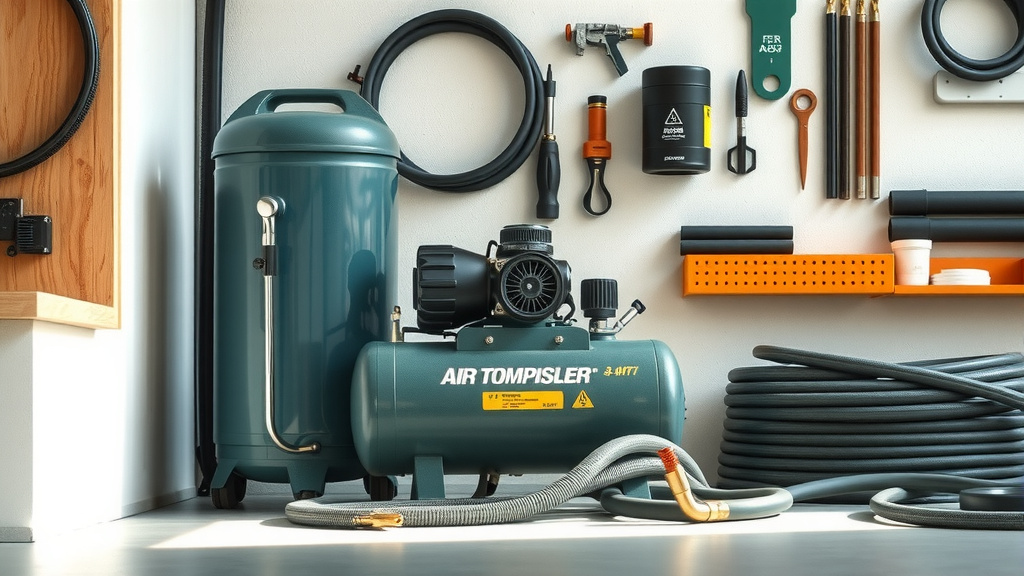
To make your air compressor truly useful, you’ll need a few essential accessories like a reliable air hose, quick-connect couplers, a blow gun, and a tire inflator. These items ensure safety, proper function, and versatility for common tasks.
The right accessories significantly expand your air compressor’s capabilities, transforming it from a simple air tank into a powerful tool for everything from inflating tires to tackling DIY projects. Without them, your compressor is just an engine and a tank.
- Get an air hose, couplers, and a blow gun as your absolute minimum.
- A tire inflator is a must-have for vehicle owners.
- FRL units (filter, regulator, lubricator) protect your tools and improve performance.
- Safety gear like eye and ear protection should always be on your list.
- Think about your projects to pick specialized tools like impact wrenches or nail guns.
What Accessories Do I Need For Air Compressor?
You need a range of accessories to maximize your air compressor’s utility and keep it running smoothly. These attachments turn your compressor into a versatile workhorse for many jobs.
Why Do Air Compressor Accessories Matter?
Imagine buying a fancy camera but forgetting the lenses; it wouldn’t be very useful, would it? Your air compressor is similar. Accessories are the “lenses” that let you connect various air tools and accomplish specific tasks with ease and efficiency.
They don’t just add functionality. They also protect your compressor and extend the lifespan of your pneumatic tools. Many experts say investing in quality accessories saves you money over time (National Safety Council).
Starting with the Absolute Essentials
When you first get an air compressor, some accessories are non-negotiable. These are the items that will get you up and running for most basic tasks right away.
Air Hoses: Your Compressor’s Lifeline
An air hose is the connection between your compressor and your tools. You’ll want one that is durable and long enough for your workspace.
Many homeowners find a 25-foot or 50-foot hose is a good starting point. We found that polyurethane hoses offer good flexibility, even in colder temperatures.
Quick-Connect Couplers and Plugs
Tired of wrestling with threaded connections? Quick-connect couplers and plugs are game-changers. They let you swap between tools in seconds, making your work much more efficient.
Make sure you get couplers and plugs that are compatible with each other. There are different styles, like industrial (I/M) or automotive (A/M), so check what your tools require.
Blow Gun: The Handiest Tool
A blow gun is simple but incredibly useful. You can use it for clearing dust, drying surfaces, or just generally cleaning your workspace.
We’ve found it’s often the first accessory people reach for when they’re not actively using a specialized tool.
Tire Inflator with Gauge
If you own a car, bike, or even just sports equipment, a tire inflator is a must. It allows you to easily maintain proper tire pressure.
An integrated gauge helps you accurately monitor PSI levels, which is vital for safety and fuel efficiency (Department of Transportation).
Protecting Your Investment: FRL Units
An FRL unit stands for Filter, Regulator, and Lubricator. These three components often work together to protect your air tools and compressor.
Air Filter
Your air filter traps moisture and debris before it reaches your tools. Water in air lines can cause rust and damage delicate internal components. Research often connects proper filtration with longer tool life (Compressed Air & Gas Institute).
Pressure Regulator
A regulator lets you control the air pressure delivered to your tool. Different tools require different PSI settings. Too much pressure can damage tools, and too little makes them ineffective.
Air Lubricator
Certain air tools need constant lubrication to operate correctly. A lubricator adds a fine mist of oil into the airstream, keeping these tools well-oiled automatically.
| FRL Component | Purpose | Benefit |
|---|---|---|
| Air Filter | Removes moisture & particles | Protects tools from rust and wear |
| Pressure Regulator | Adjusts air pressure | Ensures correct PSI for each tool |
| Air Lubricator | Adds oil mist to air | Keeps specific tools continuously lubricated |
Enhancing Your Workshop Experience
Beyond the essentials, several other accessories can greatly improve your air compressor setup, making your work safer and more organized.
Hose Reels: Keeping Things Tidy
Tangled air hoses are a tripping hazard and a general nuisance. A hose reel helps keep your hose organized, extends its life, and makes cleanup quick and easy.
Safety Equipment: Always a Priority
Working with compressed air can be noisy and propel small particles. Always wear **safety glasses to protect your eyes** and **hearing protection** like earplugs or earmuffs. We’ve found many accidents are preventable with simple PPE (Occupational Safety and Health Administration).
Various Nozzles and Adapters
From fine-point nozzles for detailed work to wider cones for larger areas, having a variety of nozzles expands your blow gun’s utility. Adapters allow you to connect different thread sizes or types.
Specialized Air Tools and Attachments
This is where your air compressor truly shines, becoming a powerhouse for many specific jobs. What you need here depends entirely on your projects.
- Impact Wrench: For quickly tightening or loosening stubborn nuts and bolts, great for automotive work.
- Air Ratchet: Similar to an impact wrench but for smaller spaces, offering speed in confined areas.
- Nail Guns/Staplers: Essential for framing, trim work, upholstery, or crafting projects.
- Paint Sprayers: Achieve a smooth, professional finish on furniture, fences, or even entire rooms.
- Die Grinders: Perfect for grinding, polishing, or deburring metal in tight spots.
Choosing the Right Accessories for Your Projects
Don’t just buy everything at once. Think about what you actually plan to do. Your compressor’s CFM (Cubic Feet per Minute) and PSI (Pounds per Square Inch) ratings are important too. We recommend matching tool requirements to your compressor’s output.
For instance, a small pancake compressor might struggle with a paint sprayer that demands high CFM. Start with accessories for your most common tasks and build up your collection as needed.
Quick Checklist for Essential Compressor Setup
- Appropriate length air hose
- Set of quick-connect couplers and plugs
- Reliable air blow gun
- Tire inflator with a pressure gauge
- Air filter, regulator, and lubricator (FRL unit)
Conclusion
Equipping your air compressor with the right accessories is like giving it a superpower. You move from simply having a machine to owning a **highly versatile and efficient tool system**. Whether you’re a weekend warrior, a serious DIYer, or a professional, understanding which accessories you need will help you tackle projects safely and effectively. Start with the essentials, always prioritize safety, and build your collection based on the jobs you want to conquer.
What is the most important accessory for an air compressor?
The most important accessory is arguably a reliable **air hose and a set of quick-connect couplers**. Without these, you cannot even connect a tool to your compressor, severely limiting its basic functionality right from the start.
Do all air compressor accessories fit all compressors?
No, not all accessories fit all compressors. While many standard fittings are common, there are different connection types (like Industrial, Automotive, or Aro). Always check compatibility for fitting sizes and types to ensure a proper seal and safe operation.
How often should I replace air compressor filters?
You should replace your air compressor’s filter based on usage and environmental conditions, but a good general guideline is every 3-6 months. In dusty environments or with heavy use, you might need to change it more frequently to maintain air quality and protect your tools.
Can I use regular oil in an air tool lubricator?
No, you should not use regular oil in an air tool lubricator. Air tools require **specialized pneumatic tool oil** designed to atomize properly and lubricate internal components without damaging seals. Using the wrong oil can cause tool failure and void warranties.
Is an air pressure regulator always necessary?
While an air pressure regulator isn’t always absolutely necessary for every single task, it is **highly recommended for most applications**. It allows you to precisely control the air pressure to prevent damage to delicate tools, ensure consistent performance, and enhance safety by reducing over-pressurization risks.
