
Does An Air Compressor Use A Lot Of Electricity?
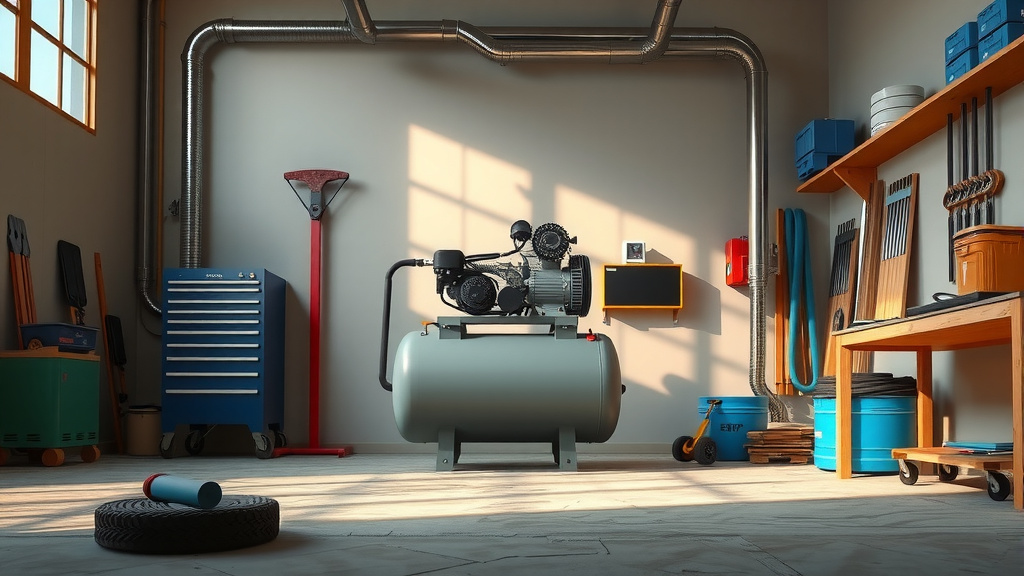
Yes, an air compressor can use a significant amount of electricity, especially larger or continuously running models. Its power consumption directly impacts your electric bill.
The exact amount of electricity an air compressor uses depends on its horsepower, tank size, pressure settings, and how often you operate it. Efficient models and mindful use can help reduce this cost.
- An air compressor’s electricity use can range from moderate to high, varying with its size and how often you run it.
- Factors like horsepower, PSI, and duty cycle are key determinants of its energy appetite.
- You can significantly cut down electricity costs by choosing an efficient model and practicing smart usage.
- Understanding your compressor’s specifications helps predict its impact on your utility bill.
- There are practical steps you can take to make your air compressor more energy-efficient.
Does An Air Compressor Use A Lot Of Electricity?
An air compressor’s electricity usage can be quite substantial, often making it one of the more power-hungry tools in your shop or garage. Imagine plugging in a small refrigerator versus a large industrial freezer; the energy difference is similar.
Understanding Air Compressor Power Consumption
To grasp how much electricity your air compressor consumes, think about its job: it squeezes air into a tank. This process needs a powerful motor, and powerful motors need a lot of electricity. We found that the motor’s horsepower (HP) is the biggest factor.
A small 1-2 HP compressor for hobby use will sip power compared to a 5 HP industrial unit. Many experts say that the higher the HP, the more watts it will draw. This directly translates to higher numbers on your electric meter.
The Horsepower Connection
Horsepower (HP) directly relates to how much work the motor can do. A 1 HP air compressor typically draws around 750 watts. A 5 HP unit could pull 3750 watts or more. This power is needed to compress air to high pressures, like 90-120 PSI (pounds per square inch).
When you see “amps” on a compressor’s label, it indicates the electrical current it draws. The higher the amperage, the more electricity it pulls from your outlet. We found that matching your compressor’s amperage to your circuit breaker is really important for safety.
Key Factors Influencing Your Electric Bill
Several elements come together to determine your air compressor’s impact on your electric bill. It’s not just about the motor size, but how you use the machine. Think of it like driving a car; fuel economy depends on both the engine and your driving habits.
Motor Horsepower (HP)
As we mentioned, the higher the horsepower, the more electricity is consumed. A small pancake compressor might be 1.5 HP, while a large shop compressor could be 5 HP or even 10 HP. That’s a huge difference in energy demand.
Tank Size and Pressure (PSI)
A larger tank means the compressor runs longer to fill it to a desired PSI. Higher PSI requirements also mean the motor works harder. For instance, reaching 150 PSI requires more effort than reaching 90 PSI, thus using more electricity.
Duty Cycle and Usage Frequency
This is where your habits come in. How often do you use the compressor? How long does it run each time? A compressor that runs constantly, or has a high duty cycle, will cost significantly more than one used only occasionally for short bursts.
We found that compressors for continuous use, common in auto repair shops, are designed differently and often have higher running costs. They are built for endurance, but that endurance consumes a lot of power.
Efficiency of the Compressor
Some compressors are simply more energy-efficient than others. Newer models often have better motor designs and advanced controls. An older, less efficient model might use more electricity to achieve the same output. It’s like comparing an old incandescent bulb to an LED.
Typical Electricity Usage: What to Expect
Let’s talk numbers. It helps to visualize the cost. Your local electricity rates play a big role, of course, but the wattage draw gives us a baseline. Research shows that typical residential electricity rates hover around $0.10 to $0.15 per kWh (kilowatt-hour).
To calculate your cost, you’ll need the compressor’s wattage and how long it runs. Wattage often isn’t directly listed but can be estimated from HP (1 HP ≈ 746 watts). For example, a 2 HP compressor might pull around 1500 watts.
Here’s a simple table to illustrate typical power draw and potential cost:
| Compressor HP | Estimated Watts | Cost per Hour (at $0.12/kWh) |
|---|---|---|
| 1.5 HP | 1100-1300 W | $0.13 – $0.16 |
| 2 HP | 1500-1800 W | $0.18 – $0.22 |
| 3 HP | 2200-2600 W | $0.26 – $0.31 |
| 5 HP | 3700-4500 W | $0.44 – $0.54 |
Please note, these are estimates for when the compressor motor is actively running. A compressor cycles on and off, so the actual run time is less than total usage time. This is where the duty cycle comes into play.
Ways to Reduce Your Air Compressor’s Energy Use
Worried about your electric bill soaring? Don’t be! There are several smart strategies you can use to lower your air compressor’s power consumption. It’s all about working smarter, not harder, right?
- Check for Leaks: Even small air leaks in hoses or fittings can make your compressor run more often. It’s like a slow tire leak; you keep having to reinflate it. Many experts say that fixing leaks is the most cost-effective energy saver.
- Match Compressor to Task: Don’t use a 5 HP compressor for small tasks that a 1.5 HP unit could handle. Use the right tool for the job.
- Optimize PSI Settings: Only set the pressure as high as you need for your tools. Lowering the PSI by even 10-20 points can significantly reduce run time.
- Regular Maintenance: Keep filters clean and oil levels correct. A well-maintained compressor runs more efficiently. We found that neglecting maintenance makes a compressor work harder.
- Consider an Energy-Efficient Model: If you’re buying new, look for models with variable speed drives (VSD) or better efficiency ratings. While they might cost more upfront, they save money on electricity over time.
- Proper Ventilation: Compressors run hotter when they’re working hard. Good airflow around the unit helps it operate more efficiently and last longer.
Choosing the Right Compressor for Energy Efficiency
When you’re in the market for a new air compressor, or just thinking about optimizing your current setup, energy efficiency should be a top priority. It’s an investment that pays you back over time. What type of compressor suits your needs best?
Types of Compressors and Their Efficiency
There are generally two main types for most users: piston (reciprocating) and rotary screw. Piston compressors are common in home garages and small shops. They are simple and relatively inexpensive. However, for continuous, heavy use, they can be less efficient than rotary screw models.
Rotary screw compressors, typically found in industrial settings, are built for constant operation and can be very energy efficient for those demanding tasks. They cost more upfront but often have lower operating costs over their lifespan. Research often connects these with higher initial investment but lower long-term energy spend (DOE).
Features to Look For
When shopping, look for features that boost efficiency. A larger air receiver tank means the compressor runs less frequently, even if it runs longer each time. This reduces wear and tear and can smooth out energy spikes. Also, check for “continuous run” features that help maintain consistent pressure without constantly stopping and starting.
Many experts also suggest looking for units with advanced control systems. These can manage motor speeds and pressure more precisely, avoiding wasted energy. Sometimes, a unit with a slightly higher initial cost but better efficiency features can save you a bundle over its lifetime.
Checklist for Maximizing Air Compressor Efficiency
Want to make sure you’re getting the most out of your air compressor without breaking the bank? Use this quick checklist:
- Is my compressor sized correctly for my typical applications?
- Have I recently checked all hoses and connections for air leaks?
- Are my pressure settings optimized to the lowest effective PSI?
- Is the air filter clean and unobstructed?
- Am I regularly draining moisture from the tank?
- Is the compressor operating in a well-ventilated area?
Conclusion
Yes, an air compressor can definitely use a lot of electricity, especially if it’s a larger model or runs frequently. Its motor size, how much air pressure you need, and how often it cycles all add up on your energy bill. But don’t let that deter you from enjoying the convenience and power of compressed air!
By understanding these factors and applying practical tips—like fixing leaks, choosing the right size, and maintaining your unit—you can significantly reduce its energy footprint. Being mindful of your usage and investing in an efficient model will keep your projects humming along without costing you an arm and a leg in electricity.
How do I calculate the electricity cost of my air compressor?
To calculate the electricity cost, find your compressor’s wattage (often estimated from HP: 1 HP ≈ 746 watts). Multiply the wattage by the hours it runs per month, then divide by 1000 to get kilowatt-hours (kWh). Finally, multiply kWh by your electricity rate (e.g., $0.12/kWh). Remember, this is for active run time.
Does tank size affect electricity usage?
Yes, tank size affects how often your compressor cycles. A larger tank stores more compressed air, meaning the compressor motor will run for longer periods to fill it initially, but then it will cycle on less frequently. A smaller tank will cycle on more often, but for shorter bursts. Over time, the total energy consumed to produce the same amount of air might be similar, but a larger tank can reduce motor wear.
Are oil-free air compressors more energy efficient?
Generally, oil-free compressors can sometimes be less efficient than their oil-lubricated counterparts in terms of raw power output per HP, often running hotter and louder. However, their lower maintenance and suitability for specific applications might offer different overall cost savings. Energy efficiency varies greatly by specific model and design, not just the presence or absence of oil.
Can a dirty air filter increase electricity consumption?
Absolutely. A dirty air filter restricts airflow to the compressor’s pump. This forces the motor to work harder and longer to pull in enough air to reach the desired pressure. Just like a clogged vacuum cleaner, it uses more energy to do the same job. Regularly cleaning or replacing your air filter is a simple step to maintain efficiency.
Is it better to have a compressor that runs continuously or cycles on and off?
For most intermittent workshop or home use, a compressor that cycles on and off is perfectly normal and efficient. For industrial applications requiring constant airflow, a rotary screw compressor designed for continuous running (often with variable speed drives) can be more efficient. Frequent short cycling of a piston compressor can be less efficient than longer, less frequent runs, as starting the motor draws a surge of power.
