
How Much Electricity Does An Air Compressor Use?
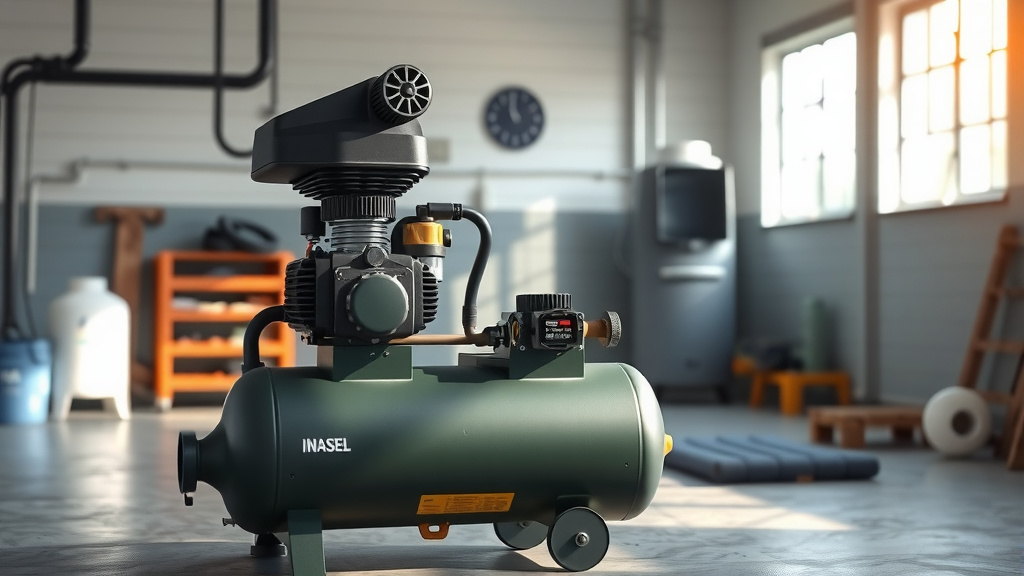
An air compressor’s electricity usage varies widely, typically consuming between 1,500 to 7,500 watts per hour, depending on its horsepower and how often it runs.
The amount of electricity an air compressor uses is directly tied to its motor size, tank capacity, and the demands of your specific tools or tasks.
- Air compressors draw significant power, usually 1.5 to 7.5 kWh hourly.
- Factors like motor size, tank volume, and duty cycle dictate energy consumption.
- Understanding your compressor’s specs helps calculate operational costs.
- Optimizing usage and maintenance can reduce your electricity bill.
- Choosing the right compressor for your needs prevents wasted energy.
Ever wondered about the hidden cost behind that powerful blast of air? You’re not alone! Many of us rely on air compressors for everything from inflating tires to powering impact wrenches. But what does that convenience truly cost you in terms of your electricity bill? It’s a common question, and understanding the answer can save you money.
You probably think of your compressor as a workhorse, not an energy hog. Yet, these machines can be surprisingly thirsty when it comes to electricity. Let’s break down how much power they actually use, so you can make smarter choices for your wallet and your projects.
How Much Electricity Does An Air Compressor Use?
Generally, a common air compressor for home or small workshop use can draw anywhere from 1.5 to 7.5 kilowatt-hours (kWh) per hour of run time. This range covers many piston-style and rotary screw compressors.
The exact number always depends on its size, type, and how hard it’s working. Think of it like your car’s fuel efficiency; a small sedan uses less gas than a large truck.
Why Does Air Compressor Electricity Use Matter?
For your home workshop, a higher electricity bill is the most obvious reason. But for businesses, energy costs can quickly add up, affecting profit margins. Understanding consumption helps you budget effectively and spot inefficiencies.
Knowing your compressor’s power appetite also lets you choose the right model for your needs. Why pay to run a giant compressor if a smaller one does the job perfectly well? It’s all about efficiency and smart spending.
Key Factors Affecting Power Consumption
Several elements play a role in how much juice your air compressor sips or guzzles. It’s not just a single number; it’s a combination of specs and operational habits.
Horsepower (HP) Rating
This is often the biggest indicator of power draw. More horsepower usually means a bigger motor, which naturally consumes more electricity. A 1 HP compressor uses less than a 5 HP unit.
You’ll often see compressor power listed in HP. A 2 HP compressor might draw around 15 amps at 120 volts, equating to about 1.8 kWh per hour. A 5 HP unit could easily pull 20-25 amps at 240 volts, meaning much higher consumption.
Tank Size and Pressure (PSI)
The tank size dictates how much compressed air can be stored. A larger tank might cycle less often for intermittent tasks, but it takes longer to fill initially, demanding more power during that longer fill time. The pressure setting (PSI) matters too.
To reach higher PSI, the compressor motor has to work harder. This means more electricity used per cubic foot of air compressed. Finding the right balance for your tools is key.
Duty Cycle (How Often It Runs)
This refers to the percentage of time your compressor is actually running and compressing air, compared to sitting idle. If your compressor is constantly running to keep up with demand, its duty cycle is high, and it’s using electricity non-stop.
Intermittent use, like filling a tire occasionally, means a low duty cycle and less overall power usage. For continuous use, you need a different calculation approach.
Motor Efficiency
Not all motors are created equal. Some motors are designed to be more efficient, turning more electricity into useful work and less into wasted heat. Look for compressors with “high-efficiency” or “premium efficiency” motors.
We found that replacing an older, less efficient motor can sometimes reduce electricity consumption by 5-10% (U.S. Department of Energy). This can be a significant saving over time.
Calculating Your Compressor’s Energy Cost
Ready to crunch some numbers? You can estimate your compressor’s operating cost with a simple formula. You’ll need its wattage, how many hours it runs, and your local electricity rate.
Here’s the basic calculation: (Watts / 1000) * Hours Run * Electricity Rate = Cost. Let’s look at an example.
| Compressor Type | HP (approx.) | Avg. Watts | Est. Cost/Hour (at $0.15/kWh) |
|---|---|---|---|
| Small Portable (Pancake) | 1.5 | 1500 | $0.23 |
| Medium Workshop (Vertical) | 3 | 3000 | $0.45 |
| Larger Industrial (Rotary) | 10 | 7500 | $1.13 |
Remember, these are estimates. Your actual cost will depend on your local utility rates and how hard your compressor works. Some utility rates can be much higher, so always check your bill!
Real-World Examples: What Different Compressors Use
Let’s consider a few common scenarios. This helps put the numbers into perspective for your situation.
Small Portable Compressors
These are your go-to for DIY tasks. Think tire inflation, small nail guns, or cleaning. A typical 1-2 HP portable unit might draw between 1200-2000 watts.
If you run it for an hour, that’s 1.2 to 2 kWh. At an average electricity rate of $0.15/kWh, that’s about $0.18 to $0.30 per hour of actual running time. Not bad for occasional use!
Medium-Duty Workshop Compressors
These are common in home garages or small woodworking shops, often 3-5 HP. They power impact wrenches, sanders, and paint sprayers. Consumption can be around 2500-5000 watts.
Running for an hour could cost you between $0.38 to $0.75. If you’re using it for several hours a day, those costs can add up quickly over a month.
Industrial-Grade Compressors
For large shops or factories, compressors can be 10 HP or more. These are powerful machines meant for constant, heavy use. Their draw can be 7500 watts (7.5 kW) and upwards.
An industrial compressor might cost over $1.00 per hour to run. For operations running 8-12 hours daily, this becomes a major operating expense that warrants careful management.
Tips for Reducing Your Compressor’s Power Bill
Nobody likes high utility bills, right? Good news: you have control. Small changes can make a big difference in how much electricity your air compressor uses.
- Regular Maintenance Checks: Keep your compressor in top shape. Clean filters and proper oil levels ensure it runs efficiently.
- Check for Leaks: Even small air leaks in your lines or fittings can force your compressor to run more often to maintain pressure. This is wasted energy.
- Right-Sizing Your Compressor: Use a compressor that matches your needs. Don’t use a 5 HP unit for a job a 1.5 HP model could easily handle.
- Optimize Air Tool Usage: Only run air tools when you need them. Turn off the compressor when you’re done for the day.
- Lower PSI When Possible: If your tools don’t need maximum pressure, reducing the PSI setting can save energy.
Many experts say that addressing air leaks alone can reduce a compressor’s energy consumption by 10-30% (Energy Star). That’s like finding free money in your shop!
Choosing the Right Compressor: A Power Perspective
When you’re buying a new compressor, don’t just look at the price tag. Consider its efficiency ratings and how its power draw matches your intended use. A slightly more expensive, but much more efficient, compressor could save you money over its lifetime.
Think about your peak demand and average use. Do you need continuous air, or just short bursts? This will guide you toward the right horsepower and tank size without overspending on electricity.
Conclusion
Understanding how much electricity an air compressor uses is more than just curiosity; it’s about smart operation and saving money. From the small pancake compressor in your garage to the industrial unit in a factory, power consumption varies widely based on horsepower, tank size, and how often it cycles.
By using our tips, calculating your costs, and choosing the right machine for the job, you can keep your air tools running strong without giving your electricity meter an unnecessary workout. Your wallet and your projects will thank you for it!
How do I find out my air compressor’s wattage?
You can usually find the wattage or amperage listed on the compressor’s motor nameplate or in the owner’s manual. If it only lists amps and voltage, multiply amps by voltage to get watts (e.g., 15 amps x 120 volts = 1800 watts).
Does a larger air compressor tank use more electricity?
A larger tank itself doesn’t directly use more electricity; it stores more compressed air. However, it will take longer for the compressor to fill that larger tank initially, meaning the motor runs for a longer duration during the initial fill-up, using more electricity during that period.
Can changing my air compressor’s filter affect electricity usage?
Yes, absolutely. A clogged or dirty air filter restricts airflow into the compressor, making the motor work harder to draw in air and maintain pressure. This increased effort translates directly to higher electricity consumption. Regular filter changes are a simple way to maintain efficiency.
Is a 240V air compressor more energy-efficient than a 120V?
While a 240V compressor might not be inherently “more efficient” in terms of how much energy it uses per unit of air, it allows for larger, more powerful motors to operate more effectively. For higher horsepower compressors, 240V is often preferred because it draws fewer amps, which can reduce heat loss and electrical strain on your circuits, leading to better overall performance for bigger jobs.
How often should I perform maintenance to save on electricity?
Regular maintenance, including checking for leaks, draining the tank, and inspecting filters, should ideally be done monthly or according to your manufacturer’s recommendations. For heavily used compressors, daily checks for leaks and weekly filter inspections are wise to ensure peak efficiency and lower electricity bills.
