
What Is the Best 12V Air Compressor for a Truck?
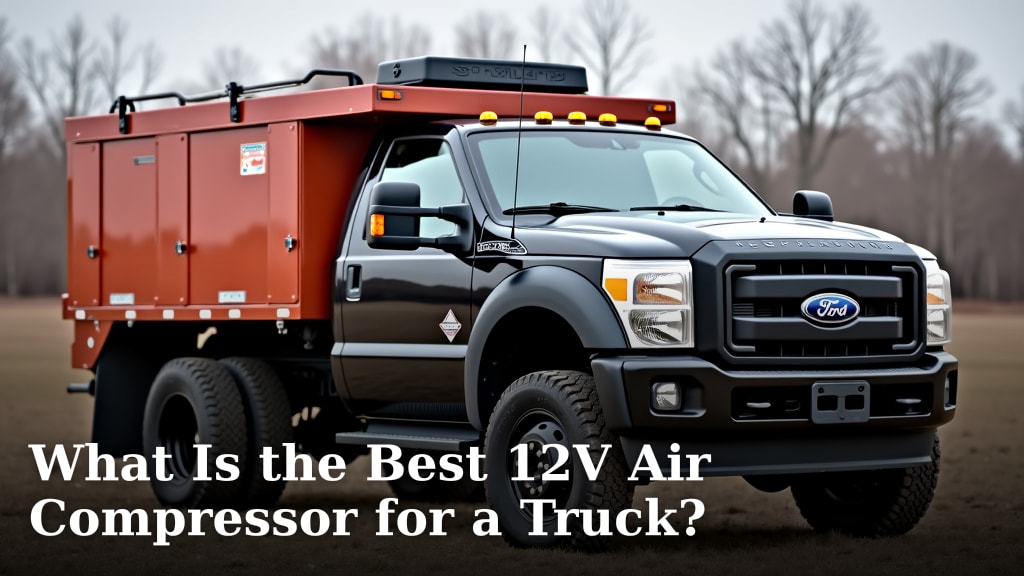
The best 12V air compressor for a truck is often the Viair 400P Portable Compressor. We found that it consistently offers a great balance of power, durability, and ease of use for truck owners. It’s a top choice for quickly airing up tires.
You need a reliable 12V air compressor to handle flats or adjust tire pressure. Truck tires need more power than car tires to inflate properly. A good compressor means you’re prepared for off-road adventures or unexpected low-pressure warnings.
Viair 400P is a top choice for trucks.
Look for high CFM and duty cycle.
Portability and accessories matter a lot.
Consider your truck size and tire type.
Some compressors have extra features like auto-shutoff.
Let’s dive into what makes a 12V air compressor great for your truck. We’ll help you pick the perfect one for your needs.
Finding the Right 12V Air Compressor for Your Truck
Choosing the best 12V air compressor for your truck means looking at a few key things. You want something powerful enough. It also needs to be reliable and easy to use. Let’s break down what truly matters for truck owners.
Understanding CFM and PSI: Your Compressor’s Powerhouse
When you’re shopping for a 12V air compressor, you’ll see terms like CFM and PSI. These aren’t just technical jargon. They tell you how well a compressor will perform for your truck tires.
CFM (Cubic Feet per Minute) Explained
CFM measures how much air your compressor can move in one minute. For truck tires, higher CFM is better. Why? Truck tires are large. They need a lot of air to inflate quickly. A low CFM compressor will take a very long time. It could also overheat.
We found that for most truck tires, you’ll want a compressor with at least 2.0 CFM at 0 PSI. Many experts recommend 3.0 CFM or higher for faster inflation. This is especially true for larger off-road or commercial truck tires.
PSI (Pounds per Square Inch) Explained
PSI tells you the maximum pressure the compressor can generate. Truck tires, especially heavy-duty ones, often need higher PSI than car tires. Some truck tires require 60-80 PSI or even more. Your compressor must be able to meet or exceed your tire’s maximum recommended PSI.
Look for a compressor that can handle at least 100-120 PSI. This gives you a good buffer. It ensures you can inflate your tires to their correct pressure without straining the unit. Always check your truck’s tire pressure sticker for the exact PSI recommendations (National Highway Traffic Safety Administration).
Duty Cycle: How Long Can It Work?
The duty cycle is a very important specification. It tells you how long a compressor can run continuously before needing a break. This is expressed as a percentage. For example, a 30% duty cycle means it can run for 3 minutes out of every 10 minutes.
For truck tires, you want a high duty cycle. Inflating a large truck tire takes time. A compressor with a low duty cycle will constantly stop and start. This can be frustrating. It also puts more wear and tear on the unit.
We found that compressors with a 60% duty cycle or higher are ideal for trucks. Some heavy-duty models even offer a 100% duty cycle. This means they can run continuously without needing to cool down. If you have a fleet of trucks or often air up multiple large tires, a 100% duty cycle is a huge advantage.
Portability and Storage: Easy Access When You Need It
A 12V air compressor is meant to be portable. You need to be able to take it with you. How easily it stores and travels can make a big difference.
- Size and Weight: Will it fit under your seat or in your toolbox? Some powerful compressors can be bulky.
- Carry Bag: Does it come with a sturdy carry bag? This helps keep all the accessories together.
- Power Cord Length: Is the power cord long enough to reach all your tires comfortably? You don’t want to constantly move your truck.
- Air Hose Length: A longer air hose means more flexibility. You can leave the compressor in one spot while reaching all your tires.
Many popular truck compressors are designed for easy storage. They often include thoughtful features. These include quick-connect fittings and built-in pressure gauges. These small details improve the user experience significantly.
Key Features to Look For in a Truck Compressor
Beyond CFM, PSI, and duty cycle, several other features can make your compressor more effective and user-friendly. Don’t overlook these.
Integrated Pressure Gauge
An accurate pressure gauge is a must. Many compressors have one built right in. This allows you to monitor tire pressure as you inflate. Some gauges are analog, others are digital. We found that digital gauges are often easier to read and more precise.
Automatic Shut-Off
This is a fantastic safety feature. An automatic shut-off will stop the compressor once it reaches your preset pressure. This prevents over-inflation. It also means you don’t have to constantly watch the gauge. This is especially helpful if you’re multitasking or in a hurry.
Thermal Overload Protection
Compressors can get hot, especially during extended use. Thermal overload protection will automatically shut down the unit if it gets too hot. This protects the motor from damage. It helps extend the life of your compressor. It’s a sign of a well-engineered product.
LED Work Light
Picture this: it’s dark, you’re on the side of the road, and your tire is flat. An integrated LED work light is a lifesaver in these situations. It illuminates your workspace. This makes it much easier and safer to inflate your tires at night or in low-light conditions.
Comparing Top 12V Air Compressor Options
To help you see the differences, here’s a quick comparison of some popular choices for trucks. This isn’t an exhaustive list, but it highlights common options and their strengths.
| Compressor Model | Typical CFM | Max PSI | Duty Cycle | Key Benefit |
|---|---|---|---|---|
| Viair 400P | 2.3 CFM | 150 PSI | 33% @ 100 PSI | Excellent balance of power and portability |
| Smittybilt 2781 | 5.65 CFM | 150 PSI | 60% | Very high CFM for fast inflation |
| ARB CKMA12 | 2.18 CFM | 150 PSI | 100% | Heavy-duty, continuous run time |
| Tire Inflator (Generic) | 1.0-1.5 CFM | 80-100 PSI | 15-20% | Budget-friendly, for small jobs |
As you can see, the “best” really depends on your specific needs. The Viair 400P, as we mentioned earlier, strikes a great balance. The Smittybilt 2781 is a beast for speed. The ARB CKMA12 offers rugged reliability and continuous use, perfect for serious off-roaders.
When to Consider an Onboard Air System
For some truck owners, a portable 12V compressor might not be enough. If you frequently air up multiple large tires, use air tools, or need continuous air, an onboard air system might be a better fit. These systems are permanently mounted to your truck. They often include a small air tank.
Onboard systems offer higher CFM and 100% duty cycles. They are more expensive and require installation. However, they provide unparalleled convenience and power for heavy use. Consider your long-term needs. Do you want something for emergencies, or something for constant use?
Your Compressor Checklist: What to Look For
To summarize, here’s a quick checklist to help you choose the right 12V air compressor for your truck:
- Sufficient CFM: Aim for 2.0 CFM or higher for truck tires.
- High Max PSI: Ensure it meets or exceeds your truck’s tire pressure needs (100-120 PSI minimum).
- Good Duty Cycle: Look for 50% or higher for practical use.
- Portability: Easy to store, long enough cords and hoses.
- Essential Features: Accurate gauge, auto-shutoff, thermal protection, work light.
- Reputable Brand: Choose brands known for reliability and customer support.
By keeping these points in mind, you’ll be well-equipped to select a 12V air compressor that truly meets your truck’s demands. You’ll feel much safer and prepared on the road or trail.
Conclusion
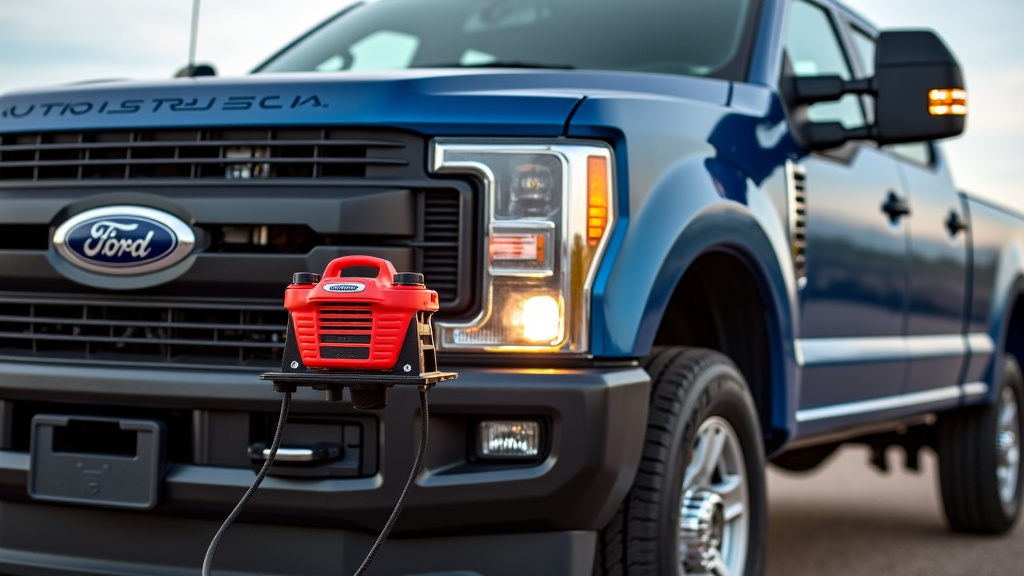
Choosing the right 12V air compressor for your truck means understanding your needs. Consider your tire size and how often you’ll use it. We found that compressors like the Viair 400P offer a great blend of power and practicality for most truck owners. By prioritizing CFM, PSI, and duty cycle, you can avoid frustration. Don’t forget those helpful features like an auto-shutoff and a work light. Take a moment to assess your truck’s requirements and invest in a compressor that will keep you safely on the road, no matter where your adventures take you.
Frequently Asked Questions
Can I use a regular car tire inflator for my truck tires?
While you technically can, it’s not recommended for truck tires. Car inflators typically have lower CFM and duty cycles. This means they will take a very long time to inflate a truck tire and may overheat or fail prematurely. It’s best to use a compressor designed for larger volumes of air. You might also wonder if you can use a 12V compressor for a house tire, but it’s generally not recommended due to power limitations.
How often should I check my truck tire pressure?
You should check your truck tire pressure at least once a month. Also, check it before any long trip or if there’s a significant change in temperature. Proper tire pressure improves fuel efficiency, extends tire life, and enhances safety. We recommend keeping a reliable gauge handy.
What’s the difference between a portable and an onboard air compressor for a truck?
A portable compressor is a standalone unit you connect to your truck’s 12V power source when needed. An onboard system is permanently installed in your truck, often with an air tank, providing air on demand. Onboard systems are usually more powerful and convenient for heavy or frequent use.
Does a higher CFM always mean a better air compressor?
Not necessarily “better” for everyone, but higher CFM generally means faster inflation, which is crucial for large truck tires. While a very high CFM is great for speed, it might come with increased cost or size. You need to balance CFM with other factors like duty cycle and portability for your specific use.
What accessories are essential for a truck air compressor?
Beyond the compressor itself, look for an accurate pressure gauge (often built-in), a long air hose, and a sturdy carry bag. Adapters for different valve types and perhaps a deflator tool are also very useful. Some kits include repair plugs, which can be a lifesaver in an emergency.
