
Can You Use a 12V Air Compressor for a House Tire?
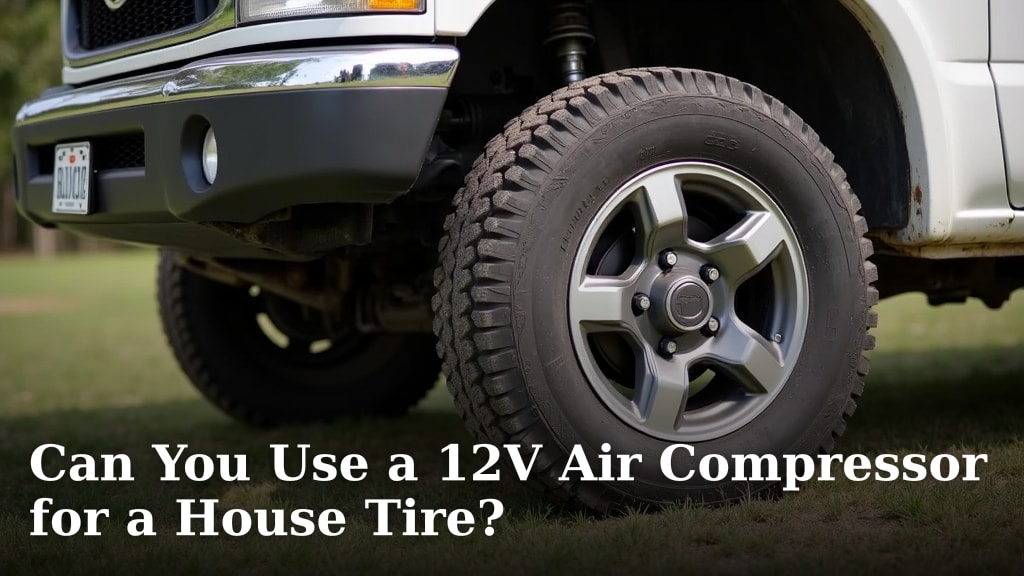
No, you generally cannot use a 12V air compressor for a house tire. These compressors are designed for vehicles and need a 12-volt power source, like your car’s cigarette lighter or battery, not your home’s standard wall outlet.
You might be wondering if there’s a workaround. We found that plugging a 12V compressor into a regular household outlet requires a power inverter, which converts AC home power to DC power. However, even with an inverter, a 12V compressor usually lacks the power and volume needed for larger, higher-pressure house or RV tires.
- 12V compressors need a car’s power, not a wall outlet.
- You’ll need a power inverter for home use, but it’s not ideal.
- 12V compressors are often too weak for house or RV tires.
- They lack the pressure and volume for bigger tires.
- It’s usually better to use an AC-powered compressor for home needs.
Let’s walk through why a standard 12V air compressor falls short for your home inflation needs and what alternatives work best.
Why Your Car’s Air Compressor Isn’t Cut Out for Home Tires
You might be hoping your trusty 12V car air compressor can handle those bigger tires on your RV, trailer, or even a specialized home cart. We understand the appeal of using what you already own! However, we found these smaller units often fall short when it comes to the demands of larger tires.
The main reason is simple: power and volume. Your car compressor is built for car tires, which have different pressure and air volume needs than many home-based applications. It’s like trying to fill a swimming pool with a garden hose – it might work, but it will take a very, very long time and strain your equipment.
Understanding 12V Compressor Limitations
Let’s dive a bit deeper into why these handy automotive tools aren’t quite right for home use. It’s all about their design and the job they’re meant to do.
Power Source: 12V DC vs. 120V AC
Your 12V compressor is made for your vehicle’s power system. This means it runs on direct current (DC), typically from your car’s cigarette lighter outlet or directly from its battery. Your home, on the other hand, uses alternating current (AC), delivered through standard wall outlets.
To bridge this gap, you’d need a power inverter. This device converts your home’s AC power into DC power that your 12V compressor can use. While this sounds like a neat solution, it introduces potential issues. An inverter needs to be correctly sized for your compressor, and cheap ones might not deliver consistent power, potentially harming your compressor or just making it run inefficiently.
Pressure (PSI) and Air Volume (CFM) Mismatch
Here’s where the rubber meets the road, so to speak. Car tires usually require pressures ranging from 30-45 PSI. Most 12V compressors are designed to handle this range comfortably. What about an RV tire or a heavy-duty trailer tire? They often need 60-80 PSI or even more.
Beyond pressure, there’s air volume, measured in cubic feet per minute (CFM). A small 12V compressor might deliver 1-2 CFM. A large RV tire, however, needs a lot more air. Filling it with a low-CFM compressor means you’ll be waiting a very long time, and the compressor will be working overtime, risking overheating and damage. It’s simply not designed for that kind of sustained effort (RVIA, RV Industry Association).
The Practical Problems You’ll Face
So, what happens if you try to make it work anyway? You’ll likely encounter a few frustrating scenarios.
- Slow Inflation Times: What takes minutes with a proper compressor could take an hour or more with a 12V unit for a large tire.
- Compressor Overheating: These small units aren’t built for continuous operation under heavy load. They can quickly overheat, trigger a thermal cutoff, or even fail permanently.
- Inaccurate Readings: Some cheaper 12V compressors have less accurate gauges, which is critical for proper tire inflation and safety.
- Limited Duty Cycle: Most 12V compressors have a “duty cycle,” meaning they can only run for a short period (e.g., 10-15 minutes) before needing a cool-down. This is impractical for big tires.
When a 12V Compressor *Might* Work (with Caution)
Are there any exceptions? Perhaps for very small, low-pressure items that happen to be around the house. Think about a bicycle tire or a sports ball. But even then, you’d still need that power inverter to plug it into your wall outlet.
For anything larger, like a wheelbarrow tire, a small utility trailer tire, or certainly an RV tire, it’s generally not recommended. The effort and potential strain on your equipment just aren’t worth it.
Comparing 12V Compressors to AC-Powered Alternatives
To really see why your car’s compressor is a different beast, let’s look at it next to what’s designed for home use.
| Feature | 12V DC Air Compressor (Car) | 120V AC Air Compressor (Home/Garage) |
|---|---|---|
| Primary Power Source | Car’s 12V outlet/battery | Standard home wall outlet (120V) |
| Typical PSI Range | Up to 100-120 PSI (but effective only up to 45-60 PSI for most cars) | Up to 150-175 PSI (suitable for high-pressure needs) |
| Typical CFM (Air Volume) | 0.5 – 2 CFM (low volume) | 2 – 6+ CFM (higher volume) |
| Tank Size | None (direct drive) or very small | 1 gallon to 30+ gallons (stores air for continuous use) |
| Duty Cycle | Limited (e.g., 10-15 min on, 15-20 min off) | Often continuous or longer duty cycles |
| Portability | Very high, compact | Varies (small units are portable, larger ones are less so) |
| Best For | Car/motorcycle tires, bicycle tires, sports balls | RV/trailer tires, home DIY, power tools, larger inflatables |
Choosing the Right Compressor for Your Needs
So, if your 12V unit isn’t the answer for your house tires, what should you look for? It really depends on what you plan to inflate.
For Occasional, Large Tire Inflation
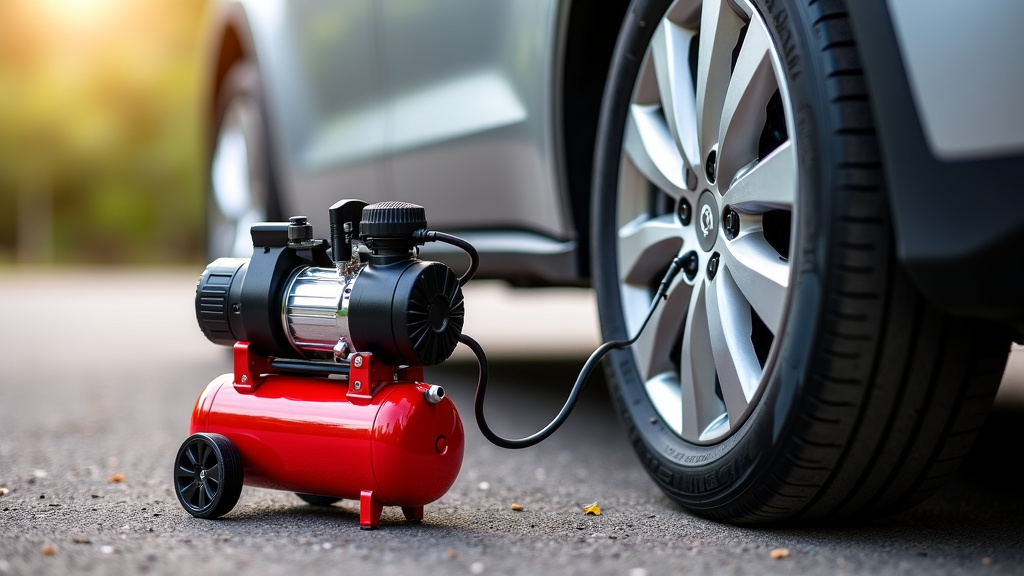
If you only occasionally need to top off RV tires or a large trailer, a portable 120V AC air compressor with a small tank (1-6 gallons) is often a great choice. These plug directly into your wall outlet, offer higher pressure and CFM, and are still relatively easy to move around. They’re much more efficient for larger tires than any 12V model.
For General Home and Garage Use
If you have a garage and might want to use air tools, inflate multiple large tires, or do various DIY projects, you’ll want a more robust stationary or wheeled air compressor. These typically have larger tanks (10-30+ gallons) and higher CFM ratings, making them capable of handling demanding tasks without breaking a sweat.
Your Checklist for Choosing an Air Compressor
When you’re ready to find the right compressor for your home needs, keep these points in mind:
- Determine the highest PSI you’ll need for any tire or tool.
- Estimate the volume of air (CFM) required for your biggest tasks.
- Consider the power source: do you need it to plug into a wall outlet (AC)?
- Think about portability: will you be moving it around often?
- Look for a good duty cycle if you’ll use it for extended periods.
- Read reviews about noise levels; some compressors are much louder than others.
By carefully considering these factors, you can pick an air compressor that truly meets your specific needs without struggling with underpowered equipment.
Conclusion
While your 12V car air compressor is perfect for automotive emergencies, our research shows it simply isn’t built for the demands of larger home or RV tires. You’d face slow inflation times, risk overheating the unit, and likely end up frustrated. To avoid these headaches, we recommend investing in an AC-powered compressor. It will save you time and effort while ensuring your larger tires are properly inflated for safety and longevity. Choose the right tool for the job!
Frequently Asked Questions
Can I use a 12V air compressor to inflate a bicycle tire at home?
Yes, you can use a 12V air compressor for a bicycle tire at home, but you’ll still need a power inverter to plug it into your wall outlet. It’s often overkill for bicycle tires, which typically need much less pressure and can be inflated quickly with a hand pump.
Why do 12V compressors often overheat when used for larger tires?
12V compressors overheat because they are designed for smaller volumes of air and shorter run times, like car tires. When tasked with larger tires that require more air volume and sustained operation, they work beyond their intended duty cycle, causing internal components to heat up excessively.
What’s the main difference between PSI and CFM when choosing an air compressor?
PSI (pounds per square inch) measures the maximum pressure an air compressor can deliver, which is important for reaching the recommended pressure of a tire. CFM (cubic feet per minute) measures the volume of air the compressor can produce, indicating how quickly it can fill a tire or power an air tool.
Will a power inverter drain my car battery if I try to use a 12V compressor for a long time?
Yes, if you use a power inverter and a 12V compressor connected to your car battery for an extended period without the engine running, it can definitely drain your battery. Compressors draw a significant amount of power, so it’s best to have the engine on to keep the battery charged.
Are there any portable air compressors designed specifically for RV tires that plug into a wall outlet?
Absolutely! Many portable 120V AC air compressors are designed with higher PSI and CFM ratings suitable for RV and larger trailer tires. We found these often come with small tanks and can be easily plugged into a standard home garage outlet, offering a much more efficient solution.
