How to Inflate Tires with a Stanley Air Compressor
To use a Stanley compressor for tyres, check the tire's target pressure, connect the hose securely, and add air in short bursts while checking pressure. Follow the compressor manual for its power setup and limits.
On this page (8 sections)
- How do you use a Stanley compressor for tyres?
- What pressure should you use for a car tire?
- How should you connect a Stanley compressor to the tire valve?
- What should you check before powering on?
- What if the tire pressure is still low?
- Which portable inflators can help with tire pressure?
- How does a Stanley compressor compare with other tire setups?
- How do you use a Stanley compressor for tyres safely?
To use a Stanley compressor for tyres, check the tire's recommended pressure, connect a compatible hose and tire chuck, then add air in short bursts while monitoring pressure. Follow your model's manual for power, duty cycle, and safe operating steps.
The pressure target comes from the vehicle maker, not the maximum pressure printed on the tire sidewall. Find the cold-pressure recommendation on the driver's door placard or in the owner's manual before you start.
How do you use a Stanley compressor for tyres?
Set up the compressor, attach the tire chuck, and inflate gradually to the vehicle's recommended cold pressure. Stanley models differ, so use the manual for your unit's controls, power connection, and operating limits.
- Park on a firm, level surface and secure the vehicle.
- Check the tire pressure target and the compressor's manual.
- Connect the compressor to its specified power source.
- Remove the valve cap and attach the tire chuck firmly.
- Inflate in short bursts, checking pressure as you go.
- Stop at the target, remove the chuck, and replace the cap.
If your Stanley unit has a built-in pressure gauge, read it while inflating and confirm the result with a separate tire gauge if needed. Disconnect the chuck carefully because a small hiss as it comes off can release air.
A compressor that becomes hot or reaches its stated run limit needs a break. Don't leave it running unattended or keep adding air after reaching the target.
What pressure should you use for a car tire?
Use the cold tire pressure on the driver's door placard or in the owner's manual. The number on the tire sidewall is a maximum limit, not the everyday target for your vehicle.
Check all tires when they're cold, ideally before driving or after the vehicle has been parked for several hours. The recommended pressure may differ between front and rear tires, so check each position.
A tire pressure monitoring system may not update immediately after inflation. Use a gauge at the valve to confirm pressure rather than relying only on a dashboard warning.
Does the Stanley compressor gauge need a second check?
A second gauge is useful if the compressor reading is unclear or you need a careful final check. Attach it after inflation and compare the reading with the vehicle's target.
Keep the gauge square on the valve stem to reduce air loss while measuring. If the reading is above target, release a little air and check again.
How should you connect a Stanley compressor to the tire valve?
Remove the valve cap and secure the tire chuck straight onto the valve stem. A tight, stable connection helps air flow into the tire instead of escaping around the fitting.
Some compressors use a lever-lock chuck, while others use a threaded or twist-on fitting. Follow the instructions for your Stanley model and the tire inflator accessory.
If you hear steady air escaping, stop and reseat the chuck. Don't force a fitting that doesn't match the valve, and replace a missing valve cap after inflation.
What should you check before powering on?
Inspect the hose, power lead, connectors, and tire before starting the compressor. Stop if you find a split hose, damaged plug, loose clamp, or visible tire damage.
Keep the compressor on a stable surface with its vents clear. Route the hose and cable away from hot engine parts, moving wheels, and places where someone could trip.
If the tire is visibly damaged, has a bulge, or keeps losing pressure, inflation may not be enough to make it safe. Arrange a tire inspection instead of driving on it.
Can you use a 12V inflator at home?
Only if the inflator is designed for the power source available. A 12V model may use a vehicle outlet or battery clamps, while an AC/DC unit can support a household outlet when its instructions allow it.
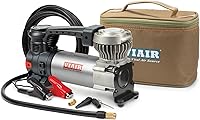
For a portable 12V option with battery clamps, the VIAIR 88P includes a built-in gauge, a 16-foot air hose, and a 10-foot power cord.
It delivers up to 120 PSI and is suited to tires up to 33 inches. Follow VIAIR's instructions for connecting the clamps and operating the compressor.
What if the tire pressure is still low?
Recheck the pressure with the chuck seated, then inspect for a leak if it falls again. A loose connection can cause a misleading reading, but a repeated pressure drop may point to a puncture or valve problem.
Inflate in short bursts and check the gauge between them. If the compressor runs without raising pressure, check the power connection and hose fit, then consult the manual.
Don't keep topping up a tire that loses air quickly. Use the vehicle's spare or roadside assistance if the tire isn't safe to drive on.
Which portable inflators can help with tire pressure?
The VIAIR 88P, AstroAI inflator, and ETENWOLF VORTEX S6 offer different power options for tire inflation. Choose the one whose power source and operating limits fit your situation.
The VIAIR 88P comes first for its battery-clamp power, built-in gauge, 16-foot hose, and 120 PSI maximum. The AstroAI inflator supports 12V DC and 120V AC power, has a digital pressure display, and shuts off at a preset pressure.
AstroAI specifies a 15-minute continuous run limit followed by at least 10 minutes to cool, and says the unit is not for heavy-duty trucks. Check those limits against your needs before use.
The ETENWOLF VORTEX S6 is cordless and has a built-in battery, automatic stop, and a stated maximum pressure of 160 PSI.
ETENWOLF says the S6 supports heavy-duty vehicles as well as regular cars, but it's not for stand-up paddleboards. Check its instructions and your tire requirements before using it.
For an outlet-powered option, compare the best 120V air compressors for tires. If you want a broader overview of equipment types, see the best air compressors for tires.
How does a Stanley compressor compare with other tire setups?
The basic tire-inflation steps are similar across compressor styles, but the power source and controls vary. Use the instructions for the exact unit in front of you.
A pancake compressor may need a separate hose and tire chuck. See how to use a pancake air compressor for tires for that setup.
For brand-specific instructions, read how to use a Husky air compressor for tires or how to use a RIDGID air compressor to fill tires. The general guide to inflating a tire with an air compressor covers the shared steps.
How do you use a Stanley compressor for tyres safely?
Use the vehicle's cold-pressure target, the compressor's specified power source, and short inflation checks. Stop if the tire, hose, or compressor shows damage or overheating.
Choose a clamp-powered inflator if your setup calls for direct battery power, an AC/DC model for compatible home and vehicle outlets, or a cordless unit if you need built-in battery power. Always check the compressor manual for limits before inflating a tire.
Frequently asked questions
Can I use a Stanley air compressor to inflate car tires?
Yes, if your Stanley compressor and tire inflator attachment are suitable for the tire and the compressor's manual allows the job. Check the tire's recommended cold pressure, confirm the hose and chuck fit the valve, and monitor pressure as you add air.
Should the car be running while using a Stanley compressor?
Follow the instructions for your specific Stanley model and power source. Some 12V inflators are designed to run with the vehicle engine on, while a garage compressor has a different setup; keep the vehicle outdoors if its engine must run.
How do I know when to stop inflating a tire?
Stop when the tire reaches the pressure recommended by the vehicle maker, usually shown on the driver's door placard or in the owner's manual. Check with a tire gauge if the compressor's gauge is hard to read, and avoid using the maximum pressure printed on the tire as the target.
Can I inflate a tire while it is hot?
For a routine pressure check, use the vehicle maker's recommended cold tire pressure and check before driving or after the car has been parked for several hours. If a tire is hot from driving, don't bleed air to match the cold target; recheck it when cold.