Is It Cheaper to Fill Your Own Tires Than a Gas Station?
Yes, it is generally cheaper to fill your own tires with air than it is at most gas stations, especially if you use a home air compressor or buy a small portable one. Gas stations often charge a small fee for air, which adds up over time. This can make DIY tire inflation a smart money-saving move for your vehicle.
Keeping your tires properly inflated is important for vehicle safety and fuel efficiency. Low tire pressure can decrease your gas mileage and wear out your tires faster. While a small fee might seem minor, it’s a recurring cost that you can easily avoid with a little effort and a small initial investment.
- Gas stations usually charge for tire air.
- Filling your own tires can save you money long-term.
- Proper tire pressure improves safety and gas mileage.
- A home compressor is a good investment for frequent inflation.
Let’s break down the costs and methods for filling your own tires so you can see how much you could save.
Is DIY Tire Inflation a Money Saver?
When it comes to keeping your car’s tires properly inflated, you have a few options. You can visit a gas station and pay a small fee, or you can take matters into your own hands. We’ve found that doing it yourself is often the **more economical choice** over time.
It might seem like a minor expense, but those quarters add up. Think about it: how often do you check your tire pressure? If it’s once a month or more, that fee can become a recurring cost that eats into your budget.
The Cost of Convenience: Gas Station Air Prices
Most gas stations in the US charge for tire inflation. This is a common practice now, a way for them to offset the cost of the equipment and electricity. You’ll typically find air pumps that accept coins, usually quarters. The price can vary, but it’s often around $0.50 to $1.00 per tire.
Let’s do some quick math. If you fill up all four tires every month, and each fill costs $1.00, that’s $4.00 a month. Over a year, that’s $48.00 just for air. This doesn’t even account for times when you might need to top them off more frequently due to temperature changes or slow leaks.
Factors Influencing Gas Station Fees
Why the variation in price? Location plays a big role. Stations in busy urban areas might charge a bit more than those in quieter, rural spots. The type of machine also matters. Some are newer and more efficient, while older ones might be less reliable and cost more to maintain.
The biggest factor, though, is simple economics. Gas stations know that proper tire inflation is a necessity for drivers. They offer this service as a convenience, and they charge accordingly. It’s a small, recurring **transaction you can easily control**.
The DIY Approach: Your Tire Inflation Options
Taking tire inflation into your own hands can be surprisingly easy and cost-effective. The initial investment might seem like a hurdle, but think of it as buying back your time and money.
Option 1: The Manual Tire Pump
This is the most basic and often the cheapest option upfront. A manual bike pump or a foot pump designed for car tires can work. You’ll need to physically pump air into the tire. It’s a good workout, for sure!
Pros: Very low initial cost. No electricity needed. Portable. Cons: Takes a lot of physical effort. Can be time-consuming, especially for multiple tires or if they’re very low. Accuracy can be an issue without a good gauge.
Option 2: The Portable Air Compressor
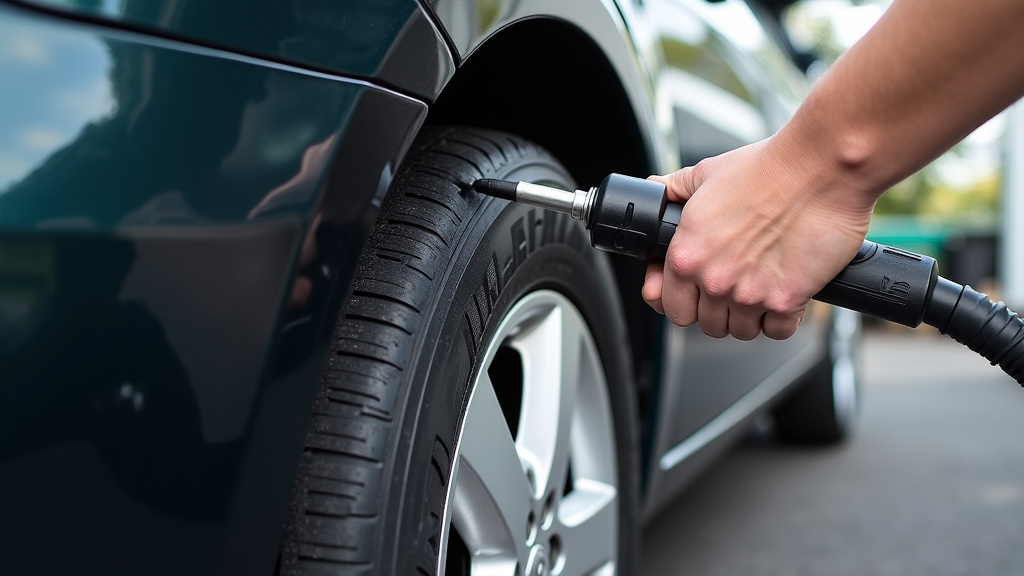
This is where the real savings and convenience kick in. You can buy a small, portable 12-volt air compressor that plugs directly into your car’s cigarette lighter or accessory port. Many come with a built-in pressure gauge. A portable 12-volt air compressor that plugs into your car’s cigarette lighter is a convenient option.
We found that these portable compressors range in price from about $20 to $60, depending on the brand and features. For a one-time purchase, this is a fantastic deal. Most models can inflate a standard car tire from flat to full in just a few minutes.
How to Use a Portable Compressor
It’s incredibly straightforward.
- Make sure your car’s engine is running to power the compressor.
- Connect the compressor’s power plug to your car’s 12-volt outlet.
- Attach the air hose nozzle firmly to your tire’s valve stem. You might hear a little hiss, which is normal.
- Watch the pressure gauge on the compressor. Inflate until you reach the recommended PSI.
- Unplug the compressor and reattach the valve stem cap.
- Repeat for all tires.
Option 3: A Home Air Compressor
If you have a garage or a dedicated space, a larger home air compressor is another option. These are more powerful and can be used for various tasks beyond just tires, like powering air tools. However, they represent a higher upfront cost.
Pros: Powerful, fast inflation. Versatile for other uses. Cons: Higher initial cost ($100+). Takes up more space. Requires an electrical outlet. Might be overkill if only for tires.
The Long-Term Savings Calculation
Let’s compare the potential costs over a year using our earlier example of $48.00 per year for gas station air.
| Inflation Method | Initial Cost (Estimate) | Annual Cost (Estimate) | Total First Year Cost | Total Second Year Cost |
|---|---|---|---|---|
| Gas Station Air | $0 | $48.00 | $48.00 | $48.00 |
| Portable Compressor | $40.00 | $0.00 (electricity is negligible) | $40.00 | $0.00 |
| Home Compressor | $150.00 | $0.00 (electricity is negligible) | $150.00 | $0.00 |
As you can see, a portable compressor pays for itself in less than a year. After the first year, you’re essentially getting **free tire inflation**. Even a larger home compressor becomes more cost-effective than gas station air after a few years, especially if you use it for other things.
Why Proper Tire Pressure Matters (Beyond Saving Money)
While saving money is a great motivator, there are even more critical reasons to keep your tires properly inflated. Your car manufacturer sets a recommended tire pressure, usually found on a sticker in the driver’s side doorjamb or in your owner’s manual. It’s often different from the maximum pressure listed on the tire sidewall.
Safety First: Preventing Blowouts and Improving Handling
Underinflated tires can overheat. This is because the tire flexes more than it’s designed to. Increased flexing generates more heat. Over time, this heat can damage the tire’s internal structure, leading to a **tire blowout**. This is extremely dangerous, especially at highway speeds. You can lose control of your vehicle in an instant.
Proper inflation also ensures your tires make even contact with the road. This gives you the best possible **traction and braking performance**. When tires are too low, the edges wear down faster and the center doesn’t grip as well. Overinflated tires have a smaller contact patch, reducing grip and making the ride harsher.
Fuel Efficiency: Getting More Miles Per Gallon
This is a big one for your wallet. Underinflated tires create more rolling resistance. Think of trying to push a heavy shopping cart with one wobbly wheel – it takes more effort. Your car’s engine has to work harder to overcome this resistance.
We found that underinflated tires can reduce your gas mileage by up to 3% or more (U.S. Department of Energy). If you drive an average amount and spend a few thousand dollars a year on gas, even a 1-2% improvement can translate into noticeable savings. This is backed by many automotive experts and organizations.
Extending Tire Lifespan: Saving on Replacement Costs
Tires are not cheap! When your tires aren’t properly inflated, they wear out unevenly and much faster. Underinflated tires tend to wear more on the edges. Overinflated tires wear out faster in the center. Both scenarios mean you’ll need to replace your tires sooner.
Regularly checking and adjusting your tire pressure ensures that your tires wear evenly across the tread. This means you get the maximum possible mileage out of them. It’s another way that **DIY tire inflation saves you money**.
Checklist for DIY Tire Inflation Success
Ready to take control of your tire pressure and save some cash?
- Get a reliable tire pressure gauge. Even if your compressor has one, a separate digital or dial gauge is a great backup.
- Know your recommended PSI. Check the sticker in your doorjamb or owner’s manual.
- Invest in a portable air compressor. It’s the sweet spot for cost and convenience.
- Check your tires regularly. Aim for at least once a month and before long trips.
- Inflate when tires are cold. Driving heats them up, increasing the pressure.
- Don’t forget the spare! Many people overlook their spare tire.
Conclusion
You’ve seen how keeping your tires properly inflated doesn’t just boost your car’s safety and fuel efficiency—it can also save you money. While gas stations charge for air, taking a few minutes to fill your own tires with a portable compressor can eliminate that recurring cost. We found that the initial investment in a compressor pays for itself quickly, leaving you with years of free tire inflation.
Make it a habit to check your tire pressure monthly. Grab that portable compressor, know your PSI, and take control of your car’s maintenance. You’ll enjoy peace of mind and a lighter wallet.
Frequently Asked Questions
How often should I check my tire pressure?
It’s best to check your tire pressure at least once a month. You should also check it before any long road trips. Temperature changes can affect tire pressure, so regular checks ensure optimal performance and safety.
What is the best type of air compressor for home use?
For most car owners, a portable 12-volt air compressor that plugs into your car’s accessory port offers the best balance of cost and convenience. Larger home compressors are an option if you need more power for other tasks, but they have a higher upfront cost.
Can overinflating tires be as bad as underinflating them?
Yes, overinflating tires can also be detrimental. It leads to a smaller contact patch with the road, reducing traction and braking ability. It can also cause the tire to wear faster in the center and result in a harsher ride.
Where can I find the correct tire pressure for my car?
You can find the recommended tire pressure for your vehicle on a sticker located on the driver’s side doorjamb. It’s also usually listed in your car’s owner’s manual. This recommended PSI is often different from the maximum pressure listed on the tire sidewall.
Do I need to check tire pressure when tires are hot or cold?
You should always check your tire pressure when the tires are cold. This means they haven’t been driven on for at least three hours. Driving heats up the air inside the tires, which increases the pressure and can give you an inaccurate reading.
