
What Size Air Compressor for Framing Nailer?
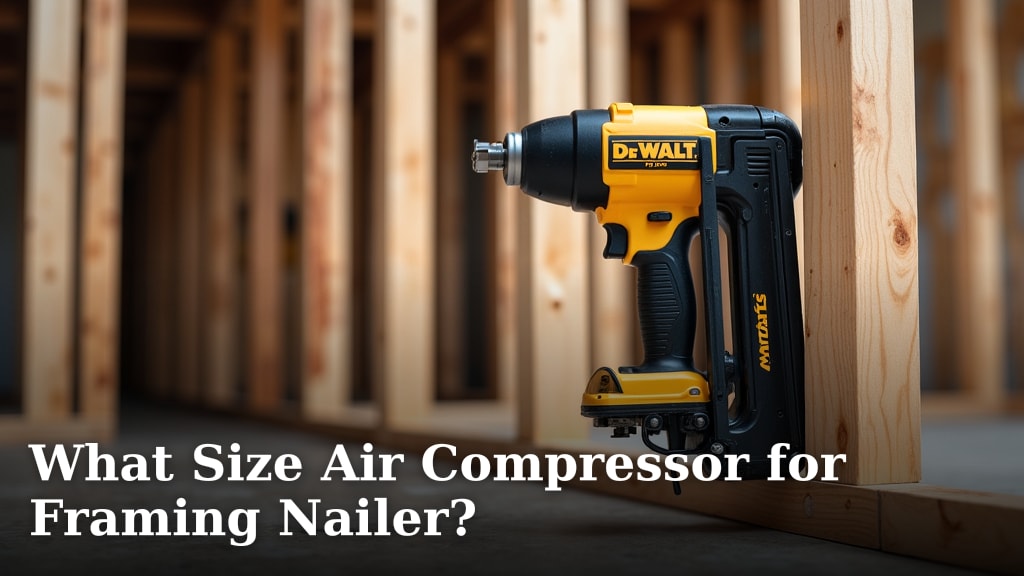
For framing nailers, you typically need an air compressor that can deliver at least 2 CFM (Cubic Feet per Minute) at 90 PSI. A larger tank size, like 20 gallons or more, is also recommended to avoid frequent cycling and maintain consistent air pressure for your framing tasks.
Choosing the right air compressor ensures your framing nailer has enough power to drive nails reliably. Not having enough CFM or a proper tank size can lead to frustrating delays and subpar work. We’ve researched the key specifications to help you make the best choice.
- Look for at least 2 CFM at 90 PSI for framing nailers.
- A 20-gallon tank or larger is ideal for continuous use.
- Proper sizing prevents pressure drops and nail jams.
- This ensures your nailer performs at its best consistently.
Let’s get straight to what you need to know about picking the perfect air compressor for your framing nailer.
Picking the Right Air Compressor for Your Framing Nailer
So, you’ve got a framing nailer, and now you need to make sure it gets the air it needs to perform. It’s like giving your nailer the right fuel. You don’t want it to sputter or die halfway through a project. We’ve looked into what makes a framing nailer happy, and it all comes down to a couple of key specs: CFM and tank size.
Understanding Air Compressor Specifications
When you’re looking at air compressors, two numbers usually stand out: PSI and CFM. PSI is the “push” or pressure. CFM is the “flow” or volume of air. For framing nailers, the CFM is usually more critical. You need enough air volume to drive those big framing nails into tough lumber. Too little CFM, and your nailer won’t be able to sink nails properly. They might pop out or get stuck halfway.
What Does CFM Really Mean?
CFM stands for Cubic Feet per Minute. Think of it like water flowing through a pipe. A higher CFM means more air is available to your tool. Framing nailers are air hogs. They use a lot of air with each shot. We found that most framing nailers require at least 2 CFM at 90 PSI. This is the standard measurement many tool manufacturers use. It ensures your nailer has consistent power.
Why 90 PSI Matters
PSI (Pounds per Square Inch) is the pressure at which the air is delivered. Your framing nailer will have a recommended operating pressure, and 90 PSI is common for these heavy-duty tools. The compressor needs to be able to deliver the required CFM *at* that specific PSI. A compressor might boast a high PSI, but if its CFM drops significantly at 90 PSI, it won’t be enough for your framing nailer.
The Importance of Tank Size
Beyond CFM and PSI, the tank size plays a vital role. This is the reservoir where the compressor stores compressed air. A larger tank is like a buffer. It means the compressor doesn’t have to run constantly. This is especially important when you’re doing a lot of nailing, like framing a house. Imagine trying to talk without pausing to take a breath – it’s tough! A big tank prevents that for your nailer.
How Tank Size Affects Your Workflow
A small tank will mean the compressor motor kicks on and off frequently. This can be annoying and, more importantly, can lead to fluctuating air pressure. If the pressure drops too much, your nailer will start to falter. We’ve seen that for framing jobs, a tank size of 20 gallons or more is often recommended. This gives you a good reserve of air, allowing for more sustained work before the compressor needs to recharge.
When a Smaller Tank Might Work (But Probably Not for Framing)
While smaller compressors (like 1-6 gallons) are great for light-duty tasks like brad nailing or inflating tires, they simply don’t have the air capacity for framing. You’d be waiting more than you’d be nailing. Many sources agree that anything less than 10 gallons is usually too small for any serious framing work.
Matching Compressor Specs to Your Framing Nailer
Let’s get down to brass tacks. Your framing nailer is the primary driver here. What does *it* need? Most framing nailers, whether pneumatic or cordless with a pneumatic element, will perform best when supplied with adequate air. Many professional-grade framing nailers are designed for job sites where a robust air supply is standard.
Checking Your Nailer’s Manual
The absolute best place to start is your framing nailer’s user manual. Manufacturers put this information there for a reason! They’ll specify the required CFM and PSI. Often, they’ll give you a range. For example, it might say “requires 2.0-4.0 CFM at 90 PSI.” This gives you a little wiggle room.
If you can’t find the manual, a quick online search for your nailer’s model number usually brings up the specifications. We found that many common framing nailers hover around the 2 CFM mark. So, aiming for a compressor that can consistently deliver at least that is a safe bet. Going a little over is always better than being under.
The “Duty Cycle” Concept
Another term you might hear is “duty cycle.” This refers to how long a compressor motor can run before needing to cool down. For framing, you want a compressor with a high duty cycle, ideally 50% or more. This means it can run for half the time without overheating. A compressor designed for continuous use will have a better duty cycle.
Compressor Types for Framing
Most framing jobs will use a piston air compressor. These are the most common type you’ll see on job sites and in workshops. They come in various sizes and power levels. You’ll typically be looking for a “hot dog” style compressor (longer, cylindrical tank) or a “pancake” style (shorter, wider tank). For framing, the “hot dog” style often has larger tanks and more powerful motors, making them a better fit.
Oil vs. Oil-Free Compressors
You’ll see both oil-lubricated and oil-free compressors. Oil-free compressors are generally lighter and require less maintenance. However, they can sometimes be noisier and might not last as long as their oil-lubricated counterparts under heavy, continuous use. Many professionals prefer oil-lubricated for durability on tough jobs, but modern oil-free designs are quite capable. For framing, durability is key, so consider this carefully.
Electric vs. Gas-Powered
Most framing will be done with electric compressors, especially if you have access to power on the job site or in your shop. If you’re working in a remote location with no electricity, a gas-powered compressor might be necessary. These are powerful but are louder, heavier, and require more maintenance (like oil changes for the engine).
Putting It All Together: What to Look For
To recap, when you’re hunting for an air compressor for your framing nailer, keep these points in mind. It’s about ensuring you have enough air, reliably, when you need it most. You want to drive nails, not chase down air pressure.
| Specification | Minimum Recommended | Ideal |
|---|---|---|
| CFM at 90 PSI | 2.0 CFM | 3.0 CFM or higher |
| Tank Size | 10 Gallons | 20 Gallons or larger |
| Duty Cycle | 50% | 75% or higher (continuous use) |
A Quick Checklist for Your Purchase
Here’s a simple rundown to help you make the final decision:
- Check your nailer’s manual for exact CFM and PSI needs.
- Aim for at least 2 CFM at 90 PSI. More is often better.
- Look for a tank size of 20 gallons or more for fewer interruptions.
- Consider compressors rated for continuous use or with a high duty cycle.
- Ensure the compressor can maintain consistent pressure without frequent cycling.
- Read reviews specifically mentioning framing nailer use if possible.
Conclusion
Choosing the right air compressor for your framing nailer is key to getting your projects done efficiently. You’ve learned that hitting at least 2 CFM at 90 PSI is essential, and a tank size of 20 gallons or more will keep you from constantly waiting for air. Remember to always check your nailer’s manual for its specific needs. Investing in a compressor that meets these specs means fewer nail jams, consistent power, and a much smoother building experience.
Your next step is to look at your specific framing nailer’s requirements and then compare that to the compressor options available, keeping our recommended specs in mind. Happy building!
Frequently Asked Questions
How can I tell if my current air compressor is too small for my framing nailer?
If your framing nailer struggles to drive nails completely, jams frequently, or makes sputtering noises, your compressor is likely too small. You might also notice the compressor motor running constantly or the air pressure dropping significantly with each nail fired. These are clear signs it can’t keep up with your nailer’s demand.
Can I use a smaller compressor (like a 6-gallon pancake) for occasional framing?
While a small compressor might work for a handful of nails in a pinch, it’s not ideal for any significant framing work. You’ll find yourself waiting for the tank to refill very often, making the job take much longer. For consistent performance, a larger tank and higher CFM are definitely recommended for framing.
What’s the difference between a “hot dog” and a “pancake” air compressor, and which is better for framing?
A “hot dog” compressor usually has a longer, cylindrical tank, often associated with higher capacities suitable for continuous use. “Pancake” compressors are shorter and wider, typically smaller. For framing, a “hot dog” style often offers larger tanks (20 gallons+) and more powerful motors, making them a better fit for sustained airflow needs.
Do I need to worry about the compressor’s duty cycle when framing?
Yes, duty cycle is important for framing. It tells you how long the compressor motor can run before needing to cool down. For framing, you want a compressor with a high duty cycle (50% or more) so it can keep up with the repetitive firing of your nailer without overheating and shutting down. Compressors designed for continuous use are best.
What happens if I use an air compressor with a higher CFM than my nailer requires?
Using a compressor with a higher CFM than your framing nailer requires is generally not a problem and is often beneficial. It means your nailer will always have more than enough air, leading to consistent power and less strain on the compressor. Just ensure the PSI matches or is adjustable to your nailer’s needs.
