
How To Calculate Air Compressor Requirements?
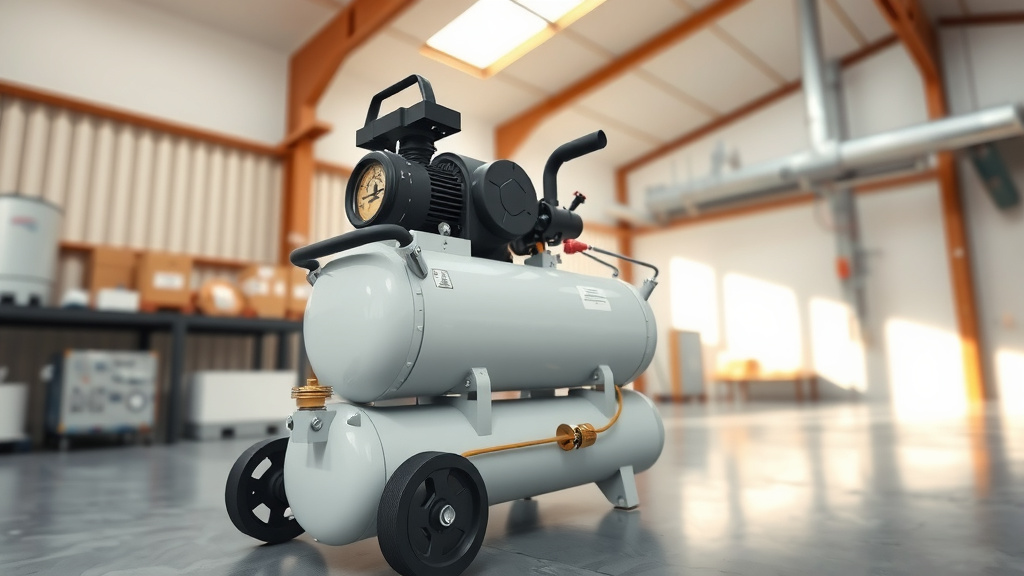
To calculate air compressor requirements, you need to determine the total CFM (Cubic Feet per Minute) and PSI (Pounds per Square Inch) needed for all your tools.
Start by listing every air-powered tool you use, find their individual CFM and PSI ratings, then add them up for a reliable estimate of your air compressor requirements.
Here’s a quick summary of what you’ll learn to confidently choose your next air compressor:
- Identify the specific CFM (airflow) and PSI (pressure) needed for your tools.
- Learn to calculate your total air needs, including a safety buffer.
- Understand how duty cycle impacts compressor choice and longevity.
- Discover the role of tank size and why it’s not about power.
- Find out how to plan for future expansion and potential air leaks.
How To Calculate Air Compressor Requirements?
Calculating air compressor requirements involves a straightforward process of adding up your tool’s needs. You primarily focus on CFM and PSI ratings. This ensures you buy a compressor that can actually keep up with your work.
Why Is Correct Sizing So Important?
Imagine trying to run a marathon on an empty stomach. You wouldn’t get very far, right? That’s what happens when your compressor is too small. It struggles, overheats, and can even damage your tools.
On the other hand, buying a compressor that is too large means spending extra money. You pay more for features you simply don’t need. Many experts say that finding the sweet spot saves you both headaches and cash (Industry Best Practices).
Understanding CFM: Your Airflow Power
CFM, or Cubic Feet per Minute, measures the volume of air an air compressor can deliver. Think of it as the breath your tools need to perform their tasks. Tools like grinders or sanders need a lot of constant air volume.
Without enough CFM, your tools will run slowly or stop working altogether. This makes jobs take longer. It also puts strain on your equipment.
How to Find Your Tool’s CFM
Each air tool you own will have a CFM rating listed. You can usually find this in the owner’s manual. Sometimes it’s printed directly on the tool itself. Always look for the CFM required at a specific PSI, often around 90 PSI.
If you cannot find the exact rating, a quick search online for the tool model often helps. We found that most manufacturers provide these details readily.
Understanding PSI: Your Air Pressure Strength
PSI, or Pounds per Square Inch, indicates the air pressure the compressor can generate. This is the “push” behind the air. Think of it like water pressure in your garden hose. Some tasks need a strong, direct spray.
Different tools require different pressure levels. An air nailer might need 90 PSI. A paint sprayer might need lower pressure, but more consistent volume. Understanding both CFM and PSI is key.
PSI for Common Applications
Most common shop tools operate effectively around 90 PSI. This includes impact wrenches, air ratchets, and grinders. Tire inflation might need 30-60 PSI. Heavy-duty tasks, like sandblasting, might demand 100-120 PSI.
Always check the maximum PSI for your tools. Never exceed this limit to prevent damage. A compressor should always meet or exceed your highest tool’s PSI requirement.
Calculating Total CFM Needs
This is where the rubber meets the road. List every air tool you plan to use with your compressor. Write down their individual CFM requirements at 90 PSI. Now, here’s the trick: You usually don’t run all tools at once, right?
Many experts recommend adding up the CFM of your most-used tools. Then, identify the tool with the highest CFM rating. That high-CFM tool is your baseline. Add about 10-20% extra CFM for a safety buffer. This ensures the compressor doesn’t run constantly.
Don’t Forget the Duty Cycle!
A compressor’s duty cycle tells you how long it can run continuously before needing to rest. Many smaller compressors have a 50% duty cycle. This means they can run for 30 minutes in any hour. Ignoring this can cause overheating.
For demanding, continuous work, you need a compressor with a 100% duty cycle. Rotary screw compressors typically offer this. Piston compressors usually have a lower duty cycle. Matching your duty cycle to your work matters a lot for compressor lifespan.
Considering Air Quality and Dryer Needs
Is your application sensitive to moisture or oil? Painting, sandblasting, or medical tools need very clean, dry air. A standard compressor produces air with moisture. You might need an air dryer or filters.
Adding these components impacts your overall system efficiency. They can also cause a slight pressure drop. Always factor these into your calculations if air purity is important.
Tank Size: Storage, Not Power
Many people mistakenly think a bigger tank means a more powerful compressor. This isn’t true! The tank size determines how much compressed air can be stored. It’s like a battery for your air tools.
A larger tank allows the compressor to cycle less often. This gives it more time to cool down. It’s great for intermittent tasks but won’t change the actual CFM output. A small tank might make the motor run more often, leading to faster wear.
Factoring in Future Growth and Leakage
Are you planning to add more air tools down the road? Or expand your workshop? It’s always wise to slightly oversize your compressor. This gives you room to grow without buying a new unit too soon. Many experienced users recommend this approach.
Air leaks can also waste a lot of power. Even small leaks in hoses or fittings add up. We found that a significant percentage of compressed air can be lost to leaks in an average system. Fixing these is a quick way to save energy.
The ‘Add a Buffer’ Rule
Once you’ve calculated your total CFM, always add a buffer. A common recommendation is to add 15-20% to your calculated CFM. So, if your tools need 10 CFM, aim for a compressor that provides 11.5-12 CFM. This prevents the compressor from running at its absolute limit all the time. It also helps against unexpected surges.
Here’s a look at common tool CFM requirements at 90 PSI:
| Air Tool Type | Average CFM @ 90 PSI |
|---|---|
| Air Ratchet | 3-5 CFM |
| Impact Wrench (1/2″) | 4-6 CFM |
| Air Sander (Orbital) | 6-10 CFM |
| Die Grinder | 5-8 CFM |
| Air Hammer/Chisel | 3-6 CFM |
| Spray Gun (HVLP) | 10-20 CFM |
When choosing your air compressor, consider these key factors:
- Total CFM and PSI needed: This is your baseline requirement.
- Duty cycle of your work: How often will your tools be running?
- Available power supply: Do you have 120V or 240V access?
- Noise level tolerance: Some compressors are much louder than others.
- Portability requirements: Will it stay in one spot or move around?
- Air quality needs: Is dry, oil-free air essential for your tasks?
Use this simple checklist to guide your decision-making:
- List all air tools and their CFM/PSI ratings.
- Identify the highest individual CFM tool.
- Calculate total peak CFM for simultaneous tools.
- Add a 15-20% safety buffer to your total CFM.
- Ensure the compressor’s max PSI meets your highest tool’s need.
- Consider tank size for intermittent use and less cycling.
Conclusion
Calculating your air compressor requirements doesn’t have to be a guessing game. By carefully assessing your tool’s CFM and PSI needs, considering duty cycle, and planning for future growth, you can make a smart choice. Taking these steps ensures your compressor works efficiently. It also extends the life of both your compressor and your air tools. Now you have the facts to make a truly informed decision!
What is the difference between CFM and SCFM?
CFM (Cubic Feet per Minute) is the basic measure of airflow. SCFM (Standard Cubic Feet per Minute) adjusts CFM to a standard set of conditions, typically 68°F and 36% relative humidity at sea level. For most home or small shop users, focusing on the CFM rating provided by tool manufacturers is usually sufficient, as it’s typically given at a specified working pressure.
How does elevation affect air compressor performance?
At higher elevations, the air density is lower. This means an air compressor has to work harder to produce the same volume of compressed air. Consequently, a compressor might deliver slightly less actual CFM than its rated capacity at sea level. If you’re at a high altitude, you might consider oversizing your compressor slightly to compensate.
Should I choose an oil-lubricated or oil-free air compressor?
Oil-lubricated compressors generally offer longer lifespan and quieter operation, making them good for regular, heavy-duty use. Oil-free compressors require less maintenance and produce air free of oil contaminants, which is crucial for applications like painting, food processing, or medical use. However, they can sometimes be noisier and have a shorter lifespan compared to their oil-lubricated counterparts.
Is it better to have a higher PSI or higher CFM?
Neither is inherently “better”; it depends entirely on your specific applications. If your tools require a lot of air volume to run continuously (like sanders or grinders), a higher CFM is more important. If your tools need a strong burst of pressure for a short duration (like impact wrenches), sufficient PSI is key. Many applications require a balance of both, so always match the compressor’s output to your tools’ specific needs.
How often should I drain my air compressor tank?
You should drain your air compressor tank daily or after each use. Compressed air contains moisture, and this moisture condenses into water inside the tank. Regular draining prevents rust and corrosion inside the tank, which can weaken it over time and contaminate your compressed air supply. It’s a simple maintenance step that significantly extends the life of your compressor.
