
How Large Of An Air Compressor Do I Need?
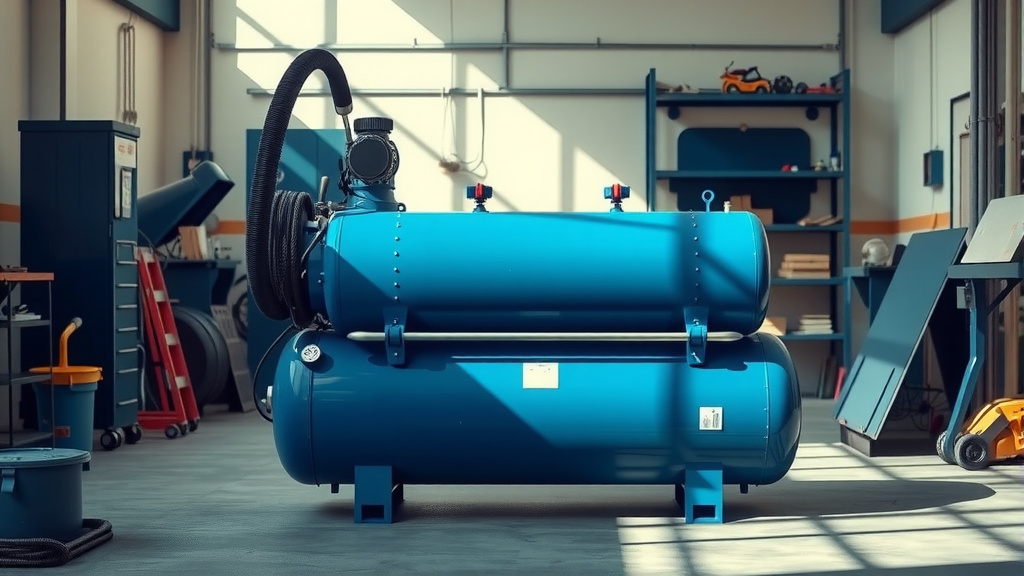
To determine how large of an air compressor you need, first list all the air tools you plan to use and find their CFM (Cubic Feet per Minute) requirements at a specific PSI (Pounds per Square Inch). Then, choose a compressor that can deliver at least 1.5 times the highest CFM of your most air-hungry tool.
This ensures your air compressor can keep up with demand, preventing frustrating pauses and protecting your tools from inadequate airflow, making your projects much smoother.
- The right air compressor size depends on your tools’ CFM needs, not just tank volume.
- Always check the CFM at 90 PSI for your most demanding air tool.
- Add a 50% buffer to your highest CFM requirement for optimal performance.
- Tank size affects how long you can run tools without the motor cycling, not total power.
- Consider your power source (electric or gas) and duty cycle for long-term use.
How Large Of An Air Compressor Do I Need?
Choosing the right air compressor size can feel like a puzzle. You want enough power without buying too much. It all comes down to matching the compressor’s output to your tools’ needs.
Why Air Compressor Size Matters So Much
Imagine trying to run a marathon with a tiny glass of water. That’s what happens when your compressor is too small. It struggles to keep up. This means your tools won’t work right. They might even suffer damage. A properly sized compressor lets you work efficiently. It also protects your investment in air tools (Many experts say).
Understanding CFM: Your Tools’ Appetite
CFM, or Cubic Feet per Minute, is perhaps the most important number to know. It tells you how much air your tool needs to run. It also tells you how much air a compressor can deliver. Always check your tools for their CFM requirement. Most often, this is listed at 90 PSI.
What About PSI? Pressure, Not Volume
PSI stands for Pounds per Square Inch. This is the pressure at which the air is delivered. Most air tools operate best around 90 PSI. A compressor needs enough PSI to drive the tool. However, CFM tells you the volume of air flow. You need both to be adequate.
Matching CFM to Your Air Tools
Start by identifying your most air-hungry tool. Is it an impact wrench? A sander? Find its CFM rating at 90 PSI. Let’s say your sander needs 10 CFM at 90 PSI. You’ll want a compressor that can produce at least 15 CFM at 90 PSI. Why the extra? That’s your safety buffer. It ensures the compressor isn’t running constantly. We found that a 50% buffer helps extend the compressor’s life.
Tools That Demand More Air
Some tools are just thirstier than others. Sanders, grinders, and paint sprayers are known for their high CFM needs. Impact wrenches and nail guns typically use air in quick bursts. But if you’re doing continuous work, their burst usage adds up fast.
Intermittent vs. Continuous Use
Are you just inflating tires now and then? A smaller compressor is fine. Are you sandblasting all day? You need a beast. For continuous use, your compressor’s “delivered CFM” must meet or exceed your tool’s requirement. For intermittent use, the tank size helps smooth out demand.
Tank Size: Storage for Your Air
The tank doesn’t add power. Think of it like a battery for air. A larger tank stores more compressed air. This means the compressor motor runs less often. It kicks on to refill the tank, then shuts off. For tools used in short bursts, a larger tank means fewer motor cycles. This is great for noise and motor longevity (Industrial Compressor Association).
Portable Air Compressors: Small Tanks, Quick Jobs
Most portable compressors have tanks from 2 to 6 gallons. These are great for tire inflation or nail guns. They’re easy to move around. But they will refill often if you use demanding tools. This can be annoying and noisy.
Stationary Compressors: Big Tanks, Steady Power
Tanks range from 20 gallons to 80 gallons or more. These are for workshops and garages. They allow for more sustained work. The motor doesn’t have to cycle as frequently. This is ideal for painting, sanding, or running multiple tools.
Duty Cycle: How Long Can It Run?
A compressor’s duty cycle tells you how long it can run versus how long it needs to rest. Some compressors are rated for 50/50 duty. This means they can run for half the time and then need to cool down. Others are 100% duty cycle, designed to run continuously. For heavy use, a higher duty cycle is essential.
Electric vs. Gas: What Powers Your Work?
Electric compressors are quieter and produce no fumes. They are perfect for indoor use. Gas compressors offer more power and portability. They are ideal for outdoor jobs or construction sites without power access. Your workspace helps determine which is best.
Single-Stage vs. Two-Stage Compressors
Single-stage compressors compress air once. They are common for home and light shop use. Two-stage compressors compress air twice. This results in higher pressure and efficiency. They are often found in industrial settings or busy professional shops. We found that two-stage compressors are more durable for heavy daily use (Compressed Air and Gas Institute).
A Quick Checklist Before You Buy
- List all tools and their CFM @ 90 PSI.
- Add a 50% buffer to your highest CFM.
- Consider your tank size needs (intermittent vs. continuous).
- Evaluate the compressor’s duty cycle.
- Decide between electric or gas power.
- Factor in your budget and available space.
Common Air Tool Requirements (Table)
This table offers a general guide. Always check your specific tool’s manual.
| Air Tool | Approx. CFM @ 90 PSI | Usage Type |
|---|---|---|
| Nail Gun (Brad/Finish) | 0.5 – 2 | Intermittent |
| Impact Wrench (1/2″) | 4 – 6 | Intermittent |
| Air Ratchet | 3 – 5 | Intermittent |
| Die Grinder | 6 – 10 | Continuous |
| Orbital Sander | 8 – 12 | Continuous |
| Paint Sprayer (HVLP) | 10 – 20+ | Continuous |
| Air Chisel/Hammer | 3 – 8 | Intermittent |
| Air Blow Gun | 2 – 5 | Intermittent |
Conclusion
Choosing the right air compressor size boils down to simple math and careful planning. You’re not just buying a machine; you’re buying the ability to power your projects smoothly. Focus on CFM, add that buffer, and think about how you’ll use it. With the right size, your work becomes easier, faster, and much more enjoyable. Don’t let a too-small compressor slow you down!
What Does CFM Mean for Air Compressors?
CFM, or Cubic Feet per Minute, measures the volume of air an air compressor can deliver. For air tools, it indicates how much air volume they need to operate correctly. You should always look for the CFM rating at a specific PSI, usually 90 PSI, to make accurate comparisons and ensure your compressor can meet your tools’ demands.
Is a Larger Air Compressor Tank Better?
A larger air compressor tank provides a reserve of compressed air, meaning the compressor motor runs less frequently to maintain pressure. This is particularly beneficial for tools that require bursts of air, as the tank can supply the air without the motor immediately kicking on. For continuous use tools, while helpful, the sustained CFM output of the motor is still more critical than tank size alone.
Can I Use a Small Compressor for Big Jobs?
While you technically *can* use a small compressor for big jobs, it’s generally not recommended. A small compressor will struggle to keep up with the high CFM demands of larger tools or continuous tasks. This leads to frequent motor cycling, overheating, slower work, and potential damage to both the compressor and your tools. It’s often more frustrating than productive.
What’s the Difference Between Single-Stage and Two-Stage?
The main difference lies in how many times the air is compressed. A single-stage compressor compresses air once to reach its maximum pressure. A two-stage compressor compresses the air twice, typically to a higher pressure and often with greater efficiency. Two-stage models are built for more demanding, continuous, or industrial applications, while single-stage units are suitable for lighter home and shop use.
How Do I Calculate My Total Air Needs?
To calculate your total air needs, identify all the air tools you plan to use. Find the CFM requirement at 90 PSI for each tool. If you plan to use multiple tools simultaneously, add their CFM requirements together. For general use, take the highest CFM rating of your most demanding tool and multiply it by 1.5 (a 50% buffer). This gives you a good target CFM for your new compressor.
