Is a 15 Gallon Air Compressor the Right Size for Your Tools?
A 15 gallon air compressor can suit intermittent use of many air tools, but tank size alone doesn't determine whether it can keep up. Compare each tool's CFM demand at its working PSI with the compressor's delivered airflow, then consider how long you'll use it between pauses.
On this page (7 sections)
- Is a 15 gallon air compressor big enough for your tools?
- Why do CFM and duty cycle matter more than gallons?
- Which 15 gallon compressor features should you check?
- When is 15 gallons a good fit?
- Which compressor examples show the trade-offs?
- How can you tell if a 15 gallon compressor will keep up?
- What should you choose instead of 15 gallons?
A 15 gallon air compressor can suit intermittent use of many garage and workshop tools, but tank capacity alone doesn't tell you whether it can keep up. Compare each tool's air demand in CFM at its working PSI with the compressor's delivered airflow, then consider how long you'll run it between pauses.
A tank stores compressed air; the pump replenishes it. A larger tank can give you more reserve for short bursts, but it won't turn a low-output pump into a continuous-duty compressor.
Use the checks below to decide whether 15 gallons fits your tools, work pattern and workspace. If you're comparing sizes more broadly, start with What Size Compressor Tank Do I Need?.
Is a 15 gallon air compressor big enough for your tools?
A 15 gallon tank is a reasonable starting point for tools used in short bursts, provided the pump delivers enough CFM at the pressure those tools need. It may fall short when a tool uses air steadily or demands more airflow than the compressor can replace.
The tool manual is the first place to check. Look for its required CFM and PSI, and compare those numbers with the compressor's delivered CFM at the same pressure.
| Work pattern | What to check | What a 15 gallon tank may do |
|---|---|---|
| Short bursts, followed by pauses | Tool CFM, working PSI and pump recovery | Provide a reserve while the compressor catches up |
| Repeated bursts with little downtime | Tool demand versus compressor output | Pressure may drop if use outpaces recovery |
| Long, steady air use | Continuous CFM and duty cycle | Tank reserve can run down quickly |
| Multiple tools at once | Combined CFM demand | Add the tools' requirements before comparing |
These are general decision patterns, not guarantees for every compressor. Pump output, pressure settings, the tool and your pace all affect how long the system runs before pressure drops.
A tool's maximum pressure rating isn't its air consumption. CFM and working PSI together are the useful comparison, while tank volume indicates stored air.
What size air compressor tank do common tools need?
There isn't one tank size that fits every tool in a category. Nailers often use air in brief shots, while sanding, grinding and some spray work can draw air for longer stretches.
| Tool or task | Typical use pattern | What matters most |
|---|---|---|
| Brad or finish nailer | Short bursts | Recovery between shots and the tool's pressure range |
| Framing nailer | Repeated bursts | CFM under fast use and pump recovery |
| Tire inflation | Intermittent | Working pressure, hose reach and the tire's required pressure |
| Blow gun | Short or sustained, depending on the task | CFM and safe use around people and debris |
| Impact wrench | Bursts, often repeated | Tool CFM at working pressure and hose size |
| Spray gun | Often steady while spraying | Continuous airflow and pressure stability |
| Air sander or grinder | Sustained use | Delivered CFM and compressor duty cycle |
The exact requirement varies by tool model. Treat the table as a guide to what to investigate, then use the tool's manual for its stated air demand.
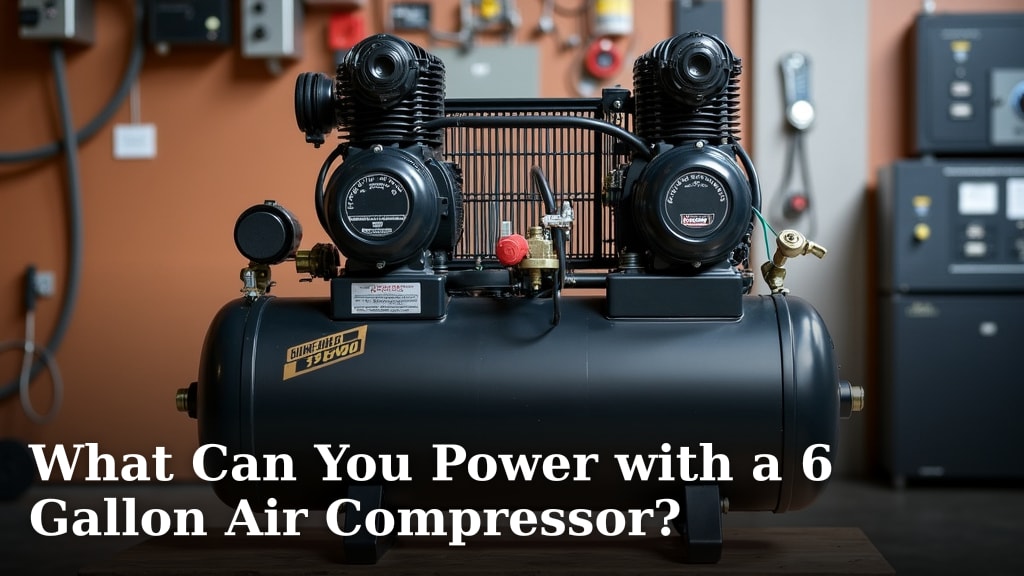
A smaller tank can still suit a tool that runs briefly, while a larger tank can disappoint when the pump is unable to replenish air fast enough. Our guide to what you can power with a 6 gallon air compressor shows how smaller capacity can fit certain tasks.
Why do CFM and duty cycle matter more than gallons?
CFM tells you how quickly the compressor can supply air, while duty cycle describes how long its pump can operate before it needs a rest. Together, they help you judge whether a compressor can support your work beyond a short initial burst.
Check the compressor's delivered CFM at the PSI your tool needs. A CFM figure measured at a different pressure may not describe what the compressor supplies at your working pressure.
The pump also needs time to refill the tank. If your tool draws air faster than the pump supplies it, stored air declines and the compressor runs more often.
A longer tank can delay that pressure drop, but it does not increase pump output. For sustained use, look for a compressor whose rated delivery and duty cycle suit the tool and your work sessions.
Don't compare gallons alone. A 15 gallon compressor with modest airflow may struggle with a tool that runs continuously, while a smaller unit can be adequate for a tool used only in brief bursts.
Which 15 gallon compressor features should you check?
A 15 gallon compressor's suitability depends on air delivery, pressure, duty cycle, power and fit in your workspace. Tank capacity is one useful detail, but the rest determine how practical the compressor is.
Check these details before buying:
- Delivered CFM at your working PSI: Match the compressor figure to your tool's requirement at the same pressure.
- Duty cycle: Confirm how long the pump can run and what rest period it needs.
- Maximum pressure: Make sure the compressor's operating range covers the tools you plan to use.
- Power needs: Check the electrical supply and starting requirements for the specific model.
- Tank dimensions and weight: Measure the storage spot, path through doors and any steps or lifting.
- Noise: Compare the stated sound level with where and when you'll use the unit.
- Outlet and hose setup: Check couplers, hose diameter and length for compatibility with your tools.
- Maintenance needs: Read the care instructions for the pump type and tank.
If a maker gives both peak and delivered airflow, use the delivered figure for tool matching. Also consider hose length and fittings, since a restrictive setup can affect the air available at the tool.
A compressor that fits a garage may be awkward to carry to another floor. Plan where it will live and how you'll move it before you settle on a tank size.
When is 15 gallons a good fit?
A 15 gallon compressor is most useful when your tools need a moderate reserve and you can give the pump time to recover. It can be a practical middle ground for a garage where a very small tank cycles often but a large shop compressor would take too much room.
It may suit you if you:
- Use nailers, tire tools or blow guns in short sessions.
- Have several jobs with pauses between them.
- Need more stored air than a compact trim compressor provides.
- Have space for a larger unit and don't need to carry it frequently.
- Have checked that the pump's CFM meets your tools' needs.
It may be a poor fit if you expect to sand, grind or spray for long periods and the pump's output is below the tool's demand. In that case, a larger tank might extend the first run slightly, but a higher-output compressor is the more important change.
If your tasks are light and occasional, a smaller option might be enough. Compare the best 6 gallon air compressors and what a 2 gallon air compressor can do before paying for unused capacity.
Which compressor examples show the trade-offs?
These three examples show how the intended use can differ across portable inflation, small nailer work and a larger shop setup. None is a 15 gallon model, so use them to compare needs rather than as direct substitutes.
EPAuto 12V DC Portable Air Compressor Pump
The EPAuto is a vehicle-powered tire inflator for car, bike, sedan and midsize SUV tires. It plugs into a 12V cigarette lighter socket and includes a display in PSI, KPA, BAR and KG/CM, plus automatic shutoff at a set pressure.
EPAuto says it isn't designed for truck tires. This type of inflator serves a different job from a tank compressor, so choose it for vehicle tire inflation rather than nailers, impact wrenches or spray guns.
Metabo HPT Quiet Air Compressor
The Metabo HPT is a 1 gallon oil-free compressor designed for portable use and quiet operation. It has a universal quick coupler for switching among framing, siding, finish and roofing nailers.
At 25.2 lb and 59 dB, it is smaller and quieter than a typical 15 gallon shop setup might be. Its small tank makes it a different choice for intermittent nailer work, not a substitute for a compressor whose airflow can support sustained high-demand tools.
California Air Tools 10020C 2.0 HP Ultra
The California Air Tools 10020C has a 10 gallon steel tank and wheels for moving it around a shop or garage. Its stated airflow is 6.40 CFM at 40 PSI and 5.30 CFM at 90 PSI, which gives you useful figures to compare with tool requirements.
It is not a 15 gallon unit, but it illustrates why pump output matters alongside capacity. Compare its airflow at your tool's working pressure, then check its 82.5 lb weight, 70 dB noise level and 14 A maximum current against your space and power setup.
How can you tell if a 15 gallon compressor will keep up?
Compare the longest tool run you expect with the compressor's output and recovery, rather than judging from a brief trial burst. A tank may support short work well but lose pressure during a longer pass.
Use this simple check:
- Find your tool's required CFM and PSI in its manual.
- Find the compressor's delivered CFM at that PSI.
- Compare the figures and check the compressor duty cycle.
- Add the CFM requirements if you plan to run tools together.
- Consider how long you'll operate the tool before taking a pause.
- Confirm the hose and fittings are suitable for the tool's airflow.
If the tool's demand is above the compressor's output, pressure will eventually fall during sustained use. A larger tank may slow the drop, but it cannot remove the gap between demand and supply.
For air tools used in brief bursts, pauses let the pump rebuild pressure. If you expect continuous spraying or sanding, choose around the sustained demand and duty cycle instead.
What should you choose instead of 15 gallons?
Choose a compressor size around the air demand and work pattern you can name, not a general rule that bigger is always better. Smaller tanks can suit brief tasks; sustained use calls for enough delivered CFM and duty cycle.
Choose a smaller compressor if you mainly inflate tires or use a nailer in short bursts and value easy storage. For pancake models, see what size pancake compressor you need.
For the smallest tank size here, compare 1 gallon air compressors for light, intermittent jobs.
Choose 15 gallons if your tools need a moderate reserve, you have room for the unit and their airflow needs match its pump.
Choose a higher-output shop compressor if your work includes long spray, sanding or grinding sessions. For a stationary shop option, compare 60 gallon air compressors against your tool demand and available power.
Compare actual delivered CFM, working pressure and duty cycle before deciding whether the larger tank is worth its space. For a high-capacity option, see two stage 80 gallon compressors.
The useful decision rule is simple: pick the tank for your reserve needs and the pump for your air demand. Check both against your tools before choosing a 15 gallon air compressor.
Frequently asked questions
Is a 15 gallon air compressor enough for an impact wrench?
It depends on the impact wrench's required CFM at its working pressure and how long you use it. Compare the tool's air demand with the compressor's delivered CFM, then allow for fittings and hose losses.
A 15 gallon tank can provide a reserve, but it cannot make an undersized pump deliver air continuously.
Can a 15 gallon compressor run a paint sprayer?
Some paint sprayers may work with a 15 gallon compressor if its delivered CFM meets the sprayer's requirement at the needed pressure. Check the sprayer manual and compressor output, and account for long, continuous passes.
If the pump cannot keep up, pressure can fall during a pass and affect the finish.
Does a bigger compressor tank make more CFM?
No. Tank volume stores compressed air; the pump's delivery rate determines how quickly the compressor can replace air while a tool runs.
A larger tank may extend a short burst before pressure drops, but it does not raise the compressor's sustained CFM.
Is a 15 gallon compressor portable?
Portability depends on the unit's weight, shape, handle, wheels and the route you need to move it over. A 15 gallon tank is larger than a small trim compressor, so check its dimensions and weight, plus whether stairs, vehicle loading or storage space are part of your routine.
What should I check before buying a 15 gallon air compressor?
Check the tool's CFM requirement at its working PSI, then compare it with the compressor's delivered CFM at that pressure. Also check duty cycle, electrical needs, tank dimensions, noise, mobility and the fittings you need.
Match those details to your longest typical work session, not only the tank label.