Air Hose Rubber vs PVC vs Hybrid: Which Is Better? (November 2026)
Choose rubber for maximum flexibility, PVC for low weight and hybrid hose for a practical balance. Your climate, hose length, air demand and work surface should decide the material.
On this page (9 sections)
- Air hose rubber vs PVC vs hybrid: which material should you choose?
- How do rubber, PVC and hybrid hoses compare in daily use?
- Which hose material works best in cold weather?
- Does hose size matter more than material?
- Which hose is best for a long driveway or job site?
- Which product fits each buying situation?
- How should you store and care for an air hose?
- Are rubber and hybrid hoses better than polyurethane?
- What should you choose for your compressor?
Choose rubber for maximum flexibility, PVC for low weight and hybrid hose for a balanced mix of both. The right choice depends on temperature, hose length, air demand and how often you drag the hose across rough ground.
Material changes how a hose feels day to day. A soft hose is easier to route around a vehicle or workbench, while a stiff hose can fight you at every turn.
Weight matters more as length grows. A short shop hose is easy to carry, but a long run becomes a chore when it is heavy or hard to coil.
Temperature range matters as much as the material name. Cold can make some hoses hard to bend, and heat can affect outdoor use, so check the published limits for the exact model.
Air demand also shapes the choice before material. A larger diameter can supply more air to high flow tools, while a smaller diameter suits lighter general purpose work.
Work surface is another practical factor. Concrete, gravel and metal edges can wear a hose quickly, so a tougher outer coating may matter more than a light feel on a job site.
Rubber suits workshops that value a soft, flexible feel. It moves easily around corners and stays pleasant to handle during frequent connections and disconnections.
The trade off with rubber is often heft. A long rubber hose can be tiring to carry up stairs, across a yard or in and out of a service vehicle.
PVC is useful when carrying weight matters most. It is easier to lift, store and move between a garage and a driveway for short or occasional jobs.
That lighter handling can have limits in cold weather for some plain PVC designs. If winter work is part of your routine, a clear low temperature rating is a safer guide than the PVC label alone.
A PVC and rubber hybrid can reduce the trade off between flexibility and weight. The blend keeps handling manageable while adding the pliability and toughness many users expect from rubber.
Hybrid construction also suits mixed indoor and outdoor use. You can move from a warm shop to a cold driveway without changing hoses, which saves time on bigger projects.
Fittings deserve attention alongside the hose itself. Solid brass fittings and bend resistors protect the ends of the hose where stress builds up during daily use.
Length should match the job rather than simply buying the longest option. Extra reach can save compressor moves, but excess hose still needs space to coil and care to avoid kinks.
This guide compares hose materials, working conditions, airflow and care. For a broader look at couplers, fittings and hose sizing, see our air hose complete buying guide.
 Best for long general-purpose runs
Estwing E14100PVCR 1/4" x 100' PVC/Rubber Hybrid
Air hose rubber vs PVC vs hybrid: which material should you choose?
Pick rubber for flexibility, PVC for light handling and hybrid hose for all-around use. The best material is the one that matches your work surface, climate and compressor setup.
Rubber is often comfortable to move around a busy shop because it tends to stay flexible. Its trade-off is that a rubber hose can feel heavier than a PVC hose of the same length.
PVC can be easier to carry and store. It may be a sensible choice for occasional indoor jobs, but cold conditions can make some PVC hoses less pleasant to handle.
A hybrid hose combines PVC and rubber. The goal is to keep the lower weight of PVC while adding some of the strength and flexibility associated with rubber.
What is a hybrid air hose?
A hybrid air hose uses blended PVC and rubber construction to balance handling and durability. It is not the same as a plain PVC hose because the blend changes how the hose behaves during use and storage.
The what is a hybrid air hose guide explains the construction in more detail. In general, hybrid hose is a useful middle ground when you move between a garage, driveway and job site.
How do rubber, PVC and hybrid hoses compare in daily use?
Rubber usually feels most flexible, PVC usually feels lightest and hybrid hose aims for a middle point. Your preferred feel matters because a hose that is hard to move or coil can slow down simple jobs.
A flexible hose follows you more easily around a vehicle or workbench. It also takes less effort to position near a nailer, impact wrench or spray gun.
Weight matters on long runs. A 100 ft hose can cover more ground, but the extra length also creates more hose to carry, coil and protect after use.
A hybrid hose can make sense when you want reach without accepting the full handling burden of a heavier material. The Estwing E14100PVCR is a 1/4 in x 100 ft PVC/rubber hybrid with a 300 PSI maximum working pressure.
For a rubber-focused comparison, see our guide to the best rubber air hose for compressor. It can help if you prefer a traditional rubber hose for workshop use.
Which hose material works best in cold weather?
Choose the hose with the published temperature range that covers your working conditions. Do not assume that every rubber, PVC or hybrid hose handles winter temperatures in the same way.
The Estwing hybrid hoses in this comparison are described as flexible from -40°F to 164°F. That range makes them suitable for a wide set of indoor and outdoor conditions, but you should still store and use any hose according to its care instructions.
Cold weather can make hose material feel less pliable. A stiff hose is harder to route, more likely to resist coiling and less pleasant to move around obstacles.
If winter work is common, compare the exact temperature range before choosing by material label. A hose with a clear cold-weather range gives you more useful information than a simple rubber or PVC description.
Does hose size matter more than material?
Hose diameter affects airflow, so size matters alongside material. A 1/4 in hose can suit general-purpose tasks, while a 3/8 in hose is a better match for tools that need more air volume.
The Estwing E14100PVCR has a 1/4 in size and a 100 ft length. Its longer reach can help you work farther from the compressor without moving the machine as often.
The Estwing E3850PVCR has a 3/8 in x 50 ft size. Its larger diameter is designed for more air volume and is suited to HVLP paint sprayers and pneumatic automotive tools such as impact wrenches, ratchet wrenches, air drills and die grinders.
See the best 3/8 hybrid air hose options if your tool setup needs more airflow. You can also compare the best 3/8 inch rubber air hose choices if you want a rubber construction at that diameter.
Do not select a hose by diameter alone. Check the compressor outlet, tool inlet, coupler type and required airflow so the complete connection works together.
For press-in plastic connections, see how to seal press-in air fittings.
Which hose is best for a long driveway or job site?
A long hybrid hose is a practical choice when reach and manageable weight both matter. The 100 ft Estwing hybrid can reduce how often you move the compressor during a large work area.
Long hoses need a clear route. Keep them away from sharp edges, hot surfaces, vehicle tires and places where doors can pinch them.
The E14100PVCR includes a 1/4 in NPT industrial fitting and a universal coupler, both made of solid brass. It also has bend resistors at each end and a kink-resistant design.
A shorter hose can be easier to store and faster to deploy in a compact shop. The 50 ft E3850PVCR may suit you better when the compressor stays near the workbench or vehicle.
For a general-purpose hybrid option, compare the best hybrid air hose for compressor. For a PVC-focused option, see the best PVC air hose for compressor.
Which product fits each buying situation?
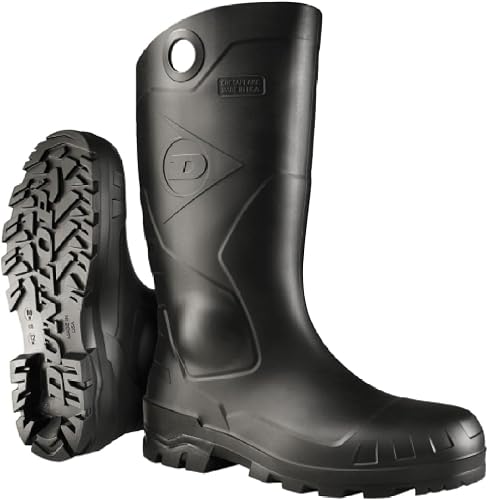
The 100 ft hybrid suits long general-purpose runs, while the 3/8 in hybrid suits higher-flow tools. The Dunlop item is footwear, not a compressor hose, so it should not be used for air delivery.
The E14100PVCR combines a 1/4 in diameter with 100 ft of length. That makes it useful when the compressor needs to stay in one place while you move around a garage, driveway or construction area.
Its hybrid construction is designed to balance PVC's lower weight with rubber's flexibility. The hose also has a rubber coating, kink resistance and bend resistors at both ends.
The Dunlop Protective Footwear item has 100% waterproof PVC construction, a lightweight design, a wide calf opening and a slip-resistant outsole. Those details may suit wet outdoor work, but the boot cannot carry compressed air.
This distinction matters because PVC is used in many products. A PVC label does not tell you that an item is rated for air pressure, fitted with couplers or suitable for a compressor.
The E3850PVCR has a 3/8 in diameter and 50 ft length. It delivers up to 300 PSI maximum working pressure and includes a 1/4 in NPT industrial fitting and universal coupler made of solid brass.
Its hybrid hose is described as flexible from -40°F to 164°F. Kink resistance, bend resistors and a rubber coating support general indoor and outdoor use, including work around abrasive surfaces, chemicals, electricity and oil.
How should you store and care for an air hose?
Drain pressure, coil the hose without tight bends and keep it away from damage. Good storage protects the hose and makes the next job faster to start.
Disconnect the hose according to your compressor and tool instructions. Release pressure safely before removing fittings, and never pull the hose by its coupler.
Coil the hose in broad loops rather than sharp folds. If you store a long hose on a retractable reel, see retractable air hose reel parts.
Tight bends can stress the hose wall and fittings, especially near the compressor or tool connection.
Keep the hose off sharp edges and abrasive surfaces when possible. The Estwing hybrid hoses have rubber coating and kink-resistant designs, but those features do not make them immune to cuts or crushing.
Inspect the hose before each use. Look for cuts, bulges, damaged fittings or air leaks, and replace a damaged hose instead of wrapping it as a permanent repair.
For bulk workshop needs, see the best rubber air hose bulk guide. For a lighter material comparison, review the best polyurethane air hose options.
Are rubber and hybrid hoses better than polyurethane?
Rubber and hybrid hoses usually make more sense when flexibility and rough-site durability matter, while polyurethane can suit light handling and compact storage. The best choice depends on the tool and work area.
Polyurethane hoses are often considered for portable setups because they can be light and easy to manage. Compare the exact pressure rating, diameter, length and temperature range before switching materials.
Our best polyurethane air hose 1/4 guide covers smaller hose setups. If you need a wider line, compare the best polyurethane air hose 3/8 options.
Color and brand can also help you organize a workshop, but they do not replace pressure and size checks. See the best air hose yellow and best air hose goodyear guides for more focused comparisons.
The same rule applies to familiar brands. The best Flexzilla air hose guide can help you compare another hose range, but match the exact model to your tools and working conditions.
What should you choose for your compressor?
Choose the Estwing E14100PVCR for long general-purpose reach, and choose the E3850PVCR for higher-flow tools that benefit from a 3/8 in hose. Choose a rubber hose instead if maximum flexibility matters more than lower weight, and choose plain PVC only when light handling is your main goal.
The phrase air hose rubber vs PVC vs hybrid is not a single winner question. Pick by temperature range, diameter, length, pressure rating, fittings and the surfaces where you work.
The E14100PVCR suits long general purpose runs because it combines 1/4 in diameter with 100 ft of reach. That length can keep the compressor in one spot while you move around a driveway, garage or job site.
Its 300 PSI maximum working pressure and solid brass fittings support demanding daily use. Bend resistors at each end and a kink resistant design also help where hoses usually wear first.
The E3850PVCR suits higher flow tools because its 3/8 in diameter moves more air. That added volume helps HVLP paint sprayers and pneumatic automotive tools do their best work.
At 50 ft, the E3850PVCR is shorter but easier to manage in a compact shop. It is a better fit when the compressor stays close to the bench or vehicle.
Both hybrid hoses are rated for flexibility from -40°F to 164°F for indoor and outdoor work. Their rubber coating also guards against abrasive surfaces, chemicals, electricity and oil during rough use.
Rubber remains the pick if maximum flexibility is your top priority. Plain PVC remains the pick only when the lightest possible handling matters more than cold weather performance.
For most mixed garage and outdoor tasks, a hybrid hose offers the most balanced starting point. Measure your work area, confirm the tool's airflow needs and choose a length that you can store without tight bends.
Frequently asked questions
Is rubber or PVC better for an air hose?
Rubber is usually the better choice for maximum flexibility and demanding work conditions, while PVC is lighter and often easier to carry. Compare the exact hose design, temperature range, pressure rating and fittings instead of choosing from the material name alone.
Is a hybrid air hose better than rubber?
A hybrid air hose can be better when you want rubber-like flexibility with lower weight than a fully rubber hose. It is a practical middle choice for indoor and outdoor work, but a rubber hose may still suit you better if flexibility is your main concern.
What is the difference between 1/4 inch and 3/8 inch air hose?
A 1/4 in hose is easier to handle for general compressor work, while a 3/8 in hose can move more air for higher-flow tools. Match the hose size to the tool, compressor outlet and required airflow rather than choosing only by hose length.
Does PVC air hose work in cold weather?
PVC air hose can stiffen in cold conditions, so check the exact temperature range before outdoor use. Hybrid construction may improve flexibility, but the material name alone does not guarantee cold-weather performance.


