
Are All Air Compressor Fittings Universal?
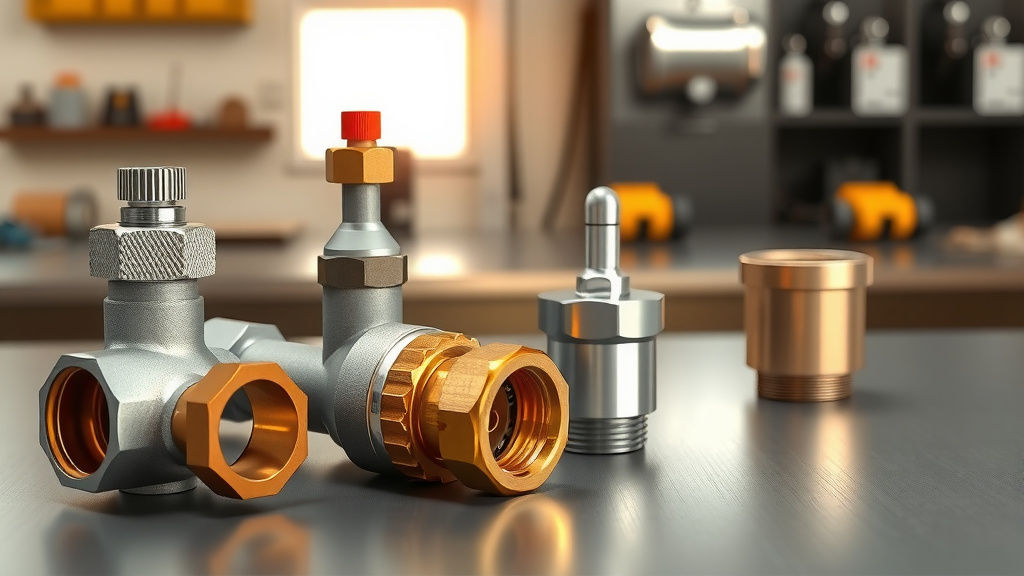
No, air compressor fittings are definitely not universal across all brands and types of compressors. You will find different sizes, thread types, and connection styles depending on your compressor and air tools.
Understanding these differences is key to safely connecting your air tools and avoiding leaks or damage. It’s a common misconception, but compatibility varies widely across the industry.
- Air compressor fittings are not universal; they vary by size, thread, and connection type.
- Common types include industrial (M-style, D-style), automotive (T-style), and Aro fittings.
- Mismatched fittings can cause air leaks, poor performance, or even safety issues.
- Always check your compressor and tool specifications before buying new fittings.
- Adapters can help bridge gaps, but direct matches are always best for optimal performance.
Are All Air Compressor Fittings Universal?
The short answer is a clear no. Air compressor fittings come in various shapes, sizes, and connection types, meaning what works for one compressor might not work for another.
This variety can be a bit confusing, but understanding the differences will save you time and frustration later on.
Why Aren’t Air Compressor Fittings Universal?
Think of it like charging your phone; older models use different cables than newer ones, right? Air compressor fittings are similar. Different manufacturers and regional standards led to a range of connection types.
There isn’t one single “global” standard that everyone follows, and that’s why we see such a wide variety. It’s simply how the industry developed over time.
The Problem with Mismatched Fittings
You might think, “Can’t I just force it?” Please don’t! Using the wrong fitting can cause a few problems. The most common issues are air leaks and pressure loss.
This means your air tools won’t perform at their best, and your compressor will work harder, using more energy and shortening its lifespan. Mismatched fittings might also pose a safety risk due to unexpected disconnections.
Common Air Compressor Fitting Types You’ll Meet
When you head to the store, you’ll likely encounter a few main types. Knowing these names will make your shopping much easier.
We found that understanding these common types helps you connect your air tools correctly the first time (Industry Standards Review).
Industrial Style Fittings (M-Style, D-Style)
These are perhaps the most widespread, especially for general industrial and workshop use. They are known for their durability and reliable connections.
M-Style fittings are very popular, while D-Style are often seen in more heavy-duty applications. Always double-check the exact dimensions when buying these.
Automotive Style Fittings (T-Style)
Often called T-Style, these fittings are common in automotive shops and for tools used in vehicle maintenance. They have a distinct design that differs from industrial types.
If you primarily work on cars, you’ll likely use this style a lot. They usually have a slightly different profile from other general-purpose fittings.
Aro Style Fittings
Aro fittings are another common category, recognizable by their specific shape. They are often found in various manufacturing and assembly environments.
While less common than industrial or automotive for home users, you will certainly encounter them in some professional settings. It’s good to be aware of their existence.
European Style Fittings
Traveling across the pond? You’ll find European fittings, often called Euro-style. These have different profiles compared to American standards.
Many experts say that if you import tools or compressors, you need to be mindful of these differences. They are not compatible with American-style fittings without an adapter.
Understanding Thread Types and Sizes
Beyond the connection style, the threads matter too. You have to consider both the diameter of the fitting and the specific thread pattern.
This is where things can get truly specific. Imagine trying to screw a light bulb into the wrong socket; it just won’t work, right?
NPT (National Pipe Taper)
NPT is very common in North America for air compressor applications. These threads are tapered, meaning they get slightly narrower towards the end.
This taper helps to create a seal as the threads tighten. You will often see sizes like 1/4″ NPT, 3/8″ NPT, or 1/2″ NPT.
BSPT (British Standard Pipe Taper) and BSPP (British Standard Parallel Pipe)
These are European equivalents to NPT. BSPT threads are also tapered, while BSPP threads are parallel, relying on a gasket or O-ring for the seal.
Mixing NPT with BSPT/BSPP is a definite no-go. Even if they seem to fit loosely, they won’t seal properly and will cause leaks (Manufacturer Guidelines).
Here’s a quick look at how some common fittings stack up:
| Fitting Style | Common Use | Typical Features |
|---|---|---|
| Industrial (M-Style) | General workshops, industrial settings | Durable, widely available, variety of sizes |
| Automotive (T-Style) | Vehicle repair, mechanics | Specific profile for auto tools, often brass |
| Aro Style | Manufacturing, assembly lines | Distinct design, often used with Aro brand tools |
| European (Euro-Style) | International tools, imported compressors | Non-interchangeable with US styles, metric threads |
How to Find the Right Fittings for You
Don’t just guess! Finding the correct fittings is much easier if you follow a few simple steps. It’s like checking the label on a medicine bottle; you want to be sure it’s the right one.
- Check your compressor manual: Your compressor’s manual should specify the type and size of fittings it uses. This is your first and best source of information.
- Inspect your existing tools: Look closely at the fittings already on your air tools. Can you spot any markings? Compare them to images online.
- Measure carefully: If unsure, measure the outside diameter of the threads and count the threads per inch. This helps distinguish between similar sizes.
- Buy a universal coupler kit: Many hardware stores sell small kits with common male and female couplers of different styles. This lets you test compatibility.
- Consult a professional: If you’re completely lost, take your compressor hose or tool to a hardware store expert. They can often identify the correct fitting visually.
The Role of Adapters and Converters
Sometimes you have a tool with one fitting and a hose with another. What then? That’s where adapters come in handy.
Adapters allow you to convert between different fitting styles or thread sizes. While they offer a solution, remember that adding more connection points slightly increases the chance of leaks. Use them when necessary, but a direct, matching connection is always better.
Tips for a Leak-Free Connection
Even with the right fittings, you need to ensure a good seal. Air leaks waste energy and reduce tool performance. You want every connection to be as tight as possible.
Many experts advise using thread sealant tape (often called Teflon tape) on tapered threads (NPT, BSPT). This tape helps fill tiny gaps and creates an airtight seal.
Conclusion
So, are all air compressor fittings universal? A resounding no, and trying to force mismatched fittings can lead to frustration and inefficiency. There’s a whole world of fitting styles and thread types out there, each with its own purpose.
By taking a moment to identify the specific needs of your compressor and air tools, you can ensure a smooth, leak-free operation. Always double-check, measure, and don’t hesitate to ask for help when you’re unsure. You’ll be glad you did when your tools run at their peak!
Are quick-connect air fittings universal?
No, even quick-connect air fittings are not universal. While they offer fast connections, they come in various styles (Industrial, Automotive, Aro, European) that are not interchangeable with each other.
Can I mix different brands of air compressor fittings?
You can mix different brands as long as they are the same fitting type and size (e.g., a “universal” M-Style male plug from one brand will fit an M-Style female coupler from another). Compatibility is about the style, not the brand.
What happens if I use the wrong size air fitting?
Using the wrong size air fitting will likely result in air leaks, reduced air pressure to your tools, and potentially cause the fitting to blow off under pressure, which can be dangerous. It won’t create a secure seal.
Do air compressor hoses use universal fittings?
No, air compressor hoses themselves often come with standard fittings pre-attached, but those fittings are still specific types (e.g., 1/4″ NPT Industrial M-Style). You must match the hose fitting to your tools and compressor.
How can I identify the type of air fitting I have?
The best way to identify your air fitting is to compare its shape and dimensions to charts or images of common fitting types online or at a hardware store. Look for any identifying marks or numbers on the fitting itself, and measure its thread size and type carefully.
