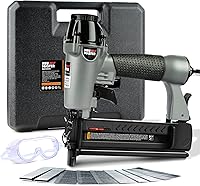
Brad Nailer vs Finish Nailer: Which Should You Choose? (November 2026)
Choose a brad nailer for light trim and a finish nailer for heavier trim that needs more holding strength. In this brad nailer vs finish nailer comparison, nail gauge and length decide what each tool can fasten well.
On this page (11 sections)
- Brad nailer vs finish nailer: the quick verdict
- The two side by side
- Nail size and holding strength
- Length range and trim applications
- Power source: battery, pneumatic or manual
- Accuracy, depth control and features
- Weight, balance and comfort
- Who should buy a brad nailer?
- Who should buy a finish nailer?
- Setup, safety and care
- Final verdict: brad nailer vs finish nailer
Choose a brad nailer for light trim and a finish nailer for heavier trim that needs more holding strength. In this comparison, nail gauge and length decide what each tool can fasten well.
A brad nailer drives thin 18 gauge nails that suit small moldings and delicate pieces. For battery-powered options, compare cordless 18 gauge brad nailers.
A finish nailer drives thicker 15 or 16 gauge nails that grip harder and resist pulling. We compared the tools on nail size, length range, weight, power source and trim tasks.
If you are new to nailers, our nail gun guide explains the main types before you pick a gauge. For another application-specific comparison, see roofing nailers vs siding nailers.


Brad nailer vs finish nailer: the quick verdict
Pick the brad nailer for light, decorative work and the finish nailer for trim that must hold. A thinner shank cannot grip like a thicker one.
The DEWALT DCN680B drives 18 gauge brads from 5/8 in to 2-1/8 in. That range suits small casing, shoe molding and kitchen crown where thin nails set close to an edge.
The Metabo HPT 16 gauge model drives finish nails from 1 in to 2-1/2 in. Its thicker shank suits chair rail, cabinetry and molding that needs more pull resistance.
The Metabo HPT 15 gauge angled model drives angled DA nails from 1-1/4 in to 2-1/2 in. Its angle helps on crown, base molding and stair work where a straight tool cannot sit flat.
The YEAHOME tool is a manual stapler, not a brad or finish nailer. For a direct comparison, see brad nailers vs staple guns.
The two side by side
The table below shows the real split: thin brads for light trim, thicker finish nails for stronger holding. Look at gauge first, then length, then power source.
| Feature | DEWALT DCN680B Brad | Metabo HPT 16 Gauge Finish | Metabo HPT 15 Gauge Angled Finish | YEAHOME Manual Stapler |
|---|---|---|---|---|
| Fastener | 18 gauge brad | 16 gauge finish | 15 gauge angled DA | D, U, T and pin staples |
| Length range | 5/8 in to 2-1/8 in | 1 in to 2-1/2 in | 1-1/4 in to 2-1/2 in | Staple types vary |
| Power | 20V battery, tool only | Pneumatic | Pneumatic | Manual |
| Weight | 1.8 kg | 3.7 lb | 4.2 lb | 1.06 kg |
| Best trim use | Light molding, casing, crown | Molding, chair rail, cabinetry | Crown, base, casings, stairs | Crafts, upholstery, light DIY |
Brads are thinner and shorter at the low end, so they sink into small pieces with less risk of splitting. Finish nails are thicker and hold with more shaft contact in the wood.
Power matters too. The DEWALT runs on a 20V battery and needs no hose, while both Metabo HPT tools need compressed air.
Nail size and holding strength
Thicker nails hold stronger, while thinner brads leave smaller holes. That trade-off is the heart of the brad nailer vs finish nailer choice.
An 18 gauge brad has a slim shank that flexes more under load. It works well when the trim piece is light, flat and not likely to be knocked or pulled.
A 16 gauge finish nail is thicker, so it resists bending and grips with more material contact. For models without a hose, compare cordless finish nailers.
That makes it a better pick for chair rail, cabinet faces and trim that people touch often.
A 15 gauge angled finish nail is thicker still. It suits crown and casings where the piece is larger and the joint takes more stress over time.
Why gauge numbers confuse buyers
Lower gauge numbers mean thicker nails, which trips up many shoppers at first. So 15 gauge is thicker than 16 gauge, and both are thicker than 18 gauge.
Length also changes holding strength. A 2-1/2 in nail reaches deeper than a 1 in nail, but only if the trim and the wood behind it are thick enough.
Our guide to the best nails for brad nailer helps you match length to the trim you are fixing. Use the shortest nail that still grips well in both pieces.
Length range and trim applications
Brads start shorter and suit small pieces; finish nails reach longer for thicker trim. Check the length range before you buy, since it limits what you can fasten.
The DEWALT DCN680B accepts brads from 5/8 in to 2-1/8 in. DEWALT says this range suits decorative molding, casing, kitchen crown and shoe molding.
Short brads help you fasten thin trim without splitting it. They also help you set nails near a profiled edge, where a thicker nail could crack the wood.
The Metabo HPT 16 gauge model accepts nails from 1 in to 2-1/2 in. That range suits molding, chair rail and cabinetry where the nail must pass through two layers.
The Metabo HPT 15 gauge angled model accepts DA nails from 1-1/4 in to 2-1/2 in. Those lengths suit crown, base molding, window and door casings, exterior trim and staircases.
Match length to the piece, not the tool
Measure the trim thickness and the wood behind it before you load a magazine. The nail should grip both pieces and stop short of poking out the back.
Test depth on a scrap piece first. Depth adjustment should set the nail head flush or just below the surface, ready for filler.
Power source: battery, pneumatic or manual
Battery power gives mobility, pneumatic power suits shop work, and manual power suits small craft jobs. Each source changes setup, weight and where you can work.
The DEWALT DCN680B is battery powered and tool only. DEWALT says it removes the hassle of gas, a compressor and a hose.
Its brushless motor supports runtime and durability. A micro nose improves line of sight and nail placement compared with the DEWALT DC608.
The Metabo HPT finish nailers are pneumatic. They need a compressor, a hose and a fitting, which adds setup time but keeps the tool itself light.
The YEAHOME stapler is manual. Its power adjustment lever changes pressure between low and high for soft and hard materials.
Compressor needs for pneumatic finish nailers
If you go pneumatic, check pressure needs for your tool and compressor. Our guide on How Much PSI Does a Brad Nailer Need? explains pressure in plain terms for smaller nailers.
For a brad nailer powered by air, our Best Air Compressor For Brad Nailer guide helps you match tank and pressure to the tool.
Battery tools avoid hose drag and setup. They do need a charged battery, and the DEWALT is sold as tool only, so plan for a battery and charger.
Accuracy, depth control and features
Depth control and nose design matter more than raw power on trim work. A tool that sets nails flush saves you filler, sanding and rework.
The DEWALT DCN680B has tool-free depth adjustment for precise countersinking. It also has a tool-free jam release and an integrated stall release lever.
Its low nail lockout prevents dry firing and marks on the work material. That helps protect soft trim when the magazine runs low.
The Metabo HPT 16 gauge model has tool-free depth of drive adjustment. It also has a no-mar tip on the nose to protect the work piece.
The Metabo HPT 15 gauge model has a tool-less depth adjuster. Its angled magazine helps you place nails in tight corners without forcing the tool.
Trigger modes and exhaust
Both Metabo HPT finish nailers have a selective actuation switch. You can switch between bump fire and sequential fire modes with a flip.
Sequential fire helps you place one nail at a time with control. Bump fire speeds up runs, but it needs more care near edges and profiles.
Both models have a 360 degree exhaust port that directs air away from you. The 16 gauge model also has an air duster button to clear dust and debris.
The DEWALT brad nailer has a tool-free selectable trigger for sequential or contact modes. Its multi-functional LED lights give workspace light and tool diagnostics.
Weight, balance and comfort
Lighter tools help on long trim runs, but balance matters as much as the scale. Check weight before you plan a full room of molding.
The Metabo HPT 16 gauge finish nailer weighs 3.7 lb. Metabo HPT calls it lightweight and well balanced for less fatigue and more maneuverability.
The Metabo HPT 15 gauge angled model weighs 4.2 lb. Metabo HPT also calls it lightweight and well balanced for extended renovation work.
The DEWALT DCN680B weighs 1.8 kg, about 4 lb. Battery placement and the micro nose affect how it feels held up to a wall for hours.
The YEAHOME manual stapler weighs 1.06 kg. Its steel handle has an over-molded grip for comfort during repeated squeezes.
Comfort tips for trim days
Hold the tool with the nose flat and supported when you can. That reduces the force your wrist must supply to keep the nail straight.
An adjustable belt hook, like the one on the DEWALT, helps you park the tool safely. It can attach on the left or right, based on your preference.
Who should buy a brad nailer?
Buy a brad nailer if you mostly install light trim, small moldings and delicate pieces. Thin nails, short lengths and a small hole are the main wins.
The DEWALT DCN680B suits decorative molding, casing, kitchen crown and shoe molding. Its 5/8 in to 2-1/8 in range fits those jobs well.
Its cordless design helps you move around a room without dragging a hose. That matters on stairs, in tight rooms and on jobs where setup time counts.
Our best 18 gauge brad nailer guide shows more 18 gauge options in the same class. It helps you compare nose design, weight and depth control.
If your work is mostly small craft trim, our best brad nailer for crafting guide may fit better.
Who should skip a brad nailer?
Skip a brad nailer if your main job is chair rail, cabinetry or heavy crown. Thin brads may not hold those pieces with enough grip.
In those cases, a 16 or 15 gauge finish nailer is the safer match for the trim.
Who should buy a finish nailer?
Buy a finish nailer if your trim is larger, touched often or needs stronger holding. Thicker nails and longer lengths do that work better.
The Metabo HPT 16 gauge model suits molding, chair rail and cabinetry. Its 1 in to 2-1/2 in range gives you depth for two piece joints.
The Metabo HPT 15 gauge angled model suits crown, base molding, window and door casings, exterior trim and staircases. Its angled magazine helps in corners.
Both models include safety glasses, a 1/4 in NPT male plug, a no-mar tip and a carrying case. Both carry a Metabo HPT 5-year warranty.
Our best brad nailer for trim work guide helps you see where 18 gauge tools fit in trim jobs.
Straight or angled magazine?
Choose the straight 16 gauge model for flat runs and cabinet work. Its 3.7 lb weight helps on long, straight installs.
Choose the angled 15 gauge model for crown and corners. The angled magazine reaches into tight angles without twisting your wrist.
Angled DA nails are a specific fastener, so check nail supply before you buy. Straight finish nails are more widely stocked in many areas.
Setup, safety and care
Set depth on scrap wood, wear eye protection and keep the nose flat before you fire. Good setup prevents split trim, proud nails and marks.
Metabo HPT includes safety glasses with both finish nailers. Wear eye protection with any nailer, since nails and debris can kick back.
Check that the magazine is loaded with the right gauge and length. A wrong nail can jam the tool or fail to hold the trim.
Use tool-free depth adjustment to set nails flush. Test on scrap, then adjust in small steps until the head sits just below the surface.
Care in general terms
Keep the nose clean and free of debris so it sits flat on the trim. A dirty nose can cause angled nails and surface marks.
Clear jams only with the tool powered down and the magazine checked. The DEWALT has a tool-free jam release, but safe handling still matters.
Store nailers dry, with the magazine unloaded if the manual directs it. Keep nails dry too, since rust can affect drive and hold.
Final verdict: brad nailer vs finish nailer
Pick the DEWALT DCN680B for light trim and cordless freedom, and pick a Metabo HPT finish nailer for heavier trim that must hold. That rule settles most decisions.
Choose the 18 gauge DEWALT if your jobs are casing, shoe molding, kitchen crown and small decorative pieces. Its thin brads, micro nose and battery power fit that work.
Choose the Metabo HPT 16 gauge model for chair rail, cabinetry and molding that needs a thicker nail. Choose the 15 gauge angled model for crown, corners and stairs.
The YEAHOME manual stapler fits crafts, upholstery and light DIY, not trim nailer work. It does not replace a brad or finish nailer.
Start with your trim thickness and the load it will carry. Then pick the nail gauge that grips well without splitting the wood, and set depth on scrap before you start.
Frequently asked questions
Is a brad nailer or a finish nailer better for trim?
A finish nailer is better for trim that carries load or needs strong holding, such as chair rail, cabinetry and heavier molding. A brad nailer suits light decorative trim where a thin nail leaves a smaller hole and is easier to place.
Can a brad nailer replace a finish nailer?
A brad nailer cannot fully replace a finish nailer for heavier trim, because 18 gauge brads have less holding strength than 15 or 16 gauge finish nails. Use brads for light molding, casing and crown, and choose finish nails when the piece may be pulled or bumped.
What is the difference between 18 gauge and 16 gauge nails?
18 gauge nails are thinner and flex more, so they suit light trim and leave smaller holes. 16 gauge nails are thicker and hold stronger, which helps on molding and cabinetry that needs more grip from the fastener.
Do I need a compressor for a finish nailer?
The Metabo HPT finish nailers in this comparison are pneumatic, so they need a compressor and hose. The DEWALT brad nailer is battery powered and does not need gas, a compressor or a hose for its 18 gauge brads.