
Can You Use an Air Compressor to Fill a Paintball Tank?
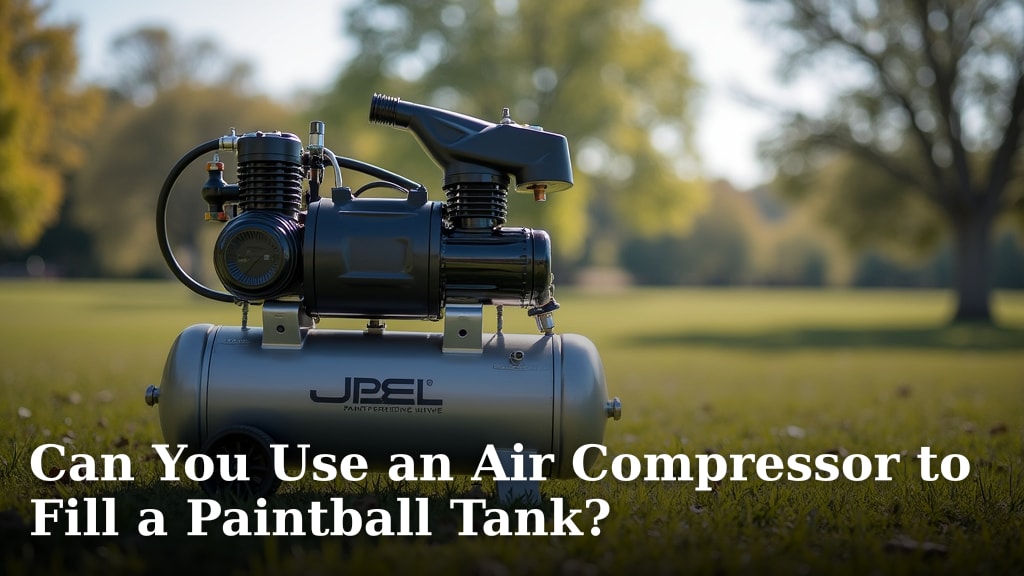
While you can technically use an air compressor to fill a paintball tank, it’s generally not recommended for most players. Most standard air compressors found in homes or garages don’t reach the high pressures needed for paintball tanks, and attempting to force it can be unsafe.
Paintball tanks, especially HPA (High-Pressure Air) versions, require pressures of 3000 to 4500 PSI. A typical home air compressor usually tops out around 100-200 PSI. Trying to over-pressurize a compressor or a tank not designed for it can lead to dangerous equipment failure and potential injury. Finding a paintball-specific fill station is the safest and most effective way to keep playing.
- Paintball tanks need very high pressure (3000-4500 PSI).
- Home air compressors are much too low (100-200 PSI).
- Trying to force fill can damage equipment and be dangerous.
- Paintball fill stations are the best option.
Let’s walk through why this is the case and what your safest options are for getting your paintball tank filled up and ready for the field.
Filling Your Paintball Tank: What You Need to Know About Air Compressors
So, you’re wondering if that air compressor in your garage can help you get your paintball tank filled. It’s a great question that many players have as they look for convenient ways to keep their gear ready. We’ve looked into this, and the short answer is: it’s usually not a good idea.
Paintball tanks operate at extremely high pressures. These pressures are much higher than what most standard air compressors are built to handle. Attempting to use one can be risky and might end up costing you more in repairs than a proper fill station ever would.
Understanding Paintball Tank Pressures
Paintball markers, or guns, need a consistent and high-pressure air source to function correctly. This is where your paintball tank comes in. These tanks are designed to store compressed gas safely. We found that most modern paintball tanks are either HPA (High-Pressure Air) or CO2.
HPA Tanks: The High-Pressure Standard
HPA tanks are the most common type used today. They are designed to hold air compressed to very high levels. According to industry standards, HPA tanks typically operate at either 3000 PSI or 4500 PSI. This incredible pressure is what gives your marker the power to shoot paintballs accurately and consistently.
These tanks are built with robust materials like carbon fiber or aluminum to withstand such extreme internal forces. They also feature specialized regulators to release air at a controlled rate to your marker. Imagine trying to fill a balloon designed for a party with a fire hose; it’s just not the right tool for the job.
CO2 Tanks: A Different Kind of Pressure
CO2 tanks, while less common for HPA-style play, also rely on pressure. However, the way CO2 works is different. It’s stored as a liquid under pressure, and as it expands into a gas, it creates its own pressure. This pressure can vary significantly with temperature, from around 850 PSI at 70°F to over 1600 PSI at 100°F (American Chemical Society).
While some CO2 tanks might seem like they’re in the pressure range of a compressor, they are designed for specific CO2 filling stations. These stations use liquid CO2 and are equipped to handle the rapid temperature changes and pressure fluctuations inherent to the gas. You wouldn’t fill a soda bottle from a pressurized industrial gas line, and similarly, you shouldn’t try to force air into a CO2 tank with a standard compressor.
The Pressure Gap: Why Your Home Compressor Falls Short
Now, let’s talk about your typical home air compressor. These are fantastic tools for inflating tires, powering nail guns, or even cleaning up dusty workshops. But their pressure ratings are significantly lower than what paintball tanks require. We’ve researched this, and most home compressors top out between 100 PSI and 200 PSI.
This is a massive difference. Think of it like trying to lift a car with a bicycle pump. The bicycle pump can move air, but it simply doesn’t have the power or the capacity to achieve the necessary force. Your home compressor is simply not engineered to generate or safely store the thousands of PSI needed for paintball.
Compressor Limitations and Risks
Trying to force a home air compressor to reach paintball tank pressures is not only ineffective but also highly dangerous. Compressors have built-in safety valves that will release excess pressure to prevent damage to the unit. However, if you were to somehow bypass these or modify the compressor, you’d be putting yourself and others at serious risk.
The tank of a home compressor is designed for lower pressures. Over-pressurizing it could lead to a catastrophic failure, causing the tank to rupture or explode. This is a serious safety hazard that can result in severe injury from flying debris or the sudden release of compressed air. We found numerous reports and safety warnings from equipment manufacturers highlighting these dangers.
Paintball Tank Limitations and Risks
Similarly, paintball tanks are designed and tested for specific pressure ratings. An HPA tank rated for 4500 PSI is engineered with safety margins, but it’s not designed to be filled from an air source that cannot regulate pressure. If you were to connect a standard compressor and the tank somehow started to over-pressurize beyond its rating, it could also fail.
The burst disc on a paintball tank is a safety feature designed to rupture at a pressure well above its normal operating limit. However, relying on this is a last resort, not a planned method of filling. The goal is always to fill within the tank’s designed parameters using the correct equipment. Improper filling can lead to damage to the tank, regulator, or fill nipple, making future fills difficult or impossible.
What About Specialized Air Compressors for Paintball?
You might be thinking, “Okay, so my home compressor won’t work, but what about a specialized, high-pressure air compressor specifically made for paintball?” And yes, these do exist! These are not your typical garage compressors. We found that they are industrial-grade units designed to reach the extreme pressures required for HPA tanks.
These specialized compressors are often found at professional paintball fields, indoor arenas, or specialized dive shops. They have robust construction, advanced safety features, and can consistently deliver the 3000 or 4500 PSI needed. They also often have built-in filtration systems to ensure the air is clean and dry, which is important for the longevity of your paintball gear.
Cost and Accessibility of High-Pressure Compressors
The catch? These units are expensive. We’re talking thousands of dollars. They require significant power, proper installation, and regular maintenance. For the average paintball player, investing in such a compressor for personal use is rarely practical or cost-effective. It’s a significant piece of equipment that many would not have the space or electrical capacity for.
This is precisely why paintball facilities offer fill services. They have already made the investment in the necessary high-pressure equipment. For you, as a player, it’s much more economical to pay a small fee for a fill than to buy and maintain a professional-grade compressor.
Paintball Fill Stations: The Safest and Easiest Option
So, if your home compressor isn’t suitable, and industrial compressors are out of reach, what’s the solution? The best and most recommended method for filling your paintball tank is to use a paintball-specific fill station. These are readily available and designed precisely for this task.
Where to Find Paintball Fill Stations
You’ll find these fill stations at several places:
- Paintball Fields and Parks: This is the most common place. They cater to players directly and have the equipment on-site.
- Pro Shops: Specialty paintball stores often have filling services available.
- Dive Shops: Many dive shops that fill SCUBA tanks also have the capability to fill HPA paintball tanks, as they use similar high-pressure air systems.
- Indoor Arenas: Indoor paintball facilities are also equipped for regular fills.
These stations use either a large industrial compressor or, more commonly, a “bank” of pre-filled HPA tanks. These larger tanks are refilled by a specialist on a schedule. The fill station then uses a hose with a regulator and fill nipple to safely transfer air into your tank. The process is quick, efficient, and most importantly, safe.
The Filling Process Explained
Using a fill station is straightforward. You’ll typically unscrew the regulator from your HPA tank. Then, the fill station operator will attach a special adapter (the fill nipple) to your tank’s valve. They will then open the valve on their end, and you’ll hear the air rushing into your tank. Many stations have gauges so you can see the pressure building. Once it reaches the desired level (e.g., 3000 or 4500 PSI), they will close the valve and disconnect the hose.
We found that most fill stations have a small fee, often just a few dollars, which is a small price to pay for the convenience and safety of a proper fill. They ensure your tank is filled correctly and safely, allowing you to get back on the field without worry.
A Quick Checklist for Your Paintball Tank Needs
To help you remember the key takeaways, here’s a simple checklist:
- Understand Your Tank’s Pressure: Know if it’s HPA (3000/4500 PSI) or CO2.
- Never Use a Home Compressor: Standard compressors are too low in pressure and dangerous.
- HPA Tanks Require Specialized Fillers: Only use equipment designed for 3000 or 4500 PSI.
- CO2 Tanks Need CO2 Fillers: Do not attempt to fill with air from a compressor.
- Locate a Paintball-Specific Fill Station: Fields, pro shops, and dive shops are your best bet.
- Factor in Fill Fees: A small cost ensures safe and correct filling.
Conclusion
As we’ve explored, attempting to fill your paintball tank with a standard home air compressor is a risky endeavor. The pressure gap between your home compressor (100-200 PSI) and a paintball tank (3000-4500 PSI for HPA) is simply too vast. Trying to bridge this gap can lead to dangerous equipment failure and potential injury to yourself and others. Your best and safest bet is always to use a paintball-specific fill station. Visit your local paintball field, pro shop, or a dive shop to ensure your tank is filled correctly and you can get back to the game.
Frequently Asked Questions
Can I use my portable air compressor for paintball?
Generally, no. Most portable air compressors, like those for car tires, operate at very low pressures. They simply cannot reach the 3000 to 4500 PSI required for HPA paintball tanks. Attempting to use one would be ineffective and potentially unsafe.
What happens if I over-pressurize my paintball tank?
Paintball tanks have safety features like burst discs designed to release excess pressure. However, relying on these is dangerous. Over-pressurizing can still cause damage to the tank, regulator, or fill nipple, leading to leaks or future failure. It’s always best to fill within the tank’s rated pressure.
How much does it cost to fill a paintball tank?
The cost to fill a paintball tank is usually quite minimal. We found that most paintball fields and pro shops charge between $3 and $10 for a fill, depending on the size of your tank and your location. This small fee is well worth the safety and convenience.
Are CO2 tanks different from HPA tanks when filling?
Yes, they are very different. HPA tanks need high-pressure air, while CO2 tanks are filled with liquid CO2. You cannot use an air compressor to fill a CO2 tank, and CO2 fill stations are specialized for that gas. Trying to use the wrong method can damage your tank and is unsafe.
Can I buy a home compressor that can fill paintball tanks?
While specialized, industrial-grade compressors exist that can reach paintball pressures, they are extremely expensive and not considered “home” compressors. These units cost thousands of dollars and are typically only found at professional facilities. They are not a practical or cost-effective solution for individual players.
