What Is the Best Air Compressor for a Car Detailing Business?
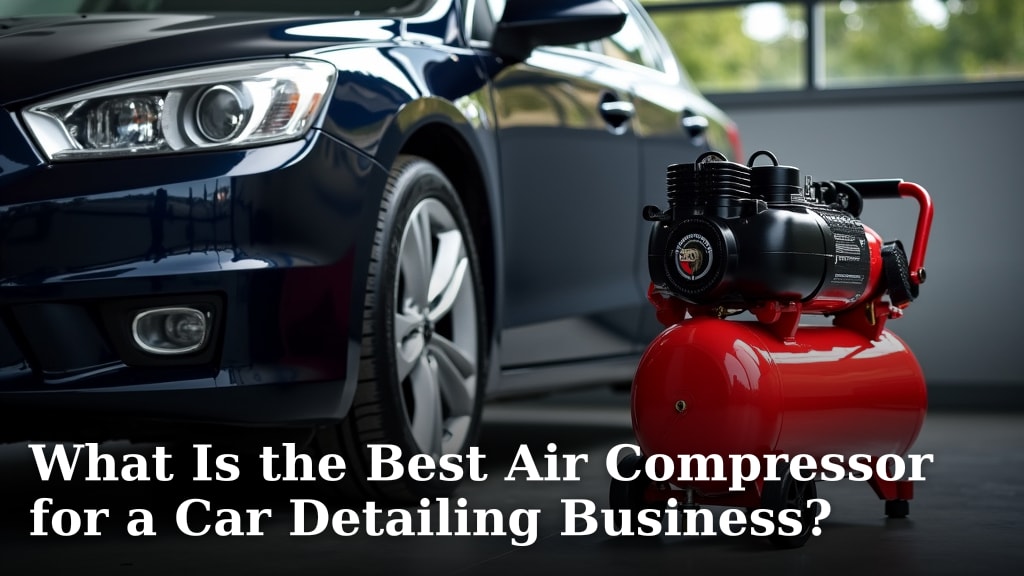
The best air compressor for your car detailing business depends on your needs. For most detailing tasks, a portable, oil-free compressor with a tank around 2-6 gallons is ideal. Look for models that deliver at least 4 CFM (Cubic Feet per Minute) at 90 PSI. This provides enough power for cleaning, drying, and powering air tools without being too bulky.
Choosing the right air compressor is key to a productive detailing operation. You need a unit that’s powerful enough for demanding jobs but also easy to transport between client locations. We’ve found that balancing tank size, air delivery, and portability helps you serve more customers efficiently and effectively.
- Tank Size: 2-6 gallons is usually sufficient.
- Airflow (CFM): Aim for at least 4 CFM at 90 PSI.
- Type: Oil-free is generally lower maintenance.
- Portability: Look for lightweight, compact designs.
- Noise Level: Quieter models can be a plus for customer service.
Let’s dive into what makes an air compressor a great fit for a professional detailer and what to look for when making your purchase.
Choosing the Right Air Compressor for Your Detailing Business
Selecting the best air compressor for your car detailing business is about finding a reliable workhorse. You need a machine that keeps up with your pace. We’ve found that the right compressor makes detailing tasks smoother. It can mean the difference between a quick, efficient job and a frustrating, drawn-out one.
Understanding Air Compressor Basics for Detailing
Before we talk specific models, let’s get a handle on the key features. Understanding these will help you make an informed choice. Think of it like knowing your detailing chemicals before you start spraying.
What Does CFM Really Mean for You?
CFM stands for Cubic Feet per Minute. This tells you how much air the compressor can deliver. For detailing, you’ll see this number listed at a specific PSI (Pounds per Square Inch). A higher CFM means more air. This is important for tools like blowers and buffers.
We found that most detailing tasks require around 4 CFM at 90 PSI. Some heavier-duty tools might need a bit more. You don’t want your compressor struggling to keep up. That’s when jobs take longer and your frustration grows.
Tank Size: More Air Storage, Less Waiting
The tank stores compressed air. A larger tank means you can use air-powered tools for longer before the compressor has to refill. For a mobile detailer, balancing tank size with portability is key.
Many professional detailers find that a tank between 2 and 6 gallons is a sweet spot. Smaller tanks are lighter but run more often. Larger tanks offer more sustained airflow but can be heavy. We’ve seen many businesses succeed with a 4-gallon tank.
Oil-Free vs. Oil-Lubricated Compressors
This is a common question. Oil-free compressors are generally lighter and require less maintenance. They don’t need oil changes. However, they can sometimes be louder and may not last as long as oil-lubricated models.
Oil-lubricated compressors often run quieter and can be more durable. The trade-off is that you need to monitor and change the oil regularly. For a mobile business where you might be setting up in various locations, the lower maintenance of oil-free is often a big plus.
Portability: Taking Your Power with You
If you’re a mobile detailer, your compressor needs to travel. Look for units with sturdy handles and a relatively compact design. Weight is a major factor here. You’ll be loading and unloading it frequently.
Some compressors come with wheels, which can be a lifesaver. We’ve heard from many detailers that a well-placed wheel can make a huge difference. Think about how you’ll be transporting it – up stairs, into a van, or across a parking lot.
Noise Level: Keeping Clients Happy
Air compressors can be loud. This can be startling to clients, especially if you’re working near their home or office. Some compressors are much quieter than others. Look for models advertised as “quiet” or “low noise.”
Decibel (dB) ratings are helpful here. A rating below 70 dB is generally considered quiet for this type of equipment. Many guidelines suggest that prolonged exposure to noise above 70 dB can be harmful (CDC). While you won’t be exposed constantly, a quieter unit makes for a more pleasant customer experience.
Essential Air Compressor Features for Detailing Tasks
Now let’s talk about what you’ll actually be doing with your compressor. Different tasks have different air demands. Having the right tool for the job, powered by the right compressor, is key.
Engine Cleaning and Degreasing
Using an air-powered degreaser or blower to blast away dirt from engine bays is a common detailing step. This requires a good amount of airflow to dislodge stubborn grime. We found that 4 CFM at 90 PSI is usually sufficient here.
You’ll also need a good quality blowgun attachment. This is where your compressor’s ability to maintain steady pressure really shines. A compressor that drops pressure too quickly will make this task take much longer.
Interior Detailing: Upholstery and Crevice Cleaning
For vacuuming and blowing out dust from tight spots, a compressor is fantastic. Air attachments can get into vents and seams that vacuums miss. This is a task that benefits from consistent, strong airflow.
Many detailers use air-powered brushes or extractors. These tools can really lift dirt from fabric and carpets. A compressor with enough CFM ensures these tools perform at their best. Don’t underestimate the power of a good air-powered dusting.
Drying and Finishing Touches
After washing, air is excellent for drying cars, especially in tricky areas like mirrors, grilles, and panel gaps. A blower attachment powered by your compressor can drastically speed up the drying process and reduce water spots.
We’ve found that a compressor capable of delivering a consistent stream of air makes drying much more efficient. This is especially true for luxury or classic cars where you want to avoid any accidental scratches from towels.
Using Air Tools: Buffers and Sanders
Some professional detailers might use air-powered buffers or sanders for paint correction. These tools are often more expensive and require a higher-demand compressor.
If you plan on using these types of tools, you’ll need to look for a compressor with a higher CFM rating, often 7 CFM or more at 90 PSI. You’ll also likely need a larger tank, perhaps 10-20 gallons, to sustain the tool’s operation. For most mobile detailing services, this level of power might be overkill and too heavy to transport easily. It’s something to consider for a fixed shop location.
Key Features to Compare When Shopping
When you’re comparing different air compressors, keep these points in mind. They’ll help you cut through the marketing jargon.
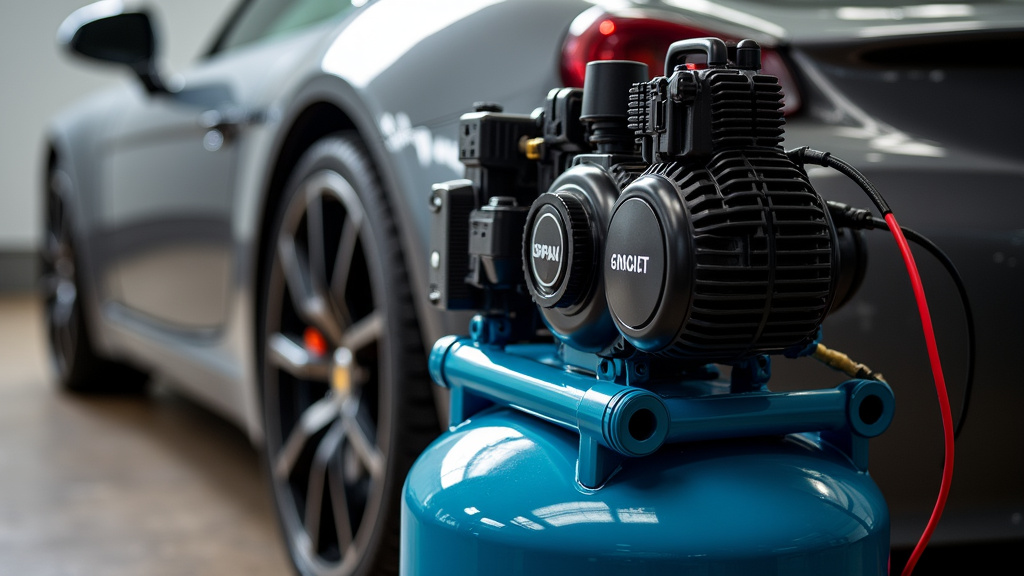
- CFM Rating: Make sure it meets or exceeds 4 CFM at 90 PSI for general detailing.
- Tank Size: 2-6 gallons is usually a good balance for portability and performance.
- Portability: Check the weight, handle design, and if it has wheels.
- Noise Level: Look for models under 70 dB if client comfort is a priority.
- Durability: Read reviews to gauge how well the compressor holds up over time.
- Power Source: Most portable units run on standard household electricity (110V/120V).
Putting It All Together: Your Ideal Compressor Checklist
Here’s a quick rundown of what to look for. It’s like a handy checklist for your shopping trip.
- Portable, oil-free design
- Tank size between 2-6 gallons
- At least 4 CFM at 90 PSI
- Quiet operation (under 70 dB preferred)
- Durable construction with good handles or wheels
- Reliable brand with positive customer reviews
By focusing on these elements, you can find an air compressor that truly supports your car detailing business. It’s an investment that pays off in efficiency and customer satisfaction.
Conclusion
You’ve learned that the best air compressor for your car detailing business is a blend of power, portability, and practicality. For most mobile detailers, an oil-free compressor with a 2-6 gallon tank and at least 4 CFM at 90 PSI hits the sweet spot. It provides enough air for cleaning, drying, and powering essential tools without being a burden to transport. Prioritize a unit that’s reliable and reasonably quiet. Investing in the right compressor means you can work more efficiently, deliver better results, and keep your clients happy. Your next step is to compare models based on these key features to find the perfect fit for your mobile operation.
Frequently Asked Questions
Will a smaller air compressor work for detailing?
For light detailing tasks like dusting interiors or using a blowgun for drying, a smaller compressor might suffice. However, we’ve found that for more demanding jobs like engine cleaning or using air-powered tools, you’ll quickly outgrow a very small unit. Aiming for at least 4 CFM at 90 PSI ensures you have enough consistent airflow.
How much CFM do I really need for car detailing?
We recommend at least 4 CFM at 90 PSI for most general detailing tasks. This level of airflow is enough to power blowguns, clean engine bays effectively, and dry vehicles efficiently. If you plan to use high-demand tools like buffers or sanders, you’ll need a higher CFM, but that’s usually for shop-based operations.
Are quiet air compressors worth the extra cost for detailing?
If you work at client homes or offices, a quieter compressor (under 70 dB) is definitely a plus. We’ve seen that it creates a more professional and less disruptive experience for your customers. While they might cost a bit more, the improved customer satisfaction can be well worth the investment.
What’s the advantage of an oil-free compressor for mobile detailing?
Oil-free compressors are generally lighter and require much less maintenance. You won’t need to worry about oil changes or potential oil leaks during transport. For a mobile business where you’re constantly moving and setting up, this lower maintenance and portability is a big advantage.
Can I use my air compressor for paint correction tasks?
While some detailers use air-powered buffers or sanders for paint correction, these tools require a significantly more powerful compressor. You’d typically need a unit with a much higher CFM rating (7+ CFM) and possibly a larger tank. For most mobile detailing services focusing on cleaning and basic paint enhancement, standard detailing compressors are sufficient.
