
Can You Use An Air Compressor To Power Wash?
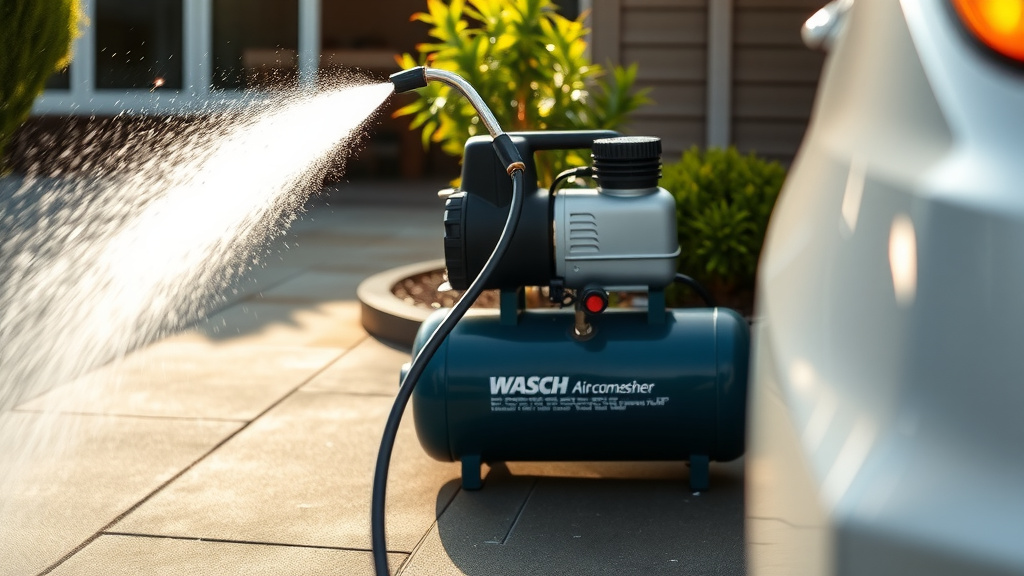
While an air compressor can generate pressure, it generally cannot be used directly to power wash effectively.
Power washing requires a specific type of pump that creates high-volume water flow and extreme pressure, which an air compressor is not designed for.
Here’s a quick summary if you are in a rush:
- An air compressor moves air, not water, at high pressure.
- Power washers use a special pump to deliver high-pressure water flow.
- You cannot simply attach a power washer nozzle to an air compressor.
- Trying to adapt an air compressor for power washing is unsafe and ineffective.
- For real cleaning, invest in or rent a proper power washer.
Can You Use An Air Compressor To Power Wash?
The short answer is no, you really can’t use an air compressor to power wash. Many people wonder if they can combine these tools. However, they serve very different functions, even though both deal with pressure. Understanding their core differences helps clarify why this isn’t a good idea.
The Core Difference: Air vs. Water
Imagine trying to clean your car with just a strong gust of wind. You might blow away some leaves, but you wouldn’t remove dried mud or grime. That’s a good analogy for the difference between an air compressor and a power washer. One moves air, the other moves water with incredible force.
What Is An Air Compressor, Really?
An air compressor takes ambient air, compresses it, and then stores it in a tank. This stored, pressurized air is then released to power various pneumatic tools. Think about impact wrenches, nail guns, or even just inflating tires. Its main job is to provide consistent air pressure.
What Is A Power Washer’s True Nature?
A power washer, or pressure washer, is a specialized cleaning machine. It connects to a water supply, then uses a motor-driven pump to intensify the water pressure. This creates a powerful stream of water that can blast away dirt, mold, and paint. It’s all about high-volume water delivery.
Why They Are Not Interchangeable
The fundamental design of each machine prevents them from swapping roles. An air compressor doesn’t have a pump to move water, nor does it have the necessary seals to handle liquid under pressure. Trying to force water through an air compressor would likely cause serious damage to the unit and create a safety hazard.
Let’s look at the key differences in a simple table:
| Feature | Air Compressor | Power Washer |
|---|---|---|
| Medium Used | Compressed air | High-pressure water |
| Primary Function | Powers pneumatic tools | Blasts away dirt and grime |
| Pressure Source | Air pump compressing air | Water pump intensifying flow |
| Typical PSI (Pounds per Square Inch) | 90-175 PSI | 1300-4000+ PSI |
| Safety Concerns | Noise, projectile hazards | Kickback, electrical shock, skin damage |
The Danger Of Mixing Them
Attempting to use an air compressor for power washing is not just ineffective; it’s also quite dangerous. You risk damaging both the compressor and your surroundings. An air compressor is not designed to withstand water, and its components could corrode or fail. Moreover, you could create an uncontrolled spray, leading to personal injury or property damage.
Can You Use An Air Compressor For Other Cleaning?
Absolutely! An air compressor is a versatile tool for many cleaning tasks, just not for power washing. It excels at tasks where you need to move dry debris or dry surfaces quickly. Many experts say an air compressor can be a great workshop companion.
- Blowing dust and debris from machinery.
- Drying paint or freshly washed items.
- Cleaning hard-to-reach crevices.
- Inflating tires or sports equipment.
- Operating pneumatic tools for various jobs.
Dusting And Debris Removal
An air compressor is perfect for blowing dust, sawdust, and light debris off surfaces. Think about cleaning your workbench after a project or clearing dust from computer components. It’s a much more efficient and powerful option than a simple brush, ensuring you reach all the tight spots. We often find this is a go-to for workshops.
Drying Surfaces
Need to dry a wet surface quickly? An air compressor can do the trick. Whether it’s drying a car after washing, blowing water out of cracks, or accelerating paint drying, the focused air stream works wonders. This keeps moisture from sitting, which prevents rust or mildew.
Inflating And Operating Tools
Beyond cleaning, the primary use for air compressors is powering pneumatic tools. From air ratchets to sanders, the consistent air supply makes these tools work. You also use it for simple tasks like inflating bike tires, car tires, or even balloons for a party. It’s truly a multi-purpose garage item.
What You Need For Effective Power Washing
If you have a tough cleaning job that requires power washing, you need a dedicated power washer. These machines are engineered for the task. They safely deliver the high-pressure water stream needed to remove stubborn grime. Research shows that choosing the right tool makes all the difference in results.
Key Features Of A Power Washer
When selecting a power washer, look for features like adjustable pressure settings, different nozzle tips for various tasks, and a powerful engine (electric or gas). Consider the PSI (pounds per square inch) and GPM (gallons per minute) ratings. Higher numbers usually mean more cleaning power, according to many industry guides (Consumer Reports).
Safety Measures For Power Washing
Power washing can be powerful, so safety is paramount. Always wear appropriate personal protective equipment, including safety glasses and closed-toe shoes. Never point the nozzle at people or pets, and always use the lowest effective pressure setting. Here is a quick checklist for safety:
- Wear eye protection at all times.
- Use sturdy, closed-toe footwear.
- Keep children and pets away from the work area.
- Start with a wide spray nozzle.
- Never point the wand at anyone.
- Unplug electric models before maintenance.
Considering A Power Washing Project?
Before you tackle a big power washing job, think about your needs and options. Do you have a small patio, or a large driveway and siding? The scale of your project helps determine the best approach. Many people find they can handle basic tasks themselves, while bigger jobs benefit from planning.
Renting Vs. Buying Equipment
For a one-off or infrequent power washing project, renting a power washer is often a smart move. Rental centers typically have robust, high-quality machines. If you plan to power wash regularly, perhaps twice a year or more, then buying your own unit might make more financial sense. We found that owning your own offers convenience.
When To Call A Professional
Sometimes, a task is simply too big, too complex, or too risky to handle yourself. If you need to clean a second-story home, a delicate surface, or have severe mold growth, consider hiring a professional. They have the experience, commercial-grade equipment, and insurance to do the job safely and effectively. This can save you time and prevent potential damage (Angi).
Conclusion
While both air compressors and power washers operate using pressure, they are distinct tools designed for unique purposes. An air compressor is excellent for tasks involving compressed air, like powering tools or blowing away dry debris. A power washer, however, is your essential tool for cleaning with high-pressure water. Trying to make an air compressor do a power washer’s job is not only ineffective but also carries significant safety risks. Always use the right tool for the job to ensure efficiency, safety, and the best results.
How do air compressors and power washers differ in their basic operation?
Air compressors work by compressing ambient air into a tank and releasing it to power tools or inflate objects. Power washers, on the other hand, connect to a water source and use a motor-driven pump to pressurize water, then expel it through a nozzle for cleaning.
Can an air compressor be modified to function as a power washer?
No, an air compressor cannot be effectively modified to function as a power washer. They lack the necessary water pump, seals, and components to handle and pressurize water safely. Such modifications would likely damage the compressor and pose serious safety hazards.
What are some safe and appropriate cleaning uses for an air compressor?
Air compressors are great for blowing dust and debris from workshops, garages, and equipment. They are also useful for quickly drying wet surfaces, inflating tires, and operating various pneumatic tools like nail guns or impact wrenches.
Is there any component or accessory that allows an air compressor to assist with water cleaning?
While some specialized air-powered “blow guns” can be used for light rinsing or drying, an air compressor cannot generate the high-volume, high-pressure water stream needed for true power washing. Any attachment designed for an air compressor will not turn it into a power washer.
What should I look for when buying or renting a power washer for home use?
When getting a power washer, consider its PSI (pounds per square inch) for cleaning power and GPM (gallons per minute) for cleaning speed. Look for features like different nozzle tips, a reliable motor (electric for lighter tasks, gas for heavy-duty), and safety features like a trigger lock. Choose a unit that matches the scale of your typical cleaning projects.
