Why Is Oily Water Draining from My Air Compressor?
Oily water from an air compressor usually means condensate has mixed with pump oil, but a thick or persistent oily discharge can point to lubricant carryover. Drain the tank safely, inspect the oil level and air output, then check the pump before continued use.
On this page (9 sections)
- Why Is Oily Water Draining from My Air Compressor?
- Is oily water from an air compressor normal?
- How can you tell condensate from excessive lubricant carryover?
- What should you check before using the compressor again?
- Can an oily smell confirm oil carryover?
- What products help with this problem?
- Can an air compressor still be used after draining oily water?
- When does oily water require service?
- How do you prevent oily compressor water?
Why Is Oily Water Draining from My Air Compressor?
Oily water draining from an air compressor usually means tank condensate has mixed with a small amount of pump lubricant, but heavy or repeated oil can signal lubricant carryover. The important question is whether the residue stays in the tank or also reaches the air stream, hose, fittings, regulator, and connected tools.
Compressed air contains moisture from the surrounding air. As that air is drawn in, compressed, and stored, it can cool inside the tank and leave water behind.
The longer the compressor runs, and the more humid the working area, the more condensate may collect.
An oil-lubricated compressor can add a trace of lubricant to this water during normal operation. That mixture may look gray, cloudy, or slightly oily when it leaves the drain, especially if the tank has not been emptied recently.
A light film in the drained water is different from thick fluid that coats the container. Thin, cloudy liquid may be limited to ordinary condensate, while sticky or dark liquid deserves a closer inspection of the oil level, compressor position, and maintenance routine.
The air outlet provides another useful clue. If the hose and outlet remain clean while the tank produces a light oily film, the concern may be limited to the stored condensate.
If oil appears on a clean cloth near the outlet, inside the hose, or on a pneumatic tool, lubricant may be moving through the compressed-air path.
The compressor's design also matters. An oil-lubricated pump needs the correct lubricant at the correct level, while an oil-free model should not normally produce pump-oil carryover.
Check the manual before adding oil, changing the operating position, or assuming that any oily liquid is harmless.
Drain the tank safely into a suitable container and observe the liquid after the compressor has cooled. Do not touch the outlet with your hand or spray unknown condensate toward yourself, work surfaces, drains, plants, or other equipment.
A small amount of oily water does not automatically mean the compressor has failed. Heavy discharge, a strong oil smell, falling oil level, visible residue in the air, smoke, overheating, or unusual noise points to a problem that should be investigated before normal use continues.
Is oily water from an air compressor normal?
A small trace of oil in tank condensate can be normal for an oil-lubricated compressor. A thick slick, strong oil smell, fast oil loss, or oil coming from the air outlet suggests a separate problem.
Start by looking at the liquid from the tank drain. Thin cloudy water with a light film is different from dark, thick fluid that leaves a heavy coating in the container.
Your compressor type also matters. An oil-lubricated pump uses lubricant around moving parts, while an oil-free design should not normally send pump oil into the tank.
Check the manual before assuming the liquid is harmless.
For a broader moisture explanation, read Why Is Water Coming Out of My Air Compressor?. Water alone usually points to condensation and drainage needs, while oil changes the inspection.
How can you tell condensate from excessive lubricant carryover?
Condensate is usually mostly water with a light film, while excessive lubricant carryover leaves thick oil and may appear in the air stream. Use several clues instead of judging one drain cycle.
Place a clean container below the drain and examine the liquid after the compressor has cooled. Look for these patterns:
- Mostly clear or cloudy water with a slight sheen suggests ordinary tank condensate.
- Thick, dark, or sticky liquid suggests more lubricant is present.
- A strong oil smell at the hose or outlet suggests oil is moving through the air path.
- Oil spots on a clean cloth held near the outlet suggest carryover beyond the tank.
- A falling crankcase oil level suggests the pump may be losing lubricant internally.
Do not put your hand over the outlet to check the air. Release pressure and inspect with a clean cloth or other method allowed by the manual.
The DEWALT D55154 1.1 HP Continuous 4 Gal is an oil-lubricated electric wheeled compressor with a 4 gal tank, 1.1 hp motor, 125 psi maximum pressure, and ball valve drain.
What should you check before using the compressor again?
Check the oil level, compressor position, drain valve, and air outlet before returning the unit to work. Stop using it for sensitive tools or painting if oil is reaching the hose.
First, confirm that the compressor is standing in the position required by its manual. Tilting an oil-lubricated pump can move lubricant into areas where it should not go.
Next, check the oil level using the compressor's normal procedure. Too much oil can create mist or carryover, while too little can increase wear.
Do not add oil until you know the correct type and level.
Inspect the drain valve for blockage or damage. A drain that does not close can leak air, while a drain that will not open can leave water and oil inside the tank.
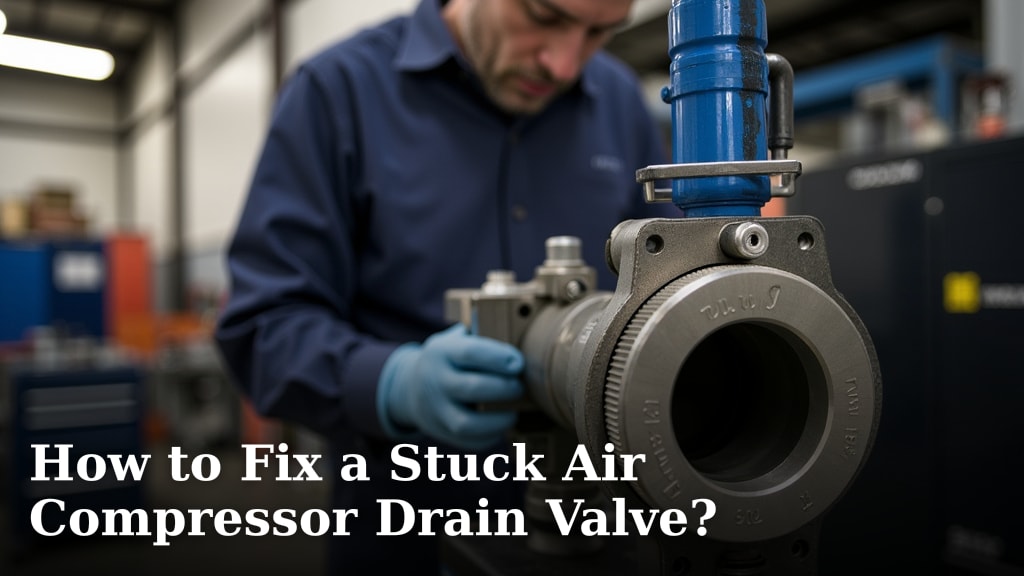
Follow How to Fix a Stuck Air Compressor Drain Valve? if the valve is difficult to operate.
Finally, inspect the outlet, hose, coupler, and regulator for oily residue. Clean only with products approved for those parts, and replace contaminated filters if the manual calls for replacement.
Can an oily smell confirm oil carryover?
An oily smell in the air supply is a warning sign, but smell alone cannot identify the exact cause. Compare the odor at the tank drain, hose outlet, and tool connection.
If the tank water smells oily but the outlet air does not, the issue may be limited to condensate. If the smell is strongest at the hose or tool, lubricant may be entering the compressed air.
Use a clean, light-colored cloth to check for visible residue after safely releasing a small amount of air. Keep the test away from ignition sources and never spray unknown condensate toward your skin.
For more odor clues, see Why Does the Air from an Air Compressor Smell?. A smell that continues after draining and checking the oil level deserves further inspection.
What products help with this problem?
The right product depends on the source of the oil. A tank drain supports routine moisture removal, while a suitable separator or filter may help protect equipment from contamination.
Neither replaces diagnosis when oil carryover is heavy.
The Dorman 34152 A/C Compressor Bypass Pulley is an automotive A/C part, not a compressed-air tank drain, filter, or separator.
The VIAIR 400P/40043 12V Portable Air Compressor, 150 PSI for Truck & SUV Tires is designed for tire inflation. It has a 12V power source, 150 psi maximum pressure, 2.3 CFM free-flow capacity, and a 33% duty cycle at 100 psi.
Do not choose a portable tire compressor as a replacement for a shop compressor if your work needs continuous air for tools. Match the compressor to the tool's air demand, pressure needs, duty cycle, and intended use.
Can an air compressor still be used after draining oily water?
You may use the compressor for low-risk work after a light oily drain if the oil level is correct and the outlet air is clean. Stop and investigate if oil keeps returning, the oil level drops, or the air leaves visible residue.
Drain the tank at the end of each work session or according to the manual. Keep the drain pointed into a container, and avoid spraying the condensate onto floors, plants, drains, or painted surfaces.
Use a moisture separator or filter only when it is rated for the compressor and application. A separator can reduce liquid reaching a tool, but it cannot repair worn pump parts or an incorrect oil level.
Do not use contaminated air for spray painting, food contact, medical applications, or other work where oil could create a safety or quality problem. For a wider diagnosis, read What Is Wrong With My Air Compressor?.
When does oily water require service?
Arrange service when oily water is heavy, repeated, or accompanied by oily air, unusual noise, overheating, smoke, or a falling oil level. These signs suggest the problem is more than ordinary tank condensation.
Keep a simple record of what the drain liquid looks like, how often it appears, and whether the oil level changes. Note the tool, pressure, and run time when the problem occurs.
Do not dismantle a pressurized tank or pump. Disconnect power, release pressure safely, and use the compressor manual or a qualified repair professional for internal service.
If the tank is damaged, heavily corroded, leaking, or showing other structural problems, stop using it. Pressure vessels can create serious hazards when repaired or modified incorrectly.
How do you prevent oily compressor water?
Drain moisture regularly, keep the compressor level, maintain the correct oil level, and use suitable filtration when the application needs it. These habits limit water buildup and make it easier to notice lubricant carryover before it reaches a tool or workpiece.
Release pressure safely before opening the drain, then let the tank empty completely into a suitable container. Close the valve before storage so dirt does not enter through the opening, and dispose of oily liquid according to local requirements.
Keep hoses, couplers, and the air outlet clean. If a hose becomes oily, clean or replace it before connecting equipment that needs dry air, because residue can travel into fittings and tools.
The practical distinction is simple: a light film limited to tank condensate calls for regular draining and monitoring. Thick oil, repeated heavy discharge, or oil in the air stream calls for an oil-level check and service before continued use.
Frequently asked questions
Is oily water from an air compressor normal?
A small amount of cloudy or slightly oily condensate can happen with an oil-lubricated pump because water collects in the tank and can mix with a trace of lubricant. Thick oil, repeated heavy discharge, falling oil level, or oily air from the hose is not something to ignore.
How do you drain oily water from an air compressor?
Turn the compressor off, disconnect power, release pressure according to the manual, and open the drain valve over a suitable container. Keep the outlet away from people and surfaces, then close the valve and dispose of the liquid according to local rules for oily waste.
Why is my air compressor sending oil into the hose?
Oil in the hose can mean lubricant is moving past the pump's compression area, the oil level is too high, or the compressor is being used outside its intended position or service routine. Check the oil level and manual before running tools that could be damaged by contamination.
Can oily compressor water damage air tools?
Yes, oily condensate can contaminate hoses, spray equipment, paint surfaces, pneumatic tools, and workpieces. Drain the tank regularly, use the correct filter or separator for the job, and investigate heavy oil carryover before connecting sensitive equipment.