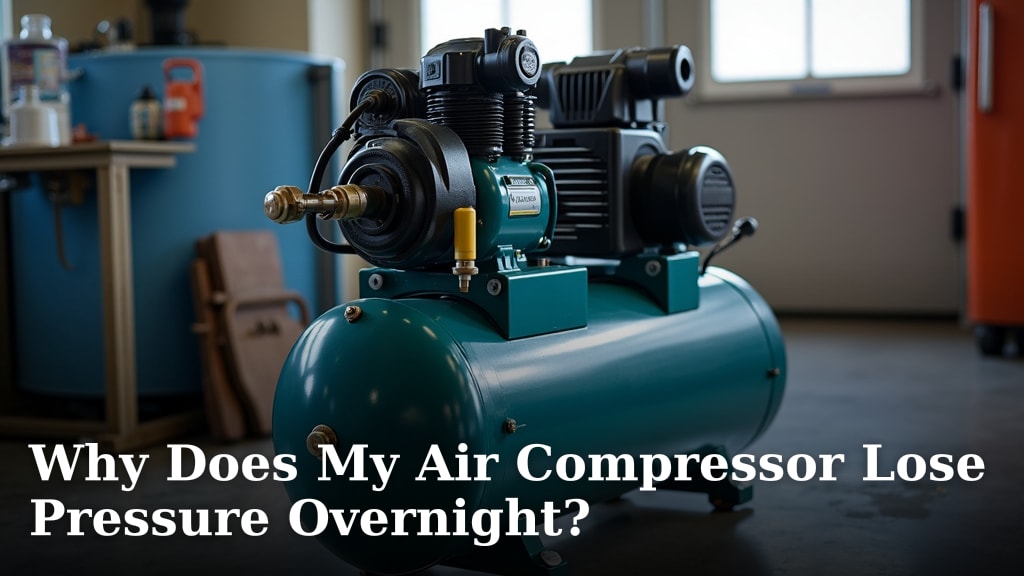
Atlas Copco Air Compressor Losing Pressure Overnight?
An Atlas Copco air compressor usually loses pressure overnight because of an air leak, an open drain, a leaking check valve, or pressure loss in connected equipment. Isolate the tank and test each section before replacing parts.
On this page (10 sections)
- What causes an Atlas Copco air compressor to lose pressure overnight?
- How can you tell if the leak is in the compressor or the air system?
- How do you check Atlas Copco air compressor leaks safely?
- Could the tank drain be causing the overnight pressure loss?
- Can a check valve make the compressor lose pressure overnight?
- What should you inspect in the connected air lines?
- Which replacement products fit related compressor problems?
- When should you call for Atlas Copco service?
- How can you prevent overnight pressure loss?
- What is the best way to fix an Atlas Copco air compressor losing pressure overnight?
An Atlas Copco air compressor losing pressure overnight usually has a leak or a valve that does not seal. The fault may be in the tank, drain, check valve, hose, fitting, regulator, or downstream piping, so isolate the system before buying parts.
A pressure drop can also come from connected equipment that remains open after the compressor stops. Record the pressure at shutdown, close the main outlet, and compare it again in the morning.
What causes an Atlas Copco air compressor to lose pressure overnight?
The most likely causes are leaking connections, an open drain, a faulty check valve, or air escaping through connected equipment. The pressure reading alone cannot tell you which section has failed.
Start with the easiest points to inspect:
- Tank drain valve or automatic drain
- Hose couplers and quick-connect fittings
- Flexible hoses and pipe joints
- Pressure regulator and outlet valves
- Safety relief valve
- Check valve between the compressor and tank
- Pneumatic tools, machines, and control valves left connected
A leak that sounds small during the day can empty a tank over many hours. If you hear hissing, see bubbles during a leak check, or find a fitting that changes when touched, mark that point before shutting down the system.
For a broader diagnostic sequence, use How to Troubleshoot Air Leaks in a Compressor System?.
How can you tell if the leak is in the compressor or the air system?
Close the main outlet between the compressor and the distribution network, then watch the tank pressure. A stable isolated tank with a falling system pressure points toward piping, tools, or machines downstream.
Before testing, let the compressor reach its normal stop point. Turn off connected equipment, close the outlet valve, and note the gauge reading and time.
Check the pressure again after several hours without running the motor.
If the tank pressure falls while isolated, inspect the drain, check valve, safety valve, gauge connection, and tank fittings. If the tank holds pressure but the system falls, reconnect sections one at a time until the pressure loss returns.
This simple split test helps prevent replacing a compressor when the actual fault is a hose or open valve. It also gives a service technician a clearer starting point.
How do you check Atlas Copco air compressor leaks safely?
Use your ears and an approved leak-detection solution, while keeping clear of moving parts and pressurized openings. Never use a flame to search for escaping air.
Apply the solution around accessible joints, threaded fittings, drain outlets, valve bodies, and hose connections. Growing bubbles suggest escaping air.
Clean the area after the inspection and repair only parts that you are qualified to service.
Do not remove guards, loosen pressurized fittings, or open the tank while it contains pressure. Follow the compressor's service manual and isolate electrical power before maintenance.
A hissing sound may come from a loose connection, a relief valve, or a damaged hose. If the sound is hard to locate, Why Is My Air Compressor Hissing? covers common locations and checks.
Could the tank drain be causing the overnight pressure loss?
Yes, a tank drain that stays open or fails to seal can release air continuously. Moisture drains are easy to overlook because the outlet may be below the tank or connected to a discharge line.
Inspect the drain after the compressor stops. Check for hissing, moisture, dirt around the valve, or a discharge tube that never fully closes.
An automatic drain can also lose air if its valve or control side is dirty or damaged.
Do not block a drain as a permanent fix. The tank needs a safe way to remove collected moisture, and the correct service method depends on the drain design.
Drain the receiver according to the equipment instructions, with the system depressurized as required. If the drain keeps leaking after cleaning or adjustment, have the correct replacement part fitted.
Can a check valve make the compressor lose pressure overnight?
A leaking check valve can let compressed air move back toward the pump after shutdown. This may cause a pressure drop, unwanted motor cycling, or a release of air near the compressor head or unloading circuit.
A similar valve or pressure problem can keep a Sanborn compressor running; see Sanborn compressor troubleshooting.
The check valve sits between the pump outlet and the receiver on many compressor designs. Its job is to keep stored air in the tank when the pump is not running.
A check valve needs proper diagnosis before replacement. A damaged seal, debris, or a related unloader problem can create similar symptoms.
Use Atlas Copco's service information for the exact model and have a qualified technician handle internal or pressurized repairs when needed.
If the compressor recently stopped after an alarm or control issue, read How To Reset Atlas Copco Air Compressor? before changing settings or parts.
What should you inspect in the connected air lines?
Inspect every device that remains connected after shutdown, because the compressor may be holding pressure while a downstream tool or valve releases it. Common examples include hose reels, blow guns, cylinders, filters, regulators, and automatic equipment.
Close branch valves one at a time and observe whether the overnight pressure loss changes. Check quick couplers for worn seals and inspect hoses for cuts, flattened areas, and damaged ends.
A hose can leak at the connection even when its outer surface looks sound. If a separate portable compressor has a hose connection problem, How to Troubleshoot Stanley FatMax Compressor Hose Connection Problems offers a useful comparison of connection checks.
Keep the system within its rated pressure limits. Do not tighten a fitting while it is pressurized, and do not substitute a connector without confirming that its thread, seal, and pressure rating suit the equipment.
Which replacement products fit related compressor problems?
The right choice depends on what you are trying to solve. A shop compressor, an automotive A/C bypass part, and a 12V tire compressor do different jobs, so none should be treated as a universal Atlas Copco repair.
The DEWALT D55154 is a 4 gallon electric wheeled dolly-style air compressor with a 1.1 HP continuous motor, 125 PSI maximum pressure, and 4 CFM air flow capacity. It has a 0.5 in compatible hose diameter, weighs 44 lb, and measures 24 x 19.75 x 22.6 in.
This type of compressor suits someone who needs a separate portable shop-air source rather than a repair to an existing Atlas Copco installation. Its 4 gallon capacity and wheeled format may be easier to position for occasional work, but compare the tool's required air flow and the compressor's intended duty before switching systems.
The Dorman 34152 A/C Compressor Bypass Pulley includes a pulley and bracket, uses screw mounting, and weighs 1.4 lb. It fits select Chevrolet, GMC, and Oldsmobile models, so confirm the vehicle's make, model, and trim before ordering.
This part is relevant only when “compressor” refers to an automotive air-conditioning compressor. It does not repair an Atlas Copco compressed-air leak, seal a receiver tank, or replace a shop-air check valve.
The VIAIR 400P/40043 is a 12V portable air compressor with 150 PSI maximum pressure, 2.3 CFM free-flow capacity, and a 33% duty cycle at 100 PSI. It includes a 25 ft 5-in-1 inflator and deflator hose, an inline 100 PSI gauge, an 8 ft power cord, a carry bag, 3 inflation tips, and a Presta valve adapter.
This model suits roadside tire inflation for trucks, SUVs, Jeeps, RVs, motorcycles, and bicycles. It is not a replacement for a fixed compressed-air system because its stated use and 12V power source are aimed at tire inflation.
When should you call for Atlas Copco service?
Call a qualified service technician when the pressure loss continues after accessible leaks are isolated, or when the fault involves the tank, check valve, controls, safety valve, or guarded components. Stored compressed air and electrical power can make internal repairs unsafe.
Service is especially important if the tank shows rust, dents, cracks, or damage around a fitting. Stop using the compressor if a safety device vents repeatedly, the motor cycles abnormally, or the pressure rises beyond its normal control point.
Record the model, shutdown pressure, morning pressure, connected equipment, and any sounds you noticed. This information can shorten the diagnostic process.
For background on the brand and manufacturing locations, see Where Are Atlas Copco Air Compressors Made?. Brand information does not replace the service manual for your exact compressor.
How can you prevent overnight pressure loss?
Close unused outlets, drain moisture as instructed, repair small leaks early, and isolate the distribution system before shutdown. These steps reduce wasted air and make a new pressure drop easier to trace.
Keep hose ends clean, avoid pulling hoses across sharp edges, and inspect couplers during routine maintenance. Check that automatic drains discharge correctly without releasing air continuously.
Do not leave pneumatic tools connected if they are not needed overnight. A tool valve or hose fitting can be the only leaking point in an otherwise sound compressor.
If the pressure falls only when one branch is open, repair that branch first. If it falls with the tank isolated, stop treating the issue as a normal line leak and arrange compressor-side diagnosis.
What is the best way to fix an Atlas Copco air compressor losing pressure overnight?
Separate the tank from the air network, measure the pressure over several hours, and repair the exact leak before replacing the compressor. Start with drains, fittings, hoses, valves, and connected tools, then move to the check valve and tank-side components.
Choose the DEWALT D55154 only when you need a separate 4 gallon electric shop compressor. Choose the Dorman pulley only for the stated automotive A/C bypass use, and choose the VIAIR 400P for 12V tire inflation up to its stated application.
For the Atlas Copco unit, use the pressure-isolation test and keep the equipment out of service if a safety or tank fault is suspected. That approach gives you a clearer answer to why your Atlas Copco air compressor is losing pressure overnight and helps prevent an unsafe shortcut.
Frequently asked questions
Why does my Atlas Copco air compressor lose pressure overnight?
The usual causes are a leak in the tank, hose, fitting, valve, drain, or connected equipment. Close the outlet, drain the system safely, record the pressure, and compare the result after several hours.
A pressure drop with the system isolated points toward the compressor or tank side.
How do I find an air leak in an Atlas Copco compressor system?
Listen for hissing, then apply approved leak-detection solution to fittings, hoses, drains, valves, and connections while the system is pressurized within its normal limits. Bubbles identify a leak.
Never use an open flame, and follow Atlas Copco's service instructions before opening guarded or pressurized parts.
Should an air compressor tank lose pressure when it is off?
A small pressure change can happen as air cools, but a continuing overnight drop usually deserves investigation. Isolate the tank from the distribution piping and equipment.
If pressure still falls, inspect the tank drain, check valve, safety valve, gauges, and tank for leaks.
Can I use a portable compressor to replace an Atlas Copco system?
A portable compressor can help with occasional tire inflation or a small independent task, but it is not automatically a replacement for a stationary Atlas Copco compressed-air system. Match pressure, flow, duty cycle, power, connections, and the tool's air demand before changing equipment.