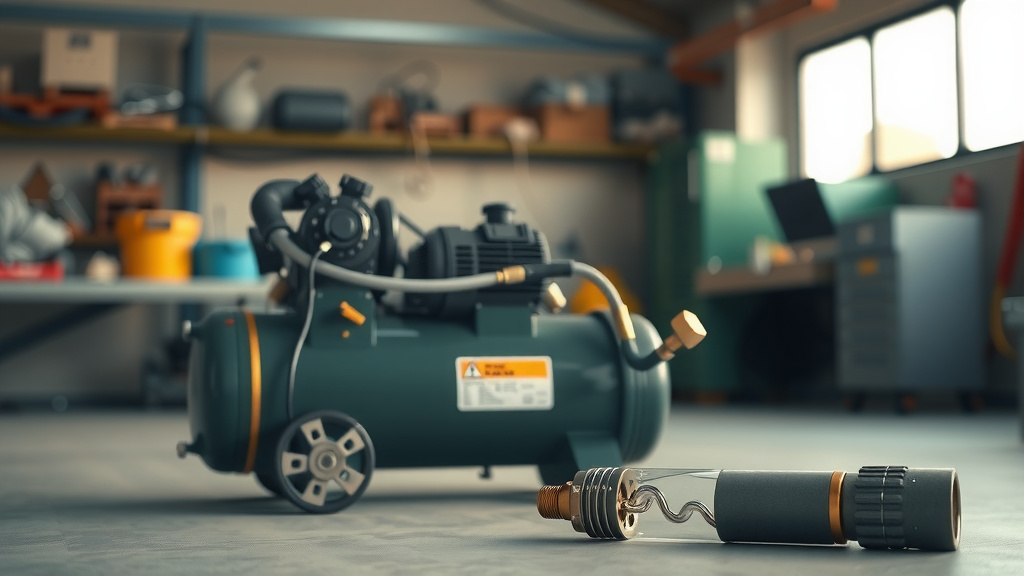
Why Does a Variable Speed Air Compressor Blow Fuses?
A variable speed compressor blows fuses mainly when its drive draws a short burst of high current at start up, or when a motor, capacitor, wiring or supply fault keeps current high. Check the fuse rating, supply voltage, restart pressure and drive fault codes before you fit another fuse.
On this page (11 sections)
- Why does variable speed compressor blow fuses at start up?
- How does low voltage raise compressor current?
- What role does the drive play in fuse failures?
- Do air compressors have fuses in the drive circuit?
- Why is my air compressor blowing fuses again and again?
- What to Do If Air Compressor Motor Won't Start?
- How do I reset an air compressor after a fuse blows?
- When should I choose a different compressor or part?
- Why does variable speed compressor blow fuses in cold weather?
- How can I prevent fuse failures next time?
- Which fix should I try first for fuse failures?
A variable speed compressor blows fuses when start up current, low voltage, a stuck pump or a drive fault pushes current past the fuse rating. You need to find the cause, not just fit a bigger fuse.
A bigger fuse can let wiring overheat and start a fire.
That answer covers most cases. The fuse is doing its job.
It opens the circuit before something else fails. Your task is to learn why current rose, fix that reason, and only then restore power.
Why does variable speed compressor blow fuses at start up?
Start up is the most common moment for failure. The motor has to break static friction and spin the pump fast enough to build pressure.
That takes more current than steady running.
A variable speed drive softens this by ramping speed up in steps. If the ramp is too fast, the drive still asks for a large current spike.
Cold oil, high tank pressure and a loaded pump make that spike larger.
Check tank pressure first. Open the drain or the outlet valve to bleed pressure to zero.
Try a restart on an empty tank. If the fuse holds, load and pressure were the cause.
How does low voltage raise compressor current?
Low voltage makes the motor work harder for the same output. You will often see it on long extension cords, shared circuits or a weak outlet.
The compressor may hum, slow down or trip its thermal switch.
Use the shortest cord you can, with a rating that matches the compressor. Avoid power strips and undersized cords.
Test the unit directly from a known good outlet if you can do so safely.
A drive can also react to low voltage. It may increase current to hold speed, then shut down on an undervoltage fault.
In that case the fuse is a warning about supply quality, not a faulty fuse.
What role does the drive play in fuse failures?
The drive controls speed, torque and current limit. A healthy drive ramps smoothly and caps current at the setting the maker chose.
A worn drive can ramp too fast or lose that current limit.
Fault codes help here. Many drives store codes for overcurrent, ground fault, short circuit or DC bus problems.
Note the code before you reset power. A code that returns on every start points to the drive or motor, not the fuse.
Heat matters too. A drive in a dusty cabinet or in direct sun can derate itself.
As it heats, it may draw more current or trip more often. Keep vents clear and leave space for air flow.
Do air compressors have fuses in the drive circuit?
Yes, and Do Air Compressors Have Fuses? explains where they sit. Some compressors use a mains fuse, some use a time delay fuse, and some drives use electronic protection with no replaceable fuse.
Check your manual for the exact type and rating. The rating is part of the protection design.
A slow blow fuse tolerates a brief start spike. A fast fuse may open on a normal start.
Never fit a higher rating to stop repeat failures. That removes the safety margin for the cord, outlet and motor windings.
If the correct fuse blows, the compressor or its supply needs attention.
What to check before you fit a new fuse
Switch off power and unplug the compressor. Inspect the cord, plug and vents for damage, dust or signs of heat.
Read the rating plate and confirm the replacement matches it exactly.
Bleed tank pressure and turn the motor by hand if the maker allows it. A pump that feels stiff or locked may need service.
Do not force it with a larger fuse.
Why is my air compressor blowing fuses again and again?
Repeat failures mean the cause is still present. Each attempt heats the motor and drive a little more.
After three or four tries, you can damage windings that would have survived one fault.
Look for a pattern. Does it blow on start, or after a few minutes?
On start suggests load, pressure or a short. After running suggests heat, low voltage or a failing capacitor.
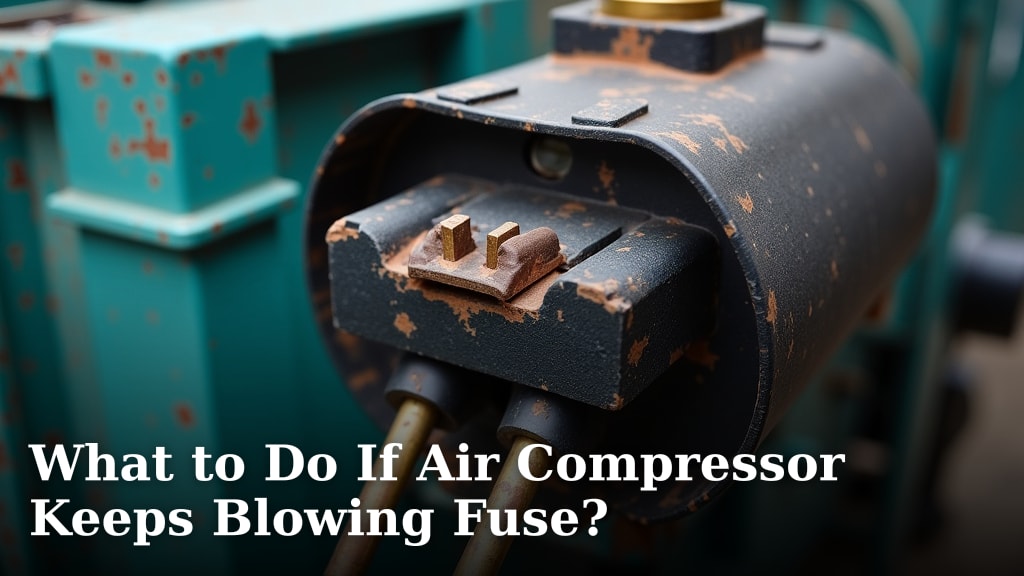
What to Do If Air Compressor Keeps Blowing Fuse? walks through that pattern step by step. Work through it once, in order, and keep notes.
Patterns save guesswork.
Why Is My Air Compressor Blowing Fuses? covers fixed speed units as well. Variable speed drives add ramp and current limit issues, but pressure, voltage and motor faults overlap.
What to Do If Air Compressor Motor Won't Start?
A motor that will not start can still blow fuses. It may draw locked rotor current while it hums and fails to turn.
That current stays high until protection opens.
What to Do If Air Compressor Motor Won't Start? helps you separate a dead motor from a supply fault. Listen for humming, check for a tripped thermal switch, and confirm voltage at the outlet.
If the motor hums and the fuse blows, suspect a stuck pump, a failed start capacitor or shorted windings. If the motor is silent and the drive shows a fault code, suspect the drive or its control supply.
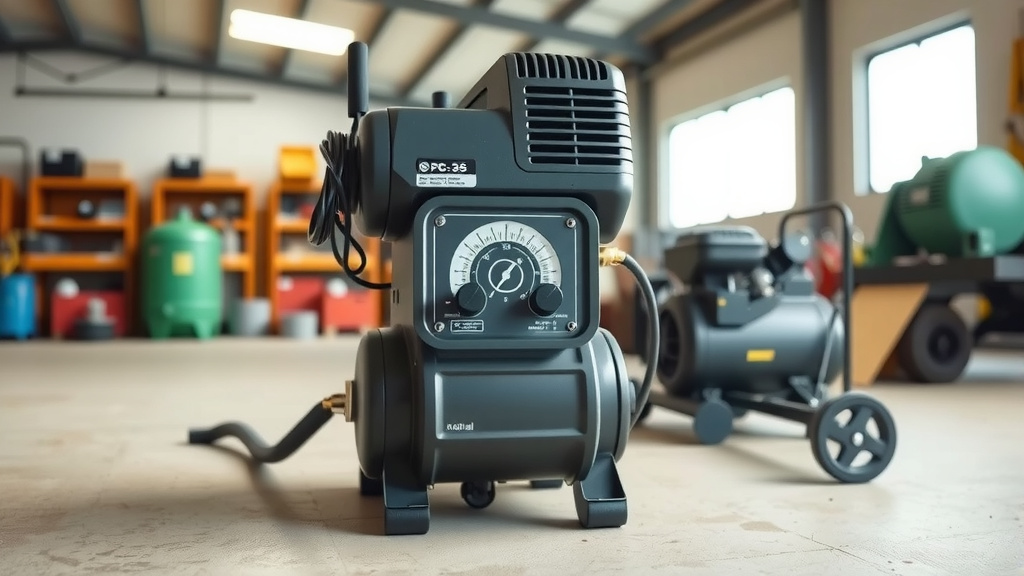
This DEWALT D55154 is a 4 gallon, 1.1 HP continuous electric wheeled dolly style unit with 125 PSI max pressure and 4 CFM at 90 PSI. It suits readers who want a workshop compressor that runs multiple tools from dual universal quick couplers.
Use it to test whether your outlet and circuit handle a known good motor load.
How do I reset an air compressor after a fuse blows?
Reset only after you have bled pressure and checked the cause. Fit the correct fuse, plug in, and start with the outlet valve open.
Let the pump reach speed before you close the valve and build pressure.
How To Reset An Air Compressor? covers tank pressure, thermal switches and drain checks. Follow those steps before you reset a drive fault code.
A reset does not clear a short circuit.
If the fuse blows on the first start, stop. Do not keep resetting.
A short will damage the drive, melt insulation or harm the outlet. Further tests need a meter and maker guidance, or professional help.
When should I choose a different compressor or part?
Choose a different compressor when your supply cannot meet its needs, or when repair costs more than replacement. Check the rating plate, circuit rating and cord length before you buy.
The Dorman 34152 A/C Compressor Bypass Pulley is a different kind of compressor part. It uses the same mounting points as the A/C compressor and keeps the standard drive belt in use after a failed A/C compressor is removed.
It fits select Chevrolet, GMC and Oldsmobile models, so check your exact vehicle fit before you order. It does not supply workshop air.
The VIAIR 400P/40043 is a 12V portable compressor for truck and SUV tires up to 35 inches. It delivers 150 PSI max pressure, with a 25 ft hose, 100 PSI gauge and 40 Amp inline fuse holder.
It suits off road use where you connect to a vehicle battery and start the engine as instructed. Its 12V circuit still needs the correct fuse and good battery connections.
Compare options in Best Variable Speed Air Compressor when you want a unit built around a drive. Look at current limit settings, cooling, and the maker fuse rating.
A well matched drive should start smoothly on your circuit without repeat fuse failures.
Why does variable speed compressor blow fuses in cold weather?
Cold weather thickens pump oil and stiffens seals. The motor then needs more torque to start.
The drive may ramp faster to compensate, and current can climb past the fuse rating.
Dual soft start features help some units in cold starts. The DEWALT unit above has dual soft start valves that assist in cold weather start up.
That design aims to ease the first seconds of running.
Warm the compressor slowly before heavy work. Run it unloaded for a short period and keep it out of freezing wind.
Do not apply external heat to the tank or motor unless the maker allows it.
How can I prevent fuse failures next time?
Prevention starts with pressure, voltage and heat. Bleed the tank before restart, use a short rated cord, and keep vents dust free.
Those three habits stop many repeat failures.
Match the fuse to the maker rating every time. Store spare fuses of the correct type with the manual.
If a fuse blows, record whether it blew at start or while running. That note guides the next check.
Service the pump and drive on schedule. Check capacitor condition, connections and cooling fans where the maker allows access.
A drive that runs hot or noisy needs attention before the next fuse failure.
Which fix should I try first for fuse failures?
Try the simple checks first: bleed pressure, test on a known good outlet, and read any drive fault code. Stop if a correct fuse blows on an empty tank start.
That points to a motor, drive or wiring fault that needs repair.
Pick a workshop compressor if you need steady air tools, pick a 12V unit if you need tire inflation away from mains, and pick a vehicle bypass part only for a failed A/C compressor on a listed vehicle. Match the fix to the job, not to the fuse.
Frequently asked questions
Why does variable speed compressor blow fuses?
It usually blows a fuse when start up current, low voltage, a stuck pump or a drive fault pushes current beyond the fuse rating. Moisture, heat and repeated restarts can make the problem worse.
Work through voltage, pressure, motor and drive checks in order, and do not fit a larger fuse to force a start.
Can a variable speed drive cause fuse failures on its own?
Yes, a failing drive can draw excess current, switch at the wrong frequency or trip on a fault. It can also mask a weak motor, since the drive ramps speed to keep pressure up.
Read any fault code and compare current draw with the maker rating before you replace parts.
Is it safe to replace a blown compressor fuse?
Only replace it with the exact type and rating after you switch off power and find the cause. A new fuse that blows straight away points to a short circuit or seized motor.
Stop testing and get help if you smell burning, see damaged wiring or hear buzzing from the outlet.
How do I stop my compressor blowing fuses every time?
Bleed tank pressure before restart, confirm the circuit and extension cord can handle the load, and check for a stuck pump or faulty capacitor. Limit restarts while you diagnose, since each start heats the motor and drive.
If fuses fail on a known good supply, the compressor needs repair.