How Many Watts Does A Small Air Compressor Use?
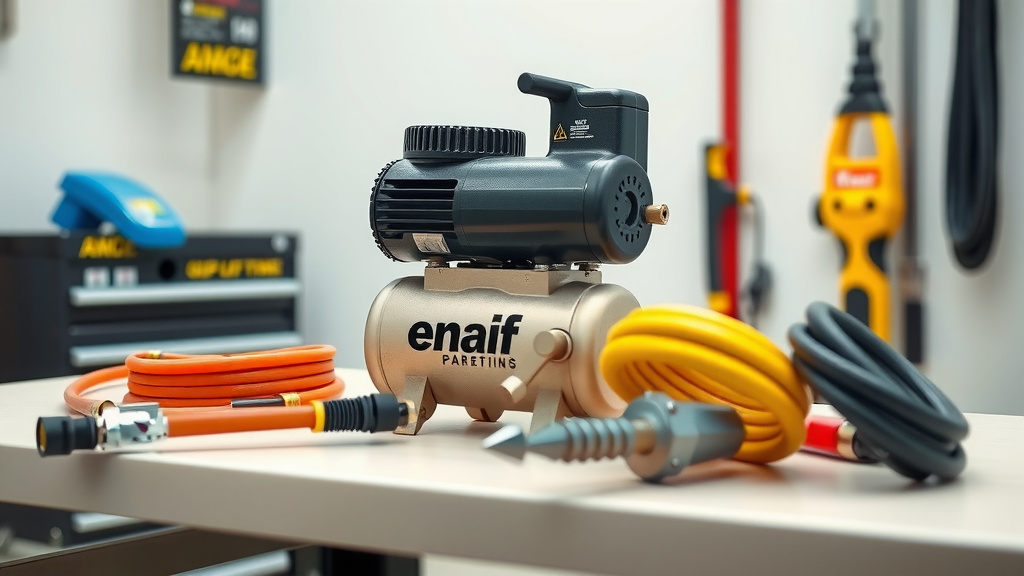
A small air compressor typically uses between 500 to 1500 watts of power.
The precise wattage a small air compressor uses depends on its motor horsepower and the specific task you’re performing.
Here’s a quick overview of what you’ll learn:
- Small air compressors generally consume 500W to 1500W.
- The motor’s horsepower (HP) directly impacts wattage use.
- Tasks like inflating tires use less power than running air tools.
- Understanding watts helps you avoid tripped breakers and choose the right generator.
- Always check your compressor’s label for exact specifications.
How Many Watts Does A Small Air Compressor Use?
Understanding how much power your small air compressor consumes is pretty important, isn’t it? Generally, these handy machines need anywhere from 500 to 1500 watts. This range covers many common household and workshop tasks. Knowing these numbers helps you avoid surprises, like a tripped circuit breaker.
Why Does Wattage Matter for You?
You might wonder, “Why should I care about watts?” Well, it’s about practical usage. Knowing your compressor’s wattage helps you pick the right extension cord. It also ensures you don’t overload your home’s electrical circuits. Plus, if you ever need to run it with a generator, you’ll know what size generator to get. It’s all about smooth, uninterrupted work!
Decoding Compressor Labels
Most small air compressors have a label that tells you their specifications. You’ll often see horsepower (HP) listed, not watts directly. Don’t worry, we’ll connect those dots for you. This label is your best friend for accurate power data. Many manufacturers provide detailed electrical requirements right there (Consumer Reports).
What Factors Influence Air Compressor Wattage?
Several things can change how many watts your small air compressor uses. It’s not a fixed number, like a light bulb. Think of it like a car – fuel economy changes based on how you drive. For air compressors, power use changes based on its features and how it’s working.
Motor Horsepower (HP)
The motor’s horsepower is the biggest factor. A 1 HP motor will use less power than a 2 HP motor, naturally. More powerful motors compress air faster, but they also demand more electricity. It’s a trade-off between speed and energy consumption.
Tank Size and Pressure
While tank size doesn’t directly use watts, it affects how long the motor runs. A smaller tank will cycle on and off more frequently to maintain pressure. This means the motor kicks in more often, consuming more power over time. Higher pressure settings also make the motor work harder. We found that maintaining higher PSI typically increases immediate power draw.
Duty Cycle
Air compressors don’t run continuously. They have a “duty cycle.” This refers to the percentage of time a compressor can operate within a given period. Running your compressor hard, with many start-stop cycles, can impact total wattage used across an hour. Constant running means constant power draw.
The Task at Hand
What are you doing with your compressor? Inflating a bicycle tire is a light load. Running an air nailer or a small impact wrench is much heavier. Heavier tasks make the compressor motor work harder. This increased effort translates directly to higher wattage consumption. Think of it as pushing a car versus coasting; pushing takes more energy.
Converting Horsepower to Watts: A Simple Trick
Since many compressors list HP, here’s a common conversion. One horsepower (HP) equals about 746 watts. So, a 1 HP compressor might use roughly 746 watts. A 1.5 HP unit would be around 1119 watts. Remember, this is an estimate for the motor’s output. The actual power drawn can be higher due to efficiency losses.
Estimating Wattage for Common Tasks
Let’s look at some examples to give you a clearer picture. These are approximate values, but they offer good guidance. We found these ranges are common among popular small compressor models.
| Task | Estimated Wattage Range | Typical Compressor HP |
|---|---|---|
| Inflating tires (car/bike) | 300 – 700 watts | 0.5 – 1 HP |
| Small nailing/stapling | 700 – 1200 watts | 1 – 1.5 HP |
| Dusting/cleaning with air gun | 500 – 900 watts | 0.75 – 1 HP |
| Blowing up inflatables (rafts, toys) | 400 – 800 watts | 0.5 – 1 HP |
| Light painting/airbrushing | 800 – 1500 watts | 1.5 – 2 HP |
Why Your Compressor Might Draw More Than Expected
Sometimes, your compressor might pull more watts than the simple HP conversion suggests. This is due to “starting wattage” and “running wattage.” When the motor first kicks on, it needs a surge of power. This surge can be 2-3 times higher than its continuous running wattage. This is why generators need a higher “surge wattage” rating (Electrical Safety Foundation International).
Understanding Running vs. Starting Watts
Think of it like getting a heavy wagon moving. You need a big push to start it (starting watts). Once it’s rolling, you only need to push lightly to keep it going (running watts). Your compressor motor is similar. This initial power spike is brief but important. It’s why a small compressor might trip a weak circuit breaker, even if its running watts are fine.
Tips for Managing Your Compressor’s Power Usage
You can do a few things to make your air compressor more efficient. These simple steps can save you energy and headaches. Nobody likes a tripped breaker in the middle of a project!
- Check for air leaks: A leaky air system makes your compressor work harder and run longer. Seal them up!
- Match the tool to the task: Don’t use a powerful compressor for a tiny job.
- Maintain your compressor: Regular maintenance keeps it running smoothly and efficiently.
- Use shorter, thicker extension cords: Long, thin cords can cause voltage drop, making the motor work harder.
- Don’t over-pressurize: Only fill the tank to the pressure needed for your task.
Choosing the Right Compressor for Your Needs
Before you buy, think about what you’ll use it for most often. Do you need it for occasional tire inflation? Or will you be using air tools regularly? This choice impacts both its size and wattage. Many experts say a 1-2 HP compressor is good for most home users (Popular Mechanics).
When to Consider a Larger Compressor
If your projects involve continuous heavy-duty air tools, a “small” compressor might not cut it. You might need something with higher HP and a larger tank. This prevents the motor from constantly cycling, which is better for its lifespan and your power bill. Sometimes, a bigger compressor uses its power more efficiently over time. It’s like using a truck for hauling instead of constantly overloading a car.
Quick Checklist for Power Efficiency
Here’s a quick list to help you manage power:
- Know your compressor’s HP and wattage.
- Ensure your circuit can handle the starting surge.
- Keep hoses and connections leak-free.
- Set pressure only as high as needed.
- Use the shortest, heaviest-gauge extension cord possible.
- Regularly drain moisture from the tank.
Conclusion
Understanding how many watts a small air compressor uses boils down to a few key points. Most fall between 500 and 1500 watts, with horsepower being the main driver. Your specific tasks also play a huge part. By knowing these numbers, you can pick the right tools, prevent electrical issues, and work smarter. Always check your compressor’s label and use our conversion tips to estimate power. Happy compressing!
FAQs About Small Air Compressor Wattage
Is a 1000-watt air compressor considered small?
Yes, a 1000-watt air compressor is generally considered small. It’s suitable for many household tasks like inflating tires, blowing dust, and light nailing. These units typically have motors between 1 and 1.5 horsepower.
Can I run a small air compressor on a standard household outlet?
Most small air compressors are designed to run on a standard 120-volt household outlet. However, ensure the circuit has enough amperage (usually 15-20 amps) to handle both the running wattage and the higher starting wattage without tripping the breaker.
Does the size of the air tank affect wattage consumption?
The air tank size doesn’t directly consume watts. However, a smaller tank might cause the compressor motor to cycle on and off more frequently to maintain pressure. This frequent starting can lead to higher overall energy consumption compared to a larger tank that runs less often.
What size generator do I need for a small air compressor?
For a small air compressor, you’ll typically need a generator with a running wattage capacity of 1000-2000 watts. More importantly, it needs a surge wattage capacity of 2000-4000 watts to handle the motor’s startup spike. Always check your specific compressor’s requirements.
How can I reduce the power usage of my small air compressor?
You can reduce power usage by keeping your air lines leak-free, only filling the tank to the necessary pressure, using appropriate-sized tools for the job, and ensuring your extension cords are short and heavy-duty. Regular maintenance also helps your compressor run more efficiently.
