
How To Convert Air Compressor To Vacuum Pump?
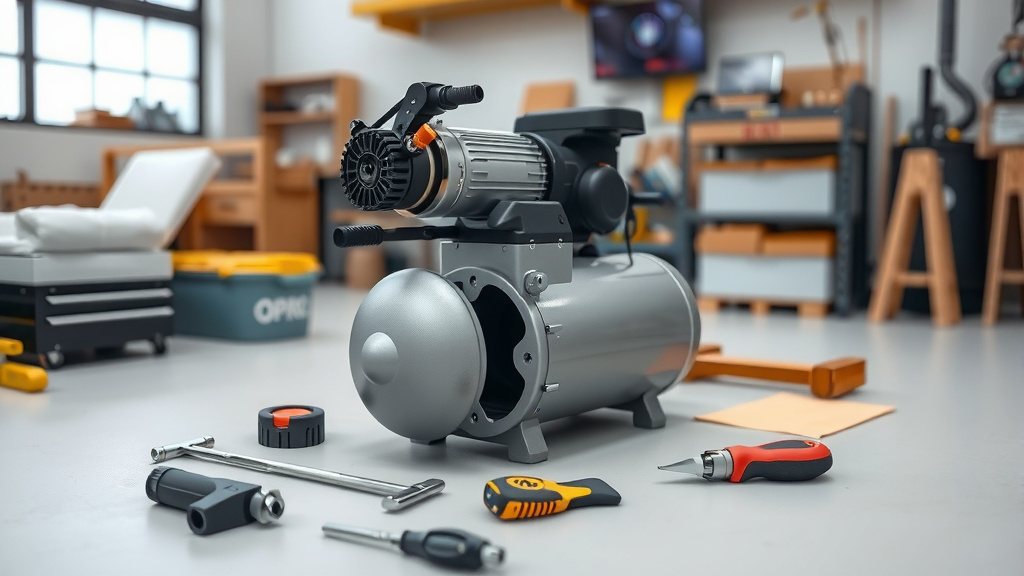
Converting an air compressor into a vacuum pump involves reversing its operation to pull air out of a sealed space instead of pushing it in. You can achieve this by modifying the compressor’s intake and exhaust valves.
To convert an air compressor to a vacuum pump, you typically reroute the intake port to become the vacuum source and ensure the exhaust port can release the evacuated air. This process often requires specific valve adjustments.
- You can repurpose an air compressor for vacuum by reversing its normal air flow.
- The modification mainly involves adjusting or swapping valves and plumbing connections for suction.
- This is a common DIY project, but it demands careful planning and a focus on safety.
- Not all compressors are ideal; rotary vane designs are often more suitable than piston types.
- Always use personal protective equipment and select the right components for a safe conversion.
Have you ever looked at your air compressor and wondered if it could do more? Many people think of air compressors only for inflation or powering tools. But what if it could also suck air out of things, creating a vacuum? It’s a pretty neat idea, right?
Believe it or not, turning your air compressor into a vacuum pump is possible for many models. This can be a huge help for tasks like degassing resins, vacuum forming, or even handling certain fluid transfers. It saves you from buying a whole new piece of equipment.
How To Convert Air Compressor To Vacuum Pump?
You convert an air compressor to a vacuum pump by modifying its air intake and exhaust system to create suction instead of pressure. This often means altering valve functionality or port connections.
Understanding the Basic Principle
Think about how your air compressor works. It pulls air in, compresses it, and then pushes it out under pressure. A vacuum pump does the opposite; it pulls air out of a sealed space. The core idea for conversion is to reverse this flow.
Essentially, you want the compressor’s normal discharge port to become the vacuum intake. And the usual intake port needs to become the atmospheric exhaust for the pulled air. It sounds simple, but the devil is in the details, especially with valves.
Is Your Compressor Suitable for Conversion?
Not every air compressor is a good candidate for this conversion. We found that rotary vane compressors are often the easiest to adapt. They are designed for continuous operation and handle the reverse flow better.
Piston compressors, while common, can be more challenging. Their valves are usually one-way check valves, making a direct reversal tricky. You might need to modify or replace these valves to create a vacuum effectively (Popular Mechanics).
Rotary Vane vs. Piston Compressors
Imagine a rotary vane compressor like a paddle wheel. It spins, trapping air and pushing it out. Reversing this motion or porting can make it pull air instead. They often generate a steadier vacuum.
Piston compressors are more like a bicycle pump. A piston moves up and down, opening and closing valves. Reversing a piston system requires more specific valve changes, which can be complex and risky.
Essential Tools and Materials You’ll Need
Before you dive in, gather your supplies. You’ll need some basic hand tools, like wrenches and screwdrivers. Safety gear is non-negotiable, so grab your safety glasses and gloves.
Specific components might include vacuum-rated hoses, fittings, and possibly new check valves or a vacuum gauge. Having everything ready saves time and frustration.
- Wrenches and socket sets
- Screwdrivers (flathead and Phillips)
- Pipe thread sealant or Teflon tape
- Vacuum-rated hose and clamps
- Appropriate pipe fittings (NPT, barb, etc.)
- Optional: Vacuum gauge
- Safety glasses and gloves
Step-by-Step Conversion Guide
Safety First: Disconnect Power and Depressurize
Before touching anything, always unplug your air compressor. If it has an air tank, fully drain any compressed air. This prevents accidental starts and high-pressure injuries. Your safety is paramount in any DIY project.
Identify and Modify the Intake/Exhaust Ports
Locate the compressor’s intake manifold (where air normally enters) and the discharge port (where compressed air exits). Your goal is to make the discharge port the new vacuum inlet. The original intake might become your new atmospheric exhaust.
Sometimes, this means installing new fittings or even a small filter on the new exhaust. You don’t want debris getting sucked into your environment. We often see people using threaded adapters for this step.
Rerouting the Airflow for Vacuum
For many piston compressors, you might need to install a new check valve. This valve allows air to be pulled from your vacuum chamber and expelled to the atmosphere, but it stops air from flowing back into your vacuum space. Think of it like a one-way street for air.
With rotary vane models, it might be simpler. You could just connect your vacuum hose to the usual pressure output. The internal design often allows it to function as a vacuum with minimal modification. It is really about understanding your specific compressor.
Testing Your New Vacuum Pump
Once everything is connected, it’s time for a test. Connect a vacuum gauge to your new setup. Turn on the compressor and watch the gauge. Is it pulling a vacuum? You might not achieve super high vacuum levels, but a good conversion should create a noticeable pull.
Listen for unusual noises and check for leaks with soapy water. Any bubbles mean you have a leak, which will reduce your vacuum performance. A little patience here can save big headaches later.
Limitations of a Converted Compressor
A converted compressor won’t likely perform as well as a dedicated vacuum pump. They are designed for different purposes. You might achieve a decent rough vacuum, but not the deep vacuum needed for some scientific or industrial applications.
Heat generation can also be an issue. Running a compressor in reverse mode for long periods might cause it to overheat, affecting its lifespan. It’s always good to monitor the temperature carefully during use.
When to Consider a Dedicated Vacuum Pump
If your needs are demanding, a dedicated vacuum pump is always the better choice. For example, if you require a very deep vacuum for freeze-drying or semiconductor manufacturing, a DIY conversion simply won’t cut it. Dedicated pumps are built for efficiency and specific vacuum levels.
Also, if you plan on frequent or heavy use, the wear and tear on a converted compressor might be too much. Investing in the right tool for the job often pays off in the long run. Many experts recommend this for professional or high-demand tasks (Scientific American).
Maintaining Your Converted Setup
Just like any tool, your converted vacuum pump needs care. Regularly check fittings for leaks. Ensure any filters are clean and free of debris. Oil levels, if applicable to your compressor type, should also be maintained.
The operational stress might be different, so listen to your machine. Any unusual sounds could indicate an issue needing attention. Preventive maintenance helps extend the life of your equipment.
| Feature | Converted Air Compressor | Dedicated Vacuum Pump |
|---|---|---|
| Cost | Low (uses existing equipment) | Higher initial investment |
| Vacuum Level | Rough to medium vacuum | Medium to very deep vacuum |
| Efficiency | Lower, not optimized for vacuum | High, designed for specific vacuum tasks |
| Longevity | Potentially reduced due to reverse stress | Longer lifespan when used as intended |
| Complexity | DIY modification required | Ready to use out of the box |
Conversion Checklist
To ensure you cover all your bases, here’s a quick checklist:
- Safety gear is ready and on.
- Compressor is unplugged and depressurized.
- Intake and exhaust ports are correctly identified.
- Necessary valve modifications are made.
- Vacuum-rated hoses and fittings are secure.
- Vacuum gauge is installed for monitoring.
- System is tested for leaks and performance.
- Maintenance plan is in place.
Conclusion
Converting an air compressor to a vacuum pump is a fantastic way to add versatility to your workshop without breaking the bank. It’s a practical DIY project that, with the right approach and a focus on safety, can yield useful results. You’re essentially teaching your compressor a new trick!
Remember that while conversions offer flexibility, they also come with limitations. For casual use or specific non-critical applications, your converted compressor will probably serve you well. For anything requiring precision, high vacuum, or heavy-duty cycles, a dedicated pump remains the gold standard. Always choose the tool that best fits the job, ensuring both efficiency and safety in your work.
Is it safe to convert an air compressor to a vacuum pump?
Yes, it can be safe if you follow proper procedures, understand your compressor’s mechanics, and prioritize safety precautions like disconnecting power and using appropriate safety gear. Incorrect modifications or neglecting safety can pose risks.
Can all types of air compressors be converted?
Not all types are equally suitable. Rotary vane compressors are generally easier to convert due to their design. Piston compressors can be converted, but they often require more complex modifications to their internal valving system.
What kind of vacuum level can I expect from a converted compressor?
You can typically achieve a rough to medium vacuum level. This is suitable for many common tasks like vacuum bagging or degassing small batches. However, it won’t reach the deep vacuum levels of specialized laboratory or industrial pumps.
Will converting my air compressor reduce its lifespan?
It might. Running a compressor outside its intended operating parameters, especially with continuous vacuum operation, can put different stresses on its components and potentially lead to increased wear or overheating, shortening its lifespan. Regular monitoring and maintenance are key.
What are common uses for a DIY vacuum pump?
A DIY vacuum pump is useful for many hobbyist and light industrial tasks. These include vacuum forming plastics, degassing epoxy resins or silicone for bubble-free casts, vacuum clamping workpieces, or even bleeding automotive brake lines. It’s a versatile addition to your toolset.
