
How to Inflate a Paddle Board with an Air Compressor?
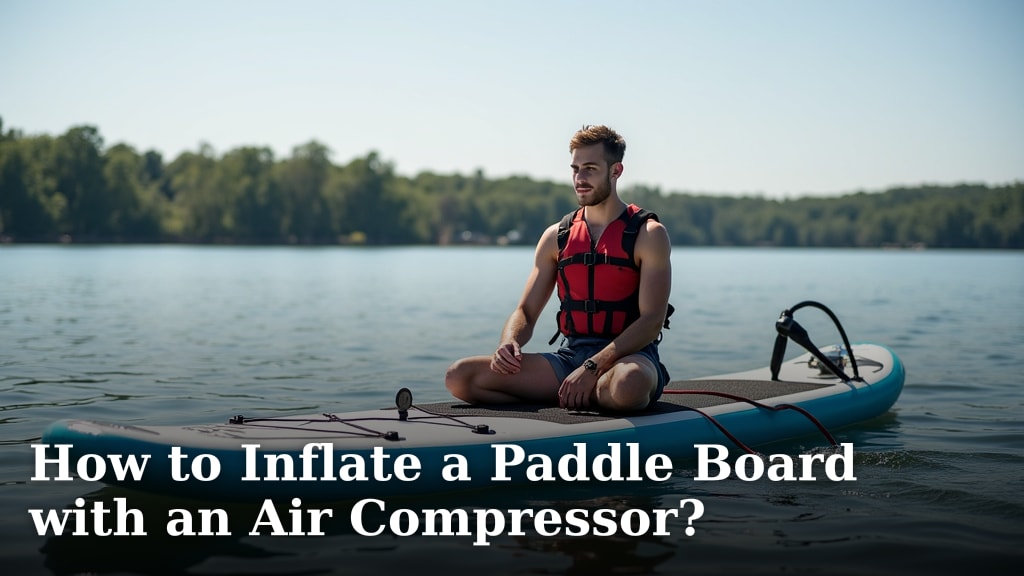
Yes, you can inflate a paddle board with an air compressor, but you need the right adapter and to monitor the pressure carefully. This method can save you a lot of effort compared to a hand pump, especially for higher PSI boards.
Many paddle board owners find that an air compressor makes inflation much faster and less tiring. We’ve found that using an appropriate valve adapter is key to a successful and safe inflation process. It’s also important to understand your board’s PSI requirements.
- The right adapter is essential for attaching to the compressor.
- Always check your paddle board’s maximum PSI.
- Inflate slowly and monitor the pressure gauge.
- Never over-inflate your paddle board.
- Compressors save time and effort.
Let’s walk through everything you need to know about how to inflate your paddle board with an air compressor, step by step.
Getting Your Paddle Board Ready for Compressor Inflation
Before you even think about connecting that air compressor, a little preparation goes a long way. You want to make sure your paddle board is ready for inflation and that you have all the necessary components. This step saves you fuss later.
Gathering Your Essentials
What do you need? Think of it like packing for a small trip! You’ll need the board, of course, and a few key tools to make the job easy and safe. Missing one small part can stop your inflation dead in its tracks.
The Right Valve Adapter
This is probably the most important piece of the puzzle. Your air compressor likely has a standard tire chuck connector, which won’t fit your paddle board’s Halkey-Roberts (H3) valve. You need a specialized Halkey-Roberts valve adapter.
We’ve found that many universal kits exist, but always double-check the description to ensure it’s compatible with inflatable stand-up paddle boards (iSUPs). You can usually find these online or at paddle board specialty stores.
Understanding Your Board’s PSI
Every paddle board has a recommended maximum air pressure, measured in pounds per square inch (PSI). You’ll typically find this number printed near the board’s valve or in your owner’s manual. Most iSUPs range from 10 to 15 PSI, but some can go higher.
Knowing this number is crucial! Over-inflating can cause serious damage to your board, or worse, create a dangerous situation. Think of it like a balloon; too much air, and it’s going to pop.
Choosing the Correct Air Compressor
Not all air compressors are created equal. For your paddle board, you’re looking for one that’s a good fit for the task. We’ve seen people use everything from small portable units to larger garage compressors. Let’s look at what works best.
Types of Compressors and Their Suitability
You have options! Each type has its own pros and cons for paddle board inflation. Consider where you’ll be inflating your board most often.
Portable 12V Compressors
These are super convenient because they often plug into your car’s 12V outlet. They are usually compact and easy to carry to the beach or lake. Many portable compressors come with a built-in pressure gauge, which is incredibly handy.
Their main drawback? They can be slower than larger compressors, sometimes taking 10-15 minutes or more to inflate a board. Patience is key with these units.
Household or Garage Compressors
If you have a larger air compressor in your garage, great! These typically inflate boards much faster, thanks to their higher airflow. They are usually more powerful and efficient.
The downside is portability. Hauling a heavy, corded compressor to the water’s edge isn’t practical. These are best if you’re inflating your board at home before heading out.
Essential Compressor Features
Regardless of the type, keep an eye out for a few features that will make your life easier when inflating your iSUP.
- Pressure Gauge: Absolutely non-negotiable. You need to know how much air is going into your board.
- PSI Range: Ensure the compressor can reach and sustain your board’s maximum PSI. Most tire inflators can easily hit 15 PSI or more.
- Manual Shut-off: Auto shut-off features are great, but manual control is essential for fine-tuning.
- Cooling: Some compressors can get hot during extended use. Look for models designed for continuous operation or allow it to cool, if needed.
Step-by-Step Guide: Inflating Your Paddle Board
You’ve got your board, your adapter, and your compressor. Fantastic! Now let’s walk through the actual inflation process. It’s simpler than you might think, but attention to detail really matters.
Preparation and Connection
First things first, let’s get everything hooked up correctly. A good connection prevents air leaks and makes for an efficient inflation.
Here’s a quick checklist before you begin inflating:
- Clean the board’s valve area.
- Attach the Halkey-Roberts adapter to your chosen compressor’s hose.
- Ensure the board’s valve pin is in the UP position (ready to accept air).
- Lay your paddle board flat on a clean, soft surface.
- Check your compressor’s power source.
Attaching the Adapter to Your Board
Locate the Halkey-Roberts valve on your paddle board, usually near the tail. Twist your valve adapter onto the board’s valve until it’s snug. You want a tight seal to prevent air from escaping. Don’t overtighten, but make it firm.
The Inflation Process
Now for the main event! It’s time to add air. This is where patience pays off. You want a steady, controlled inflation.
| Step | Action | Tip/Note |
|---|---|---|
| 1 | Connect the compressor. | Ensure your adapter is securely twisted into the board’s valve. |
| 2 | Turn on the compressor. | Listen for air flowing. It will initially inflate fast then slow down. |
| 3 | Monitor the gauge. | Watch the pressure gauge closely as the board inflates. |
| 4 | Inflate gradually. | Inflate in short bursts, especially as pressure increases. |
| 5 | Reach optimal PSI. | Stop when you hit your board’s recommended PSI. |
| 6 | Disconnect. | Quickly remove the adapter and replace the board’s valve cap. |
Monitoring Pressure and Preventing Over-Inflation
This is the most critical part. Watch the pressure gauge like a hawk! As the board gets firmer, the pressure will rise more quickly. It’s very easy to accidentally over-inflate, especially with a powerful compressor.
We found that stopping just shy of your target PSI and checking the gauge again can be helpful. A small amount of pressure might be lost when you disconnect, so consider that. Always aim for your board’s recommended PSI, never exceed it (NRS Components).
Final Checks and Tips
Once inflated, quickly disconnect the hose. Make sure to replace the valve cap on your paddle board. This cap keeps out dirt and prevents any slow air leaks during use.
You can do a quick visual check for any obvious bulges or odd shapes. Your board should feel very rigid, almost rock-hard. A properly inflated board performs much better on the water.
Troubleshooting Common Inflation Issues
Sometimes, things don’t go exactly as planned. Don’t worry! Most inflation problems have simple solutions. We’ve certainly run into a few over the years.
Air Leaks During Inflation
Are you hearing a hiss? That means air is escaping! This is usually due to an improper seal.
- Adapter Connection: Re-tighten the adapter onto the board’s valve. Sometimes it just needs another twist to create a good seal.
- Valve Position: Double-check that the board’s valve pin is in the ‘up’ position. If it’s down, air will escape as soon as you remove the compressor.
- Damaged O-Ring: Inspect the O-rings on your adapter. If they are cracked or missing, they won’t seal properly. Replacement O-rings are usually inexpensive.
Board Not Inflating to Full PSI
Is your board looking floppy even after running the compressor? A few things could be happening.
- Compressor Limits: Is your compressor strong enough? Some smaller, inexpensive 12V compressors might struggle to reach higher pressures like 15 PSI.
- Leaky Compressor Hose: Check for holes or loose connections on your compressor’s hose itself.
- Board Valve Problem: In rare cases, the board’s valve itself might be faulty or dirty. Try depressing the pin a few times to ensure it moves freely.
Conclusion
Using an air compressor to inflate your paddle board is a real time and energy saver. You’ve learned that the right adapter and careful pressure monitoring are key to a successful experience. Preparing your board, choosing a suitable compressor, and following our inflation steps will have you on the water faster.
Always prioritize safety by understanding your board’s PSI and preventing over-inflation. With these tips, you’re ready to enjoy more paddling and less pumping. Grab your gear, head to the water, and have an amazing time!
Frequently Asked Questions
Can I use a regular car tire inflator for my paddle board?
Yes, many standard car tire inflators (12V portable compressors) can work. You’ll need a specialized Halkey-Roberts (H3) valve adapter to connect it to your paddle board. Make sure the inflator can reach your board’s recommended PSI.
How long does it take to inflate a paddle board with an air compressor?
Inflation time varies depending on the compressor’s power. Smaller 12V portable units might take 10-15 minutes. Larger household or garage compressors can inflate a board much faster, sometimes in just 5-8 minutes.
What PSI should I inflate my paddle board to?
Always inflate your paddle board to the manufacturer’s recommended PSI. This number is usually printed near the board’s valve or in the owner’s manual. Most iSUPs typically range from 10 to 15 PSI for optimal performance and rigidity.
Is there a risk of damaging my paddle board with an air compressor?
The main risk is over-inflation, which can stress seams or even burst your board. Always monitor the pressure gauge closely and stop inflating when you reach the recommended PSI. Using the correct adapter with a good seal also prevents valve damage.
Where can I buy a paddle board valve adapter for an air compressor?
You can find specialized Halkey-Roberts (H3) valve adapters online through paddle board retailers, Amazon, or at specialty watersports stores. We’ve found that it’s crucial to check compatibility for iSUPs before purchasing.
