Can a VIAIR Air Compressor Inflate a Paddleboard?
Yes, a VIAIR can inflate a paddleboard only if the valve fits, the pressure stays low, and the board maker allows compressor use. Most paddleboards need low pressure and high volume, so a tire-focused VIAIR is often slow and takes careful monitoring.
On this page (12 sections)
- Is a VIAIR 88P strong enough for a paddleboard?
- What pressure should you use for a paddleboard?
- Which adapter fits a paddleboard valve?
- How do you connect a VIAIR to a paddleboard safely?
- How long will it take compared with a hand pump?
- Can you overinflate a paddleboard with a VIAIR?
- What are the limits of using a tire inflator for a board?
- When should you use a hand pump instead?
- How do you check for leaks after inflating?
- What is the safest step by step method?
- Should you buy a VIAIR just for a paddleboard?
- What should you do before your next board trip?
Yes, a VIAIR air compressor to inflate paddleboard use is possible in some cases, but only with a matching valve adapter, low pressure, and constant checks. A VIAIR 88P is made for tires, not high volume boards, so it can work as a top-up tool more than a fast full inflation tool.
You need to check three things before you start. Your board must allow compressor use, the adapter must seal on the valve, and the pressure must stay under the board limit.
Is a VIAIR 88P strong enough for a paddleboard?
The VIAIR 88P has enough pressure, but not much volume for a big board. VIAIR lists up to 120 PSI, 1.47 CFM free flow, and tires up to 33 inches.
That pressure is far above what most inflatable boards need.
Air flow matters more than top pressure here. A paddleboard is a large, low pressure object, so a small tire compressor must move a lot of air through a small hose.
The 88P can do it, but the fill may take a long time.
The 25 minute duty cycle at 30 PSI also matters. Long board fills can build heat, so short runs and rest breaks are safer.
What pressure should you use for a paddleboard?
Use the pressure printed on your board, not the pressure the VIAIR can reach. Many inflatable paddleboards use low teens in PSI, but brands and models differ.
The valve label and manual are the source to trust.
Set a low target first, then add air in short bursts. A tire gauge that reads to 120 PSI can be hard to read at 12 PSI, so small changes matter.
Do not use tire pressure habits. A car tire may need 32 PSI or more, while a paddleboard can be damaged by pressure that feels low for a tire.
If your board has no clear limit, stop and find the maker spec. Guessing with a compressor can split seams or pop a valve.
Which adapter fits a paddleboard valve?
You need an adapter made for your exact paddleboard valve, not a tire chuck. Most paddleboard valves have a wide opening that needs a specific nozzle to seal and press down a spring pin inside.
A solid brass twist-on tire chuck will not fit on its own. It may press the outside, leak, or fail to open the valve correctly.
Look for a low pressure inflatable adapter that matches your valve type, including Halkey Roberts style and other wide bore board valves. Test it by hand first.
It should seat straight, seal without force, and release air when removed.
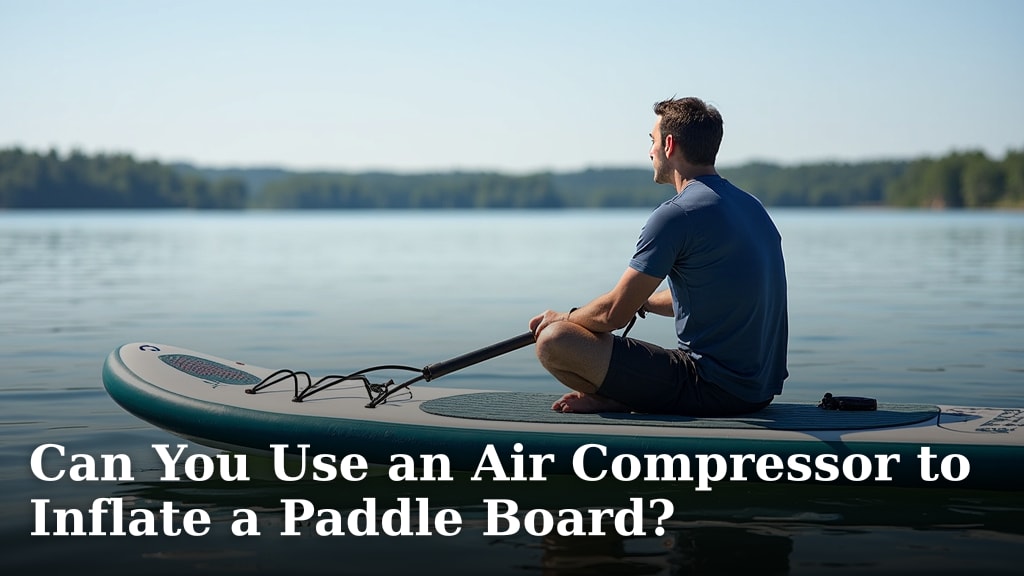
For a close comparison, see Can You Use an Air Compressor to Inflate a Paddle Board? to see how board valves differ from tire valves.
How do you connect a VIAIR to a paddleboard safely?
Connect the adapter first, then attach the hose, then run the VIAIR in short bursts. Start with the vehicle engine running if you use battery clamps, so the battery stays charged.
The VIAIR 88P uses dual battery clamps and a 10 foot power cord. That setup suits roadside and beach parking lot use, but it also means you need a safe place to park and work.
Keep the hose straight and the valve supported. A pulling hose can rock the valve and cause leaks or sudden pressure drops.
Use the on/off switch in short bursts. After each burst, check the board shape and the pressure reading before you add more air.
How long will it take compared with a hand pump?
A small VIAIR will usually be slower than a good high volume hand pump for a full board fill. Dual action hand pumps move large amounts of air with each stroke and are made for boards.
The VIAIR 88P at 1.47 CFM is better suited to topping off a tire than filling a large board from flat. A mostly flat board has a lot of volume to fill before it becomes firm.
That does not make the VIAIR useless. It can help top off a board, add air after a slow leak check, or finish the last bit of firmness.
For a kayak, the same volume issue shows up in Can You Use an Air Compressor to Inflate a Kayak?. Pools raise a similar issue in Can You Use an Air Compressor to Inflate a Pool?.
Can you overinflate a paddleboard with a VIAIR?
Yes, and this is the main risk with a VIAIR air compressor to inflate paddleboard use. The 88P can reach 120 PSI, while many boards need only a small fraction of that.
A built in gauge helps, but low readings can be hard to judge on a high range gauge. That is why short bursts matter more than a single long run.
Heat makes the risk worse. A board filled in direct sun can rise in pressure as the air warms, and a board filled with warm compressor air can change as it cools.
Stop below the limit, let the board sit, then check again. Add small amounts if the board still feels soft at the maker pressure.
How do you read low pressure accurately?
Use a gauge that reads low numbers clearly, or check pressure after each short burst. The built in VIAIR gauge is useful for tires, but a board fill needs fine control near 10 to 15 PSI.
An inline digital inflator can help you set a target and stop at that target. That reduces the chance of overshooting while you watch the board.
What are the limits of using a tire inflator for a board?
A tire inflator is a tool with limits, not a board pump replacement. The AstroAI AIRUN H, for example, is listed as not designed for high volume inflatables such as pool floats or air mattresses.
That warning tells you the category problem in plain terms.
Tire inflators are built for small, high pressure tasks. Paddleboards are large, low pressure tasks.
The mismatch shows up as slow fills, heat, adapter problems, and pressure control issues.
You may still use a VIAIR as a backup. Keep it for topping off, not for a full beach setup from a flat board.
If you want boat style inflatables, our guide to the Best Air Compressor For Boat Inflatables shows how volume needs change by item.
When should you use a hand pump instead?
Use a hand pump for the main fill and a VIAIR only for small top ups. That split gives you volume for the bulk fill and precision for the final pressure.
A hand pump also gives you direct feel. You can tell when the board starts to firm up, which helps you avoid sudden pressure jumps.
Choose the hand pump if your board is fully flat, if you are at a beach without a vehicle, or if you need a quiet fill near other people. Choose the VIAIR if you already have it in the vehicle, the board is nearly firm, and you have the right adapter.
For car tires after the trip, How to Inflate a Tire with an Air Compressor? covers the tire side of the same tool.
How do you check for leaks after inflating?
Let the board rest at pressure, then check the valve and seams before you add more air. A leak at the adapter can make the VIAIR seem weak, while a leak at a seam needs a different fix.
Remove the hose and listen at the valve. Then press along seams and feel for air with a wet hand or a soapy water mix on suspect spots.
If the board loses firmness fast, do not keep running the compressor to chase pressure. Find the leak first, because extra air can stress seams and hide the real problem.
For air beds, the same adapter logic applies in Can You Use an Air Compressor to Inflate a Mattress?. The valve shape and volume limit decide whether a compressor helps or harms.
What is the safest step by step method?
Match the adapter, set a low target, fill in bursts, rest, and check again. That order protects the board and gives you control.
- Read the board pressure limit. 2. Fit the correct low pressure adapter by hand. 3. Connect the VIAIR hose and start the vehicle if using clamps. 4. Run short bursts. 5. Check pressure and firmness after each burst. 6. Rest the board and recheck before use.
Keep the board out of strong heat while you fill. Shade helps keep pressure stable and makes fussy gauges easier to read.
Store the adapter with the board, not loose in a tire kit. That way you will not need to force a tire chuck onto a board valve later.
Should you buy a VIAIR just for a paddleboard?
No, do not buy a VIAIR only for paddleboard inflation. The 88P is a tire tool with a 16 foot hose, LED work light, Presta adapter, and three inflation tips.
Those extras help with tires and small items, not with a full board fill.
Buy it if you also need a dependable 12V tire inflator for a car, truck, SUV, Jeep, RV, ATV, or off road trips. In that case, the paddleboard use is a bonus top up option.
If your main need is a board, a high volume hand pump or a compressor made for inflatables fits better. It will move more air at low pressure and reduce the chance of damage.
For this post, volume and valve fit matter more than top PSI.
What should you do before your next board trip?
Test the full setup at home before you need it at the water. That test tells you if the adapter seals, how long short bursts take, and how the gauge reads at board pressure.
Inflate the board to a safe test level, let it rest, and check for leaks. Then deflate it fully and pack the adapter, pump, and VIAIR in the order you will use them.
Write down your board limit on a small tag for the carry bag. That simple step prevents a rushed mistake at a busy boat ramp.
So, can you use a VIAIR air compressor to inflate paddleboard setups? Yes, as a careful top up tool with the right adapter and low pressure.
For a full fill, a high volume board pump is still the safer pick.
Frequently asked questions
Can a VIAIR 88P inflate a paddleboard?
It may work with the right low-pressure adapter and close monitoring, but it is built for tires up to 33 inches and delivers 1.47 CFM. That flow is low for a large paddleboard, so expect a long fill and frequent stops.
What pressure do most paddleboards need?
Many stand-up paddleboards use low pressure, often around 10 to 15 PSI, but your board label controls. Check the valve area and manual first, and never exceed the maker limit with any compressor.
Do I need an adapter for a paddleboard valve?
Usually yes. Common paddleboard valves need a wide, low-pressure nozzle that seals without forcing the valve.
Match the adapter to your valve type before you connect any VIAIR hose.