
What Does The Gallon Mean In An Air Compressor?
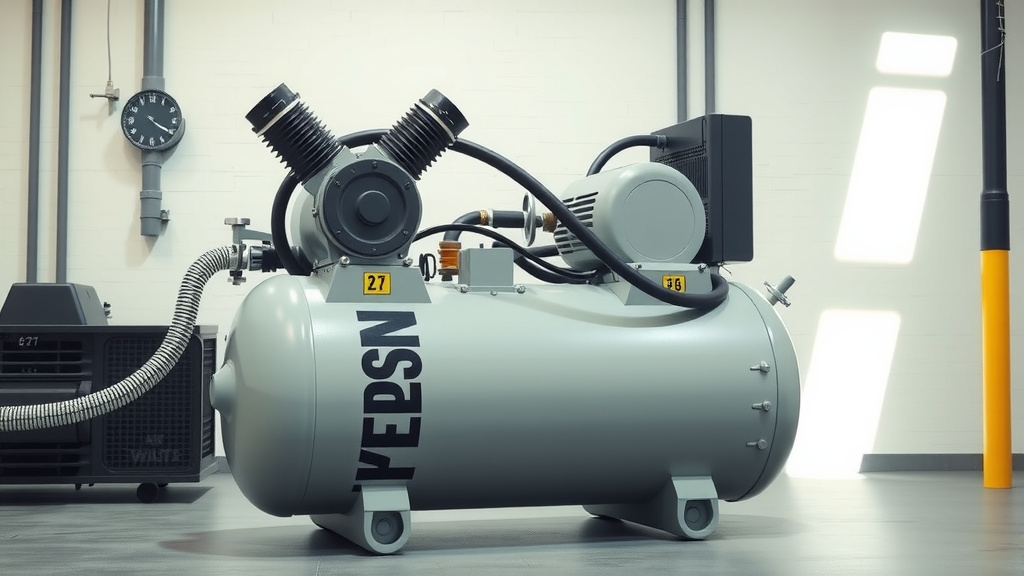
The gallon in an air compressor refers to the air tank’s storage capacity. This number tells you how much compressed air your unit can hold at a time, not how powerful the compressor motor is.
Essentially, a larger gallon size means your air compressor can store more air, allowing your tools to run longer before the motor needs to refill the tank.
- The gallon rating shows the air tank’s capacity to hold compressed air.
- It primarily impacts how long you can use air tools continuously before the compressor motor cycles on again.
- A bigger tank provides a longer run time for air-hungry tools, offering a smoother workflow.
- Tank size does not directly indicate the compressor’s power or air delivery rate (CFM).
- Choosing the right gallon size depends on the specific air tools you plan to use and your project needs.
What Does The Gallon Mean In An Air Compressor?
When you see an air compressor advertised with a gallon size, it describes the volume of its storage tank. This tank is where the compressor stores air after it’s been pressurized. Think of it as a battery for your compressed air.
This gallon number is crucial because it influences how long your air tools can operate without interruption. It’s all about reserving air for your tasks.
Why Tank Size Matters (Beyond Just Gallons)
Understanding the gallon size isn’t just about a number; it’s about practical use. A larger tank doesn’t necessarily make your compressor more powerful, but it definitely makes it more efficient for certain jobs.
It acts like a buffer, holding air so your compressor motor doesn’t have to work constantly. This gives the motor a break, extending its lifespan (we found that).
Small Tanks: Quick Bursts of Air
Compressors with smaller tanks, typically 1 to 6 gallons, are great for quick, intermittent tasks. Have you ever inflated a tire or used a brad nailer? These are perfect examples.
These compact units are often lightweight and portable. They are easy to move around your garage or job site, making quick jobs much simpler. For small projects or occasional use, they are a solid choice.
Medium Tanks: Your Everyday Workshop Buddy
Stepping up to medium-sized tanks, usually 8 to 30 gallons, opens up more possibilities. These are often seen in home workshops for general carpentry, automotive repairs, or even paint spraying.
They strike a nice balance between portability and sustained air delivery. You get longer run times for tools like impact wrenches or framing nailers, making tasks flow better. We found that a medium tank handles most DIY projects well.
Large Tanks: The Heavy-Duty Workhorse
For serious work, you’ll look at air compressors with large tanks, often 60 gallons or more. These are built for continuous, air-hungry applications like sandblasting, grinding, or powering multiple tools.
A larger tank allows for extended tool operation without constant motor cycling. Many experts say these tanks are a necessity for professional shops or for tasks demanding a steady, high volume of air (Industrial Air Power Association).
Gallons vs. PSI and CFM: The Air Compressor Trio
Gallons tell you about storage, but PSI (Pounds per Square Inch) and CFM (Cubic Feet per Minute) are also vital. PSI measures the air pressure, the “push” behind the air.
CFM measures the volume of air delivered. Think of it like a faucet: gallons are the sink size, PSI is the water pressure, and CFM is how quickly the water flows out. All three are crucial for picking the right compressor.
Understanding PSI: The Air’s Push
PSI tells you how much force the compressed air can exert. Different tools require different PSI levels to function properly. For example, a tire inflator might need higher PSI than a paint sprayer.
Always check your tool’s requirements. Using a compressor with insufficient PSI might damage your tool or produce poor results. Too much PSI can also be an issue, so regulators are common.
Decoding CFM: How Much Air You Get
CFM is perhaps the most critical metric for matching a compressor to your tools. It indicates how much air your compressor can deliver per minute. If your tool demands 5 CFM, your compressor needs to supply at least that much.
Many experts say that matching your compressor’s CFM to your tool’s needs is the key to efficient operation. Research often connects sufficient CFM to consistent tool performance (Compressed Air & Gas Institute).
| Tank Size (Gallons) | Typical Uses |
|---|---|
| 1-6 Gallons | Tire inflation, brad nailing, small airbrushing |
| 8-30 Gallons | Impact wrenches, paint spraying, framing nailing, light grinding |
| 60+ Gallons | Sandblasting, rotary hammers, multiple continuous tools |
Does a Bigger Tank Mean Better Performance?
A bigger tank doesn’t mean your compressor can generate more air pressure (PSI) or deliver more air per minute (CFM). What it does mean is that you can run your air tools for a longer stretch before the compressor motor has to kick in and refill the tank.
So, for tasks that use a lot of air quickly, like sandblasting, a larger tank offers a smoother, more consistent experience. It simply provides a bigger reservoir of ready-to-use air.
The Hidden Benefit: Less Compressor Run Time
One of the quiet advantages of a larger air tank is that the compressor motor cycles less frequently. This isn’t just about saving electricity; it’s about preserving your machine.
When the motor runs less often, there is less wear and tear. We found that this can significantly extend the overall lifespan of your air compressor, saving you money on repairs or replacements over time.
Noise Factor: A Quieter Experience?
Think about the noise an air compressor makes when it’s running. It can be quite loud, right? With a larger tank, the compressor doesn’t have to turn on as frequently to maintain pressure.
This means fewer noisy interruptions during your work. Your ears, and perhaps your neighbors, might appreciate the reduced noise levels during your projects.
How to Pick the Right Gallon Size for YOU
Choosing the ideal gallon size starts with a simple question: What tools will you actually use? Look at the CFM and PSI requirements for your most air-hungry tools.
Then, consider how long you plan to use those tools continuously. For short, quick jobs, a smaller tank is fine. For constant use, a larger tank is a must.
- What specific air tools do you plan to use most often?
- How frequently will you be operating these tools?
- Do your projects require continuous airflow, or short bursts?
- What physical space do you have available for the compressor?
- What is your budget for the initial purchase and ongoing power?
Don’t Overlook Portability
The gallon size directly affects how portable your compressor will be. A 1-gallon hot dog compressor is easy to carry around like a briefcase.
A 60-gallon vertical tank, however, is meant to stay put. Consider if you need to move your compressor frequently between different work areas.
The Cost Factor: More Gallons, More Dollars?
It’s generally true that air compressors with larger tanks carry a higher price tag. More steel and a larger footprint usually translate to increased manufacturing costs, which are passed on to you.
However, that initial investment can pay off in other ways. The reduced motor cycling from a larger tank might mean lower long-term maintenance costs (research suggests), balancing out the upfront expense.
Maintenance and Tank Size
Regardless of tank size, routine maintenance is vital. Draining moisture from the tank is perhaps the most important task to prevent rust and ensure longevity.
Many guidelines point to draining moisture daily or after each use (OSHA). While larger tanks hold more air, they also present more surface area for condensation to form, making regular draining even more crucial.
Conclusion
Understanding what the gallon size means in an air compressor is all about knowing its storage capacity for compressed air. It is not an indicator of power, but rather how much air your tools can draw before the compressor motor needs to refill the tank.
From small, portable tanks for quick tasks to large, stationary tanks for heavy-duty, continuous work, the right gallon size ensures your tools operate efficiently and your projects run smoothly. Always match the tank size to your specific tool requirements and usage patterns to make the best choice for your needs.
Does a higher gallon mean more power?
No, a higher gallon rating on an air compressor refers to the larger storage capacity of the air tank, not the motor’s power output. The power of an air compressor is more accurately reflected by its horsepower (HP) and its ability to deliver air (CFM).
Can I use a small tank for heavy-duty tasks?
While you can connect heavy-duty tools to a small tank, you will quickly find yourself frustrated. The compressor motor will run almost constantly to keep up, leading to frequent interruptions and potentially overheating the unit. For heavy-duty tasks, a larger tank is always recommended for continuous operation.
How often should I drain my compressor tank?
You should drain your air compressor tank daily or after each use, especially in humid environments. Moisture naturally collects inside the tank as air is compressed, and this water can lead to rust and corrosion, severely shortening the life of your compressor. It is a quick and simple maintenance step.
Is tank size related to the motor horsepower?
Not directly, but there is an indirect relationship. Compressors with larger tanks often come with higher horsepower motors because a bigger tank is typically meant for more demanding, continuous applications that require a stronger motor to fill it efficiently. However, you can find small tanks with powerful motors, and vice-versa.
What if I get a tank that’s too big?
If you get a tank that’s too big for your needs, the main “downsides” are the increased initial cost, larger physical footprint, and heavier weight, making it less portable. However, from a performance perspective, having a larger tank usually means the compressor motor runs less often, potentially extending its lifespan and providing more consistent air delivery for any task, big or small.
