
What Is Direct Drive vs Belt Drive Air Compressor?
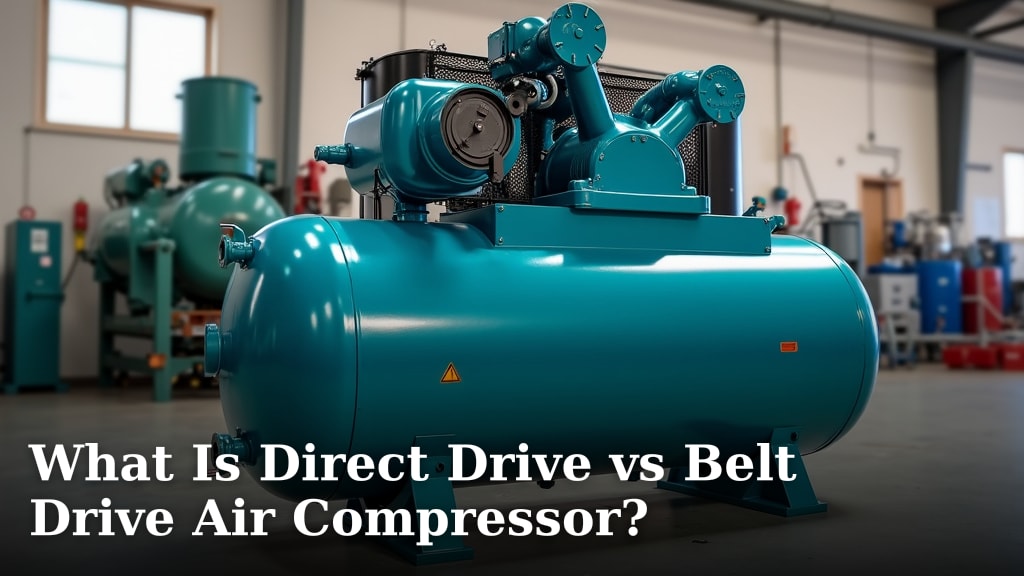
When choosing an air compressor, understanding the difference between direct drive and belt drive is key. A direct drive compressor connects the motor directly to the pump, offering simplicity and a more compact design, while a belt drive compressor uses a belt and pulleys to link them, often providing quieter operation and better cooling. We found that the best choice really depends on your specific needs and how you plan to use it.
Both types get the job done, but they go about it differently. Direct drive units are typically more affordable and easier to maintain. Belt drive systems, on the other hand, can be more durable and run cooler because the belt system allows the motor to run at a slower speed relative to the pump. This difference impacts noise levels and longevity.
- Direct drive: Motor directly powers the pump.
- Belt drive: Motor uses a belt and pulleys to power the pump.
- Direct drive is often simpler and cheaper.
- Belt drive can be quieter and run cooler.
- Your intended use will determine the best type for you.
Let’s dive into the details of each to help you make the right choice for your workshop or job site.
Understanding the Core Differences: Direct Drive vs. Belt Drive Air Compressors
So, you’re looking into air compressors and keep seeing “direct drive” and “belt drive.” What’s the big deal? Think of it like the engine in your car. Sometimes the engine is directly connected to the wheels (that’s like direct drive). Other times, there’s a system of belts and pulleys in between (that’s belt drive).
This difference might seem small, but it affects how the compressor works, how long it lasts, and even how loud it gets. We’ve looked into it, and understanding these mechanics can help you pick the perfect machine for your needs.
The Direct Drive Design: Simplicity at Its Best
Let’s start with direct drive. Imagine a motor and a pump standing side-by-side. In a direct drive setup, their shafts are connected directly. No extra parts in the middle, just a straight connection.
How Does a Direct Drive Work?
The electric motor spins, and because it’s directly linked to the pump, the pump spins at the exact same speed. It’s a very straightforward mechanical link. This direct connection means there’s very little energy lost between the motor and the pump. It’s all about efficiency in its simplest form.
Pros of Going Direct Drive
Why choose direct drive? Well, they tend to be more affordable upfront. This makes them a great starting point for DIYers or small home workshops. They are also generally lighter and more compact, which is helpful if you have limited space.
Maintenance is usually easier, too. With fewer parts, there’s less to go wrong or to keep track of. Many direct drive models are designed for easy access, making quick repairs or upkeep a breeze.
Cons of Direct Drive
However, there are some downsides. Because the motor and pump spin at the same high speed, these compressors can be quite noisy. Think of a tiny, fast-spinning motor right next to you. This can be a big issue if you’re working in a residential area or a shared garage space.
The high operating speed also means they can generate more heat. Over extended use, this heat buildup can potentially shorten the lifespan of the motor and pump. Many experts suggest these units are best for intermittent use rather than heavy-duty, continuous work (National Institute for Occupational Safety and Health).
The Belt Drive System: A Smoother, Cooler Operation
Now, let’s look at belt drive. Here, the motor and the pump are not directly connected. Instead, they are linked by a belt and pulley system. This setup introduces a bit more mechanical complexity, but it comes with some significant advantages.
How Does a Belt Drive Work?
In a belt drive compressor, the motor is typically mounted on one end, and the pump on the other, with a belt connecting them via pulleys. The key here is that the pulleys can be sized differently. This allows the motor to spin at one speed, while the pump spins at a different, often slower, speed.
This speed difference is the secret sauce. It allows the motor to operate more efficiently. Crucially, it lets the pump run at a speed that’s optimal for compression without overworking the motor. This design is a clever way to balance power and longevity.
Pros of Going Belt Drive
One of the biggest advantages of belt drive compressors is their quieter operation. Because the pump usually spins slower than in a direct drive unit, the noise level is significantly reduced. This is a major plus for anyone sensitive to noise or working in noise-restricted environments. The noise level is significantly reduced, and if you need a quiet option, our guide to the best quiet air compressors for apartments can help.
Belt drive systems also tend to run cooler. The slower pump speed and the distance between the motor and pump allow for better airflow and heat dissipation. Many professionals find this leads to greater durability and a longer service life for the compressor. Research indicates that slower operating speeds often correlate with reduced wear and tear on mechanical components (American Society of Mechanical Engineers).
These units are often considered more robust for heavy-duty applications. If you plan on using your compressor for extended periods, a belt drive might be the more reliable choice for your workshop.
Cons of Belt Drive
What’s the catch? Belt drive compressors are typically more expensive than their direct drive counterparts. The added components like the belt and pulleys, plus the often larger and more robust construction, contribute to the higher price tag.
Maintenance, while not difficult, involves more steps. You’ll need to check the belt tension and condition periodically. Over time, the belt itself will wear out and need to be replaced, which is an additional maintenance cost and task compared to direct drive.
Key Differences at a Glance
To help you quickly see the distinctions, here’s a comparison. We’ve found this table really helps people visualize the trade-offs:
| Feature | Direct Drive Compressor | Belt Drive Compressor |
|---|---|---|
| Motor-Pump Connection | Direct shaft coupling | Belt and pulley system |
| Pump Speed | Same as motor (high) | Can be slower than motor (variable) |
| Noise Level | Higher | Lower |
| Heat Generation | Higher | Lower |
| Durability (General) | Good for intermittent use | Better for continuous/heavy use |
| Cost (Initial) | Lower | Higher |
| Maintenance | Simpler, fewer parts | More parts (belt), belt tension to check |
| Size & Weight | Generally smaller and lighter | Generally larger and heavier |
Which Type is Right for Your Workshop?
So, how do you decide? It really boils down to what you’ll be doing with your compressor. Think about your typical tasks and the environment where you’ll be using it.
When to Choose Direct Drive
If you’re a hobbyist, a DIYer, or only need compressed air for occasional tasks like inflating tires, using a brad nailer, or powering small air tools, a direct drive compressor could be perfect. They’re great for occasional use where budget and space are important factors.
Consider direct drive if:
- You have a limited budget.
- You need a compact and portable unit.
- Your air usage is infrequent.
- You don’t mind a bit more noise.
When to Choose Belt Drive
If you’re a professional mechanic, a woodworker, or anyone who plans to use their air compressor for extended periods or with tools that require a lot of air (like impact wrenches or sanders), a belt drive is likely the better investment. Their ability to run cooler and quieter makes them ideal for demanding, long-duration tasks.
Consider belt drive if:
- You need a compressor for frequent or heavy-duty use.
- Noise reduction is a priority for your workspace.
- You want a unit that runs cooler and potentially lasts longer under heavy load.
- Your budget allows for a higher initial investment.
Making the Final Decision: A Quick Checklist
Before you click “add to cart” or head to the store, run through this quick checklist. It helps solidify what matters most for your specific situation:
- Task Frequency: How often will you realistically use this compressor?
- Tool Air Needs: What kinds of tools will you power? Do they need a lot of CFM?
- Noise Tolerance: How sensitive are you (or your neighbors) to compressor noise?
- Space Constraints: How much room do you have for the unit?
- Budget: What’s your comfort level for the initial purchase price?
- Durability Expectation: Are you looking for something that lasts for years of heavy use?
Conclusion
Choosing between a direct drive and belt drive air compressor boils down to your specific needs. Direct drive units offer affordability and simplicity, making them great for lighter, intermittent tasks. Belt drive compressors, while pricier, provide quieter operation, better cooling, and enhanced durability for heavier, continuous use. We’ve covered the key differences in design, pros, and cons for both. Before you buy, take a moment to review your typical tasks, noise tolerance, and budget. Then, you’ll be ready to confidently select the compressor that will best serve your workshop.
Frequently Asked Questions
How do I know if my air compressor is direct drive or belt drive?
You can usually tell by looking at it. If the motor is directly attached to the pump with no belts or pulleys visible between them, it’s a direct drive. If you see a belt and at least one pulley connecting the motor to the pump, it’s a belt drive system.
Can a direct drive compressor be used for heavy-duty work?
While direct drive compressors can handle some tasks, they are generally best suited for intermittent or lighter use. Their high operating speeds can lead to more heat and wear during continuous, heavy-duty applications, potentially shortening their lifespan.
What maintenance is different between direct drive and belt drive compressors?
Direct drive units require less maintenance because they have fewer moving parts. Belt drive compressors require periodic checks of the belt tension and condition, and the belt will eventually need to be replaced, which is an additional maintenance task and cost.
Are belt drive compressors always more expensive?
Generally, yes. Belt drive compressors tend to have a higher initial cost due to their more complex design with additional components like belts and pulleys, and often a more robust build for durability.
Which type of compressor is quieter?
Belt drive compressors are almost always quieter than direct drive models. This is because the belt and pulley system often allows the pump to operate at a slower speed, reducing the overall noise output.
