What Is the Best Air Compressor Size for a Home Garage?
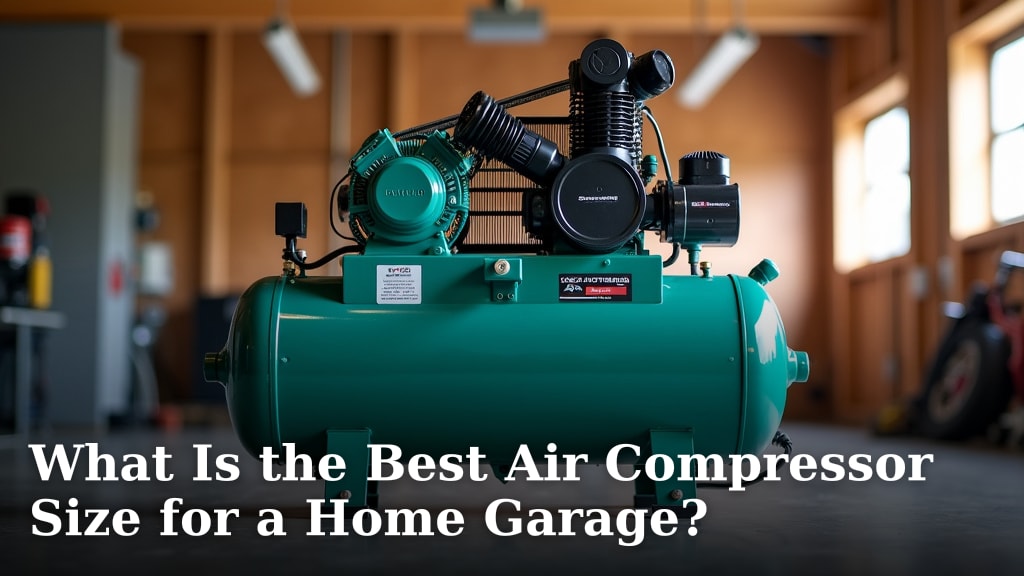
For most home garages and common DIY tasks, the best air compressor size is one with a 60-gallon tank and 3.5 to 5 horsepower (HP). This size offers a great balance between power and air capacity, handling many jobs without constantly refilling.
Choosing the right air compressor size for your home garage is a bit like picking the perfect tool for the job. You wouldn’t use a sledgehammer to hang a picture, would you? A good compressor for home use needs enough pressure (PSI) and airflow (CFM) for your specific tasks, whether it’s inflating tires or powering impact wrenches.
- Consider your most frequent tasks.
- Balance tank size with engine power.
- Larger tanks hold more air, ideal for continuous use.
- Higher CFM (Cubic Feet per Minute) often means more power.
- Plan for future projects, not just current needs.
Below, we’ll walk you through exactly how to choose the right air compressor, ensuring you get the most bang for your buck.
Finding the Ideal Air Compressor for Your Garage
The “best” size truly depends on what tasks you plan to tackle. For most DIY enthusiasts, an air compressor between 30 and 60 gallons with 3.5 to 5 horsepower offers an excellent balance of power and capacity.
Understanding Air Compressor Basics: CFM, PSI, and HP
Before diving into specific sizes, let’s break down the key terms you’ll encounter. Understanding these will help simplify your decision.
Cubic Feet per Minute (CFM): The Airflow King
CFM measures how much air your compressor can deliver at a certain pressure. This is arguably the most critical factor when choosing a compressor. If your tool needs 5 CFM at 90 PSI, your compressor must meet or exceed that. Otherwise, the tool will constantly stop and start, or fail to operate correctly.
Think of CFM as the “lungs” of your compressor. A higher CFM means it can keep up with tools that constantly demand air, like sanders or impact wrenches. We found that most air tools list their CFM requirements right on the packaging or in the manual. Always check this first.
Pounds per Square Inch (PSI): The Pressure Power
PSI tells you the maximum pressure the compressor can generate. Most common air tools operate in the range of 90 to 120 PSI. While higher PSI sounds better, it’s often the CFM at a specific PSI that truly matters for continuous tool operation. Your compressor needs to meet the tool’s required PSI to function properly.
Many air compressors are rated for their maximum PSI, but you should always compare the CFM output at a common working pressure, usually 90 PSI. This provides a more realistic comparison for everyday use.
Horsepower (HP): The Engine’s Strength
Horsepower indicates the motor’s strength. While a higher HP often suggests more power, it doesn’t always directly translate to more CFM. Some manufacturers use “peak HP” which can be misleading, as it represents a momentary maximum. We recommend looking for “running HP” or “rated HP” for a more accurate picture of sustained power.
Consider HP as the muscle behind the air pump. A stronger motor can compress air faster, which contributes to higher CFM. For home garage use, 3.5 to 5 HP is typically very robust.
Matching Compressor Size to Your Garage Tasks
Your main activities will dictate your ideal compressor. Are you mostly inflating, or do you plan on painting cars?
Light-Duty Tasks (Inflating, Blowing, Brad Nailing)
If you primarily need an air compressor for things like inflating car tires, sports equipment, or using a blow gun to clean workspaces, you don’t need a massive unit. A smaller, portable compressor often does the trick.
- Tank Size: 1-6 gallons
- CFM: 0-2 CFM @ 90 PSI
- HP: 0.5-1.5 HP
- Common Uses: Inflating tires, nailing (brad/staple gun), general cleaning.
These smaller compressors are highly portable and take up little space. They’re perfect if your needs are occasional and light. They usually recover air quickly for small tasks.
Medium-Duty Tasks (Impact Wrenches, Ratchets, Sanding)
Moving up a notch, perhaps you want to rotate tires using an impact wrench, or use an air ratchet for engine work. These tasks require more sustained air delivery.
- Tank Size: 10-30 gallons
- CFM: 3-6 CFM @ 90 PSI
- HP: 2-3 HP
- Common Uses: Impact wrenches, air ratchets, some sanding, small painting projects.
This category is a good starting point for general automotive DIY. The larger tank helps prevent the compressor from running constantly, giving you more uninterrupted tool use. We found this size to be a popular choice for hobbyists.
Heavy-Duty Tasks (Painting, Grinding, Continuous Sanding)
For more serious work, such as automotive painting, continuous grinding, or prolonged sanding, you’ll need significant and consistent airflow. This is where larger compressors truly shine.
- Tank Size: 30-80+ gallons
- CFM: 5-10+ CFM @ 90 PSI
- HP: 3-5+ HP
- Common Uses: Continuous painting, sandblasting, heavy grinding, all pneumatic tools.
This is where our recommended 60-gallon, 3.5-5 HP compressor typically falls. Many professional mechanics and serious hobbyists gravitate towards this size. It means fewer interruptions and more consistent power for demanding tools.
Considering Tank Size vs. CFM: A Balancing Act
It’s easy to get fixated on a large tank, but a big tank with low CFM is like having a huge fuel tank on a car with a tiny engine. It will hold a lot of air, but it will take forever to fill up, and it won’t keep up with demanding tools.
Conversely, a small tank with high CFM might replenish quickly but still cycle on and off frequently during continuous use. The “sweet spot” for home garages is often a good balance: enough CFM to power your tools, and a large enough tank to provide a buffer for continuous operation (Popular Mechanics).
Air Compressor Checklist for Your Home Garage
Use this quick checklist to guide your decision:
- What are the CFM requirements for your most common and most demanding air tools?
- How much available space do you have in your garage for the compressor?
- Do you prefer an electric (quieter, less maintenance) or gas (portable, louder) model?
- What is your budget for the compressor and any necessary accessories?
- What type of power outlet do you have available (120V vs. 240V)?
- Do you anticipate future projects that might require more air power?
Compressor Power Source: Electric vs. Gas
Most home garage compressors are electric. They are generally quieter and don’t produce exhaust fumes. However, gas-powered compressors offer portability for jobs away from power outlets.
Electric compressors come in 120-volt or 240-volt options. Larger, more powerful compressors often require a 240-volt outlet (the kind used for electric dryers or ranges). Ensure your garage has the proper electrical service for the compressor you choose.
Vertical vs. Horizontal Tanks: Space Considerations
Air compressors come with either vertical or horizontal tanks. The choice often comes down to available space in your garage.
- Vertical Tanks: Take up less floor space, often preferred in tighter garages.
- Horizontal Tanks: Can be easier to move and sometimes fit better under workbenches.
Always measure your available space before buying. You don’t want to get a great deal on a compressor only to find it doesn’t fit!
Comparing Common Home Garage Air Compressor Sizes
Let’s look at how different configurations stack up for typical home garage use. This table offers a quick comparison.
| Tank Size (Gallons) | HP Range | CFM @ 90 PSI | Best For | Key Consideration |
|---|---|---|---|---|
| 1-6 | 0.5-1.5 | 0-2 | Light inflation, brad nailing | Very portable, low cost |
| 10-20 | 1.5-2 | 2-4 | Tire rotation, DIY projects | Good for intermittent use |
| 20-30 | 2.5-3 | 4-6 | Impact wrenches, light sanding | Balanced for many projects |
| 30-60 (Our Recommendation) | 3.5-5 | 5-10 | Painting, grinding, heavy-duty work | Excellent power & capacity |
| 60-80+ | 5+ | 10+ | Continuous professional use | Requires 240V, large footprint |
Remember, the goal isn’t just to buy the biggest one. It’s about buying the right one for you and your projects. Overpaying for power you don’t need isn’t efficient (Consumer Reports).
Conclusion
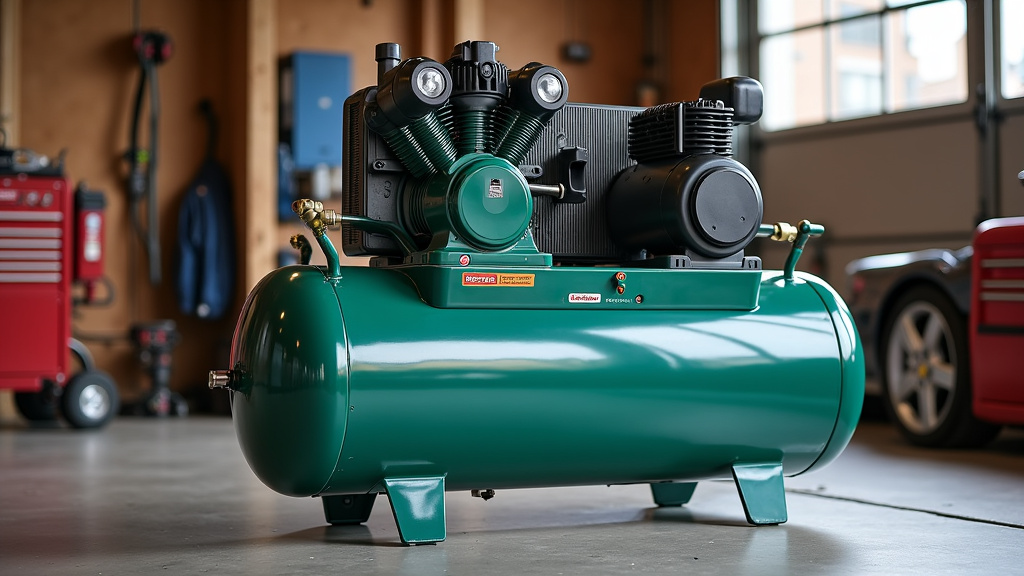
Choosing the best air compressor for your home garage doesn’t have to be overwhelming. Focus on your specific tasks, understanding how CFM, PSI, and horsepower work together. For most serious DIYers, we found that a 60-gallon tank with 3.5 to 5 HP offers the most versatility and power. This setup will comfortably handle everything from tire inflation to consistent tool use like grinding or painting. Take a moment to assess your needs, measure your space, and get the right compressor to power all your garage projects.
Frequently Asked Questions
Can I run impact wrenches with a small air compressor?
You can use an impact wrench with a smaller compressor (like 10-20 gallons), but it will likely cycle on and off frequently. This means interruptions in your work. For consistent use, a medium to large compressor with higher CFM is better.
How much space do I need for a 60-gallon air compressor?
A 60-gallon air compressor typically stands about 5-6 feet tall and has a footprint of roughly 2.5 x 2.5 feet, if vertical. Always check the specific dimensions of the model you’re considering. Remember to leave some space around it for air circulation.
Is a 240V air compressor more efficient than a 120V?
Generally, 240V air compressors are more efficient for larger models. They draw less amperage for the same amount of power, which can reduce strain on your electrical system and potentially save on electricity costs over time. Many larger compressors require 240V to operate.
How do I know the CFM requirements for my air tools?
Most air tools have their CFM requirements listed directly on the tool, in the owner’s manual, or on the product packaging. Look for the CFM at a specific PSI, usually 90 PSI. Always choose a compressor that meets or exceeds the highest CFM requirement of your most demanding tool.
What maintenance does an air compressor need?
Basic air compressor maintenance includes regularly draining condensation from the tank to prevent rust, checking and changing the oil (for oil-lubricated models), and cleaning or replacing the air filter. Always follow the manufacturer’s specific guidelines for your model.
