
What Oil To Use In Campbell Hausfeld Air Compressor?
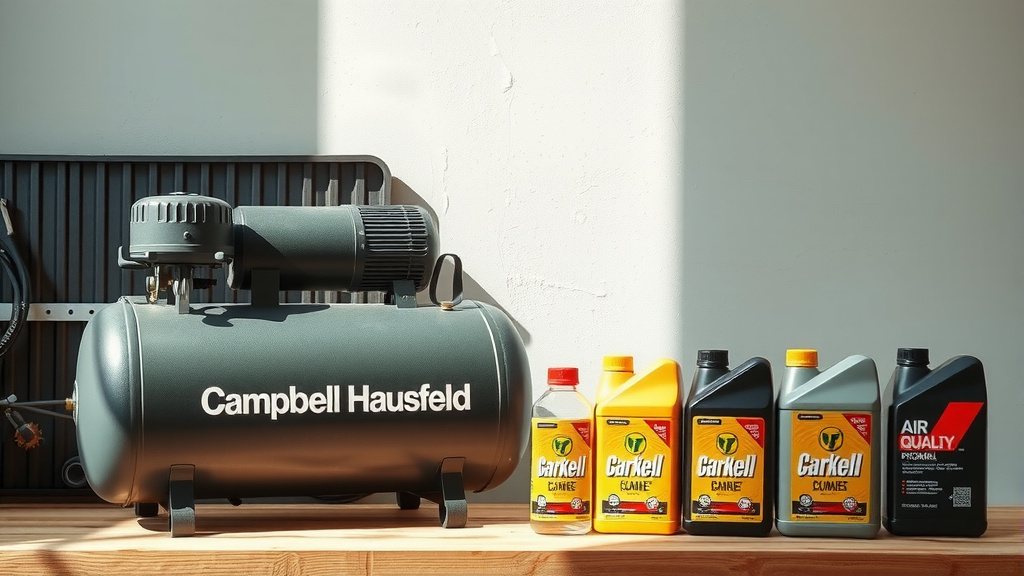
For your Campbell Hausfeld air compressor, we found that the best oil to use is a high-quality, non-detergent air compressor oil, often labeled as SAE30 or 20W Non-Detergent.
This specialized oil ensures optimal performance, extends the life of your pump, and prevents internal damage that can occur with regular motor oils.
Here’s a quick rundown of what you need to know about air compressor oil for your Campbell Hausfeld unit:
- Always use non-detergent oil specifically designed for air compressors.
- Check your compressor’s manual for the exact oil type and weight recommended.
- Avoid using standard motor oil, as it contains detergents that can cause carbon buildup.
- Regularly check and change your air compressor oil to maintain peak efficiency.
What Oil To Use In Campbell Hausfeld Air Compressor?
You should always use a non-detergent air compressor oil. This specialized oil is engineered to perform correctly in your unit. It is crucial for your compressor’s health.
Why Specific Oil Matters For Your Air Compressor
Thinking about using regular motor oil in your air compressor? Don’t! Air compressors have unique lubrication needs. Using the wrong oil can cause big problems down the road.
Motor oils contain detergents. These detergents are great for your car engine, cleaning it as you drive. But in an air compressor, they can create carbon deposits. These deposits gum up the works, especially inside the valves.
Eventually, this buildup can lead to overheating and component failure. It’s like putting syrup in your car’s gas tank; it just won’t work right and causes damage.
Types of Air Compressor Oil: What to Look For
When you’re shopping for air compressor oil, you’ll generally find two main types: conventional and synthetic. Both are non-detergent, but they have different features.
Conventional Air Compressor Oil
This oil is usually petroleum-based. It’s a cost-effective choice for most home and light-duty commercial compressors. Many Campbell Hausfeld models do very well with conventional oil.
Look for terms like “compressor oil” or “non-detergent SAE30.” Always check for the correct viscosity. Your owner’s manual will confirm the specific type.
Synthetic Air Compressor Oil
Synthetic oil is engineered for superior performance and longevity. It offers better thermal stability and reduces wear on internal parts. This means it handles extreme temperatures better.
If you use your compressor frequently or in demanding conditions, synthetic oil is a smart upgrade. It might cost more upfront, but it can extend your compressor’s life. Plus, it often allows for longer intervals between oil changes (Many experts say).
Checking Your Campbell Hausfeld Manual: Your Best Guide
The single most important source of information is your Campbell Hausfeld owner’s manual. It contains specific recommendations for your model. Don’t guess; consult the manual first.
It will tell you the exact SAE weight and type of oil. It also provides instructions for checking and changing the oil. Following these guidelines is key to keeping your compressor running well.
Understanding Viscosity: SAE30 vs. 20W
Viscosity refers to how thick or thin an oil is. For many air compressors, you’ll see recommendations like SAE30 or 20W. These numbers relate to the oil’s flow characteristics.
SAE30 is a single-grade oil. It maintains a consistent viscosity at operating temperatures. This is a common choice for many compressors.
20W is a lighter weight oil, often used in colder climates or specific models. Some manuals may suggest a multi-viscosity oil, like 20W-30, for varying temperatures. Always follow your manual’s guidance here.
Oil Changes: When and How Often?
Regular oil changes are vital. It’s like changing the oil in your car; it keeps everything running smoothly. Dirty oil loses its lubrication properties and can cause wear.
For typical home use, changing the oil every 50-100 hours of operation or once a year is a good rule of thumb. High-demand users might need to change it more frequently. Refer to your manual for specific intervals.
Changing the oil is usually a straightforward process. You’ll drain the old oil, then refill with the correct amount of new, clean compressor oil. Don’t overfill! (Research shows).
Signs It’s Time for an Oil Change
How do you know it’s time? Besides the scheduled changes, look for these signs:
- Oil appears dark or cloudy: Fresh oil is typically clear or light amber.
- Reduced compressor performance: It might seem slower or work harder.
- Unusual noises: A change in sound can signal lubrication issues.
- Excessive heat: If the pump feels hotter than usual, check the oil.
The Dangers of Using the Wrong Oil
Using motor oil, transmission fluid, or even hydraulic fluid in your air compressor is a big mistake. These fluids are designed for different operational environments. They lack the specific additives and viscosity needed for an air compressor.
Motor oil, as mentioned, leads to carbon buildup. Hydraulic fluid might be too thin or lack the right anti-wear properties. The consequences can range from poor performance to total pump failure. This costly oversight is easily avoidable.
Summary of Oil Types for Campbell Hausfeld
Here’s a quick comparison to help you choose:
| Oil Type | Key Characteristic | Best Use Case |
|---|---|---|
| Non-Detergent SAE30 Compressor Oil | Standard, single-grade viscosity | General home/shop use, moderate temperatures |
| Non-Detergent 20W Compressor Oil | Lighter viscosity | Colder climates or specific models requiring thinner oil |
| Synthetic Compressor Oil | Enhanced stability, longer life | Heavy-duty use, extreme temperatures, extended intervals |
A Quick Checklist Before You Fill
Before you pour that oil, take a moment to confirm these steps:
- Did you check your owner’s manual for the exact oil?
- Is the oil specifically labeled “air compressor oil“?
- Is it explicitly stated as “non-detergent“?
- Does the oil have the correct SAE weight (e.g., SAE30, 20W)?
- Is the compressor clean and free of old, mixed oil?
Temperature Considerations for Oil Choice
The ambient temperature where you use your compressor can influence your oil choice. If you live in a very cold region, a lighter weight oil like 20W might be better. It flows more easily at lower temperatures.
In warmer climates, or if your compressor runs hot, a heavier oil like SAE30 is often preferred. Synthetic oils, however, tend to perform well across a wider temperature range. Again, your manual usually covers this.
Conclusion
Choosing the right oil for your Campbell Hausfeld air compressor is a simple yet crucial decision. Always default to a non-detergent air compressor oil, and let your owner’s manual be your primary guide. Whether you go with conventional or synthetic, proper lubrication safeguards your investment. By paying attention to oil type and regular changes, you’ll ensure your compressor runs smoothly for years. It’s a small effort that yields big rewards in longevity and performance.
What if I accidentally used regular motor oil in my Campbell Hausfeld compressor?
If you’ve accidentally used regular motor oil, stop using the compressor immediately. Drain all the motor oil, flush the system gently according to your manual’s guidelines if possible, and refill with the correct non-detergent air compressor oil. Monitor its performance closely afterward.
Can I mix different brands of air compressor oil?
Mixing different brands of air compressor oil is generally not recommended. Even if both are non-detergent, different brands might use varying additive packages that could react poorly. It’s best to stick with one type and brand for consistent performance.
How do I check the oil level on my Campbell Hausfeld air compressor?
Most Campbell Hausfeld compressors have a sight glass or a dipstick. The compressor should be on a level surface and turned off. For a sight glass, the oil level should typically be in the middle. For a dipstick, check the markings as indicated in your manual.
Is it okay to overfill my air compressor with oil?
No, overfilling your air compressor with oil can be as damaging as underfilling. Too much oil can cause excessive pressure inside the crankcase, leading to oil leaks, foaming, and reduced efficiency. Always fill to the recommended level.
Does the color of air compressor oil matter?
Fresh air compressor oil is typically light amber or clear. Over time, it will darken due to heat and contaminants. While a dark color indicates it needs changing, the initial color doesn’t typically matter as much as ensuring it’s the correct type and weight for your compressor.
