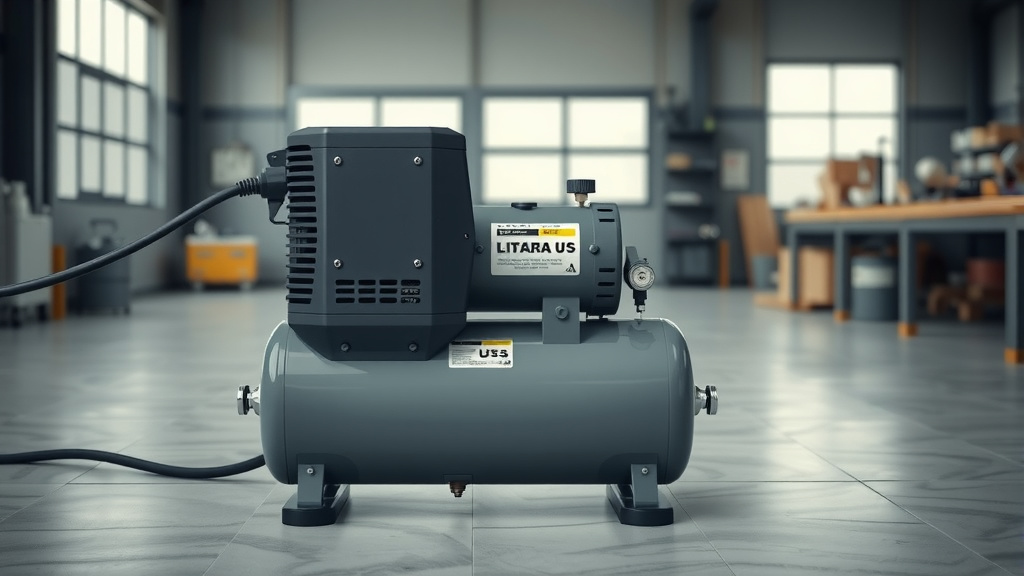
1 HP 220V Compressor Starting Current
A 1 HP 220V air compressor commonly needs about 10 to 15 amps during startup, even when its running draw is lower. The exact surge depends on the motor, pressure, temperature, wiring, and whether the compressor starts unloaded.
On this page (8 sections)
- What is the initial current draw of a 1 HP 220V compressor?
- How does 220V change compressor amp draw?
- What makes startup current higher?
- How should you size the 220V circuit?
- Can a portable 12V compressor be compared with a 1 HP 220V model?
- Is the Dorman bypass pulley related to compressor startup current?
- What should you do if the breaker trips at startup?
- How can you reduce starting problems?
A 1 HP 220V air compressor commonly draws about 10 to 15 amps during startup, while its running current may be closer to 5 to 8 amps. Those figures are a starting point for planning, not a substitute for the exact rating printed on your motor.
The real number depends on the motor design, tank pressure, temperature, circuit length, and whether the unloader releases pressure before the motor starts. A motor built for steady workshop use may behave differently from a smaller unit that shares similar horsepower on paper.
Tank pressure matters because the pump has to move against the air already stored inside. A start at low pressure asks less of the motor than a restart after the tank has filled and the pump has stopped under load.
Temperature changes the picture as well. Cold oil and cold metal can add resistance, while a hot motor that has been running for a while may respond differently when it cycles on again.
Circuit length and wire condition also shape the result. A long run, a loose connection, or voltage sag at the outlet can make the motor work harder during the brief moment when it is coming up to speed.
Startup current lasts only briefly, but it can trip a breaker or dim lights. That short surge is normal for motor loads, yet repeated trips point to a sizing or equipment problem rather than something to ignore.
Use the motor nameplate and installation instructions as the final authority instead of sizing a circuit from horsepower alone. Horsepower describes the class of motor, while the nameplate gives the current and protection values that matter for safe wiring.
Check whether the plate lists full-load amps, starting amps, or locked-rotor current, and follow any guidance on breaker type and disconnect placement. If those details are missing or unclear, a qualified electrician can confirm the correct arrangement before the compressor is put into regular use.
What is the initial current draw of a 1 HP 220V compressor?
The initial current draw of a 1 HP 220V compressor is often about 2 to 3 times its normal running current. A motor that runs near 5 amps may briefly need 10 to 15 amps when it starts.
This surge happens because the motor is not turning yet. The windings pull extra current while the motor builds enough torque to rotate the pump.
A compressor that starts with pressure already trapped in the pump can draw more current than one that starts unloaded. The unloader valve helps release pressure from the discharge line after shutdown, making the next start easier.
The guide to how many amps an air compressor uses explains the difference between running amps, startup amps, and circuit capacity.
How does 220V change compressor amp draw?
A 220V supply usually allows a motor to use less current than a similar motor on 120V. That lower running current can reduce voltage drop across the wiring, but it does not eliminate the motor's starting surge.
A simple power estimate is:
amps = watts ÷ volts
A 1 HP motor is not the same as a perfect 746-watt load because motors lose energy and have power-factor effects. The nameplate current is more useful than a horsepower conversion.
The circuit still needs the correct two-pole breaker, wire size, disconnect method, and grounding arrangement. Follow local electrical rules and the compressor manual.
OSHA's electrical safety requirements provide general workplace guidance, but they don't replace local code or a qualified electrician.
For larger equipment, compare the 5.5 HP air compressor current draw before assuming that horsepower scales in a simple way.
What makes startup current higher?
Startup current rises when the motor has more resistance to overcome. The most common factors are tank pressure, cold oil, low voltage, long wiring, undersized conductors, and a weak or failing start component.
A compressor may also struggle if the pump is damaged, the belt is too tight, or the motor bearings are worn. Repeated breaker trips are not a reason to install a larger breaker without checking the equipment and circuit first.
Cold weather can make starting harder because oil thickens. The DEWALT D55154 1.1 HP Continuous 4 Gal Electric Wheeled Dolly-Style Air Compressor with Panel includes dual soft start valves described for cold-weather startup, along with a 1.1 HP electric motor, 4-gallon capacity, and 125 PSI maximum pressure.
Its 4 CFM airflow at 90 PSI and 65 dB noise rating help explain its intended workshop role. The 44 lb unit measures 24 x 19.75 x 22.6 in and uses a 0.5 in compatible hose diameter.
Choose this type of compressor when mobility and a small tank matter more than the lower current demand of a portable tire inflator. Check the nameplate before wiring because the product's 1.1 HP rating does not by itself reveal the exact startup amperage.
How should you size the 220V circuit?
Size the circuit from the compressor nameplate, motor data, manual, and local electrical requirements. Horsepower gives you a general idea, but it cannot confirm the breaker or wire size.
Check these details before installation:
- Motor voltage and phase.
- Full-load running current.
- Locked-rotor or starting current, if shown.
- Required breaker and wire size.
- Disconnect and grounding requirements.
- Whether other loads share the circuit.
A dedicated circuit is often useful because another motor or heater starting at the same time can add to the voltage drop. Keep the run as short as practical and avoid using an extension cord unless the manufacturer specifically allows it.
For installation steps, see how to wire a 220V air compressor. A qualified electrician should handle connections you are not trained to make.
Can a portable 12V compressor be compared with a 1 HP 220V model?
A 12V portable compressor is not a direct electrical substitute for a 1 HP 220V shop compressor. It is designed for tire inflation and vehicle use, while a 220V compressor is usually chosen for tools, tank storage, and repeated workshop work.
The VIAIR 400P/40043 12V Portable Air Compressor, 150 PSI for Truck & SUV Tires draws up to 30 amps and produces 2.3 CFM. It has a 150 PSI maximum pressure, a 33% duty cycle at 100 PSI, and a recommended maximum tire size of 35 in.
It measures 10.87 x 5.83 x 7.48 in and weighs 10.4 lb. The package includes a 25 ft inflator and deflator hose, an inline 100 PSI gauge, an 8 ft power cord, a carry bag, 3 inflation tips, and a Presta valve adapter.
Use it when portability matters and the job is tire inflation. Its 12V, 30-amp demand shows why vehicle compressors need a suitable battery connection, but it does not tell you what a 220V motor will draw.
Is the Dorman bypass pulley related to compressor startup current?
The Dorman 34152 A/C Compressor Bypass Pulley is not an air compressor and does not help size an air-compressor circuit. It is an automotive part intended to let the original drive belt remain in use after an inoperable vehicle A/C compressor is bypassed.
It includes a pulley and bracket, uses screw mounting, weighs 1.4 lb, and fits select Chevrolet, GMC, and Oldsmobile models. Confirm the vehicle's make, model, and trim before choosing it.
The bypass pulley is aimed at an automotive repair situation where the original drive belt needs to stay in service after an inoperable A/C compressor is removed. That makes fitment more important than electrical ratings, because a pulley that does not match the vehicle will not solve the belt drive problem.
This product belongs in an automotive repair decision, not a workshop electrical-load comparison. It is included here only to separate an automotive A/C compressor bypass from an electric air compressor motor.
What should you do if the breaker trips at startup?
If the breaker trips when the compressor starts, stop resetting it repeatedly. Turn off the compressor and check for an overloaded circuit, wrong voltage, loose connections, excessive extension-cord length, tank pressure problems, or a mechanical fault.
Look for a pressure-unloader problem if the motor starts normally when the tank is empty but struggles after stopping at pressure. Listen for humming, slow rotation, burning smells, or repeated clicking from the motor protection.
Do not replace a breaker with a larger one unless the complete circuit and equipment are rated for it. A larger breaker can allow unsafe current through wiring that was not designed for the load.
For broader comparisons, see How Many Amps Does Air Compressor Draw? and the guide to 20 HP air compressor motor amp rating.
How can you reduce starting problems?
Reduce starting problems by keeping the compressor on the correct voltage, using the recommended circuit, draining the tank as directed, and maintaining the pump and unloader system.
Place the compressor where airflow is adequate and keep the intake filter clean. Follow the service schedule for oil-lubricated pumps, and avoid starting the motor repeatedly in quick succession.
A 220V compressor may be the better choice when you need lower running current than a similar 120V motor, but the wiring still must handle the startup event. If you are choosing a unit rather than troubleshooting one, compare the best 220V air compressors by motor data, tank size, airflow, and intended tool use.
The practical rule is simple: use the nameplate startup information when available, expect a short surge above running amps, and have the circuit checked if the breaker trips. Choose the DEWALT for a wheeled 1.1 HP workshop compressor, the VIAIR for 12V tire inflation, and the Dorman pulley only for the specified automotive bypass job.
Frequently asked questions
How many amps does a 1 HP 220V air compressor use?
A 1 HP 220V air compressor often runs at roughly 5 to 8 amps, but its initial current can rise to about 10 to 15 amps or more for a short time. Check the motor nameplate and manual for the exact running and locked-rotor values before sizing the circuit.
Why does a compressor draw more current when starting?
The motor needs extra torque to overcome mechanical resistance and begin turning. That short surge is called starting, inrush, or locked-rotor current.
A compressor may draw even more if it starts against tank pressure, uses a long extension cord, or operates in cold conditions.
Can a 1 HP compressor run on a 15 amp 220V circuit?
It may, but the circuit must match the compressor's nameplate, starting current, breaker requirements, wire size, and local electrical rules. A 15 amp circuit can nuisance-trip if the motor has a high startup surge or shares power with another load.
Does 220V reduce compressor amp draw?
Yes, higher voltage usually means lower running current for the same motor power compared with a similar 120V motor. It does not remove startup surge, so the breaker, disconnect, wiring, and motor protection still need to handle the compressor's starting demand.