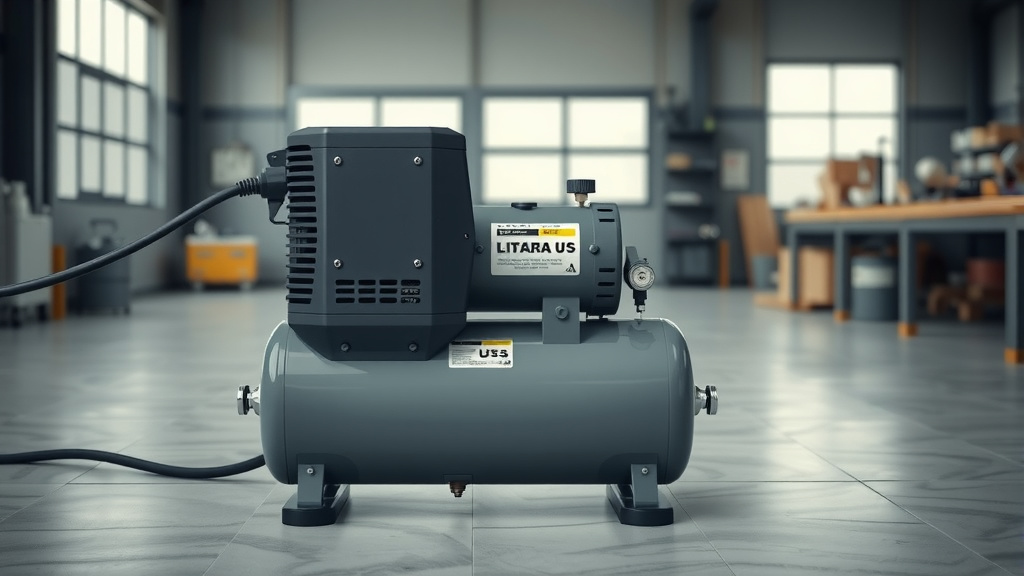
How Many Amps Does a 20 HP Air Compressor Motor Draw?
A 20 HP air compressor motor may draw roughly 50 to 60 amps at 230 volts three-phase, but the exact current depends on its nameplate, voltage, phase, and operating load. Use the motor and compressor nameplates plus the installation manual to size wiring and protection.
On this page (7 sections)
- How many amps does a 20 HP air compressor draw?
- What changes the 20 HP motor amp rating?
- How do you find the correct amp rating?
- Why can startup current be higher?
- How should you size wiring and protection?
- What compressor size fits a smaller electrical setup?
- What should you do before connecting a 20 HP compressor?
A 20 HP air compressor motor may draw roughly 50 to 60 amps at 230 volts three-phase, but its exact current depends on voltage, phase, efficiency, and load. Check the nameplate and compressor manual before choosing wiring or overcurrent protection.
This estimate is for orientation only. Startup current can be higher than running current, and the compressor circuit must be sized to the equipment and local electrical rules.
See compressors on 20 amp circuits for that specific question.
How many amps does a 20 HP air compressor draw?
A 20 HP motor at 230 volts three-phase may run at about 50 to 60 amps, though motor designs vary. The precise full-load current is on the motor nameplate or in the manufacturer's documentation.
Horsepower describes mechanical output, not a complete electrical specification. Voltage and phase change the current, and efficiency and power factor also affect the relationship between electrical input and rated output.
For context, a 5.5 HP motor has a different current range and setup. See how many amps a 5.5 HP air compressor draws to compare a smaller motor.
What changes the 20 HP motor amp rating?
Voltage and phase are the first details to confirm because the same horsepower can have different current ratings on different supplies. Then check the nameplate for full-load amps, voltage, phase, frequency, and wiring options.
A three-phase motor generally draws less current per line than a comparable single-phase motor at the same voltage and output. Confirm the exact compressor configuration rather than assuming a 20 HP model is three-phase.
Efficiency, power factor, and load affect current as well. A motor working hard to keep up with demand may draw more current than one running under a lighter load.
Does the tank capacity determine compressor amps?
No. Tank capacity measures stored air volume, not motor current.
A 20-gallon tank does not tell you the motor's voltage, phase, or rated amps.
A larger tank may affect how frequently the compressor cycles for a given air demand. The electrical rating still comes from the motor and compressor specifications.
For a smaller tank example, see how many amps a 20-gallon air compressor uses.
How do you find the correct amp rating?
Read the motor nameplate first, then compare it with the compressor's installation manual. Look for full-load amps, voltage, phase, frequency, and instructions for connecting the motor.
If the label is hard to read, ask the compressor manufacturer or a qualified electrician to identify the correct rating. Don't estimate from tank size or use a generic online table as the final basis for installation.
For a broader explanation of compressor current, see how many amps does an air compressor use and how many amps does an air compressor draw. Those guides explain why motor size alone won't give a reliable circuit specification.
Why can startup current be higher?
A motor can draw a brief surge when it starts, especially when it must overcome pressure or mechanical load. Starting current differs from normal running current, so don't size equipment from a running estimate alone.
The compressor's controls, unloader, starter, and motor design affect how it starts. Follow the manufacturer's wiring diagram and instructions, including any requirements for a starter or other control equipment.
A motor that repeatedly struggles to start, trips protection, or runs unusually hot needs attention. Turn it off and have the installation checked instead of repeatedly resetting a breaker.
How should you size wiring and protection?
Use the motor nameplate, compressor instructions, and local electrical code together. A horsepower-to-amps estimate can't safely choose wire size, breaker size, disconnect, or starter.
Motor circuits can follow sizing rules that differ from ordinary household circuits. Wire length, installation conditions, conductor material, temperature ratings, and starting behavior can also matter.
Have a qualified electrician check the supply, conductors, disconnect, and protection before installation. Don't connect a 20 HP compressor based only on a breaker number that seems close to the rough running-current estimate.
What compressor size fits a smaller electrical setup?
A 20 HP compressor is a large machine, so it may be more than a garage or small workshop needs. Match a compressor's motor and air output to the tools you plan to run, and confirm electrical compatibility before buying.
For components installed after the compressor, see downstream air compressor accessories.
For a smaller motor reference, compare a 3 HP motor air compressor and how many watts a 1 HP air compressor uses. Neither comparison replaces the specifications for a particular machine.
A compact electric compressor may suit intermittent jobs where a large industrial unit would be excessive. The DEWALT has a 1.1 HP continuous motor, a 4-gallon tank, and 4 CFM delivered at 90 PSI.
A vehicle-based tire compressor serves a different purpose. The VIAIR 400P is a 12V unit with a maximum current of 30 A and a 40-amp inline fuse holder.
The Dorman 34152 is an A/C compressor bypass pulley, not an air compressor motor or air tool. It doesn't help size a workshop compressor circuit.
What should you do before connecting a 20 HP compressor?
Confirm that the building supply matches the compressor's motor nameplate. Check the voltage and phase, then have an electrician verify the circuit and required starting equipment.
Don't rely on a rule of thumb when the machine's label or manual gives a specific rating. If either is missing or unclear, get the manufacturer or a qualified electrician to confirm the requirements before energizing the compressor.
For a 20 HP air compressor motor amp rating, use the nameplate for the exact current and installation requirements. Treat the 50 to 60 amp range at 230 volts three-phase as a rough guide only, and have the full circuit reviewed before installation.
Frequently asked questions
How many amps does a 20 HP air compressor draw?
A rough estimate for a 20 HP motor at 230 volts three-phase is about 50 to 60 amps, but this is not a substitute for the motor nameplate or electrical code requirements. Current changes with voltage, phase, efficiency, power factor, and load.
Use the compressor manual and a qualified electrician to plan the circuit.
Does a 20 HP compressor need a 60 amp breaker?
Not necessarily. The breaker or fuse size depends on the motor nameplate, starting method, conductor size, compressor instructions, and applicable electrical code.
Motor circuits have specific sizing rules, so don't select a breaker from horsepower alone.
Have a qualified electrician verify the complete installation.
Is a 20 HP air compressor single-phase or three-phase?
A 20 HP compressor may be offered with different motor and supply configurations, depending on the model and market. Check the motor nameplate for voltage and phase before connecting it.
If your building supply doesn't match, consult the manufacturer or an electrician about compatible equipment.
Does tank size change the motor's amp rating?
Tank volume doesn't set the motor's rated current. The motor's voltage, phase, horsepower, efficiency, and design determine its electrical characteristics, while tank size affects stored air and how often the compressor cycles.
The nameplate and installation instructions remain the right references for wiring.