Which Power Supply Does a 30 Gallon Air Compressor Need?
A 30 gallon air compressor can need either 120V or 240V power; the motor’s nameplate and manual decide. Match the compressor to your available circuit, and have an electrician check wiring and breaker needs before installation.
On this page (6 sections)
A 30 gallon air compressor may use 120V or 240V power, depending on its motor and design. Check the nameplate and manual before you buy; tank capacity alone does not identify the required voltage.
Match the compressor’s electrical requirements to the circuit at your intended location. If the supply, breaker, wiring, or outlet is uncertain, have a qualified electrician check it before installation.
Does a 30 gallon air compressor use 120V or 220V?
A 30 gallon air compressor can be built for 120V or 220–240V, so there is no single answer based on tank size. The motor’s nameplate and the manufacturer’s instructions give the requirements for that specific model.
In the US, product descriptions may use “220V” to refer to a 230–240V class supply. Follow the voltage printed on the compressor and in its manual rather than relying on shorthand in a product title.
A 120V model may suit a location with a compatible household circuit, but it still needs the circuit capacity stated by the manufacturer. A 240V model needs an appropriate supply and connection; a common household outlet is not enough.
For a look at the trade-offs between fuel and electric models, see What Is Better Gas Or Electric Air Compressor?. This guide focuses on matching an electric compressor to your available power.
How do you check a compressor’s power requirements?
Read the motor nameplate and manual before choosing a compressor or connecting one. Confirm the voltage, current, phase, and any circuit or plug requirements the manufacturer provides.
Use this checklist:
- Find the electrical nameplate on the motor or compressor.
- Note the rated voltage and current, including whether the motor supports more than one voltage.
- Check the manual for circuit, breaker, wiring, and connection instructions.
- Compare those requirements with the supply at the planned work location.
- Ask an electrician to confirm compatibility if the circuit details are unclear.
Do not infer the voltage from the tank size, horsepower, or outlet shape. A plug that fits is not proof that a circuit is suitable.
If you’re considering 240V equipment, compare models in our Best 220V Air Compressor guide. For lower-demand jobs and a smaller footprint, see best 120V small air compressors.
What does 120V versus 220–240V mean for your setup?
The right supply is the one that matches the motor’s rating and the circuit’s capacity. Voltage alone does not tell you whether a particular circuit can safely start and run a compressor.
Motors draw current while operating, and starting a motor can place a temporary demand on the circuit. The compressor’s instructions should guide the required wiring and protection.
Avoid sharing a circuit with other equipment unless the manufacturer and an electrician confirm it is suitable.
A 240V compressor is not automatically better for every garage or workshop. It may make sense when the model requires that supply and the location has a suitable circuit, while a compatible 120V unit can fit a different setup.
Do not use an adapter or extension cord to make an incompatible connection work. Follow the manual’s instructions, including any limits on cord use, and have changes to fixed wiring handled by an electrician.
Can you convert an air compressor from 110V to 220V?
A conversion depends on the motor and compressor design, not just the outlet. Some motors support more than one voltage when wired as specified; others do not.
Check the motor label and manual for an approved wiring diagram or conversion instructions. If neither confirms that the motor supports the change, do not assume it can be converted.
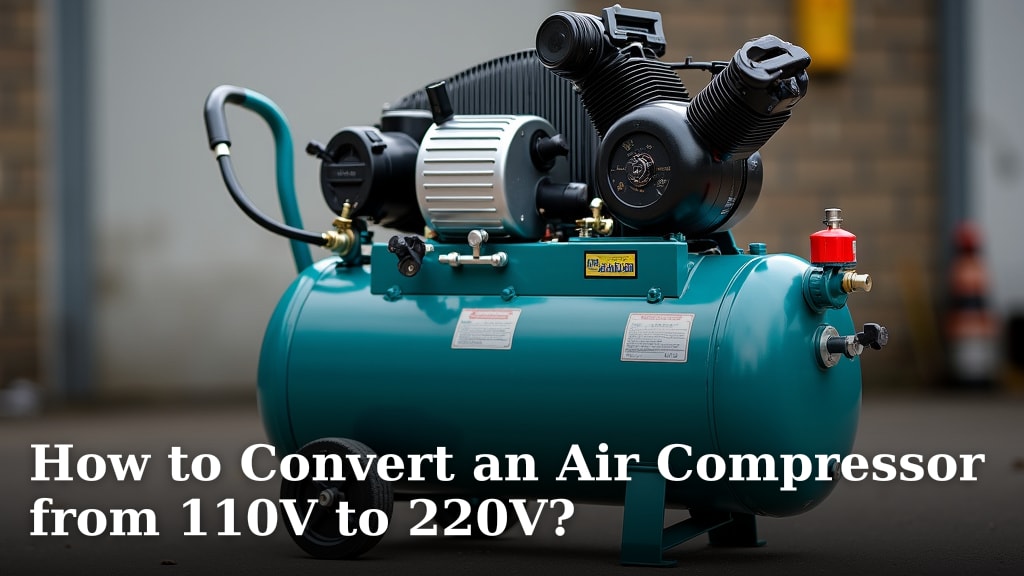
Changing an outlet or adding an adapter does not change the motor’s voltage rating. Read our How to Convert an Air Compressor from 110V to 220V? guide, and consult a qualified electrician about the circuit and connection.
What other compressor details should you compare?
After confirming the power supply, compare airflow and intended use. A 15 gallon compressor sizing guide can help you compare a smaller tank for intermittent work.
A compatible voltage will not make a compressor suitable for a tool that needs more air than the pump can deliver.
Check the tool’s air use in CFM at its stated pressure, then compare that with the compressor’s delivered airflow at the same pressure. Tank volume is storage capacity; it does not replace a matching airflow rating for continuous tool use.
For a larger shop tank, compare 80 gallon air compressors and their airflow ratings.
The smaller options below show portable electric compressors for tasks such as tire inflation or intermittent DIY work. For tire-only jobs, compare air compressors and tire inflators before choosing.
They are not 30 gallon replacements, so compare their capacity and airflow with your actual needs.
For a small tank’s task range, see What Can You Power with a 6 Gallon Air Compressor?. The Top 7 Gallon Air Compressor guide can help if you’re comparing another portable size.
Which supply should you choose?
Choose a 120V compressor only when its motor is rated for 120V and your circuit meets its requirements. Choose a 220–240V model when its rating calls for that supply and the installation has a suitable circuit.
Before buying, confirm the motor rating, manual requirements, tool airflow needs, and the electrical supply where you’ll work. For a much larger fixed shop setup, compare vertical 120 gallon compressors.
If any part of the circuit or conversion is uncertain, ask an electrician to check it before connecting the compressor.
Frequently asked questions
Can a 30 gallon air compressor run on 120V?
Some 30 gallon compressors are designed for 120V, but tank size alone does not tell you the required voltage. Check the motor nameplate and manual for voltage, current, and circuit requirements.
Use the compressor only with a matching supply and properly rated wiring.
Does a 30 gallon air compressor need 220V?
Some do, while others are designed for 120V. The motor’s electrical rating and manufacturer instructions determine whether it needs 220V or another supply.
Before buying, compare that requirement with the circuit available where you plan to use it.
Can I plug a 120V compressor into a 220V outlet?
No. A 120V compressor must not be connected directly to a 220V outlet.
Use only the voltage and connection specified for the motor, and ask an electrician to assess any changes to the circuit or outlet.
Can I convert a 120V air compressor to 220V?
Only if the compressor’s motor and wiring are designed to support the conversion and its instructions explain the correct setup. An outlet change by itself does not convert a motor.
Review the 110V to 220V conversion guide and consult an electrician.
What should I check before buying a 30 gallon compressor?
Check the voltage, current, phase, and circuit requirements on the motor nameplate and in the manual, then confirm your outlet and wiring can meet them. Also compare the compressor’s airflow with your tool’s needs and confirm there is room for the tank and safe access around it.