
How Many Watts Does An Air Compressor Use?
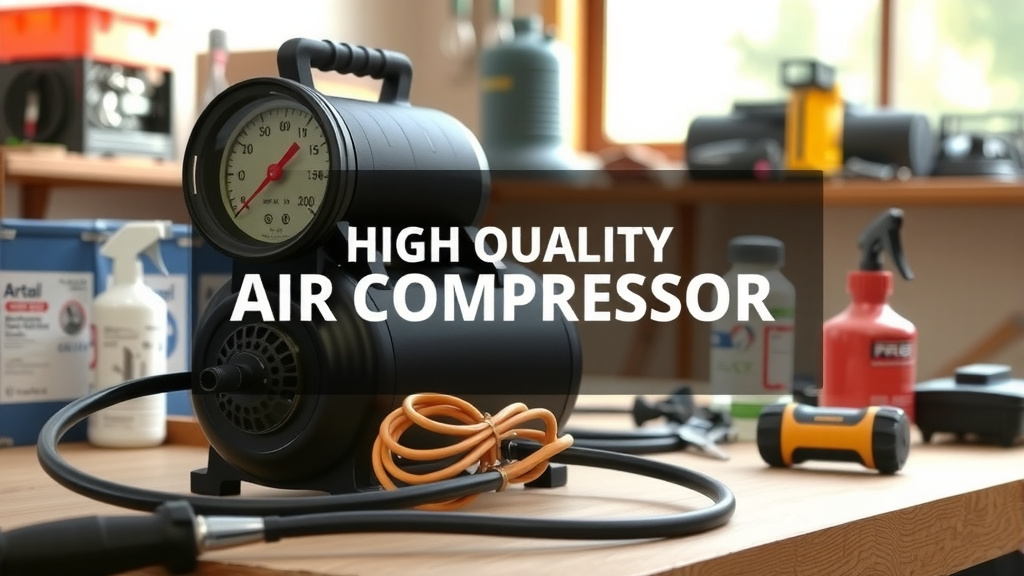
An air compressor’s wattage can vary greatly, typically ranging from 1,500 to 7,500 watts, depending on its horsepower, size, and intended use.
To figure out how many watts an air compressor uses, you’ll generally multiply its voltage by its amperage, keeping in mind that the starting wattage can be much higher than running wattage.
TL;DR: Here’s the quick rundown on air compressor wattage:
- Your air compressor’s wattage depends on its horsepower and how big it is.
- Smaller models might use around 1,500 watts, while industrial ones can hit 7,500 watts or more.
- Voltage and amperage are key numbers you’ll need to estimate power use.
- Starting an air compressor takes a lot more power than keeping it running.
- Understanding wattage helps you pick the right power supply and manage energy costs.
How Many Watts Does An Air Compressor Use?
So, you’re curious about how many watts your air compressor uses? It’s a smart question that many folks ask when considering energy bills or power supply needs. The truth is, there isn’t one simple answer, as wattage differs widely based on the compressor’s type and job.
We found that a small pancake compressor for light tasks might draw around 1,500 watts. On the other hand, a large industrial air compressor, often used in workshops, could easily consume 5,000 watts or even up to 7,500 watts. It really boils down to the machine’s power and purpose.
Why Does Air Compressor Wattage Matter to You?
Understanding wattage is super important for a few practical reasons. First, it directly impacts your electricity bill. More watts often mean higher operating costs. Nobody likes an unexpected bill, right?
Second, knowing the wattage helps you choose the right power source. Can your garage circuit handle it? Do you need a dedicated line? This prevents tripped breakers and potential electrical issues (Electrical Safety Foundation International).
Lastly, if you’re planning to use a generator with your compressor, wattage is a key factor. You’ll need a generator that can supply enough power, especially for the compressor’s high starting demands.
Understanding Air Compressor Power Ratings
Air compressors come with various labels indicating their power. It can sometimes feel like a puzzle, but we can simplify it. You’ll often see horsepower, amps, and volts. These terms all relate to how much power your unit needs.
Looking at these ratings helps you gauge the wattage. Don’t worry, we’ll walk through how they connect. It’s about getting a clear picture of your compressor’s energy hunger.
Horsepower (HP) vs. Watts
Many air compressors are rated by horsepower (HP). Think of HP as the muscle of the compressor. While HP isn’t wattage directly, there’s a conversion. Roughly speaking, 1 horsepower equals about 746 watts.
However, this is an ideal conversion for motor output. Real-world air compressors have efficiencies that make the actual wattage drawn from your wall a bit higher. So, a 5 HP motor might actually pull closer to 4,000-5,000 watts when running.
Amps and Volts Play a Role
When you see amps and volts listed, you’re getting closer to direct wattage. Watts are essentially volts multiplied by amps. For example, a 120-volt compressor drawing 15 amps would be 1,800 watts (120V x 15A).
This simple formula, Watts = Volts x Amps, helps you quickly estimate the running wattage. Just remember, this is for *running* power, not the much higher surge power needed to start the motor initially.
Factors Influencing Wattage Use
Several things can change how much power your compressor uses. It’s not just about the nameplate rating. Think about how you use it and what kind of machine it is.
These factors explain why two compressors with similar horsepower might have different wattages. It’s all about efficiency and demand.
Compressor Size and Tank Capacity
Generally, larger compressors with bigger tanks need more wattage. A bigger motor is required to fill a larger tank to the desired pressure. This means more power consumption over a longer period.
A small, portable inflator will naturally use far less power than a stationary unit with an 80-gallon tank. Consider the scale of your tools and their power requirements.
Motor Efficiency
Not all motors are created equal. A highly efficient motor will convert more electrical energy into mechanical work (compressing air) and waste less as heat. We found that compressors with better motor efficiency ratings typically use fewer watts for the same output (U.S. Department of Energy).
Investing in a more efficient model can lead to significant long-term energy savings. It’s like comparing a fuel-efficient car to a gas guzzler – both get you there, but one costs less in the long run.
Duty Cycle and Usage
The “duty cycle” refers to how often your compressor runs compared to resting. If your compressor is constantly cycling on and off, it will use more power overall. Each start-up is a big power draw.
Using your compressor continuously for heavy-duty tasks will naturally consume more watts than intermittent, light use. Think about how much air you genuinely need for your projects.
Pressure (PSI) and Airflow (CFM)
The higher the pressure (PSI) you need, and the greater the airflow (CFM) your tools demand, the more watts your compressor will use. It takes more energy to compress air to higher pressures and move it faster.
Matching your compressor’s output to your tool’s requirements helps save energy. Don’t run a huge compressor for a tiny nail gun if you don’t need to.
Typical Wattage for Common Air Compressors
Let’s look at some common types of air compressors and their approximate wattage ranges. This table offers a general idea, but always check your specific model’s label.
Remember, these are running wattages. The starting wattage, especially for larger motors, can be 2-3 times higher for a brief moment.
| Compressor Type | Typical HP Range | Approximate Running Watts |
|---|---|---|
| Pancake/Hot Dog (small portable) | 0.5 – 2 HP | 750 – 2,500 watts |
| Twin Stack (medium portable) | 2 – 3 HP | 2,000 – 3,500 watts |
| Stationary Workshop (vertical tank) | 3 – 7.5 HP | 3,000 – 7,500 watts |
| Industrial (large capacity) | 7.5 HP+ | 7,500+ watts |
Calculating Your Air Compressor’s Wattage (The Math Made Simple)
Want to get a more precise number for your specific unit? You usually need two pieces of information: voltage (V) and amperage (A). These are often found on a sticker or plate on the compressor itself. Look for terms like “Volts” and “Amps” or “Input Current.”
The basic formula is straightforward: Watts = Volts x Amps. So, if your compressor runs on 240 volts and draws 20 amps, it uses 4,800 watts (240V x 20A). Keep in mind this is for running power.
For starting wattage, it’s a bit trickier because it’s a momentary surge. Many experts say to multiply the running wattage by 2.5 or 3 to estimate the peak starting load. This is especially important for generators.
Energy Saving Tips for Your Air Compressor
Who doesn’t like saving a bit of money? Here are some simple ways to reduce your air compressor’s energy consumption. Every little bit adds up, especially if you use your compressor often.
- Check for Leaks: Even small air leaks can make your compressor run more often.
- Maintain Filters: A clogged air filter makes the motor work harder, using more power.
- Use Proper Tools: Match your air tool’s CFM requirement to your compressor’s output.
- Optimize Pressure: Don’t set your pressure higher than what your tools actually need.
- Regular Maintenance: Keep your compressor in good shape; a well-maintained machine is more efficient.
When Does an Air Compressor Use the Most Power?
An air compressor consumes its highest power when it first starts up. This initial surge of electricity is called “starting watts” or “surge watts.” The motor needs extra juice to overcome inertia and get moving. After that, it settles into a lower “running watts” consumption. This surge can be two to three times higher than the running wattage, which is crucial for generator sizing.
What Happens If You Don’t Have Enough Power?
If your power supply (like a wall outlet or generator) can’t deliver enough wattage, you’ll run into problems. At best, the compressor might not start at all. You might hear a hum, but no action. At worst, you could trip breakers, blow fuses, or even damage the compressor’s motor from insufficient power. Always ensure your power source meets the compressor’s starting wattage requirements.
Conclusion
Understanding how many watts an air compressor uses is more than just a technical detail; it’s a practical insight into managing your electricity costs and ensuring safe, effective operation. We’ve seen that wattage depends on factors like horsepower, size, and how you use the machine.
By checking your compressor’s ratings, applying simple calculations, and following energy-saving tips, you can make informed decisions. Whether you’re a hobbyist or a professional, knowing your watts will help you keep your projects running smoothly and your energy bills in check. Always think about both the running and starting wattage for safety and performance.
How do I find the wattage of my specific air compressor?
You can usually find the wattage or the necessary amps and volts on a data plate or sticker located directly on your air compressor. If not, check the user manual or the manufacturer’s website. If only horsepower is listed, remember that roughly 1 HP equals 746 watts, but account for motor inefficiencies which increase the actual power draw.
Why is the starting wattage higher than the running wattage?
The starting wattage is higher because the electric motor needs a burst of extra power to overcome inertia and initial resistance to begin spinning and compressing air. Once the motor is up to speed and running smoothly, it requires less power to maintain that operation, resulting in a lower running wattage.
Can a smaller air compressor save me money on electricity?
Yes, a smaller air compressor typically uses fewer watts and can save you money on electricity, especially for light-duty tasks. However, if you try to use a small compressor for heavy-duty jobs, it might run constantly or struggle, which could negate some of those savings. Matching the compressor size to your actual needs is key for efficiency.
Does the voltage (120V vs. 240V) affect the wattage used?
While the wattage (total power consumed) for a given job remains consistent regardless of voltage, the amperage drawn will differ. A 240-volt compressor will draw half the amperage of a 120-volt compressor to produce the same wattage. This lower amperage can sometimes allow for smaller wiring or prevent tripping breakers on existing circuits for powerful units.
What are the signs that my air compressor isn’t getting enough power?
Signs that your air compressor isn’t getting enough power include the motor humming but not starting, circuit breakers tripping when you try to start it, the compressor running very slowly, or the motor overheating. These issues often point to an undersized circuit or a generator that cannot handle the compressor’s starting wattage.
