
What Are The Types Of Air Compressor?
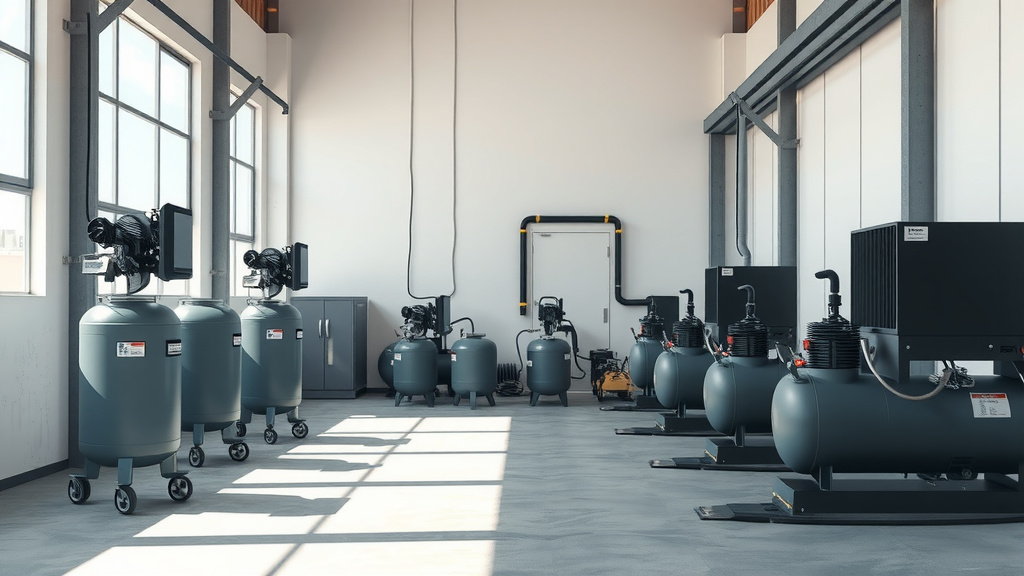
Air compressors are primarily categorized into two main types: positive displacement and dynamic, each employing distinct mechanisms to compress air for a wide range of uses.
Understanding these fundamental types of air compressor helps you pinpoint the best machine for your workshop, industrial needs, or even simple home projects.
- Positive displacement models, like piston and rotary screw compressors, work by trapping air and reducing its volume.
- Dynamic compressors, such as centrifugal types, use rapidly rotating components to accelerate air and convert velocity into pressure.
- Each type is designed for specific applications, ranging from small DIY tasks to demanding heavy industrial operations.
- When choosing, factors like required pressure (PSI), air flow (CFM), duty cycle, and budget are extremely important.
What Are The Types Of Air Compressor?
Air compressors broadly fall into two main categories: positive displacement and dynamic. These classifications describe the fundamental way they compress air. We found that each type has unique operating principles and applications, guiding your selection process.
Understanding Positive Displacement Compressors
These compressors operate by trapping a fixed amount of air in a chamber and then physically reducing its volume, which increases the air pressure. Think of it like pushing down on a syringe plunger. It’s a very common compression method you’ll encounter.
Reciprocating (Piston) Compressors
This is probably the most familiar image of an air compressor! Piston compressors utilize a piston moving within a cylinder to compress air. It truly works like an engine, but in reverse.
Single-Stage Piston Compressors
In these units, air gets compressed just once in a cylinder before being sent to the tank. They are often smaller and perfect for light-duty tasks like inflating tires or using small nail guns around your garage or home.
Two-Stage Piston Compressors
For more serious work, air is compressed twice: first in a larger cylinder, then transferred to a smaller one for a second compression. This design delivers higher pressure and greater efficiency, making them suitable for demanding industrial tools.
Rotary Screw Compressors
These modern machines employ two intermeshing helical screws, or rotors, to trap and compress air continuously. Rotary screw compressors are known for their smooth, continuous airflow and relatively quiet operation, ideal for consistent demand.
Rotary Vane Compressors
Rotary vane compressors use a rotor with sliding vanes that rotate within a cylindrical housing. As the rotor turns, the vanes trap air and compress it. They offer a simple, robust design and are generally very quiet, often used in dental practices or laboratories.
Exploring Dynamic Compressors
Dynamic compressors take a different approach. They accelerate air at very high speeds using rotating components and then slow it down. This process converts the air’s velocity into pressure, a fundamental engineering principle.
Centrifugal Compressors
These are the workhorses of heavy industry, using a rapidly spinning impeller to accelerate air outwards. They are specifically designed for producing very large volumes of air for demanding, continuous industrial processes. They are often quite large.
Axial Compressors
While not typical for workshops, axial compressors are essential in specific fields. They use a series of rotating blades to compress air as it flows axially through the machine. You primarily find these highly efficient units in jet engines and large-scale industrial plants for massive air volumes.
Key Features and Variations
Beyond their core compression method, air compressors can also be described by other important features that impact their use. We found these distinctions really matter when you’re choosing a unit.
Oil-Lubricated vs. Oil-Free Models
Oil-lubricated compressors (the majority) use oil to lubricate moving parts, cooling them and ensuring a good seal. These tend to be more durable. Oil-free compressors, as the name suggests, avoid oil in the compression chamber. They are important when air purity is absolutely essential, for instance, in medical or food-grade applications, where even a tiny drop of oil could cause problems (CDC guidelines sometimes highlight this for specific sterile uses).
Single-Stage vs. Two-Stage Operation
This distinction mainly applies to piston compressors. Single-stage units compress air once, generally suitable for lower pressure tools. Two-stage units compress air twice, yielding higher pressures and making them better for tools requiring more consistent power or higher PSI.
Electric vs. Gas-Powered Units
Most compressors you’ll encounter are electric compressors, powered by standard wall outlets or industrial electrical supplies. Gas-powered compressors offer excellent portability where electricity isn’t readily available, often seen powering construction sites far from power grids.
How to Choose Your Perfect Compressor
Picking the ideal air compressor goes beyond just knowing the types; it’s about matching the machine to your specific needs. Many experts say that thinking through your actual usage scenario is the most important first step.
Your Air Compressor Checklist
Before you invest, consider these points. They will guide you to a wise choice.
- What tools will you power? Each tool has specific CFM and PSI requirements you must meet.
- How often will you use it? For continuous use, a rotary screw might be better than a piston.
- What is your budget? Consider both the initial purchase price and ongoing running costs, including energy.
- Are noise levels a concern? Some compressors are much quieter than others, especially for indoor use.
- Do you need pure air? Oil-free models are vital for sensitive applications like painting or dental work.
- What about space and portability? Smaller, portable units are great for quick jobs, while large units need a dedicated space.
A Quick Comparison Table
Let’s look at a simple table to help visualize the differences between the most common compressor types. Many industry guides offer similar breakdowns, helping you see the trade-offs and advantages quickly.
| Feature | Reciprocating (Piston) | Rotary Screw | Centrifugal |
|---|---|---|---|
| Operation Style | Intermittent | Continuous Duty | Continuous Heavy Duty |
| Airflow (CFM) | Low to Medium | Medium to High | Very High |
| Typical Pressure (PSI) | Up to 175 | Up to 200 | Up to 125 (typically) |
| Noise Level | Moderate to Loud | Low to Moderate | Moderate |
| Common Uses | DIY, small shops, light industrial | Manufacturing, auto shops, medium industry | Heavy manufacturing, large chemical plants |
Conclusion
Understanding the different types of air compressor is truly your first step to making an informed decision. Whether you need a simple piston compressor for occasional tasks or a robust rotary screw for constant industrial output, a suitable option definitely exists. By considering your specific needs, the demands of your tools, and your budget, you’ll select a machine that works tirelessly for you, delivering reliable compressed air day in and day out.
How do I know if I need an oil-free or oil-lubricated compressor?
Choose oil-free for applications where air purity is critical, such as food processing, medical procedures, or painting. For general workshop use where minor oil presence isn’t an issue, oil-lubricated models are typically more durable, quieter, and can be more cost-effective over their lifespan.
What is CFM and PSI, and why are they important?
CFM stands for Cubic Feet per Minute, measuring the volume of air an compressor can deliver. PSI is Pounds per Square Inch, measuring the air pressure. Your air tools have specific CFM and PSI requirements; ensuring your compressor meets or exceeds these ratings is essential for optimal tool performance and efficiency.
Can I use a rotary screw compressor for small home projects?
While technically possible to use, rotary screw compressors are generally overkill and significantly more expensive for small home projects. Their design for continuous operation and high CFM makes them best suited for industrial or heavy-duty shop environments where air demand is constant and substantial.
Are dynamic air compressors more efficient than positive displacement ones?
Dynamic compressors, particularly centrifugal types, are often more efficient for very high-volume, continuous airflow applications where massive amounts of air are needed. However, for smaller-scale or intermittent use, positive displacement types like rotary screw compressors can be highly efficient for their specific tasks and pressure ranges.
What’s the main difference between single-stage and two-stage piston compressors?
A single-stage compressor compresses air once within its cylinder, typically reaching maximum pressures around 125 PSI. A two-stage compressor compresses air twice—first in a larger cylinder, then in a smaller one—achieving higher pressures, often up to 175 PSI or more. This makes two-stage models better for more demanding tools and tasks.
