
What Does The Air Compressor Governor Do?
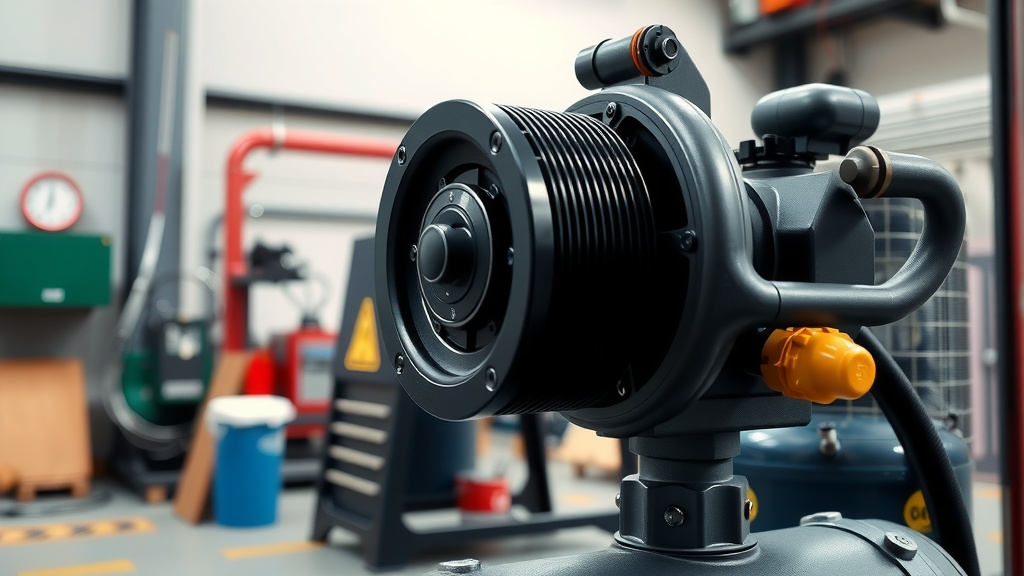
The air compressor governor is like a watchful guardian for your compressor, ensuring it maintains a steady, safe air pressure range. It automatically stops and starts the motor or unloads the compressor when pressure limits are met.
This critical component prevents your air tank from over-pressurizing or losing too much air, making your system run smoothly and efficiently. It’s essential for both safety and performance.
Here’s a quick overview of what you’ll learn about your air compressor governor:
- Governors act as the brain for pressure control in your air compressor.
- They prevent dangerous over-pressurization and ensure consistent air delivery.
- You’ll discover how they work by sensing pressure and controlling valves or motor activity.
- Learning about governor types helps you understand your specific system better.
- Proper adjustment and maintenance mean a longer-lasting, safer compressor experience.
What Does The Air Compressor Governor Do?
The air compressor governor’s main job is to regulate air pressure within your compressor system. It’s the component that tells your compressor when to work and when to rest, keeping everything balanced.
Without it, your compressor might run non-stop, wasting energy, or worse, building up unsafe pressure levels (Technical Guides).
Why Your Compressor Needs a Governor
Imagine driving a car without a speed limit or brakes. That’s a bit like an air compressor without a governor!
Your governor prevents this chaos. It acts as a smart traffic cop, making sure the air pressure stays within the safe operating zone you set. This saves wear and tear on components.
Many experts say this control is vital for component longevity and energy efficiency, as it prevents unnecessary cycles and stress (Industry Standards).
How the Governor Controls Air Pressure
So, how does this smart component actually work? It involves a bit of sensing and a bit of mechanical action, or sometimes electronic signals. Let’s break it down.
Sensing Pressure Changes
Your governor is always paying attention to the air pressure in your storage tank. Think of it like a sensor that knows exactly when the pressure is getting too high or too low.
When the pressure hits a certain point, it triggers the governor into action. This constant monitoring is key to maintaining consistency.
Opening and Closing Valves
Once the governor senses a change, it reacts. If the pressure gets too high, it might tell an unloader valve to open, releasing excess air or stopping the compressor from compressing more.
When pressure drops, it signals the compressor to start working again. It’s a bit like a seesaw, always trying to find the perfect balance.
Types of Governor Systems
Not all governors are built the same, though they share the same goal. You’ll usually find two main types working behind the scenes in different compressor setups.
The Pilot Valve Governor
Many older or industrial compressors use a pilot valve system. This mechanical marvel works with springs and air lines to directly control the compressor’s intake valve.
When the tank pressure reaches its limit, the pilot valve opens, sending a signal that unloads the compressor. It’s a time-tested, purely mechanical approach.
Electronic Governor Systems
Modern compressors, especially smaller, more portable units, often feature electronic governors. These systems use pressure sensors and microcontrollers.
They send electrical signals to control solenoids or directly turn the compressor motor on and off. We found these offer more precise control and can integrate with other digital systems.
Setting the Right Pressure Range
Setting your governor correctly is like fine-tuning an instrument. You want it to play the right notes for your tools and applications.
It involves understanding two important pressure points: the high and low limits. Many experts recommend calibrating these for optimal tool performance (OSHA guidelines).
High-Pressure Cut-Out
This is the upper limit for your air tank. When the tank pressure reaches this point, your governor steps in and stops the compressor from building more air.
It’s a crucial safety feature, preventing your tank from getting overfilled. Think of it as the maximum fill line.
Low-Pressure Cut-In
The low-pressure cut-in is the point where your compressor kicks back on. Once the air pressure drops below this set value, the governor signals the compressor to start filling the tank again.
This ensures you always have enough air to keep your tools running without interruption. It’s your compressor’s re-fill reminder.
What Happens Without a Governor?
Operating an air compressor without a functioning governor is a recipe for trouble, if not disaster. It’s like forgetting the lid on a boiling pot; things can quickly get out of control.
You risk damaging your compressor, wasting a lot of energy, and even creating a safety hazard. Research often connects uncontrolled pressure with premature equipment failure (Compressor Manufacturer Guides).
Common Governor Problems and Fixes
Governors are tough, but they can face issues. Here are some common problems you might encounter and straightforward ways to address them:
| Problem | Possible Cause | Simple Fix |
|---|---|---|
| Compressor runs continuously. | Worn pilot valve, clogged sensing line, electronic sensor failure. | Inspect/clean lines, replace pilot valve kit, check sensor wiring. |
| Compressor cycles too often. | Tank leak, incorrect pressure settings, unloader valve issue. | Find and fix leaks, adjust cut-in/cut-out, check unloader function. |
| Compressor won’t start. | Governor stuck in “unload” position, electrical fault (electronic). | Manually check valve, test electrical connections, reset governor. |
| Pressure readings are off. | Faulty pressure gauge or sensor. | Calibrate or replace the gauge/sensor. |
Extending Your Governor’s Lifespan
Just like any part of your compressor, a little tender loving care goes a long way for your governor. Regular checks can prevent minor issues from becoming major headaches.
We found that preventative maintenance is key to keeping your governor in top shape and avoiding costly repairs down the line.
Here’s a quick checklist to help you maintain your air compressor governor:
- Regularly check for air leaks around the governor and associated lines.
- Keep the governor and its components clean and free of dirt or debris.
- Periodically test the cut-in and cut-out pressure settings for accuracy.
- Listen for any unusual sounds coming from the governor area during operation.
- Consult your compressor’s manual for specific maintenance intervals and tips.
Conclusion
The air compressor governor might not be the flashiest part of your system, but it’s undoubtedly one of the most important. It’s the silent hero that ensures your compressor runs safely, efficiently, and reliably.
Understanding its role, how it works, and how to maintain it empowers you to keep your compressor in optimal condition for years to come. Your tools and your wallet will surely thank you for the consistent pressure and prolonged equipment life.
What is the main difference between an air compressor governor and a pressure switch?
While both control compressor operation, the governor typically manages the continuous running of the compressor by “unloading” it at high pressure and “loading” it at low pressure, keeping the motor running. A pressure switch, common in smaller systems, simply turns the entire compressor motor on and off based on pressure thresholds.
Can I adjust the pressure settings on my air compressor governor myself?
Yes, many governors allow for adjustment of the cut-in and cut-out pressure settings. You’ll usually find adjustment screws or knobs on the unit. Always refer to your compressor’s user manual for specific instructions and safety guidelines before making any adjustments.
How do I know if my air compressor governor is failing?
Common signs of a failing governor include the compressor running continuously without stopping, frequent short cycling (turning on and off rapidly), or the compressor failing to build pressure properly. You might also notice unusual noises or air leaks around the governor itself.
Is it possible to repair an air compressor governor, or should I replace it?
For some mechanical pilot valve governors, specific repair kits (like diaphragm or spring replacements) are available. For more complex electronic governors, or if the main body is damaged, replacement is usually the more practical and reliable option. We found that consulting a technician helps determine the best course of action.
Does the type of air compressor (piston vs. rotary screw) affect the governor’s function?
While the underlying principle of pressure control remains the same, the execution differs. Piston compressors often use pressure switches or pilot valve governors that control motor start/stop or intake unloading. Rotary screw compressors, especially larger ones, tend to use more sophisticated electronic governors that manage variable speed drives and elaborate unloader systems for finer control and energy savings.
