
What’S The Quietest Air Compressor?
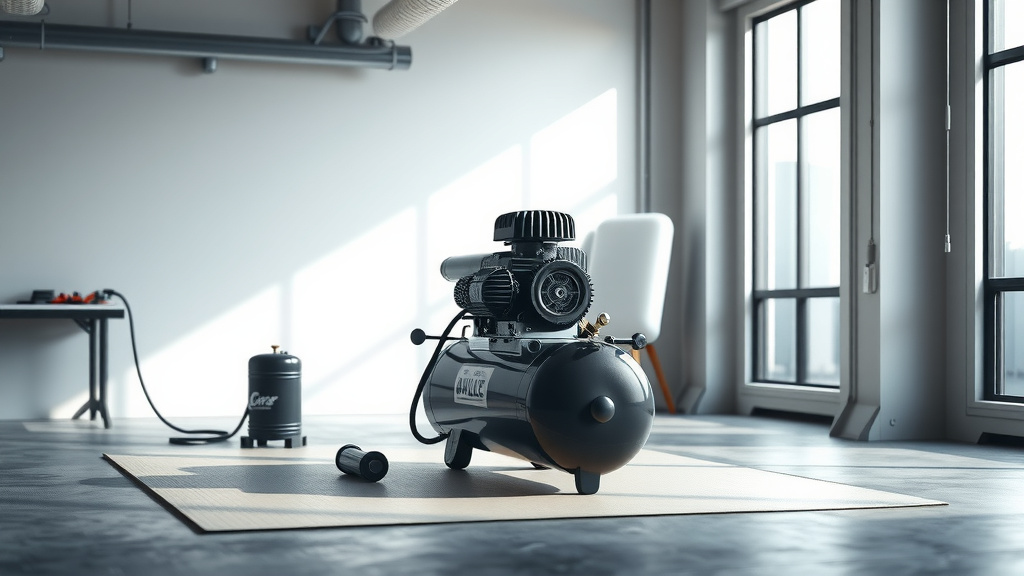
The quietest air compressor available typically registers around 40-60 decibels (dB), which is comparable to a quiet conversation or refrigerator hum.
These exceptionally quiet air compressors often achieve low noise levels through oil-lubricated pumps, advanced motor technology, and sound-dampening enclosures.
- For true peace and quiet, look for air compressors rated below 60 dB.
- Oil-lubricated models often run quieter than their oil-free counterparts.
- Tank size doesn’t directly affect noise, but larger tanks mean less frequent motor cycling.
- Your application dictates the ideal balance between noise, power, and portability.
- Regular maintenance helps keep your compressor running as quietly as intended.
What’s The Quietest Air Compressor?
The quietest air compressors generally fall into the 40-60 decibel (dB) range, making them remarkably quiet for most uses. These models are designed with specific features to keep noise to a minimum.
Why Quiet Matters More Than You Think
Ever used a really loud air compressor? It can be jarring, right? A quiet model makes your workspace much more pleasant, allowing you to focus. Plus, it’s much kinder to your ears and those around you. Nobody wants a headache after a simple task.
Working with less noise also reduces fatigue, letting you work longer and more comfortably. Many regulations, especially in residential areas or shared workshops, even suggest noise limits. A quiet compressor helps you stay within those guidelines (OSHA).
Understanding Noise: What Are Decibels (dB)?
When we talk about quiet, we’re measuring sound in decibels. This scale helps us understand how loud something truly is. For context, 0 dB is the threshold of human hearing. A normal conversation sits around 60 dB. A running refrigerator is usually about 50 dB.
So, when you see an air compressor rated at 55 dB, that’s similar to your fridge humming along. It’s a huge difference compared to a jackhammer, which can hit 130 dB. We found that the lower the dB rating, the less disruptive your compressor will be.
Types of Quiet Air Compressors
Not all compressors are created equal when it comes to noise. Understanding the different types helps you choose wisely. Some designs inherently run quieter than others.
Oil-Lubricated vs. Oil-Free Designs
Most experts say that oil-lubricated air compressors tend to be quieter than oil-free models. The oil helps reduce friction, absorb vibrations, and cool the internal components. This creates a smoother, less noisy operation.
Oil-free compressors, while maintenance-free, often rely on Teflon or other coatings. These can wear down, leading to more friction and, consequently, more noise over time. If quiet is your top priority, an oil-lubricated model is often the better choice.
Inverter Technology Compressors
Some modern compressors use inverter technology. This allows the motor to run at variable speeds, adjusting power output to match demand. This means it doesn’t always run at full blast, saving energy and often reducing noise during lighter loads.
Scroll Compressors
Scroll compressors are known for their extremely quiet and smooth operation. They use two spiral-shaped scrolls, one fixed and one orbiting, to compress air. There are no reciprocating pistons, meaning fewer vibrating parts. This design makes them ideal for sensitive environments.
Rotary Screw Compressors
While often found in industrial settings, smaller rotary screw compressors can be very quiet. They use two interlocking helical rotors to compress air continuously. Their constant, non-pulsating operation contributes to a lower noise profile compared to piston models.
Key Features for a Quiet Compressor
What specific features should you look for to ensure you’re getting a truly quiet machine? It’s more than just the dB rating; it’s about the entire design.
Motor and Pump Design
A compressor’s motor and pump are its heart. Look for models with slow-revving motors. These typically create less noise and vibration than high-speed motors. The pump design itself also matters. Single-stage pumps can be noisy, while some multi-stage designs are quieter.
The build quality of these components also plays a role. Better-made parts with tighter tolerances tend to operate more smoothly and quietly. Many manufacturers now focus on low-noise designs from the ground up.
Enclosure and Insulation
Many quiet compressors come with sound-dampening enclosures. These are like mini soundproof rooms built around the noisy parts. They use materials designed to absorb and block sound waves. Think of it like a cozy blanket for your compressor, keeping the noise inside.
Some models even feature advanced insulation materials inside the casing. This further reduces the sound that escapes into your workspace. It’s a clever way to keep the noise contained where it belongs.
Tank Size and CFM Considerations
While tank size doesn’t directly affect the noise level of the motor when it’s running, it does impact how *often* the motor runs. A larger tank stores more air, meaning the compressor doesn’t have to cycle on as frequently. This gives you more periods of silence.
Conversely, CFM (Cubic Feet per Minute) indicates how much air the compressor can deliver. If you need high CFM for demanding tools, the motor will work harder and run longer. We found it’s important to balance your CFM needs with your desire for quiet operation.
Top Brands for Quiet Air Compressors
When you’re searching, a few brands consistently pop up for their dedication to quiet design. These companies have invested in technology to reduce noise.
California Air Tools
Many consumers choose California Air Tools for their notably quiet operations. They often specialize in models that hover around the 60 dB mark or lower. Their focus is specifically on low noise levels across their product lines.
Rolair
Rolair offers several models designed with reduced noise in mind. While some are still robust for construction, their “Quiet Compressor” series is quite popular for home workshops and professional settings where noise is a concern.
Makita
Known for its high-quality power tools, Makita also produces quiet air compressors. Their compressors, like the “Big Bore” series, prioritize both performance and a comfortable noise level, typically below 70 dB.
- Quiet Air Compressor Checklist:
- Is the dB rating below 60 dB?
- Is it oil-lubricated for smoother operation?
- Does it feature a sound-dampening enclosure?
- Is the motor a slow-revving type?
- Does it have adequate CFM for your intended tools?
- Is the brand known for quiet models (e.g., California Air Tools)?
Choosing the Right Quiet Compressor
Picking the best quiet compressor is a bit like finding the perfect pair of shoes. It needs to fit your specific needs and feel right.
Your Application Matters Most
Are you inflating tires, running airbrushes, or powering heavy-duty impact wrenches? Different tasks require different levels of power (CFM) and pressure (PSI). A small, super-quiet compressor might be perfect for hobbies but insufficient for a framing nailer. Match the compressor to your tools.
Consider where you’ll be using it too. A garage workshop has different needs than an indoor craft space. Think about how much noise you can truly tolerate for your specific environment.
Noise Level vs. Performance Trade-off
Sometimes, there’s a slight trade-off between absolute quietness and raw power. While many quiet compressors are incredibly capable, some extremely demanding tasks might still lean towards slightly louder, higher-performing units. It’s about finding your ideal balance.
For most DIYers and many professionals, a compressor in the 55-65 dB range offers an excellent mix of quiet operation and solid performance. Research often connects higher-performance with slightly more noise (Industrial Compressor Journal).
Maintenance for Continued Quiet Operation
Even the quietest compressor needs care. Regular maintenance, such as checking oil levels, draining the tank, and inspecting filters, keeps it running smoothly. A well-maintained compressor vibrates less and stays quieter over its lifespan.
Neglecting maintenance can lead to increased friction, worn parts, and ultimately, a louder machine. Just like your car, a little TLC goes a long way in preserving its best qualities.
| Noise Level (dB) | Comparable Sound | Common Use Cases for Compressors |
|---|---|---|
| 40-50 dB | Quiet library, Refrigerator hum | Airbrushing, Pinhole filling, Small crafts |
| 50-60 dB | Normal conversation, Quiet office | Brad nailers, Tire inflation, Light woodworking |
| 60-70 dB | Washing machine, Dishwasher | Framing nailers, Impact wrenches (light), Garage work |
Conclusion
Finding the quietest air compressor really transforms your work experience. By focusing on models with low decibel ratings, oil-lubricated pumps, and smart noise-dampening features, you can significantly reduce workplace noise. Remember to align your choice with your specific application and tools. A bit of research into brands known for quiet operation, coupled with regular maintenance, will ensure you enjoy a more peaceful and productive environment for years to come. Your ears will certainly thank you for it!
What is a good dB level for a quiet air compressor?
A good dB level for a quiet air compressor is generally between 40-60 dB. This range is comparable to a quiet conversation or the hum of a refrigerator, making it suitable for most home workshops and indoor projects without causing significant noise disruption.
Do oil-free air compressors make more noise than oil-lubricated ones?
Yes, typically, oil-free air compressors tend to be louder than oil-lubricated models. The absence of oil means more direct friction and vibration in the pump, which often results in a higher noise output. Oil acts as a dampener and lubricant, reducing operational noise.
Can I make my existing air compressor quieter?
You can often make your existing air compressor quieter to some extent. Simple steps include placing it on a rubber mat to reduce vibrations, building a sound-dampening enclosure around it, or ensuring all parts are well-maintained and lubricated. Replacing old, worn components can also help.
Does tank size affect the noise level of an air compressor?
Tank size itself doesn’t make the compressor’s motor quieter when it’s running. However, a larger tank stores more compressed air, meaning the motor will cycle on less frequently to refill it. This results in longer periods of silence between operational cycles, improving overall quietness.
Are quieter air compressors less powerful?
Not necessarily. While some very small, hobby-grade quiet compressors might have lower power, many quiet models, especially those with advanced scroll or rotary screw designs, can be very powerful. Modern engineering allows for both quiet operation and robust performance, though it might come with a higher price tag.
