
How To Read Air Compressor Specs?
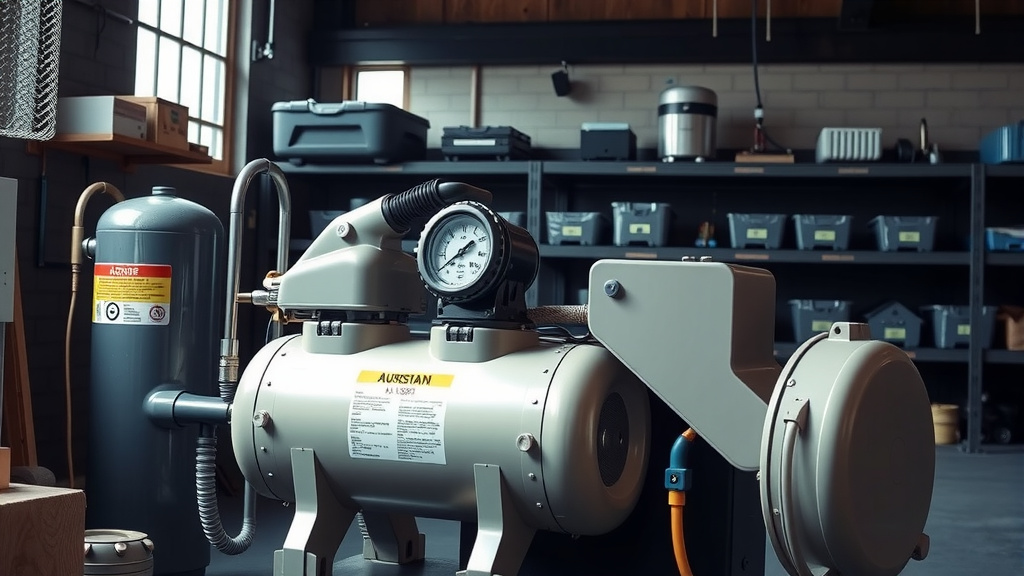
Reading air compressor specs helps you match the right machine to your tasks, ensuring efficient operation and longevity.
Key specifications like CFM, PSI, and horsepower tell you an air compressor’s power and air delivery capacity.
- Understanding air compressor specs means knowing your tools’ needs.
- CFM and PSI are your primary numbers for power and pressure.
- Horsepower, tank size, and duty cycle reveal the compressor’s endurance.
- Choosing wisely prevents frustration and saves you money.
- Always match the compressor to your heaviest-demanding tool.
Ever stared at an air compressor label, feeling like you’re reading a foreign language? You’re not alone! Deciphering those abbreviations and numbers can feel daunting. But trust us, it’s not rocket science.
Think of it like buying a car. You wouldn’t just pick one based on color, right? You’d check the engine size, fuel efficiency, and seating capacity. Air compressors are similar. Knowing what each spec means helps you pick the perfect partner for your projects.
We’re here to demystify it all for you. Let’s break down those important specs so you can choose with confidence.
How To Read Air Compressor Specs?
Reading air compressor specs involves understanding key metrics like CFM, PSI, and HP, which define its performance and suitability for various air tools.
Why Specs Matter for Your Wallet and Your Work
Ignoring specs is like trying to fit a square peg in a round hole. You’ll either buy a machine too weak for your tasks or one that’s overkill, costing you extra cash and energy. The right specs ensure efficiency.
Many experts emphasize that matching your compressor to your tools is paramount for both performance and the longevity of your equipment (Air Compressor Technical Committee).
The Power Duo: CFM and PSI Explained
These are the two most critical numbers you’ll see. Think of them as the heart and soul of your air compressor. Get these wrong, and your tools will struggle.
What is CFM (Cubic Feet Per Minute)?
CFM measures the volume of air an air compressor can deliver per minute. This is arguably the most important spec. Every air tool, from impact wrenches to sanders, has a CFM requirement.
Imagine a garden hose. CFM is like how much water flows out. If your tool needs a lot of air, you need a higher CFM. For example, a nail gun uses much less CFM than a spray gun.
What is PSI (Pounds Per Square Inch)?
PSI indicates the maximum pressure the air compressor can produce. This pressure pushes the air out to power your tools. Most pneumatic tools operate within a specific PSI range.
Continuing the garden hose analogy, PSI is like the water pressure. Too low, and your sprinkler won’t spray far. Too high, and you might burst something. Matching your tool’s PSI is crucial.
Always check your tools. Many commonly require 90 PSI to function effectively, but always confirm this on the tool itself or its manual.
The Muscle: Horsepower (HP) Demystified
Horsepower tells you about the compressor’s motor strength. It indicates how much power the motor has to convert electricity into compressed air. A higher HP often means the motor can work harder.
However, HP can sometimes be a bit misleading without looking at CFM and PSI. A high HP motor with a poorly designed pump might not deliver the CFM you need. Always prioritize CFM first.
Holding the Air: Tank Size (Gallons)
The tank stores the compressed air. A larger tank doesn’t mean more power, but it does mean the compressor won’t have to run as often. It acts like a temporary buffer.
For intermittent tasks like nailing or inflating tires, a smaller tank might be fine. For continuous use tools like grinders or paint sprayers, a larger tank is a huge help. It provides a steady supply of air, letting the motor rest.
Staying Power: Duty Cycle
The duty cycle tells you how long the compressor can run continuously versus how long it needs to rest. This is often expressed as a percentage, like “50% duty cycle.”
A 50% duty cycle means it can run for 5 minutes and then needs 5 minutes of rest. Industrial-grade compressors often have a 100% duty cycle, meaning they can run non-stop. For most home users, a moderate duty cycle is usually sufficient.
Pump Type: Oiled vs. Oil-Free
This spec describes how the compressor pump is lubricated. Each type has its pros and cons.
- Oil-Lubricated Pumps: These are generally more durable, quieter, and have a longer lifespan. They require regular oil changes, much like a car engine. Many experts prefer these for heavy-duty, long-term use.
- Oil-Free Pumps: These are maintenance-free regarding oil, lighter, and often more portable. However, they tend to be noisier and may not last as long as their oiled counterparts. They are popular for lighter, infrequent tasks.
Noise Level: dB (Decibels)
Some compressors can be incredibly loud, which is a significant consideration, especially in a home workshop or if you have neighbors nearby. Noise level is measured in decibels (dB).
For context, a normal conversation is about 60 dB. A running lawnmower is around 90 dB. Many modern “quiet” compressors operate in the 60-70 dB range, which can make a huge difference in your workspace comfort. Always check the dB rating if noise is a concern.
Power Requirements: Voltage & Amperage
Most smaller, portable compressors run on standard 120V household outlets. Larger, more powerful units often require a 240V circuit, similar to an electric dryer or oven.
Always check the voltage and amperage requirements to ensure your electrical system can handle the compressor. Trying to run a 240V compressor on a 120V circuit won’t work, and an undersized circuit can trip breakers. Electrical compatibility is key.
Portable vs. Stationary: Which is For You?
While not strictly a “spec,” this is a crucial decision influenced by many specs. Portable compressors are lighter, often have smaller tanks, and are designed to be moved. Stationary models are heavier, usually have much larger tanks, and are meant to stay in one place.
Consider your needs. Do you need to inflate tires in the garage AND then take it to a job site for framing? Or will it live permanently in your shop to power a sandblaster? Your answer helps narrow down the choices.
Comparing Common Air Compressor Specs
To give you a better idea, here’s a quick look at how specs can vary by compressor type:
| Compressor Type | Typical CFM (at 90 PSI) | Typical Tank Size | Common Use |
|---|---|---|---|
| Pancake/Hot Dog | 2-4 CFM | 2-6 Gallons | Nail guns, tire inflation |
| Twin Stack | 4-7 CFM | 4-10 Gallons | Framing, medium tools |
| Horizontal/Vertical | 7-20+ CFM | 20-80+ Gallons | Automotive, sandblasting |
Your Air Tool’s Needs: The Starting Point
Before you even look at a compressor, list out the air tools you plan to use. Every tool has a tag or manual specifying its CFM and PSI requirements. Always look for the CFM at 90 PSI.
For example, if your air ratchet needs 4 CFM at 90 PSI, you’ll want a compressor that delivers at least that much. It’s always smart to aim slightly higher, maybe 1.5 times your highest tool’s CFM, to prevent the compressor from overworking.
Checklist for Choosing Your Air Compressor
Here’s a simple checklist to guide you when you’re ready to buy:
- Identify the highest CFM requirement of your tools (at 90 PSI).
- Confirm the PSI range needed for your tools.
- Decide if you need a portable or stationary unit.
- Consider the noise level (dB) for your workspace.
- Verify your electrical supply matches the compressor’s needs.
- Think about tank size based on continuous or intermittent use.
Conclusion
Understanding air compressor specs doesn’t have to be intimidating. By focusing on CFM, PSI, horsepower, and tank size, you gain the confidence to make an informed decision. Remember to always match the compressor’s output to your tools’ demands. This simple approach ensures your projects run smoothly and your equipment lasts longer. Go ahead, read those specs, and pick the perfect power partner!
How do I find the CFM for my air tools?
You can usually find the CFM requirements for your air tools printed directly on the tool itself, on a label, or within the product manual. Look for a number followed by “CFM at 90 PSI” or “SCFM.”
Can I use a compressor with a lower CFM than my tool needs?
While you might technically be able to connect it, a compressor with a lower CFM than your tool requires will struggle. It won’t be able to keep up with the airflow demand, leading to poor tool performance and potentially overheating the compressor.
What’s the difference between SCFM and CFM?
SCFM stands for “Standard Cubic Feet Per Minute,” measuring air volume at standard conditions (e.g., specific temperature, humidity, and atmospheric pressure). CFM can be a more general measurement, but for practical purposes, when comparing compressor specs for tools, they are often used interchangeably to indicate air delivery.
Is higher horsepower always better in an air compressor?
Not necessarily. While higher horsepower generally means a stronger motor, it’s the combination of HP with an efficient pump that truly matters for air delivery. Always prioritize CFM and PSI output over just horsepower alone, as these directly relate to your tools’ needs.
How does tank size affect compressor performance?
Tank size determines how much compressed air can be stored. A larger tank allows the compressor to run less frequently for intermittent tasks, providing a more consistent air supply for tools that demand air continuously, like spray guns, without constant motor cycling.
