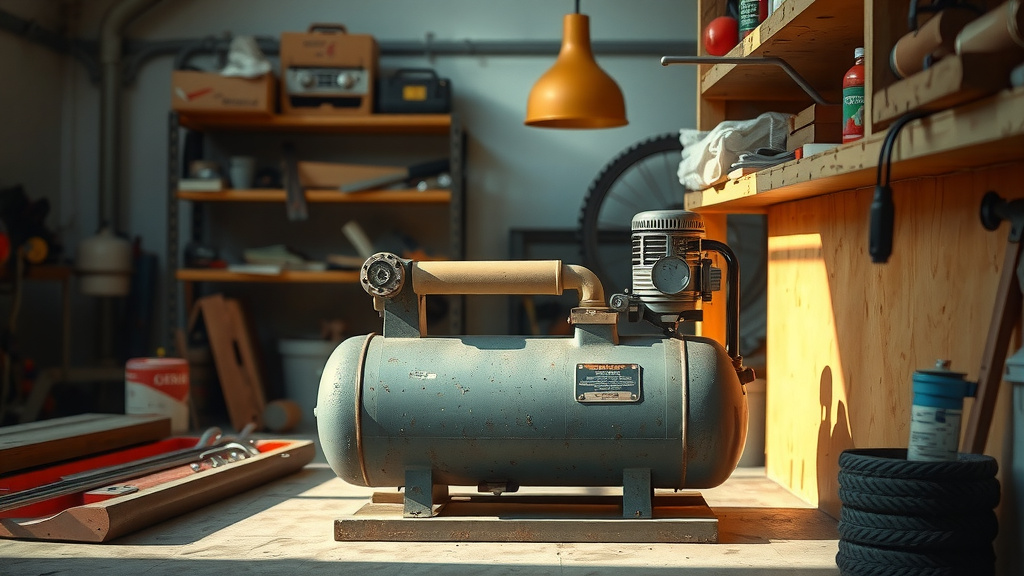
How Is an Air Compressor Tank Tested?
An air compressor tank is tested through a professional pressure vessel inspection, leak checks, corrosion checks, and controlled pressure testing. Routine compressor performance checks do not replace a vessel test.
On this page (10 sections)
- What does an air compressor vessel test check?
- How is a professional air compressor tank tested?
- What is the difference between a vessel test and a compressor test?
- Why does water inside the tank matter?
- Can you use a small compressor for a vessel test?
- Is an A/C compressor bypass pulley related to tank testing?
- Can a portable tire inflator replace a tested tank?
- What warning signs mean you should stop using the tank?
- How often should an air compressor tank be tested?
- What is the safest way to arrange a vessel test?
An air compressor vessel test checks whether the tank can safely hold compressed air. It is different from checking whether the motor runs, the pump builds pressure, or the compressor delivers enough airflow.
A qualified inspector normally looks at the vessel's condition, records, fittings, and safety controls before deciding which pressure or leak tests are suitable. The exact method depends on the tank design, condition, age, and rules that apply to the installation.
What does an air compressor vessel test check?
An air compressor vessel test checks the tank shell, welds, openings, fittings, and safety devices for conditions that could make stored air unsafe. The inspection may include visual checks, measurements, leak checks, and a controlled pressure test when appropriate.
The tank is not just a container around the pump. It stores compressed air, so a defect in the shell or a blocked safety device can create a serious hazard even when the motor and pump appear to work normally.
Inspectors may look for external rust, pitting, dents, bulges, cracks, damaged threads, loose fittings, and signs of leakage. Internal corrosion can also matter because water collects inside many compressed-air tanks.
The tank's nameplate, inspection history, repair history, and operating information help determine how it should be assessed. If those records are missing, tell the inspector instead of guessing about the vessel's condition.
How is a professional air compressor tank tested?
A professional test begins with making the tank safe to inspect, followed by a condition review and a controlled test selected for that vessel. The inspector should follow the applicable procedure rather than using a general pressure number from another compressor.
Before testing, the compressor should be isolated from power and the tank depressurized according to the correct procedure. The inspector may remove or inspect drain valves, gauges, hoses, fittings, and other connected parts so the vessel can be assessed properly.
A visual inspection comes first because heavy corrosion, a dent, a crack, or an altered tank can change whether pressure testing is safe. A damaged vessel may need to be removed from service instead of being pressurized again.
The test itself must use suitable equipment, controls, and a pressure level chosen for the vessel. Never copy the tank's maximum working pressure as a do-it-yourself test target.
A pressure test can show whether the vessel holds the required test pressure without unacceptable leakage or deformation. It does not erase evidence of severe corrosion or poor repair work, so the inspector still needs to evaluate the tank's condition.
What is the difference between a vessel test and a compressor test?
A compressor performance test checks operation, while an air compressor vessel test checks the pressure container. One can pass while the other still needs attention.
A routine compressor check may include:
- Whether the motor starts and stops.
- How the pressure switch controls cut-in and cut-out.
- How quickly the tank reaches its normal pressure.
- Whether air escapes from fittings, hoses, or valves.
- Whether the pump delivers the expected airflow.
- Whether the gauge, drain, and regulator work.
Those checks help diagnose compressor problems. They do not prove that the tank wall, welds, or internal surfaces are suitable for continued pressure service.
For a separate operating overview, see How To Test A Air Compressor?. If the concern is pump output, How To Test Air Compressor Pump? covers that narrower question.
Why does water inside the tank matter?
Water inside a steel air tank can support internal corrosion, so draining and inspecting the vessel matters. Condensation forms as compressed air cools, and that moisture can collect at the bottom of the tank.
A drain valve helps remove water during normal maintenance, but draining alone does not prove the interior is sound. Rust can continue beneath deposits or in areas that are hard to see through a small opening.
Do not assume a tank is safe because little water comes out of the drain. A blocked drain, a damaged valve, or a tank that was rarely drained can all hide the condition inside.
If you see rust flakes, unusual liquid, or a slow leak near the bottom of the vessel, stop using the compressor until a qualified person evaluates it. Do not scrape, drill, weld, or patch a pressurized tank.
Can you use a small compressor for a vessel test?
A small compressor should not be used to improvise a vessel test. The equipment used for a professional inspection must match the test method, controls, and safety needs of the tank.
The DEWALT D55154 1.1 HP Continuous 4 Gal is a wheeled electric compressor with a 4-gallon tank, 125 psi maximum pressure, and a ball valve drain. Its drain feature can support routine moisture removal, but it does not turn the compressor into vessel-testing equipment.
Use the compressor's manual for normal operation and maintenance. If you are evaluating an older tank, inspect the vessel itself rather than judging its safety from the pump's ability to build pressure.
For broader risk guidance, read Do Air Compressor Tanks Explode?.
Is an A/C compressor bypass pulley related to tank testing?
An automotive A/C compressor bypass pulley is not related to testing a compressed-air storage tank. It is a vehicle repair part that allows the original drive belt to remain in use after an inoperable A/C compressor is bypassed.
The Dorman 34152 A/C Compressor Bypass Pulley has a pulley and bracket and uses the same mounting points as the A/C compressor for select vehicle applications. It has no role in inspecting, repairing, or pressure testing an air compressor vessel.
Check the vehicle's make, model, and trim before considering this part. Do not treat an automotive A/C component as a replacement for an air compressor safety device or tank fitting.
Can a portable tire inflator replace a tested tank?
A portable tire inflator can supply air for tires without using a separate storage tank, but it does not replace inspection of a tank you already own. Its purpose is direct inflation, not pressure-vessel storage.
The VIAIR 400P/40043 12V Portable Air Compressor has a 150 psi maximum working pressure, a 33% duty cycle at 100 psi, and a 2.3 CFM free-flow capacity. It includes a 25 ft inflator hose, inline gauge, power cord, carry bag, and inflation adapters.
Use it according to its operating instructions, including the stated duty cycle and vehicle connection steps. For wiring details, see how to hardwire a 12V compressor.
A portable inflator can be useful for tires, but it does not make an old shop tank safe.
What warning signs mean you should stop using the tank?
Stop using the tank when you find serious rust, a dent, bulge, crack, leak, damaged threads, or a safety device that does not work correctly. Also stop if the tank's history is unknown and you cannot get a qualified inspection.
Do not keep operating a tank because it still reaches pressure. A pump can continue to run while the vessel has a hidden defect.
Keep people away from the compressor and release pressure only through the correct controls if doing so is safe. Do not remove fittings, gauges, or valves from a pressurized tank.
An older compressor deserves extra care. Are Old Air Compressors Dangerous? explains why age, corrosion, and unknown maintenance history change the risk.
How often should an air compressor tank be tested?
There is no single safe testing interval for every air compressor tank. Follow the manufacturer's instructions, the vessel's inspection requirements, and the rules that apply to the workplace or installation.
A new tank with clear records may follow a different inspection plan from an old tank stored in a damp area. A tank exposed to heavy use, moisture, impact, or visible corrosion may need attention sooner.
Keep records of inspections, repairs, drain maintenance, and any changes to the compressor setup. Those records help a qualified inspector understand what the tank has experienced.
If you are asking because of explosion risk, read How Often Do Air Compressors Explode? and Why Do Air Compressors Explode? for the main failure conditions.
What is the safest way to arrange a vessel test?
Take a questionable tank out of service and arrange an inspection with a qualified pressure-vessel professional. Give them the model, nameplate information, age if known, inspection records, and a clear description of any rust, damage, or leak.
Do not pressure-test an unknown tank with improvised tools. Do not weld a repair onto the vessel or keep using it because a routine compressor check appears normal.
Choose the DEWALT for workshop air and routine draining, the Dorman part only for its vehicle-bypass purpose, and the VIAIR for direct tire inflation. None of these products replaces an air compressor vessel test.
The key decision is simple: use performance checks for the compressor, and use qualified vessel inspection for the tank. If the tank's condition or history is uncertain, safety comes before continued operation.
Frequently asked questions
What is an air compressor vessel test?
An air compressor vessel test checks whether the tank can safely contain compressed air. A qualified inspector may review the tank's condition, look for corrosion or damage, check safety devices, and carry out a controlled pressure test using procedures suited to that vessel.
Can I pressure test an air compressor tank at home?
No. Do not fill an unknown or damaged tank to test it yourself.
Stored compressed-air energy can make a failed vessel dangerous.
Use the tank's records and have inspection or testing completed by a qualified professional who can choose the correct method and controls.
Does a compressor performance test test the tank?
No. A performance test checks items such as pressure build time, cut-in and cut-out operation, leaks, or delivered airflow.
Those checks can reveal operating problems, but they do not prove that the tank wall is safe as a pressure vessel.
When should an air compressor tank be inspected?
Inspect a tank before using it if its history is unknown, and stop using it when you find heavy rust, dents, leaks, damage, or a failed safety device. Follow the manufacturer's instructions and any inspection rules that apply where the tank is installed.