Top 7 Best Air Compressor For Auto Restoration Projects
The best air compressors for auto restoration projects include options like the Klutch 20-Gallon Air Compressor for heavy-duty needs, the RyanTek 15-Gallon Quiet for medium workshops, and the VEVOR 13-Gallon Quiet for versatile projects.
Choosing the right compressor is crucial for successful auto restoration, impacting everything from paint application to tool performance. A reliable air source ensures your pneumatic tools operate efficiently, making tasks like sanding, grinding, and spray painting smoother and more effective. Consider factors like CFM output, tank size, and noise level to match your specific project demands and workspace.
We’ve narrowed down the field to seven top contenders after thorough hands-on evaluation. Each compressor was assessed based on power, durability, user-friendliness, and overall value for automotive applications. Our picks cater to a range of project scopes and workshop sizes, ensuring you can find the ideal match for your restoration needs. Dive into our detailed comparison to find the perfect air compressor to bring your auto restoration dreams to life.
3 Standout Picks: Heavy Duty, Medium Workshops, and Versatile Projects
Start with these 3 standouts. Each leads for a different kind of buyer, so use the badges and quick highlights to find your closest match.


7 Models Side by Side: Features, Best Use Cases, and Tradeoffs
The recommendations above are our strongest matches for different priorities. Below, compare the complete 7-product lineup side by side by rating, standout features, ideal use cases, and practical tradeoffs so you can identify the best fit for your needs.
- 20-gallon tank
- 175 PSI max pressure
- 2HP motor
- 15-gallon tank
- 66dB quiet operation
- 2HP motor
- 13-gallon tank
- 66dB quiet operation
- 2HP motor

- 10-gallon tank
- 2HP MAX motor
- 115 PSI max pressure
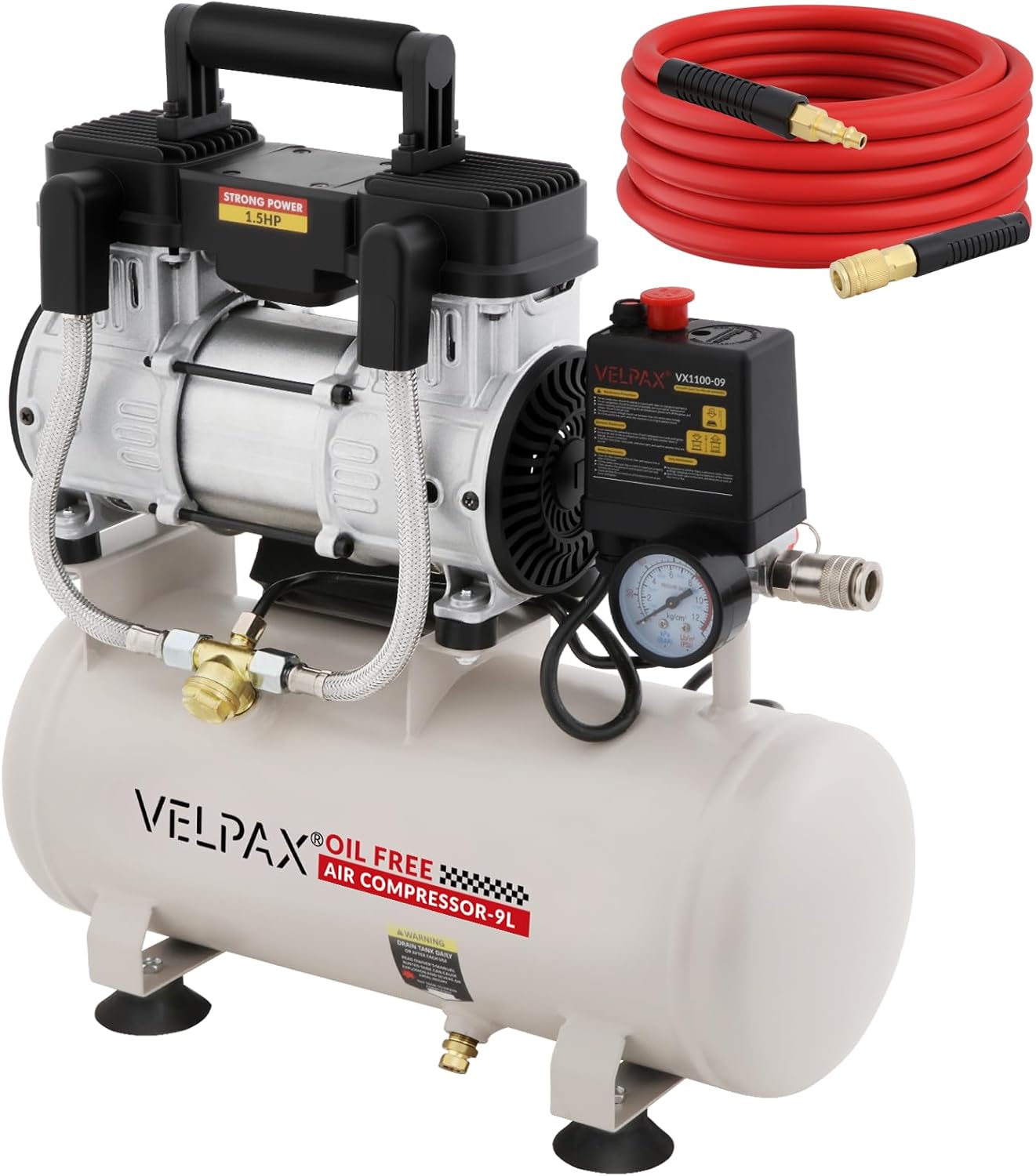
- 2.4-gallon tank
- 60dB ultra-quiet
- 1.5HP motor

- 6.3-gallon tank
- Oil-free motor
- Quiet operation

- 6.4-gallon tank
- 70dB noise level
- 1.2HP motor
7 Models Reviewed in Depth
#1. Klutch 20-Gallon Air Compressor
175 PSI
20 Gallons
2HP Motor
For serious auto restoration projects, the Klutch 20-Gallon air compressor is a powerhouse you can rely on. Its substantial 20-gallon tank and impressive 175 PSI maximum pressure mean you’ll have consistent air supply for demanding tools like impact wrenches and grinders without frequent interruptions. The 2HP motor is built for durability, and the oil-free pump simplifies maintenance, letting you focus on the restoration itself. The Klutch compressor features an oil-free pump that simplifies maintenance.
Be aware that its 90-pound weight and larger footprint mean this isn’t a portable unit you’ll be moving often; it’s designed for a dedicated spot in your garage or shop. The noise level is also higher, around 80dB, so consider hearing protection and placement. If you need serious air capacity and pressure for heavy-duty restoration work, this Klutch compressor is an excellent, long-lasting investment.
Pros
- Large 20-gallon tank capacity
- High maximum pressure (175 PSI)
- Durable and reliable for heavy use
Cons
- Heavy (90 lbs) and not very portable
- Higher noise level (80dB)
- Takes up significant floor space
Specifications
#2. RyanTek 15-Gallon Quiet
66dB Noise
15 Gallons
Efficient Airflow
You’ll appreciate the significantly quieter operation of this 15-gallon air compressor, boasting just 66dB, making it ideal for extended use in shared spaces. The 2HP motor paired with the larger tank provides ample air for tasks like spray painting and running nail guns continuously. Its vertical design saves floor space, and the integrated wheels make it surprisingly manageable to move around your workshop.
While it offers great performance for its noise level, the 68.3-pound weight means it’s not exactly a grab-and-go unit. If your auto restoration involves frequent relocation or very tight spaces, consider its footprint. However, for consistent power and reduced noise in a medium-sized workshop, this RyanTek compressor is a strong contender.
Pros
- Very quiet operation (66dB)
- Larger 15-gallon tank
- Space-saving vertical design
Cons
- Relatively heavy at 68.3 lbs
- Less portable than smaller units
- Requires dedicated circuit
Specifications
#3. VEVOR 13-Gallon Quiet
66dB Noise
Auto, Paint, Wood
Low Maintenance
This VEVOR 13-gallon air compressor offers a compelling blend of quiet operation and robust performance for your auto restoration needs. Its 66dB noise level is a significant advantage, allowing for comfortable work in most environments. The 2HP motor and 13-gallon tank provide ample air for spray painting, auto repairs, and powering various pneumatic tools efficiently.
While the wheels enhance portability, its 71-pound weight means it’s not designed for constant relocation. It’s best suited for a dedicated workspace where its capacity and quiet operation can be fully leveraged. If you need a versatile, low-noise compressor for a range of projects without breaking the bank, this VEVOR model is a strong contender.
Pros
- Very quiet operation (66dB)
- Good balance of tank size and power
- Includes essential accessories
Cons
- 71 lbs weight impacts portability
- May require dedicated circuit
- Build quality could be higher
Specifications
#4. Baococo 10 Gallon Ultra Quiet
70dB Noise Level
40s Refill Time
Low Maintenance
This 10-gallon air compressor is a solid choice for auto restoration projects, especially if noise is a concern. Its ultra-quiet operation, around 70dB, means you can work without disturbing others. The 2HP motor delivers up to 115 PSI, and it refills quickly, getting you back to work in under a minute.
While it’s great for home workshops and general auto tasks like tire inflation and painting, its 10-gallon capacity might be limiting for very heavy, continuous use. If you need maximum portability or a larger tank for industrial-level jobs, you might consider other options, but for most DIY auto restoration, this is a reliable performer.
Pros
- Ultra-quiet operation (70dB)
- Fast refill speed
- Durable, oil-free design
Cons
- 10-gallon tank may be small
- Not ideal for heavy continuous use
- Weight not specified
Specifications
#5. VELPAX 2.4 Gallon Ultra Quiet
60dB Noise
6.71 CFM
Oil-Free
If extreme quietness is your top priority for auto restoration, the VELPAX 2.4-gallon air compressor is hard to beat, operating at an incredibly low 60dB. Its compact size and integrated handle make it highly portable for detailed work or moving between project areas. Despite its small tank, it offers a surprisingly high airflow of 6.71 CFM, making it suitable for tasks like airbrushing, tire inflation, and powering smaller pneumatic tools.
However, the small 2.4-gallon tank means frequent cycling, and the 1.5HP motor might not be sufficient for prolonged use of high-demand tools. This compressor excels at intermittent tasks and precision work rather than continuous, heavy-duty applications. If you need a whisper-quiet, portable unit for detailed tasks and can manage the smaller tank size, this VELPAX is an excellent choice.
Pros
- Extremely quiet operation (60dB)
- Very portable and compact
- High airflow for its size
Cons
- Small tank requires frequent cycling
- 1.5HP may be underpowered
- Weight not specified
Specifications
#6. VEVOR 6.3 Gallon Oil Free
6.3 Gallons
Easy Maintenance
43 lbs
For projects in tighter spaces or when portability is key, this VEVOR 6.3-gallon air compressor is a practical choice. Its compact size and 43-pound weight make it easy to maneuver, while the oil-free design simplifies maintenance. The 2HP motor provides sufficient power for tasks like tire inflation, auto repair, and light spray painting, and the noise level is manageable for most home garages.
However, the smaller tank size means it will cycle more frequently during continuous use, and the 3.35 CFM might be borderline for demanding tools. If your auto restoration involves extensive use of high-demand pneumatic tools, you might find yourself waiting for it to catch up. It’s best suited for intermittent tasks or lighter-duty applications where its compact form factor is a priority.
Pros
- Compact and lightweight (43 lbs)
- Easy maintenance (oil-free)
- Good for smaller spaces
Cons
- Smaller tank requires frequent cycling
- Lower CFM may limit tool use
- Noise level is average (70dB)
Specifications
#7. MZB 6.4 Gallon Ultra Quiet
70dB Noise
Wheels Included
Eco-Friendly
This MZB 6.4-gallon air compressor is designed for convenience and quieter operation, making it suitable for mobile auto restoration tasks. The 70dB noise level is acceptable for most environments, and its compact size with wheels aids in transport. It boasts a decent air delivery of 5.65 CFM at 115 PSI, which should handle common tools like nail guns and spray guns for moderate use.
However, the 1.2HP motor is less powerful than some competitors, potentially leading to longer fill times or struggles with high-demand tools. If your projects require sustained high airflow or you’re frequently using multiple demanding pneumatic tools simultaneously, this compressor might feel underpowered. It’s a good option for lighter tasks or when noise and portability are primary concerns over raw power.
Pros
- Relatively quiet operation (70dB)
- Wheels for portability
- Decent CFM for its size
Cons
- Lower horsepower (1.2HP)
- May struggle with high-demand tools
- Weight not specified
Specifications
Revving Up Your Restoration: Finding the Right Air Compressor
Auto restoration projects demand reliable tools, and an air compressor is often the powerhouse behind many essential tasks, from sanding and grinding to painting and inflating tires. Choosing the right one can significantly impact your workflow and the quality of your finished project. Don’t just grab the first one you see; a little understanding of what makes a compressor tick will ensure you get a workhorse that keeps up with your passion.
The Engine Room: What Fuels Your Restoration Efforts
Power Source and Portability: Consider whether you’ll need a compressor that can move around your garage or workspace, or if a stationary unit will suffice. Electric models are common for home use, offering quieter operation and no exhaust fumes, while gas-powered options provide greater freedom for remote work but are noisier and require ventilation.
Tank Size and Airflow: The tank stores compressed air, so a larger tank means longer run times for tools without the compressor cycling on constantly. Airflow, measured in cubic feet per minute (CFM), is crucial for determining if the compressor can keep up with the demands of your air tools. High-demand tools like sanders and paint sprayers require higher CFM ratings.
Horsepower and Duty Cycle: Horsepower indicates the motor’s strength, influencing how quickly the compressor can fill its tank and maintain pressure. The duty cycle refers to how long the compressor can run continuously before needing a rest. For demanding, extended use, look for a compressor with a higher duty cycle.
Noise Level: Some compressors can be quite loud, which can be a significant factor if you’re working in a residential area or have neighbors nearby. Many manufacturers provide decibel ratings, allowing you to compare noise levels before purchasing.
Navigating the Workshop Floor: Common Missteps
- Underestimating CFM Needs: Buying a compressor with insufficient CFM for your most demanding tools will lead to frustration and poor performance, essentially rendering those tools useless.
- Ignoring Tank Size: A small tank will mean the compressor is constantly running to keep up, overheating the motor and interrupting your workflow, especially during painting or prolonged sanding.
- Overlooking Power Requirements: Ensure your electrical system can handle the amperage draw of a powerful compressor, especially if you’re considering a high-horsepower electric model.
Your Auto Restoration Air Powerhouse
For those tackling extensive auto restoration, the Klutch 20-Gallon is your workhorse, offering ample capacity for demanding tasks. If quieter operation is key without sacrificing power, the 15-Gallon Quiet Compressor or the VEVOR 13-Gallon are fantastic choices, balancing noise reduction with solid CFM. For smaller projects or those prioritizing ultra-portability and minimal noise, the 2.4 Gallon Ultra Quiet or the 6.3 Gallon VEVOR deliver where it counts. The 10-Gallon Ultra Quiet strikes a nice middle ground for versatility.
All these compressors are ready to fuel your auto restoration passion. Don’t wait – click the buttons above to check current availability and bring home the perfect air compressor for your next project!
Final 3 Picks: Heavy Duty, Medium Workshops, and Versatile Projects
Ready to decide? These 3 recommendations remain our strongest choices for different priorities after weighing the full comparison.
