Brad Nailer vs Framing Nailer: Which Do You Need? (November 2026)
Pick a brad nailer for trim and finish work and a framing nailer for structural framing. In this brad nailer vs framing nailer comparison, nail size and driving power decide the job, not the brand name.
On this page (11 sections)
- Quick verdict: brad nailer vs framing nailer
- The two side by side
- Nail size decides the job
- Power source: battery, air or hand
- Weight and fatigue on long days
- Accuracy and marks on finished wood
- Firing modes and speed
- Depth control and jam clearing
- Who should buy which tool
- Setup, nails and care
- Final verdict: brad nailer vs framing nailer
Pick a brad nailer for trim and finish work and a framing nailer for structural framing. This brad nailer vs framing nailer guide compares nail size, power and weight so you can match the tool to the joint in front of you.
A brad nailer drives thin 18 gauge nails up to 2-1/8 in. A framing nailer drives thick collated nails up to 3-1/2 in into studs, plates and sheathing.
That gap in nail size is the whole decision. Small nails hold trim in place.
Large nails tie a house frame together.

Quick verdict: brad nailer vs framing nailer
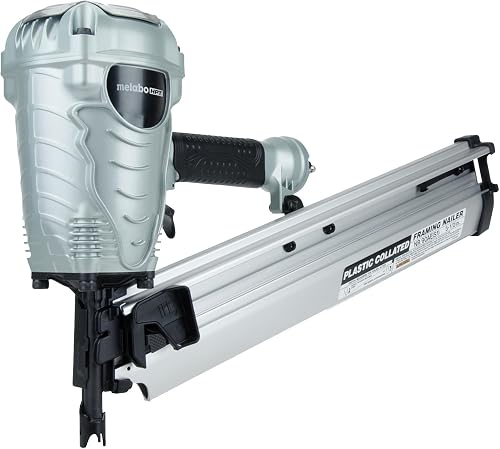
Buy the DEWALT DCN680B for finish work and the Metabo HPT NR90AES1 for framing. You get a 9.7 score on both because each one fits its own job so well.
The DEWALT drives 18 gauge brads from 5/8 in to 2-1/8 in on battery power. The Metabo HPT drives 2 in to 3-1/2 in plastic collated framing nails on air power.
If your work is mostly trim, casing and molding, the brad nailer saves arm effort and leaves smaller holes. If your work is studs, subfloor and roof decking, only the framing nailer has the nail length and power.
The verdict turns on the fastener, not the brand on the side. A thin brad protects thin stock.
A full round head framing nail ties thick stock together under load.
Our nail gun guide walks through all nailer types if you want the wider picture first. Read it before you shop if you are new to pneumatic and cordless tools.
The two side by side
The brad nailer wins on control and the framing nailer wins on holding power. The table below shows the practical gap in one view.
| Point | DEWALT DCN680B Brad Nailer | Metabo HPT NR90AES1 Framing Nailer |
|---|---|---|
| Nail type | 18 gauge brad | 21 degree plastic collated framing |
| Nail length | 5/8 in to 2-1/8 in | 2 in to 3-1/2 in |
| Power | 20V battery, brushless motor | Air powered |
| Weight | 1.8 kg | 7.5 lb |
| Depth control | Tool-free depth adjustment | Tool-less depth adjustment |
| Firing modes | Sequential or contact trigger | Selective actuation switch |
| Best jobs | Molding, casing, crown, shoe molding | Flooring, framing, subfloor, roof decking |
Both tools share useful details. Each one lets you adjust depth without tools.
Each one lets you switch between sequential and contact firing.
The shared details stop there. Nail size, nail length and power source split them into two different tool classes.
What the table does not show
The table hides two practical limits that matter on site. The DEWALT ships as tool only, so you still need a 20V MAX Lithium-Ion battery.
The Metabo HPT needs an air supply, and its plastic collated nails run from 2 in to 3-1/2 in only. That narrow collation choice keeps framing strips feeding smooth, but it means you must stock the right collation before a job starts.
Nail size decides the job
Use 18 gauge brads for finish fastening and full round head framing nails for structure. Nail diameter and length control how much load a joint can carry.
The DEWALT drives 18 gauge brads from 5/8 in to 2-1/8 in. That thin wire holds decorative molding, casing, kitchen crown and shoe molding against a wall.
The Metabo HPT accepts 2 in to 3-1/2 in plastic collated framing nails. That length and thickness drive through a stud into a plate or through sheathing into a joist.
The NuMax SFR2190 takes 21 degree plastic collated full round head nails from 2 in to 3-1/2 in, with diameters from 0.113 in to 0.131 in. That spec tells you it is built for the same structural joints.
A brad nailer for framing is the wrong tool for the task. Thin brads can pull out under load and they cannot pass through two thick boards with enough bite.
Length matters as much as gauge. A 2-1/8 in brad can anchor trim to a jamb.
A 3-1/2 in framing nail can pass through two 2x boards and still leave shank depth in the second board.
Power source: battery, air or hand
Choose battery for portability, air for sustained production and hand power for small craft jobs. Each power source changes how you move around a site.
The DEWALT DCN680B is 100 percent battery powered. DEWALT says it removes the need for gas, a compressor and a hose, and its brushless motor helps it run longer between charges.
The Metabo HPT and the NuMax are air powered. Air power suits long framing runs because the tool stays ready as long as the compressor feeds it.
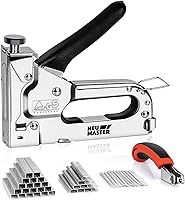
The YEAHOME Upholstery Staple Gun is manual. YEAHOME pairs a power adjustment lever with a steel handle and over-molded grip, so you set pressure for soft or hard materials by hand.
Battery power gives you freedom on ladders and in finished rooms. You walk in with the tool and a battery, and you start placing brads without dragging a hose across a floor you just finished.
Air power gives you repeatable drive on thick framing stock all day. The trade is hose management, a compressor to size, and a shop supply that must keep up with a crew.
For an air-powered framing nailer, our Best Air Compressor For Framing Nailer guide helps you size the supply. For a brad nailer, our Best Air Compressor For Brad Nailer guide still helps if you plan to add a pneumatic brad tool later.
Weight and fatigue on long days
Pick the lighter tool when your job is mostly finish work and the balanced tool when you frame all day. Weight and balance affect accuracy after the first hour.
The DEWALT brad nailer weighs 1.8 kg. That light weight helps you hold a micro nose steady on casing and crown.
The Metabo HPT weighs 7.5 lb and is well balanced for maneuverability. Metabo HPT says the balance helps you work with less fatigue through framing, truss build-up and sheathing.
The NuMax weighs 8.6 lb, so it asks more of your arms over a full shift. Its comfort grip handle helps reduce fatigue and steadies fastener placement.
The YEAHOME manual staple gun weighs 1.06 kg. It is easy to carry between craft projects, but every shot still needs your own squeeze.
Weight alone does not tell the full story. A lighter finish tool lets you work overhead on crown without shaking.
A heavier framing tool must still drive a 3-1/2 in nail, so mass helps absorb recoil.
Accuracy and marks on finished wood
Choose the brad nailer when a clean, small hole matters most. Framing nails leave marks that are fine on a subfloor and wrong on fine trim.
The DEWALT has a micro nose that improves your line of sight and nail placement compared with the DC608. Its low nail lockout prevents dry firing and unwanted marks on the work material.
Its tool-free depth adjustment helps you countersink nails with precision. Its multi-functional LED lights aid workspace illumination and tool diagnostics.
The NuMax has a no-mar safety tip that prevents damage to the work surface. That tip helps on framing jobs, but it cannot shrink a framing nail hole down to brad size.
The adjustable belt hook on the DEWALT also helps accuracy in practice. You can hang the tool left or right, so it stays off the work while you mark your next line.
If you need a middle step in nail thickness, our 15 gauge vs framing nailer comparison explains that larger finish option. It sits between brads and framing nails for trim that needs more grip.
Firing modes and speed
Use sequential firing for precision and contact firing for speed, and check that your tool offers both. Framing crews switch modes often during a single wall.
The DEWALT has a tool-free selectable trigger for sequential or contact actuation. You can place each brad with care on molding, then speed up on a longer run.
The Metabo HPT has selective actuation that changes between sequential and contact nailing with the flip of a switch. That switch suits crews who move from sheathing to precise framing within one job.
The NuMax has a dual mode trigger for single sequential firing or bump firing. You switch modes fast and easy based on the task at hand.
Sequential mode fires one nail per trigger pull and suits close placement. Contact mode fires as you bump the nose and move, which suits sheathing and decking.
Contact mode rewards a steady hand and a clear layout. Sequential mode forgives a fast pace and helps you keep spacing even on visible trim.
Depth control and jam clearing
Tool-free depth control matters on every nailer because material thickness changes fast. You should not need a wrench to set nails flush.
The DEWALT offers tool-free depth adjustment for precise countersinking. It also offers tool-free jam release to clear jams quickly and an integrated stall release lever to reset the driver blade after a stall.
The Metabo HPT offers tool-less depth adjustment to countersink or flush drive nails into a variety of materials. Its redesigned head guard allows faster and easier disassembly for maintenance.
The NuMax offers tool-free depth adjust with a hand-turn wheel. It also has an anti-dry-fire mechanism that prevents empty fires and reduces damage to internal parts.
The YEAHOME uses bottom load loading and a steel magazine for quick loading. Its jam-resistant magazine helps keep hand stapling smooth during craft work.
Depth control protects the finish, not just the joint. A brad set too deep on soft pine leaves a dent.
A framing nail set too shallow on sheathing leaves a head that can catch a shingle or a boot.
Who should buy which tool
Buy the brad nailer if you trim, the framing nailer if you build and the manual staple gun if you craft. Your main job type should pick the tool, not the other way around.
Choose the DEWALT DCN680B if you fasten decorative molding, casing, kitchen crown and shoe molding. Its battery power and micro nose fit finish carpentry and repair work.
Choose the Metabo HPT NR90AES1 if you frame houses, build trusses, install subflooring and roof decking. It includes safety glasses with the tool.
Choose the NuMax SFR2190 if you frame, build subfloors and roof decking, assemble pallets and build wood fencing on a budget. It includes adjustment tools.
Choose the YEAHOME staple gun if you do upholstery, crafts, decoration and light carpentry. It accepts D-shaped, U-shaped, T-shaped and pin staples and comes with 4000 staples.
Warranty and support also split the framing pair. The Metabo HPT carries a Professional 5-Year Tool Warranty.
The NuMax carries a 1 Year Limited Warranty and a 30 Day Wearable Parts Warranty.
Our best nail gun for framing guide lists more framing options if you want to compare brands at length. Our best framing nailer kit guide helps when you want nails and accessories in one buy.
Setup, nails and care
Match the nail collation and length to the tool before you load it, and store the tool dry. Wrong nails cause jams and weak joints.
The Metabo HPT takes 21 degree plastic collated nails from 2 in to 3-1/2 in. The NuMax takes the same angle and range in full round head form.
Our best nails for DEWALT framing nailer guide helps you check nail choice for framing work. Always confirm length, diameter and collation for your exact model first.
For the DEWALT brad nailer, load only 18 gauge brads from 5/8 in to 2-1/8 in. Its low nail lockout helps you avoid dry firing when the magazine runs low.
For the YEAHOME, load one of its four staple shapes and set the power lever for your material. Bottom load loading keeps refills simple during a long craft session.
The YEAHOME kit includes 1000 of each staple type, for 4000 total. That mix lets you test D, U, T and pin shapes on a small project before you commit to one shape for a larger run.
Wipe down each tool after use and keep magazines dry. Check depth settings on scrap wood before you start on finished work.
Final verdict: brad nailer vs framing nailer
Pick the DEWALT DCN680B for finish trim and the Metabo HPT NR90AES1 for framing, then add the NuMax or YEAHOME for specialized budget and craft work. That split covers almost every shop a home user will face.
If you only buy one, buy for the job you do most. Trim work needs the brad nailer.
Structural work needs the framing nailer.
Do not try to stretch one tool across both jobs. A brad nailer for framing risks weak joints.
A framing nailer for trim risks split molding and large holes.
Start with our nail gun guide if you still want the full tool map, then return to this brad nailer vs framing nailer verdict with your main job in mind.
Frequently asked questions
Can a brad nailer be used for framing?
A brad nailer is not suited for structural framing because its 18 gauge nails are made for finish fastening, not load-bearing joints. Framing needs longer, thicker plastic collated nails that a framing nailer drives into studs and sheathing.
Can a framing nailer do finish trim?
A framing nailer can fasten trim in a pinch, but its large nails leave bigger holes and can split thin moldings. A brad nailer sets small 18 gauge nails with a micro nose, so it gives cleaner results on casing, crown and decorative molding.
Which nailer is lighter to carry all day?
The DEWALT brad nailer weighs 1.8 kg and the YEAHOME manual staple gun weighs 1.06 kg, while the Metabo HPT framing nailer weighs 7.5 lb and the NuMax weighs 8.6 lb. Weight follows power and nail size, so finish tools stay lighter.
Do I need a compressor for either nailer?
The Metabo HPT and NuMax framing nailers are pneumatic, so they need an air supply, while the DEWALT brad nailer runs on a 20V battery with no compressor or hose. The YEAHOME staple gun is manual and needs neither.