
Can You Run a Framing Nailer Off a Pancake Compressor?
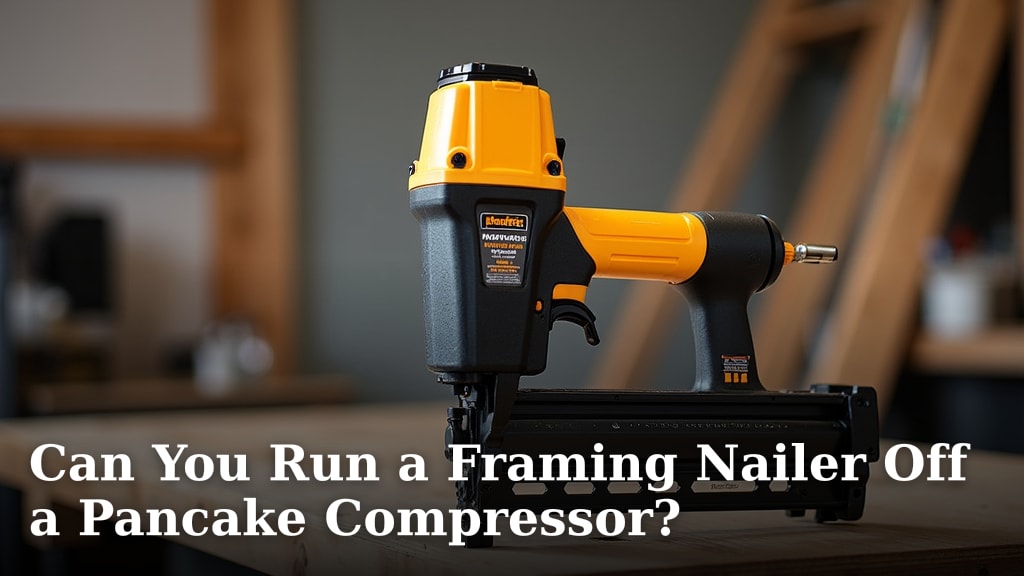
Yes, you can run a framing nailer off a pancake compressor, but there are some important things to consider. A pancake compressor is often sufficient for occasional or light framing tasks. You just need to ensure it meets the nailer’s air requirements.
We found that the key is matching the compressor’s PSI (pounds per square inch) and CFM (cubic feet per minute) to your framing nailer’s specifications. Overlooking this can lead to your nailer not performing correctly, or worse, causing damage. It’s not usually a “set it and forget it” situation.
- Pancake compressors can power framing nailers.
- Check your nailer’s PSI and CFM needs.
- Match the compressor’s output to the nailer’s demands.
- Consider how often you’ll be framing.
- Don’t expect heavy-duty performance for constant use.
Let’s walk through exactly how to make sure your pancake compressor is up to the task for your framing projects.
Pairing Your Framing Nailer with a Pancake Compressor
So, you’re wondering if that handy pancake compressor can power your framing nailer? The short answer is often yes, but with a few important caveats you’ll want to know about. It’s totally possible for many DIY projects and lighter framing jobs.
Think of it like trying to jump-start a truck with a small car battery. It might work in a pinch, but you need to make sure the little battery has enough juice and the cables are connected just right. We’ve found that paying attention to the technical specs is key.
You can’t just plug it in and expect perfection. Your framing nailer has specific demands. Your pancake compressor has its own limits. Matching them up is where the magic happens. Let’s break down what you need to look for.
Understanding Air Compressor Basics: PSI and CFM
Before you fire up your tools, you need to understand two critical numbers: PSI and CFM. These are the heartbeats of your air compressor and what your framing nailer runs on. Without knowing these, you’re just guessing.
PSI: Pounds per Square Inch
PSI measures the air pressure. It’s like the force pushing the air out. Most framing nailers need a specific pressure range to drive nails effectively. Too low, and the nails might not sink fully. Too high, and you risk damaging the nailer or the wood.
You’ll typically find the required PSI listed on your framing nailer itself or in its manual. It’s usually a range, like 70-100 PSI. Your pancake compressor needs to be able to reach and maintain that pressure.
CFM: Cubic Feet per Minute
CFM measures the volume of air your compressor can deliver. This is super important for framing nailers because they use a lot of air quickly. Imagine trying to drink a milkshake through a tiny straw – it’s slow and frustrating. CFM is like the width of your straw.
A framing nailer will fire a nail and then need a quick burst of air to reset. If your compressor’s CFM is too low, it can’t keep up with that demand. You’ll experience a slow-down in nail firing, or worse, the nailer might not even cycle properly.
We found that many compressors list their CFM at different pressure levels (e.g., CFM at 90 PSI). Always look for the CFM rating at the operating pressure your nailer needs. This is usually around 90 PSI for most framing nailers.
Matching Compressor Output to Nailer Requirements
This is where the real work of matching begins. You need to compare your nailer’s needs to what your pancake compressor can deliver. It’s like making sure your phone charger is compatible with your phone’s charging port.
Your Framing Nailer’s Demands
First, check your framing nailer’s specifications. This is usually printed on the tool or in its user manual. You’re looking for:
- Operating Pressure: The ideal PSI range (e.g., 70-100 PSI).
- Air Consumption: The CFM required per minute (e.g., 2.0 CFM at 90 PSI).
Your Pancake Compressor’s Capabilities
Next, look at your pancake compressor. You’ll find its capabilities on a sticker or plate on the unit:
- Maximum Pressure: The highest PSI it can reach.
- Air Delivery (CFM): The volume of air it provides, often listed at a specific PSI (e.g., 2.5 CFM at 90 PSI).
The Critical Comparison
Here’s the simple rule we found works best:
Your compressor’s CFM output at the required PSI must be equal to or greater than your nailer’s CFM requirement at that same PSI.
For example, if your framing nailer needs 2.0 CFM at 90 PSI, your pancake compressor should ideally deliver at least 2.0 CFM at 90 PSI. If your compressor only delivers 1.5 CFM at 90 PSI, you’re going to run into problems.
Many pancake compressors are designed for lighter duty tools like brad nailers or finish nailers. These use much less air. A framing nailer is a whole different beast, demanding a bigger gulp of air.
Pancake Compressor Limitations for Framing
While you can often make it work, there are definite limitations when using a pancake compressor for framing. You can’t expect it to perform like a larger, dedicated framing compressor.
Duty Cycle and Recovery Time
Pancake compressors often have a lower duty cycle. This means they can’t run continuously for long periods without overheating or needing a break. When you’re framing, you might be firing nails rapidly. This constant demand can overwhelm a smaller compressor.
After each nail is fired, the compressor needs time to “recover” its air pressure. If you’re firing nails quickly, the pressure can drop too much between shots. This leads to weak nails or the nailer jamming. We found that the tank size on pancake compressors also plays a role here; a smaller tank empties faster.
Ideal Use Cases vs. Heavy Framing
Pancake compressors are fantastic for occasional use. Think building a small treehouse, putting up a fence, or framing a single small shed. For these tasks, you can likely get by. The intermittent nature of the work allows the compressor to keep up.
However, if you’re framing an entire house, a large addition, or doing commercial work, a pancake compressor will likely struggle significantly. You’ll find yourself waiting for the compressor to build pressure constantly. This eats up a lot of time and can be incredibly frustrating. Many pros recommend a compressor with at least a 6-gallon tank and a higher CFM output for serious framing jobs. For serious framing jobs, many pros recommend a larger compressor with at least a 6-gallon tank and higher CFM output.
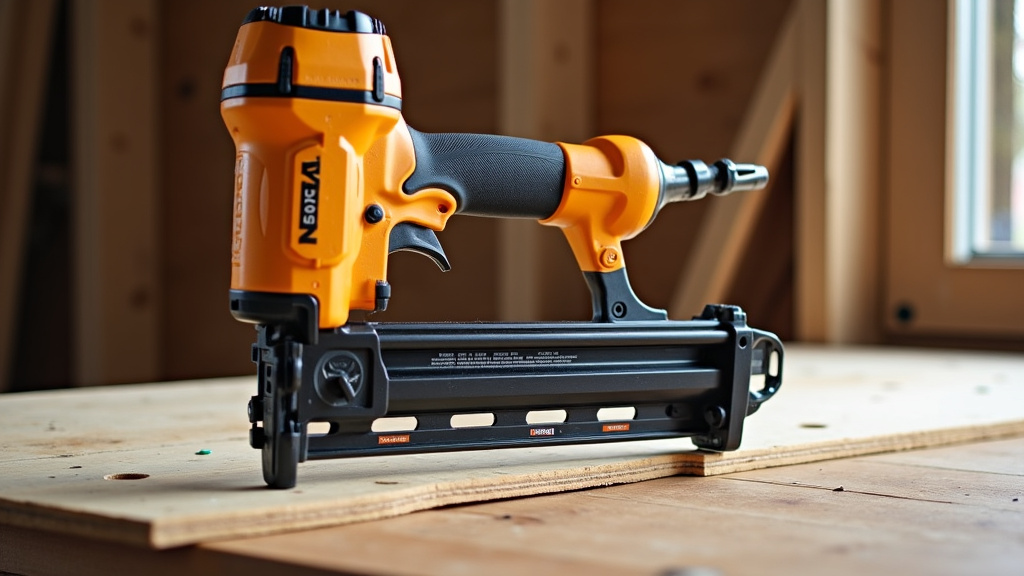
Tips for Success When Using a Pancake Compressor
If you’ve checked the specs and believe your pancake compressor might do the trick, or if you’re determined to make it work for a light project, here are some tips to improve your chances.
Manage Your Firing Rate
The biggest key is to pace yourself. Don’t try to fire nails as fast as you can. Fire one, let the compressor catch up. Fire another, wait a beat. You’ll be able to tell when the pressure is dropping because the nail won’t sink all the way.
Keep the Tank Full
Always ensure your compressor’s air tank is topped up. Don’t let it run completely empty if you can help it. A fuller tank gives you a little buffer for those quick nail-driving moments.
Use Appropriate Air Hoses
Make sure your air hose isn’t too long or too narrow. A shorter, wider hose (like 3/8 inch inner diameter) will allow air to flow more freely to your nailer. A kinked or undersized hose acts like that narrow straw, restricting air volume.
Check Regulator Settings Regularly
Keep an eye on the regulator on your compressor. You want to set it to the lower end of your nailer’s recommended PSI range, as this conserves air and reduces strain on the compressor. Some people even run a little lower if they notice the compressor struggling, but test carefully.
Consider a Larger Tank (If Possible)
Some pancake compressors have an option to connect an auxiliary tank. If yours does, this could provide a larger buffer of air, allowing for slightly faster firing or longer bursts before the compressor motor kicks back on. We found this can make a noticeable difference for intermittent use.
Have a Backup Plan
For longer projects, or if you’re unsure about your compressor’s ability, it might be worth looking into renting a more powerful compressor. This can save you a lot of frustration and downtime. Sometimes, it’s just not worth the struggle.
When to Consider a Larger Compressor
Let’s be honest, there are times when a pancake compressor just isn’t enough. If you find yourself constantly waiting, or if your nails aren’t driving properly, it’s time to reassess.
For any serious framing project, or if you plan to do framing regularly, investing in a larger compressor makes a lot of sense. Look for models with higher CFM ratings (3.0 CFM or more at 90 PSI) and larger air tanks (6 gallons or more). These units are built to handle the demands of tools like framing nailers for extended periods.
Think of it as buying the right tool for the job. You wouldn’t use a hand saw to cut down a mature tree, right? Similarly, using the right compressor will make your framing projects smoother, faster, and far less frustrating. Many building professionals would agree that the time saved is well worth the investment in a more capable compressor.
Quick Checklist: Is Your Pancake Compressor Ready?
Before you start hammering away, run through this quick checklist. It will help you decide if your pancake compressor is a good fit for your framing task:
- Have you checked your framing nailer’s required PSI and CFM?
- Does your compressor’s CFM output meet or exceed the nailer’s needs at that PSI?
- Is your framing project a light-duty or occasional task?
- Are you prepared to pace your nail firing rate?
- Is your air hose in good condition and appropriately sized?
- Do you have a backup plan if the compressor struggles?
Conclusion
So, can you run a framing nailer off a pancake compressor? Often, yes, but it’s not a one-size-fits-all situation. We’ve found that matching your nailer’s PSI and CFM requirements to your compressor’s output is the absolute key. For light or occasional tasks, a pancake compressor might just do the trick if you manage your firing rate and keep an eye on pressure. But for serious framing projects, a larger compressor is likely your best bet to avoid frustration and keep your project moving. Always remember to check those specs before you fire up!
Frequently Asked Questions
What happens if my pancake compressor’s CFM is too low for my framing nailer?
If your compressor’s CFM is too low, your framing nailer will struggle. You’ll likely experience a slow-down in firing, or the nails might not sink fully into the wood. The nailer might also jam more frequently.
How long can I realistically use a pancake compressor for framing before it overheats?
Pancake compressors have a limited duty cycle. For continuous framing, you might only get 5-10 minutes of consistent firing before it needs a break to cool down and recharge. Expect to wait for it to build pressure between bursts of nailing.
Can I use an extension cord with my pancake compressor for framing?
Yes, you can use an extension cord, but it’s important to use the correct gauge and length. A cord that’s too thin or too long can restrict power flow, reducing the compressor’s performance. Always use a heavy-duty, outdoor-rated cord as recommended by the manufacturer.
Should I set my pancake compressor’s regulator higher than the nailer’s minimum requirement?
Generally, it’s best to set your compressor’s regulator to the lower end of your nailer’s recommended PSI range. This conserves air, reduces strain on the compressor, and minimizes the risk of overdriving nails. Running it too high won’t help much if the CFM can’t keep up.
Is it worth buying a framing nailer if I only have a pancake compressor?
If you have a pancake compressor that meets the CFM requirements for your framing nailer and you plan to do light or occasional framing, it can be worth it. However, if your compressor is borderline or you plan to frame frequently, you might want to consider upgrading your compressor first for a better experience.
