Can You Use an Air Compressor with a Die Grinder for Metal Work?
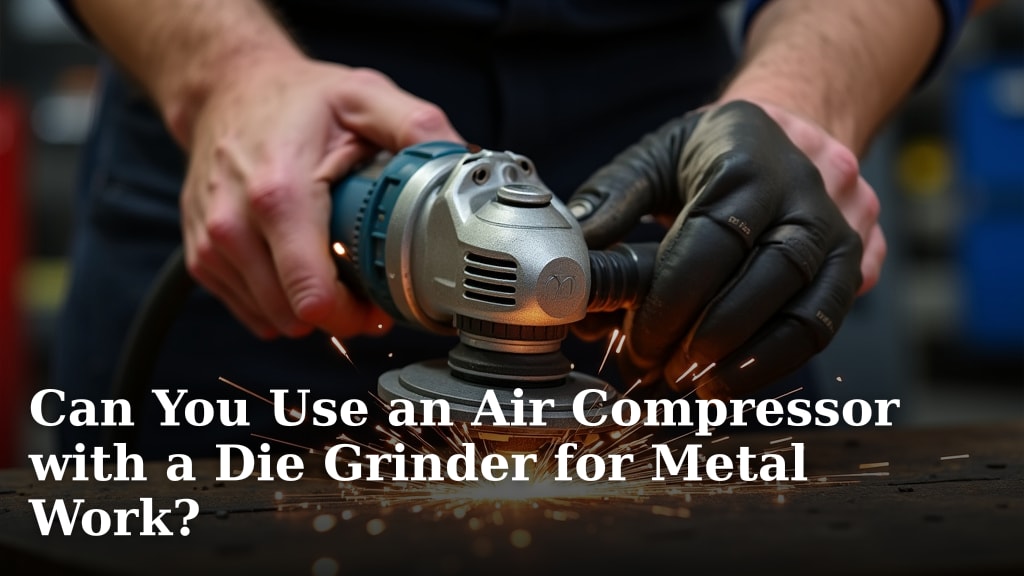
Yes, you can absolutely use an air compressor with a die grinder for metal work, and it’s often the best way to power these tools. An air compressor provides the consistent air pressure and flow needed for a die grinder to perform effectively. Without enough compressed air, your die grinder will lack power and won’t cut or grind metal efficiently.
Choosing the right air compressor is key to getting the most out of your die grinder. You need to match the compressor’s CFM (cubic feet per minute) rating to the die grinder’s air consumption. A compressor that’s too small will struggle to keep up, leading to frustrating slowdowns. We found that properly matching these tools makes a huge difference in performance and tool longevity. We found that properly matching these tools makes a huge difference in performance and tool longevity, similar to sizing an air compressor for an impact wrench.
- Yes, air compressors are ideal for die grinders.
- Match your compressor’s CFM to your die grinder’s needs.
- Underpowered compressors lead to poor performance.
- Proper matching ensures efficient metal work.
Let’s get into the specifics of how to make sure you have the right setup and what to expect when using your air compressor with a die grinder for your metal projects.
Powering Your Die Grinder: Air Compressors Explained
Can you use an air compressor with a die grinder for metal work? Absolutely! In fact, it’s the primary way these tools get their energy. Think of your die grinder like a race car. It needs a powerful engine to perform. For a die grinder, that engine is a steady supply of compressed air. Without the right air compressor, your die grinder will feel sluggish and won’t get the job done efficiently.
The Heart of the Operation: Airflow and Pressure
Your die grinder relies on two main things from the air compressor: pressure and flow. Pressure is measured in PSI (pounds per square inch). It’s like the muscle behind the tool. Flow is measured in CFM (cubic feet per minute). This tells you how much air the compressor can deliver over time. You need both enough pressure to make the grinder spin fast and enough flow to keep it spinning under load.
Understanding PSI Requirements
Most die grinders operate in the 90-100 PSI range. This is a pretty standard pressure for many air tools. Your compressor needs to be able to deliver this consistently. If the pressure drops too low, the grinder’s RPMs will suffer. This means it won’t cut or grind effectively. We found that checking the tool’s manual for its specific PSI need is the first step.
The Critical Role of CFM
CFM is where many people run into trouble. A die grinder needs a certain amount of air volume to keep its motor running at full speed, especially when you’re pressing it against metal. If your compressor’s CFM rating is lower than what the die grinder demands, the compressor will struggle. It’s like trying to fill a big bucket with a tiny hose; it takes forever and might not even get full.
Matching Your Compressor to Your Die Grinder: The CFM Equation
This is the most important part of ensuring your die grinder performs well. You need to match the CFM output of your air compressor with the air consumption of your die grinder. Die grinders are often rated by their average CFM usage. You’ll typically find this information on the tool itself or in its manual.
Here’s a simple rule of thumb we found helpful: Your air compressor should have a CFM rating that is at least 1.5 to 2 times higher than the die grinder’s average CFM requirement. Why the extra buffer? Because the compressor needs to keep up with the tool’s demand, and also account for any small leaks in your air lines or fittings. This buffer ensures consistent performance.
| Die Grinder Type | Average CFM Needed (Approx.) |
|---|---|
| Standard Die Grinder | 4-6 CFM |
| High-Speed Die Grinder | 6-8 CFM |
| Heavy-Duty Die Grinder | 8-12+ CFM |
As you can see from the table, even a standard die grinder requires a decent amount of air. Trying to run a tool that needs 6 CFM with a compressor that only supplies 3 CFM is a recipe for frustration. Your grinder will bog down and won’t be effective.
What Happens When Your Compressor is Too Small?
Using an air compressor that’s too small for your die grinder leads to a few common issues. First, the tool will lack power. You’ll find yourself pushing harder, but it won’t cut or grind as efficiently. This can lead to longer job times and more wear on both you and the tool. Second, the compressor motor will likely overheat. It’s constantly trying to catch up, working overtime. This can shorten its lifespan.
You might also notice the grinder slowing down considerably when you apply pressure. This is a clear sign that your compressor can’t keep up with the demand. Many experts suggest that if your compressor cycles on too frequently while using the die grinder, it’s a strong indicator that it’s undersized (NIOSH).
Choosing the Right Compressor: Key Features to Consider
When selecting an air compressor for your die grinder, focus on the CFM rating first. Then, consider the tank size. A larger tank (measured in gallons) acts as an air reservoir. It allows the compressor motor to cycle less frequently, providing a more consistent air supply and giving the motor a break. For die grinding, a tank size of 20 gallons or more is often recommended.
Horsepower and Tank Size
While CFM is king, horsepower (HP) is also a factor. Higher HP generally means more CFM output, but it’s not the only determinant. Don’t be swayed solely by HP. Always prioritize the CFM rating at the required PSI (usually 90 PSI). For die grinders, a compressor with a 2 HP motor or higher is usually a good starting point, provided it meets the CFM needs.
Portability vs. Stationary
Do you need to move your compressor around your workshop or job site? If so, look for portable models. They often have wheels and a more compact design. If your metalworking is confined to one area, a stationary unit might offer more power and capacity. Many portable compressors are capable of powering die grinders effectively if their CFM rating is sufficient.
Setting Up Your Air System for Success
Once you have the right compressor and die grinder, proper setup is key. You’ll need an air hose that’s rated for the PSI your compressor produces. Using a hose that’s too small in diameter can restrict airflow, even if your compressor is powerful enough. A 3/8-inch or 1/2-inch diameter hose is generally recommended for die grinders (OSHA).
Consider using an air filter and regulator. A regulator allows you to fine-tune the air pressure going to your die grinder, ensuring it stays at the optimal PSI. An air filter helps remove moisture and debris from the compressed air. This protects your die grinder from damage and ensures cleaner work. Keeping your air supply clean and regulated is often overlooked but vital for tool longevity.
Quick Checklist for Your Die Grinder Setup
Here’s a quick rundown to make sure you’re set up for success:
- Verify Die Grinder CFM Needs: Check the tool’s manual.
- Match Compressor CFM: Ensure compressor CFM is 1.5-2x the tool’s need.
- Check PSI Output: Confirm compressor can deliver 90-100 PSI.
- Select Appropriate Hose: Use a 3/8″ or 1/2″ diameter air hose.
- Consider Regulator/Filter: For consistent pressure and clean air.
- Test the Setup: Run the grinder under load to ensure it doesn’t bog down.
Conclusion
You’ve learned that an air compressor is your die grinder’s best friend for metal work. Matching your compressor’s CFM output to your die grinder’s needs is non-negotiable for efficient performance. Don’t overlook the importance of correct PSI and a good quality air hose, regulator, and filter. By getting these basics right, you’ll avoid common frustrations, extend your tool’s life, and get better results on your projects. Your next step? Double-check your current setup against these guidelines, and if you’re in the market for new gear, prioritize those CFM ratings!
Frequently Asked Questions
What’s the most common mistake people make when using an air compressor with a die grinder?
The most frequent issue we’ve seen is using an air compressor that’s too small. This leads to the die grinder lacking power and constantly bogging down. It’s frustrating and can overwork both your tool and the compressor.
Can I use a regular shop air compressor that’s not specifically designed for metalworking?
Yes, you absolutely can. As long as the shop air compressor meets the CFM and PSI requirements of your die grinder, it will work perfectly for metal projects. Focus on the air delivery specs, not just the label.
How do I know if my air compressor is providing enough air for my die grinder?
You’ll notice the die grinder maintains its speed and power even when you apply moderate pressure to the metal. If the grinder slows down significantly or stops spinning when you start working, your compressor is likely too small.
Is there a minimum tank size I should look for in an air compressor for die grinding?
While CFM is king, a larger tank size, generally 20 gallons or more, is very helpful. It acts as an air reservoir, allowing for more consistent air delivery and giving your compressor motor a break between cycles.
Do I really need an air regulator if my compressor already has a set PSI?
Yes, using an air regulator is highly recommended. It allows you to dial in the exact PSI your die grinder needs, ensuring consistent operation and preventing damage from over-pressurization. It’s a small addition that makes a big difference in tool performance and longevity.
