
How Are Air Compressors Classified?
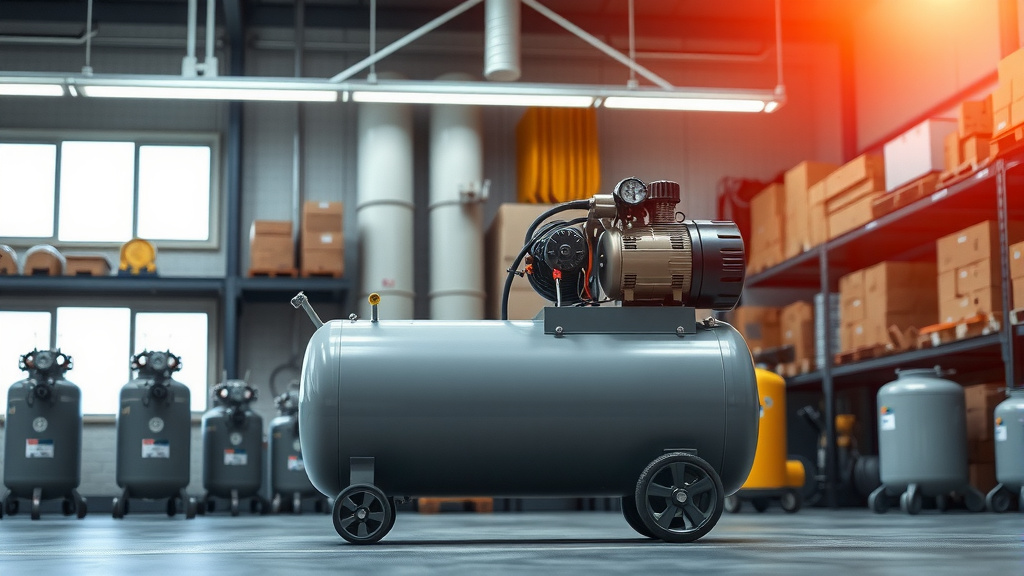
Air compressors are classified by their design and operating mechanism, like reciprocating, rotary screw, or centrifugal models. They also fall into categories based on lubrication method, pressure output, and portability, helping you pick the perfect one for your work.
You can understand air compressor types through their power source, number of stages, and duty cycle, too. Knowing these distinctions helps you match the right machine to your specific tasks, ensuring efficiency and long-term reliability for your projects.
- Air compressors are categorized mainly by their pumping mechanism, like piston or screw types.
- You’ll also find them divided by whether they use oil for lubrication or are oil-free.
- Their pressure capabilities, from low to high, determine what jobs they can handle.
- Portability is another key classification, with options for stationary or portable use.
- Learning these classifications makes choosing the right compressor much simpler.
Thinking about getting an air compressor? Or maybe you already have one but want to understand it better? It’s like picking the right tool from a toolbox – you wouldn’t use a hammer for a screw, right? Air compressors, vital machines in countless industries and workshops, come in many forms. Knowing how they’re classified makes choosing the best one for your needs a breeze. Let’s break down the world of air compressors, making it easy to understand.
You might wonder, “Why does classification even matter?” Well, it matters a lot! It helps you understand a compressor’s strengths, weaknesses, and ideal applications. Imagine buying a large industrial compressor for small home tasks – it’s overkill and inefficient. By understanding classifications, you’re better equipped to make smart decisions.
How Are Air Compressors Classified?
Air compressors are classified primarily based on their operational design, how they handle lubrication, the pressure they produce, and whether they can move around easily. This system helps you quickly identify their core function and best use.
By Design and Operating Mechanism
This is perhaps the most fundamental way air compressors are grouped. It tells you how they actually create compressed air. We found that most types fall into a few main categories here (Compressed Air & Gas Institute).
Reciprocating (Piston) Compressors
Picture a bicycle pump, but much stronger. Reciprocating compressors use pistons moving within cylinders to compress air. These are very common for both home and industrial uses.
They are known for their simplicity and reliability. Many experts say they are good for applications needing high pressure intermittently. Think of your garage workshop or a small body shop.
Rotary Screw Compressors
Instead of pistons, these compressors use two interlocking helical (screw-shaped) rotors. As the rotors turn, they trap air and compress it. Imagine two gears meshing together, but designed for air.
We found that rotary screw compressors are excellent for continuous, heavy-duty applications. They are often quieter and more energy-efficient for constant use compared to piston types (US Department of Energy).
Centrifugal Compressors
These are the big players, usually found in large industrial settings. Centrifugal compressors use a rotating impeller to accelerate air, then slow it down to build pressure. Think of a massive fan that also squeezes air.
Many guidelines point to centrifugal units for applications needing very large volumes of compressed air. They are often oil-free and designed for non-stop operation.
By Lubrication Method
This classification focuses on how the compressor handles internal friction and heat. It’s a big deal for air quality.
Oil-Lubricated Compressors
Most compressors use oil to lubricate moving parts and cool the unit. The oil keeps everything running smoothly, just like oil in your car’s engine.
You’ll find these types are often more durable and can handle heavier workloads. However, the compressed air might contain trace amounts of oil, which isn’t always ideal.
Oil-Free Compressors
As the name suggests, these compressors don’t use oil in the compression chamber. They rely on coatings or special designs to reduce friction. This means the air comes out cleaner, without oil contamination.
Research often connects oil-free compressors with industries where air purity is critical, like food processing, medical facilities, or sensitive electronics manufacturing (ISO standards for air quality).
By Pressure Output
Compressors are also grouped by the pressure they can deliver. This directly impacts what tasks they can power.
-
Low Pressure (LP) Compressors: These units provide pressures typically below 150 PSI (pounds per square inch). They are good for tools like paint sprayers or inflating tires.
-
Medium Pressure (MP) Compressors: Operating between 150-500 PSI, these are versatile for many workshop tools and light industrial uses.
-
High Pressure (HP) Compressors: Delivering over 500 PSI, these are for specialized applications like industrial cleaning, scuba tank filling, or certain manufacturing processes.
By Portability
Do you need your compressor to stay put or move around? This is an easy way to classify them.
Stationary Compressors
These are large, heavy units designed to be installed in one location, usually on a concrete pad. They often provide power for an entire facility. Think of the big machine humming in a factory corner.
We found that stationary compressors are built for maximum power and efficiency in a fixed setting. They might power multiple air tools or an assembly line.
Portable Compressors
These units are designed to be moved. They might have wheels, handles, or be small enough to carry. Think of the smaller, wheeled compressors you see at construction sites.
You’ll find portable compressors in many sizes, from small “pancake” units for DIY projects to large trailer-mounted diesel compressors for roadwork. They offer flexibility and on-site air power.
By Number of Stages
This refers to how many times the air is compressed to reach the desired pressure.
Single-Stage Compressors
In a single-stage compressor, air is drawn in and compressed once to its final pressure. It’s a bit like taking one big breath.
These are typically simpler, more common in smaller applications, and good for moderate pressure needs.
Two-Stage Compressors
Here, air is compressed in two steps. First, it goes into a smaller cylinder, then it’s cooled and moved to a second, larger cylinder for higher pressure. It’s like taking a breath, holding it, then squeezing harder.
Many experts say two-stage compressors are more efficient for higher pressure output and continuous use, making them suitable for industrial tasks.
Other Ways to Classify Air Compressors
Beyond the main categories, there are other useful ways to think about these machines.
By Drive Type
How does the compressor get its power? It could be electric (AC or DC) or run on a gasoline/diesel engine. Your power source often dictates where and how you can use the compressor.
By Power Source (Electric)
Electric compressors vary by their voltage needs: 120V (standard household outlet) or 240V (higher power industrial or large shop applications). Make sure your power supply matches your compressor.
By Duty Cycle
This refers to how long a compressor can run versus how long it needs to rest. Some are for intermittent use, while others are built for continuous operation. We found understanding duty cycle prevents overheating and wear.
| Classification Category | Key Types | Common Application |
|---|---|---|
| Design Mechanism | Reciprocating, Rotary Screw, Centrifugal | Workshops, Factories, Heavy Industry |
| Lubrication | Oil-Lubricated, Oil-Free | General use, Food/Medical/Electronics |
| Pressure Output | Low, Medium, High | Paint sprayers, Impact wrenches, Scuba tanks |
| Portability | Stationary, Portable | Factories, Construction sites, DIY |
| Number of Stages | Single-Stage, Two-Stage | Home garages, Industrial workshops |
Choosing an air compressor is much like picking a car; there’s a model for every purpose. By thinking through these classifications, you can match your needs with the perfect machine. Consider what your tasks require and let that guide your choice.
Here’s a quick checklist to help you clarify your needs:
- What types of tools will you power?
- How often will you use the compressor (intermittent or continuous)?
- Is air purity (oil-free) important for your application?
- Do you need it to be stationary or portable?
- What is your available power source (electric, gas, diesel)?
- What pressure and volume (CFM) do your tools require?
Conclusion
Understanding how air compressors are classified is your first step toward making a smart purchase or better utilizing your current equipment. We’ve explored classifications by design, lubrication, pressure, portability, and more. Each category helps define a compressor’s unique role and capabilities.
Whether you’re looking for a small piston compressor for your garage or a massive centrifugal unit for an industrial plant, knowing these distinctions will guide you. It ensures you invest in a machine that is efficient, effective, and perfectly suited to your specific demands. So, next time you see an air compressor, you’ll know more than just its name – you’ll understand its true nature!
What is the main difference between reciprocating and rotary screw compressors?
The main difference lies in their compression method. Reciprocating compressors use pistons moving back and forth in cylinders, ideal for intermittent, high-pressure tasks. Rotary screw compressors use two helical screws that rotate to trap and compress air, making them better for continuous, heavy-duty applications.
Why are some air compressors oil-free?
Oil-free compressors are designed to prevent oil from contaminating the compressed air. This is crucial for industries like food and beverage, pharmaceuticals, and electronics manufacturing where air purity is paramount. They achieve this using special coatings or designs that eliminate the need for oil in the compression chamber.
Can I use a low-pressure air compressor for heavy-duty tools?
Generally, no. Heavy-duty tools like large impact wrenches or sandblasters require a higher pressure (PSI) and often a greater volume of air (CFM) than low-pressure compressors can provide. Using an underpowered compressor for such tools will lead to poor performance and potential damage to both the tool and the compressor.
What does “two-stage” mean for an air compressor?
A “two-stage” air compressor compresses air in two distinct steps. First, air is compressed to an intermediate pressure, cooled, and then compressed a second time to reach the final, higher pressure. This method is more efficient for generating higher pressures and is typically found in industrial or continuous-use compressors.
How do I know if I need a portable or stationary air compressor?
Your need for portability depends on where and how you plan to use the compressor. If you need to move the compressor between different job sites or within a large workshop, a portable unit with wheels or a smaller design is best. A stationary compressor is ideal if you have a dedicated location and need a consistent, high volume of air for an entire facility or a fixed production line.
